
Chef Freja
Andelår med Rødkål
Slow-roasted duck legs with crisp, deeply golden skin, served with braised red cabbage and caramelized potatoes. The weeknight Danish duck that proves the best part of the bird is the one that takes its time.
A cooking platform built around craft, culture, and the stories behind what we eat.
Created by Chef Freja
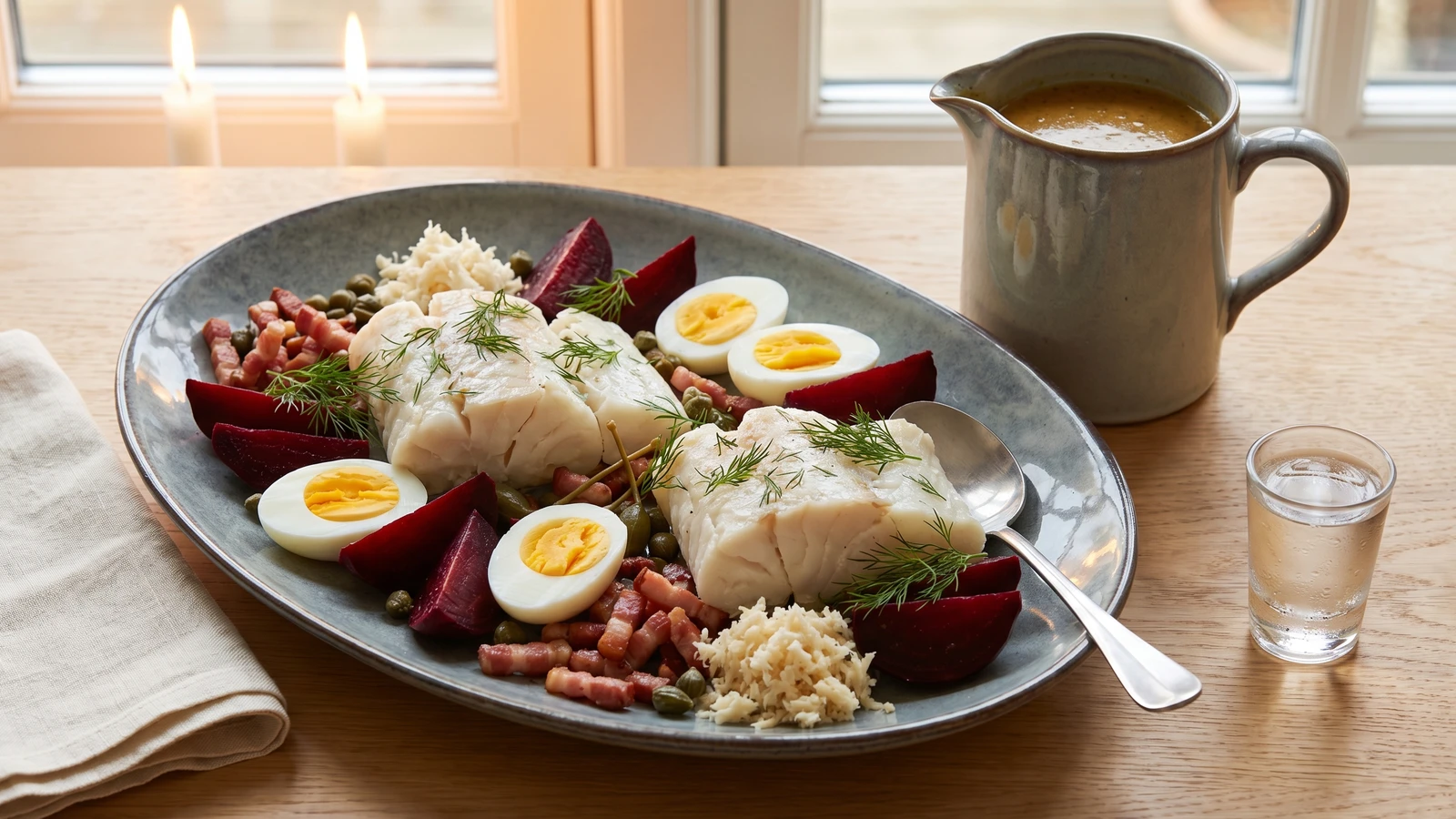
The Danish New Year's Eve table in one platter: cod poached in salted vinegar water, warm mustard cream sauce, beetroots, hard-boiled eggs, crisp bacon, capers, and the sharp bite of freshly grated horseradish. Nytaarstorsk, the fish that turns the year.
December 31st in Denmark smells like vinegar and bay leaves simmering in a wide pan. The light outside is gone by three in the afternoon, and the kitchen is the warmest room in the house. This is the evening for nytaarstorsk.
Kogt torsk med sennepssauce is the New Year's fish. Not a complicated dish, not a showy one, but a dish that carries the weight of the moment it belongs to. A whole table built around poached cod: the fish at the centre, pale and clean, surrounded by everything that makes it complete. Beetroot wedges bleeding crimson into the platter. Hard-boiled eggs halved to show their gold. Bacon crisped until it snaps. Capers, sharp and briny. Horseradish grated at the last second so it still burns. And the sennepssauce, warm and creamy with a slow mustard bite, poured from a jug at the table while someone fills your glass.
The technique is gentle. You poach the cod in water seasoned with salt and vinegar, never letting it boil, because boiling water destroys the texture of cod as surely as overcooking ruins an egg. The fish needs only minutes. The sauce is a simple white sauce finished with mustard off the heat, so the mustard keeps its warmth without turning bitter. The tilbehor, the full spread of accompaniments, is what transforms a piece of poached fish into a celebration. Each element is easy on its own. Together on the platter, they are the Danish New Year. I'll walk you through every step, and by the time the clock strikes midnight, you'll understand why this dish has held its place at the table for centuries.
Kogt torsk has been the traditional Danish New Year's Eve dish since at least the 18th century, when salt cod was the most reliable winter protein in a country surrounded by cold seas. The tradition of nytaarstorsk, New Year's cod, likely predates this by generations. Fresh cod replaced the salt-cured version as refrigeration improved, but the accompaniments, the beets, eggs, bacon, mustard sauce, and horseradish, have remained remarkably unchanged. The dish's survival owes less to nostalgia than to a simple truth: cod poached correctly and served with the full tilbehor is one of the most satisfying meals in the Danish kitchen, a quiet showpiece that asks nothing more of the cook than attention and good timing.
Quantity
1.2kg
skin on, cut into 6 thick portions
Quantity
2 litres
Quantity
3 tablespoons
Quantity
3 tablespoons
Quantity
8
Quantity
2
Quantity
500g
scrubbed
Quantity
4 medium
cooked until tender
Quantity
6
Quantity
200g
cut into lardons
Quantity
3 tablespoons
drained
Quantity
1 piece, about 8cm
Quantity
small bunch
fronds picked
Quantity
40g
Quantity
3 tablespoons
Quantity
500ml
Quantity
200ml
Quantity
2 tablespoons
Quantity
1 teaspoon
Quantity
1 teaspoon
Quantity
to taste
Quantity
to taste
| Ingredient | Quantity |
|---|---|
| fresh cod loinskin on, cut into 6 thick portions | 1.2kg |
| cold water | 2 litres |
| coarse sea salt | 3 tablespoons |
| white wine vinegar | 3 tablespoons |
| whole black peppercorns | 8 |
| bay leaves | 2 |
| small waxy potatoesscrubbed | 500g |
| beetrootscooked until tender | 4 medium |
| large eggs | 6 |
| thick-cut smoked baconcut into lardons | 200g |
| capersdrained | 3 tablespoons |
| fresh horseradish root | 1 piece, about 8cm |
| fresh dillfronds picked | small bunch |
| unsalted butter | 40g |
| plain flour | 3 tablespoons |
| whole milk | 500ml |
| poaching liquid from the cod | 200ml |
| strong Danish mustard | 2 tablespoons |
| Dijon mustard | 1 teaspoon |
| sugar | 1 teaspoon |
| fine sea salt | to taste |
| white pepper | to taste |
Place the eggs in a saucepan, cover with cold water, and bring to a rolling boil. The moment the water boils, set a timer for nine minutes. You want a fully set yolk that is still a shade of deep gold in the centre, not chalky and grey. When the time is up, plunge them straight into ice water. This stops the cooking and keeps that fine green ring from forming around the yolk. Peel them when cool and set aside.
If your beetroots aren't already cooked, wrap them individually in foil and roast at 200°C for about an hour, until a knife slides through without resistance. Let them cool just enough to handle, then slip the skins off. Cut them into thick wedges and set aside. The beets will bleed their colour across the plate later, and that is part of the beauty of this dish. Don't fight it.
Put the scrubbed potatoes into a pot of well-salted cold water. Bring to a simmer and cook until tender, about twenty minutes depending on size. A small knife should slip in and out with no grip at all. Drain and keep warm under a clean cloth. Waxy potatoes hold their shape and won't crumble on the plate beside the fish. That matters here, where everything shares the same space.
Scatter the bacon lardons into a cold frying pan and set it over medium heat. Starting in a cold pan lets the fat render slowly, so the bacon crisps evenly instead of seizing and burning. Cook, stirring occasionally, until the pieces are golden and just beginning to darken at the edges, about eight minutes. Transfer to a plate lined with kitchen paper. Save a tablespoon of the rendered fat if you like. Some cooks stir it into the sauce for depth. I do, when nobody is watching.
Combine the two litres of cold water with the coarse salt, white wine vinegar, peppercorns, and bay leaves in a wide, deep pan or a fish kettle if you have one. Stir until the salt dissolves. Bring this to a gentle simmer. The vinegar does two things: it firms the surface proteins of the cod so the flesh holds together instead of flaking apart in the water, and it keeps the fish white. Without vinegar, poached cod turns an unappealing grey. The salt seasons the fish from the outside in, the way a brine does, so every flake tastes of something.
Lower the heat until the surface of the poaching liquid barely trembles. Slide the cod portions in gently, skin-side down. The water should not boil. Not ever. Boiling water shatters cod. You want a temperature where the surface shivers but never breaks into bubbles. Poach for eight to twelve minutes, depending on thickness. The fish is done when it turns from translucent to pure opaque white and the flesh just begins to pull apart along its natural flakes when you press it gently with a spoon. Lift each piece out with a slotted spoon or fish slice, letting the liquid drain, and set on a warm serving platter. Reserve 200ml of the poaching liquid for the sauce.
Melt the butter in a saucepan over medium heat. When it foams, add the flour and stir constantly for two minutes. The flour needs to cook out its raw taste, but it must not take on any colour. This is a white sauce and it should stay that way. Slowly pour in the milk, a splash at a time at first, stirring vigorously to prevent lumps. Once about a third of the milk is in and the mixture is smooth, you can add the rest more freely. Then stir in the reserved poaching liquid. Let the sauce simmer gently for five minutes, stirring often, until it coats the back of a spoon. Season with salt, white pepper, and the sugar.
Take the sauce off the heat. Now add the strong Danish mustard and the Dijon. This is the step that matters most: the mustard goes in after the sauce leaves the flame. Mustard cooked at high heat turns bitter and loses its sharpness. Off the heat, it keeps its bite and its warmth. Stir it through thoroughly. Taste the sauce. It should be creamy, gently sharp, and warm with mustard. Adjust the salt if needed. The poaching liquid already carried salt, so go carefully. Keep the sauce warm with a lid on while you assemble the platter.
Peel the horseradish root and grate it finely just before serving. Fresh horseradish is sharp enough to make your eyes water, and that ferocity fades within minutes of grating. This is why you do it last. Jarred horseradish is not the same thing. The fresh root has a clean, volatile heat that cuts through the richness of the sauce and the fat of the bacon. If you can't find fresh horseradish, use the best jarred version you can buy, but know that you're getting a softer, more vinegary heat.
This is a dish that comes to the table as a generous spread, not plated individually. Arrange the poached cod portions on a large warm serving platter. Surround them with the boiled potatoes and the beetroot wedges. Cut the hard-boiled eggs into halves and tuck them alongside. Scatter the crisp bacon lardons and the capers over and around the fish. Place small mounds of freshly grated horseradish where people can reach them. Lay fronds of fresh dill across the fish and wherever the plate needs brightness. Pour the warm sennepssauce into a jug or bowl and set it beside the platter. Let everyone serve themselves. This is how we greet each other on New Year's Eve. Tak for mad.
1 serving (about 520g)
Culinary guides, cultural storytelling, and the editorial depth that makes cooking meaningful.
Discover Culinary ExplorerChef Freja
Slow-roasted duck legs with crisp, deeply golden skin, served with braised red cabbage and caramelized potatoes. The weeknight Danish duck that proves the best part of the bird is the one that takes its time.

Chef Freja
The whole roasted duck of juleaften, stuffed with tart apples and dark prunes, slow-roasted for four patient hours until the skin crackles like something earned and the meat underneath gives way without resistance.
Chef Freja
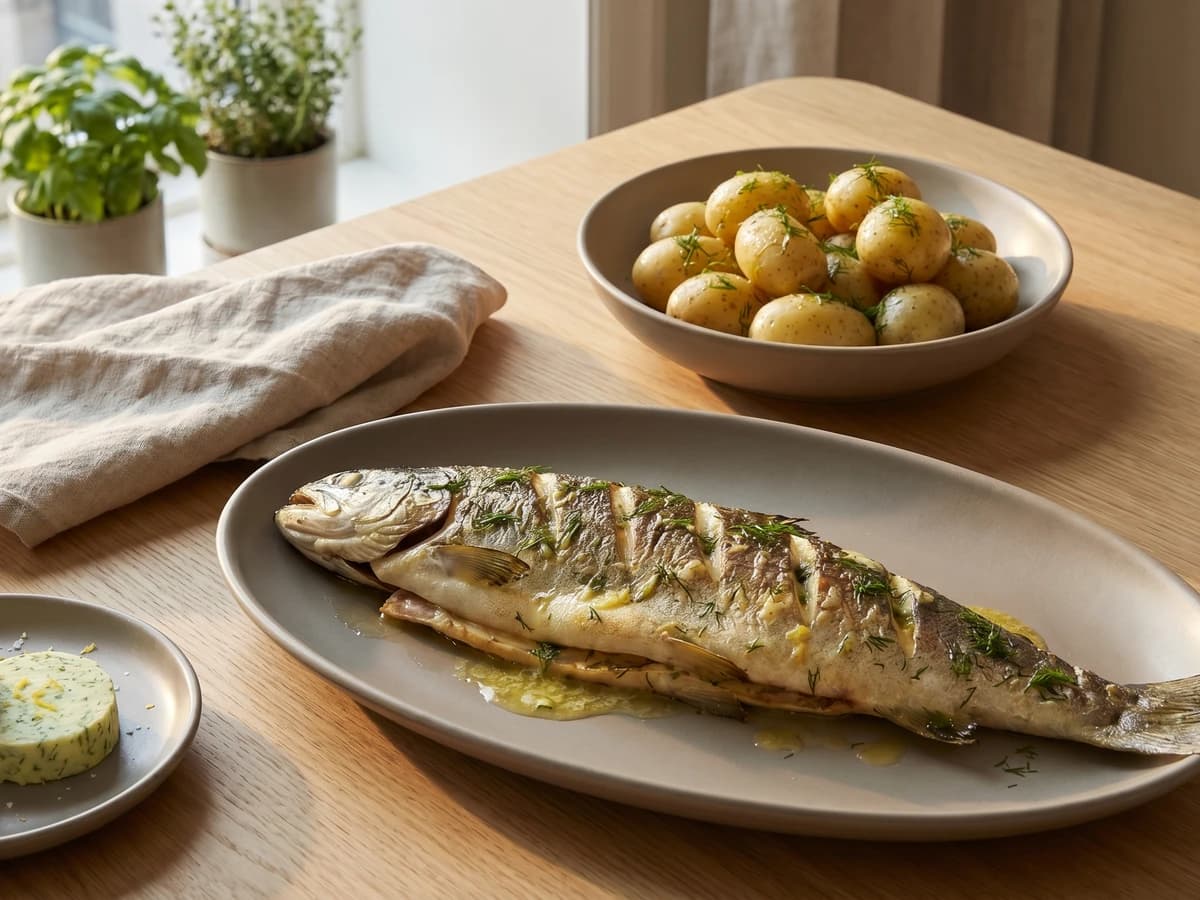
Whole sea trout baked with butter, lemon, and armfuls of dill, served beside the first nye kartofler of the season and a melting slab of dildsmor. The Danish summer table at its most generous.
Chef Freja
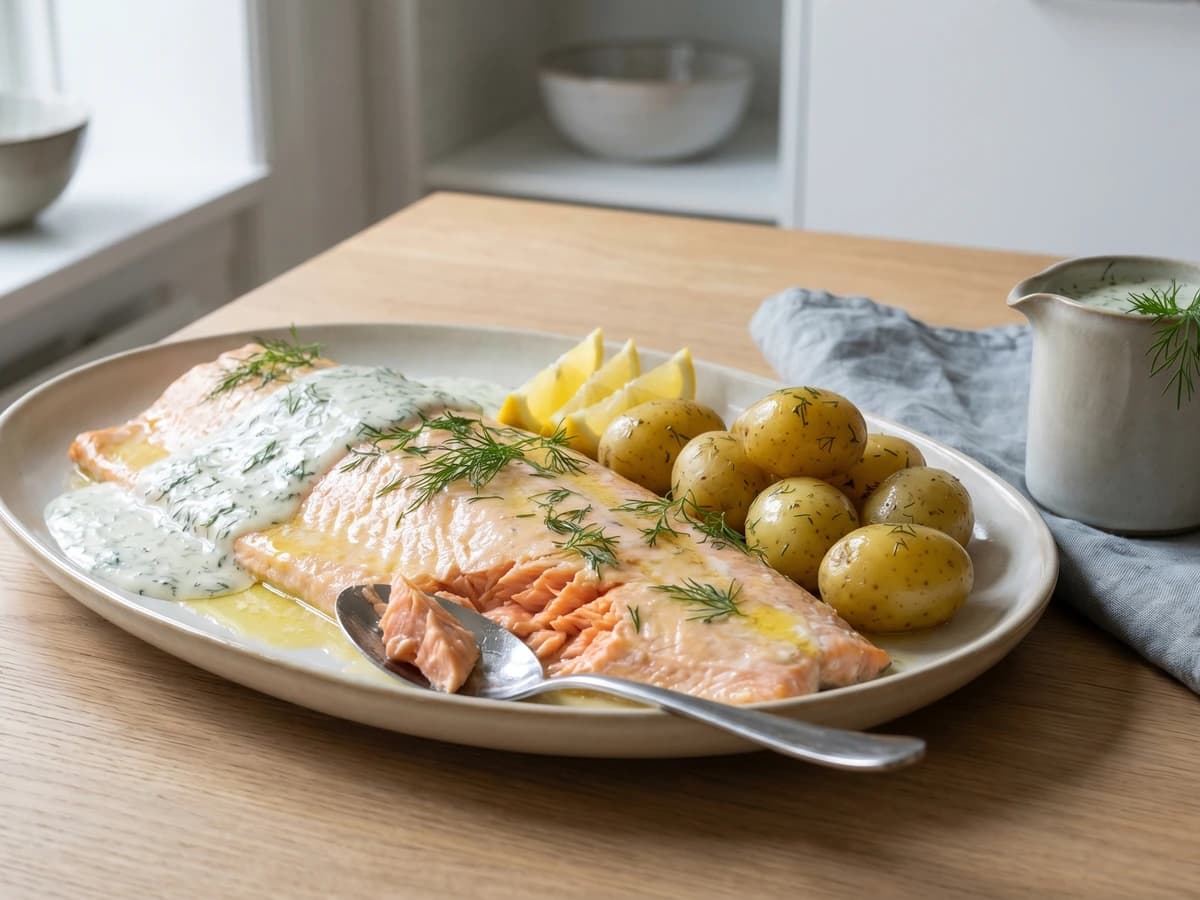
A side of salmon baked gently in butter and white wine, served warm with a bright dill cream sauce and the season's first nye kartofler. Late spring on a Danish table, cooked with love.