
Chef Klaus
Allgäuer Krautkrapfen
The Allgäu pan dish that makes a meal from noodle dough, winter kraut, onion, and fat: brown the cut sides first, then cook gently so the rolls hold.
A cooking platform built around craft, culture, and the stories behind what we eat.
Created by
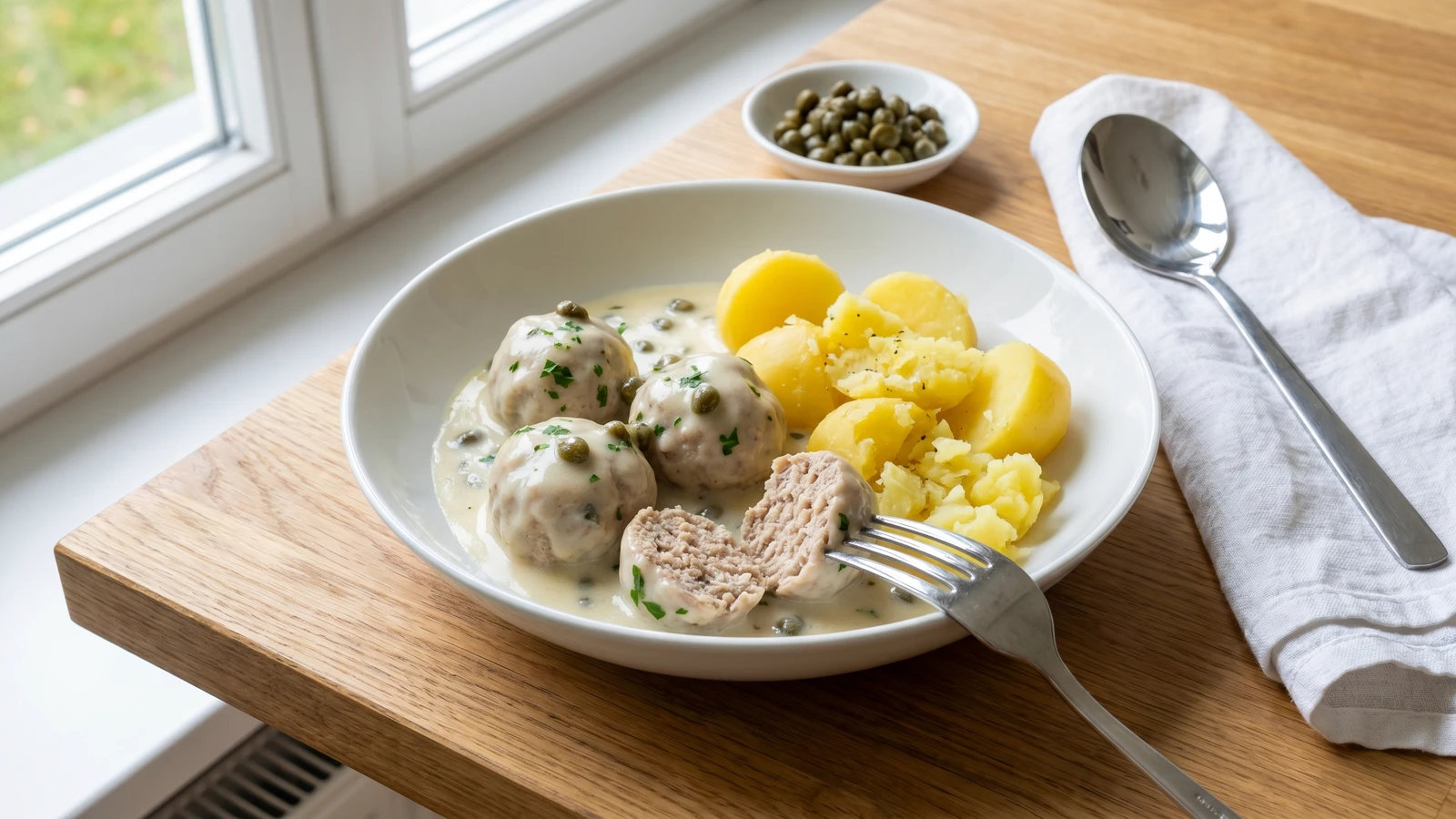
The East Prussian meatball that stays pale on purpose: poached, not fried, so the broth can become a clean white sauce with capers and lemon.
Königsberger Klopse belong to old East Prussia, a city table dish from Königsberg, which is off the German map now but still on the plate. This is weeknight food if you've got your broth ready, and Sunday food if you make the broth from bones. Pale is the point. If you want brown meatballs, cook another dish.
The regions split over the meat. The East Prussian way leans on veal, a little anchovy, capers, and lemon; elsewhere you'll see beef and pork mixed in, or the anchovy quietly left out by nervous cooks. Leave it out and the dish gets flatter. It doesn't taste fishy. It tastes seasoned.
The step that decides it is the poach. You lower the meatballs into trembling broth, not a hard boil and never a frying pan, because that broth has to stay clean enough to become the sauce. Boil them hard and the meat tightens, the surface breaks, and the sauce turns cloudy before you've even started.
Then the sharp things go in at the end. Lemon, capers, and a little caper brine don't belong under a rolling boil; the heat dulls them and can split the cream. Würzen, Fett, Salz zum Schluss. Serve with boiled potatoes, and don't apologise for the colour. Das ist kein Bierzelt.
Königsberger Klopse are named for Königsberg, the capital of East Prussia, which became Kaliningrad after 1945 when the German population was expelled and the region was transferred to the Soviet Union. The dish preserves an East Prussian taste for sharp, brined ingredients: capers arrived through long-distance trade, while anchovy or salted fish in the meat mixture reflects the Baltic and North Sea preserving larder. Its survival across postwar German home kitchens is one reason it remains a dish tied to a lost city more than to a modern federal state.
Quantity
600g
Quantity
1
about 60g
Quantity
120ml
Quantity
1
very finely diced
Quantity
1 tablespoon
for softening the onion
Quantity
1 large
Quantity
2
finely mashed
Quantity
1 tablespoon
finely chopped
Quantity
1 teaspoon
Quantity
1/2 teaspoon
freshly ground
Quantity
1.5L
Quantity
1
halved
Quantity
1
Quantity
4
Quantity
40g
for the sauce
Quantity
40g
Quantity
200ml, plus more as needed
Quantity
150ml
Quantity
2 tablespoons
drained
Quantity
1 tablespoon
Quantity
1 tablespoon, plus more to taste
Quantity
1 teaspoon
Quantity
to taste
Quantity
to serve
| Ingredient | Quantity |
|---|---|
| ground veal, or veal mixed with lean beef | 600g |
| stale white rollabout 60g | 1 |
| milk | 120ml |
| small onionvery finely diced | 1 |
| butterfor softening the onion | 1 tablespoon |
| egg | 1 large |
| anchovy filletsfinely mashed | 2 |
| flat-leaf parsleyfinely chopped | 1 tablespoon |
| fine salt | 1 teaspoon |
| black pepperfreshly ground | 1/2 teaspoon |
| light veal or beef broth | 1.5L |
| onionhalved | 1 |
| bay leaf | 1 |
| allspice berries | 4 |
| butterfor the sauce | 40g |
| plain flour | 40g |
| poaching broth | 200ml, plus more as needed |
| cream | 150ml |
| capersdrained | 2 tablespoons |
| caper brine | 1 tablespoon |
| lemon juice | 1 tablespoon, plus more to taste |
| sugar | 1 teaspoon |
| salt and white pepper | to taste |
| boiled potatoes | to serve |
Tear the stale roll into pieces and soak it in the milk for 10 minutes, then squeeze it firmly in your hands. The bread should be damp, not dripping; too much milk loosens the mixture and the Klopse, meatballs, start shedding into the broth.
Cook the diced onion in 1 tablespoon butter over low heat until soft and glassy, then let it cool. Raw onion stays sharp inside a gently poached meatball, and hot onion warms the meat mixture before it binds, which makes the texture tight.
Mix the meat, squeezed roll, cooled onion, egg, mashed anchovy, parsley, salt, and black pepper with your hands just until it holds together. Stop when it binds. Work it like dough and you get a rubber ball, not a tender Klops.
Shape 12 meatballs with wet hands, about the size of a small egg. Poach one small test piece first in the broth; if it falls apart, mix a spoonful of fine breadcrumbs into the rest, because the pot tells you more than the recipe card.
Bring the broth, halved onion, bay leaf, and allspice to a simmer, then lower the heat until the surface only trembles. Slide in the meatballs and poach 12 to 15 minutes, turning once. Do not boil. A hard boil breaks the meatballs and clouds the broth you need for the sauce.
Lift the meatballs out with a slotted spoon and keep them covered. Strain the broth, because Weggeworfen wird nichts, and the poaching liquor is the backbone of the sauce. Melt 40g butter, stir in the flour, and cook it gently for 2 minutes without browning; this sauce must stay pale.
Whisk in 200ml strained broth little by little, then add the cream and simmer until the sauce coats a spoon. Take it off the hard boil before stirring in the capers, caper brine, lemon juice, sugar, salt, and white pepper. The bright things go in last, or the lemon dulls and the cream can split.
Return the Klopse to the sauce and warm them gently for 3 to 4 minutes, without boiling. Serve with boiled potatoes and enough sauce to spoon over them. The potatoes are not decoration; they catch the caper sauce, which is why they're there.
1 serving (about 500g)
Culinary guides, cultural storytelling, and the editorial depth that makes cooking meaningful.
Discover Culinary ExplorerChef Klaus
The Allgäu pan dish that makes a meal from noodle dough, winter kraut, onion, and fat: brown the cut sides first, then cook gently so the rolls hold.

Chef Klaus
Swabian egg pasta turned toward the apple cellar: fresh Spätzle tossed with browned butter, tart apples, cinnamon, and enough restraint to stay supper, not cake.

Chef Klaus
Hesse's pork goulash belongs to Apfelwein country: shoulder, onions, and tart cider cooked low until the cheap cut turns soft and the sauce lands sweet-sour, not sour-sweet.

Chef Klaus
The old sweet supper that saves yesterday's loaf: stale bread drinks eggy milk, the pan stays moderate, and butter browns the outside only after the centre has set.