Chef Joost
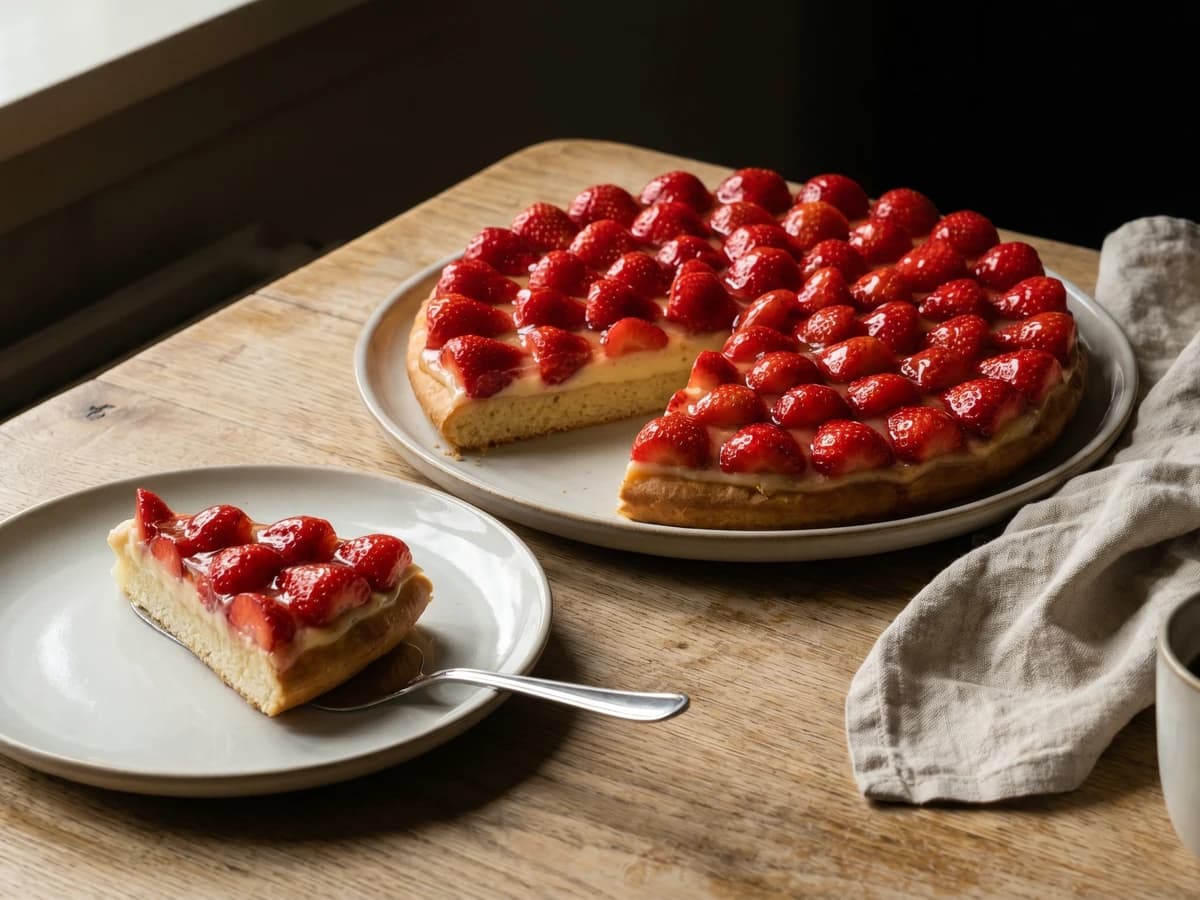
Aardbeienvlaai (Limburg Strawberry Vlaai)
The summer vlaai that politely breaks Limburg's baked-fruit rule: soft gistdeeg, cool pastry cream, and strawberries left fresh because June knows better than the oven.
A cooking platform built around craft, culture, and the stories behind what we eat.

Created by
Kniepertjes are the flat New Year wafers of Drenthe, Groningen, and Overijssel: the old year pressed thin, its secrets already opened, crisp enough to snap under your teeth.
In my grandmother's second notebook, New Year's Eve has almost no recipes, only quantities. Flour, butter, sugar, eggs, cinnamon. Then a note in her slanted hand: make enough, people come. That is the whole northern philosophy of kniepertjes, those wafer-thin cookies pressed one by one in a hot iron while the year runs out and the kitchen smells of butter, browned sugar, and the small panic of visitors at the door.
The name already tells you what your hands are doing. Kniepertjes comes from the eastern and northern dialect word related to knijpen, to pinch or press, because the iron closes on the dough like a pair of hot hands. But let me tell you a secret: the shape matters as much as the taste. In Drenthe, Groningen, and Overijssel, the flat kniepertje belongs to the old year, already unfolded and known. After midnight, the same family may roll the wafer into a nieuwjaarsrolletje, a New Year roll, because the year ahead is still closed.
So the method must stay plain and exact. Hou het altijd simpel, always keep it simple: a stiff buttery dough, a hot shallow-patterned iron, and the patience to bake them pale gold rather than brown. Press too hard and you make a board. Bake too long and cinnamon turns stern. What you want is a thin wafer with a clean snap, the sort of thing that disappears faster than the story, unless someone at the table knows to tell it first.
Kniepertjes are most strongly associated with the northeastern Netherlands, especially Drenthe, Groningen, and Overijssel, where wafer irons were part of winter household equipment and New Year visiting customs. The name is linked to dialect forms of knijpen, to pinch or press, referring to the iron that clamps the dough into a thin patterned wafer. The old regional custom distinguishes flat kniepertjes before midnight, symbolising the old year lying open, from rolled nieuwjaarsrolletjes after midnight, when the new year is still hidden from view.
Quantity
250g
Quantity
175g
Quantity
125g
melted and cooled
Quantity
2
Quantity
1 teaspoon
Quantity
1 teaspoon
Quantity
1/4 teaspoon
Quantity
2 to 4 tablespoons
as needed
Quantity
as needed
for greasing the iron
| Ingredient | Quantity |
|---|---|
| all-purpose flour | 250g |
| fine caster sugar | 175g |
| unsalted buttermelted and cooled | 125g |
| large eggs | 2 |
| ground cinnamon | 1 teaspoon |
| vanilla sugar or vanilla extract | 1 teaspoon |
| fine salt | 1/4 teaspoon |
| milkas needed | 2 to 4 tablespoons |
| neutral oil or melted butterfor greasing the iron | as needed |
Whisk the eggs, sugar, melted butter, cinnamon, vanilla, and salt until smooth. Stir in the flour until you have a soft but firm dough, then add milk one tablespoon at a time only if it feels dry or crumbly. It should be tender enough to roll into small balls, not pourable; kniepertjes are pressed from dough, not spooned like pancakes.
Cover the bowl and let the dough rest for 20 to 30 minutes at room temperature. This small pause lets the flour drink in the butter and egg, so the wafers press evenly instead of tearing at the edges. History and cookery, they cannot be separated, but neither can flour and patience.
Heat a kniepertjesijzer, a Dutch wafer iron, or an electric pizzelle iron until a tiny pinch of dough sizzles gently when pressed. Brush the plates very lightly with oil or melted butter. Too much fat gives blotches; too little makes the first wafer a sacrifice to the household gods, for obvious reasons.
Roll the dough into balls of about 12 to 15 grams, roughly the size of a large hazelnut. Place one ball just off centre in the iron, close it firmly but without violence, and bake for 45 to 75 seconds, depending on your iron. Lift the lid and look for pale gold colour with slightly deeper edges. If the wafer is dark brown, the sugar has gone bitter and the iron is too hot.
Lift each wafer out with a fork or thin spatula and lay it flat on a wire rack. It will be flexible for a few seconds, then crisp as it cools. Do not stack them while warm; trapped warmth softens the snap you have just earned.
When completely cool, store the kniepertjes in a tin or airtight box. They should stay thin, dry, and crisp, ready for coffee, New Year's visiting, or the person who says they will take only one and then proves history repeats itself.
1 serving (about 20g)
Culinary guides, cultural storytelling, and the editorial depth that makes cooking meaningful.
Discover Culinary ExplorerChef Joost
The summer vlaai that politely breaks Limburg's baked-fruit rule: soft gistdeeg, cool pastry cream, and strawberries left fresh because June knows better than the oven.

Chef Joost
A Limburg vlaai is not a pie trying to be grand. It is a thin yeast-dough round, fruit-bright and generous, made for birthdays, coffee, and second slices.

Chef Joost
The December bakery counter made small: cold leafed pastry wrapped around lemon-scented amandelspijs, brushed gold, and scattered with almonds so one person gets the whole holiday in both hands.
Chef Joost
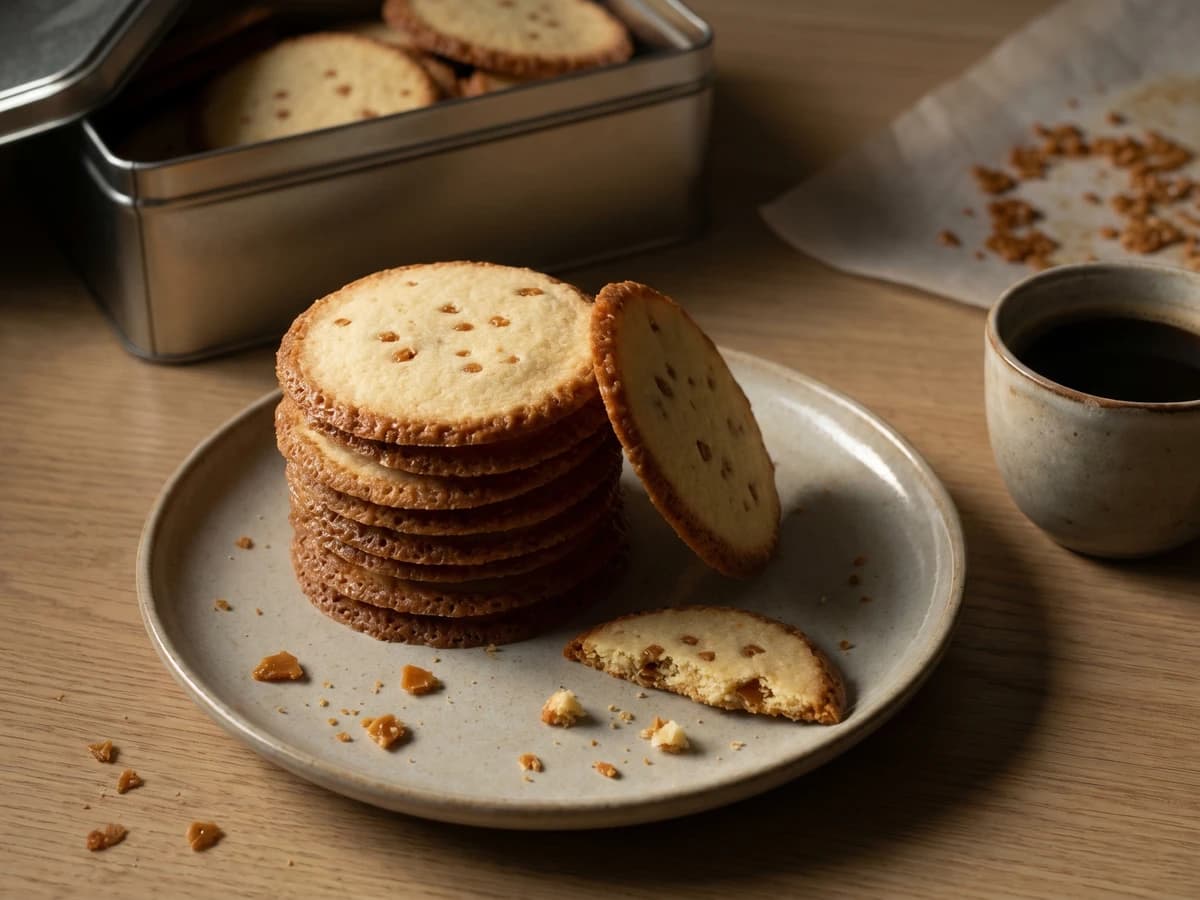
A thin Amsterdam cookie carrying a cog ship in its name: caramelized butter dough, almond nougatine, and a 1934 contest that turned municipal pride into something for coffee.