Chef Joost
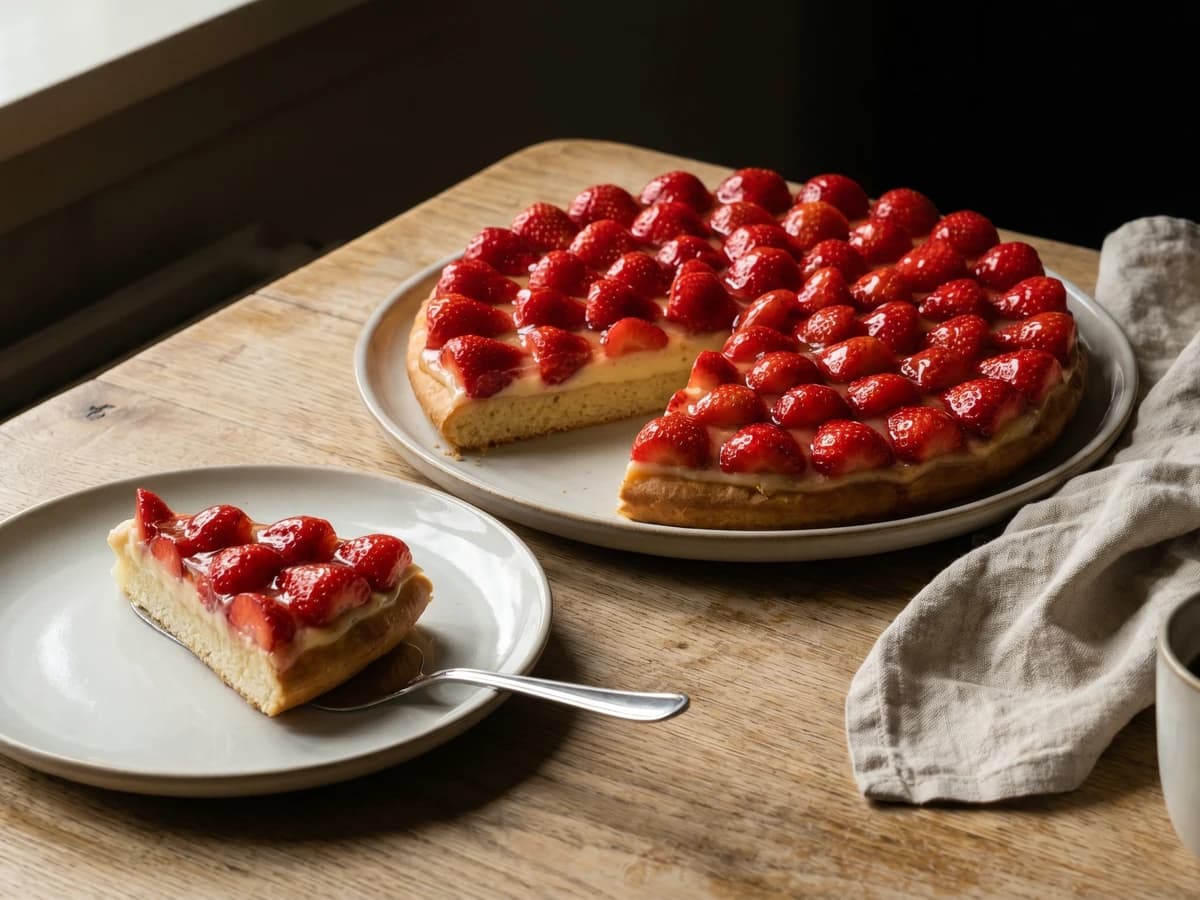
Aardbeienvlaai (Limburg Strawberry Vlaai)
The summer vlaai that politely breaks Limburg's baked-fruit rule: soft gistdeeg, cool pastry cream, and strawberries left fresh because June knows better than the oven.
A cooking platform built around craft, culture, and the stories behind what we eat.
Created by
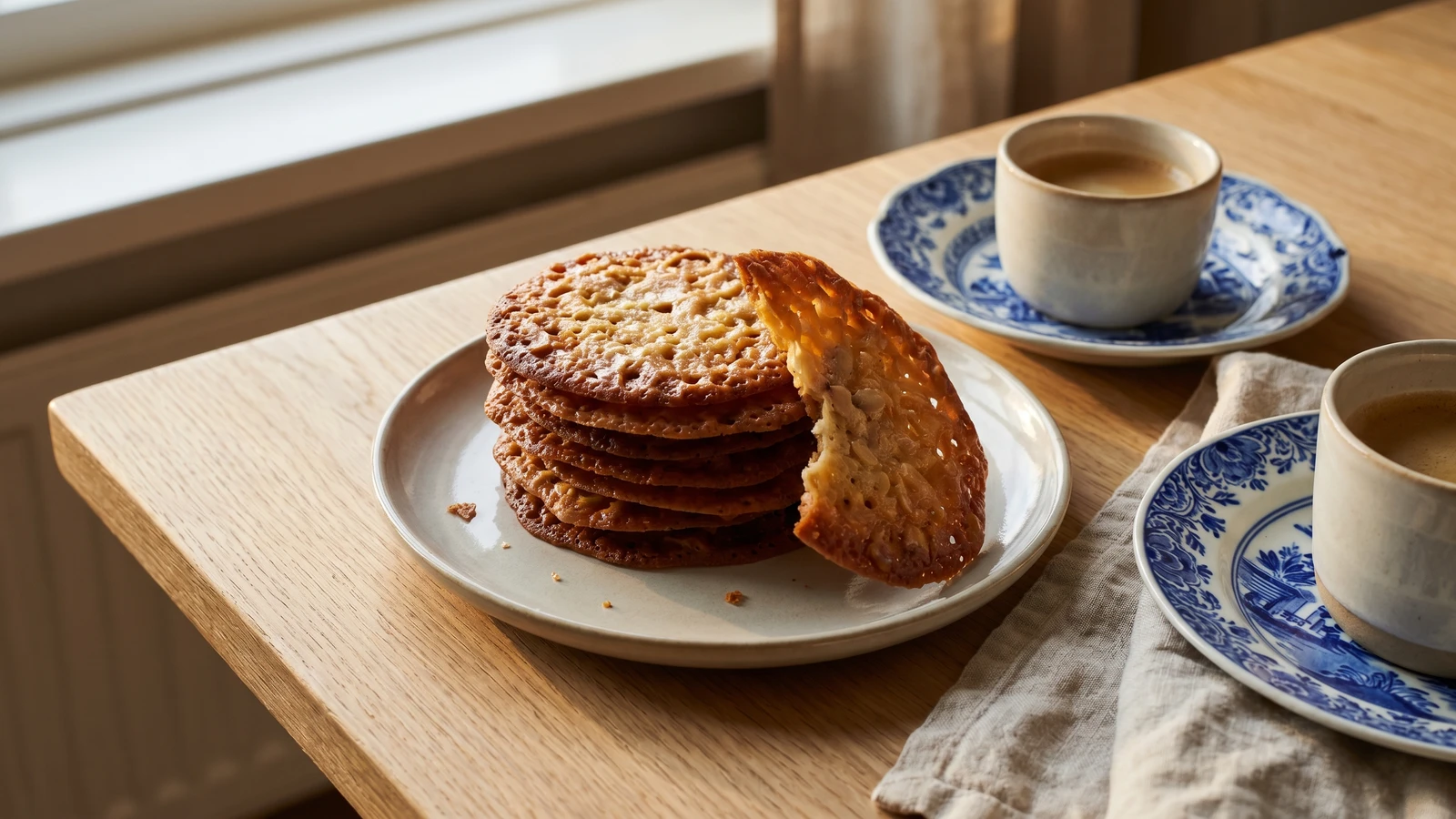
The name means bald heads, a rude little joke for wafer-thin cookies whose pitted caramel tops prove the Dutch can make frugality crackle.
The first time I saw a tray of kletskoppen come out of an oven, I thought something had gone wrong. They were too flat, too lacy, too full of holes, as if the baker had forgotten half the dough and trusted sugar to do the rest. But let me tell you a secret: that is exactly the point. A kletskop is a cookie made from restraint, and restraint, in Dutch kitchens, has always been a more interesting ingredient than excess.
The name already tells you the joke. Kletskop is Dutch for a bald head, and when these cookies bake properly their tops turn glossy, pitted, and cracked, like a sunlit pate belonging to an uncle who talks too much after coffee (for obvious reasons, every family has one). There is another shadow in the word too: kletsen, to chatter. These are coffee-table cookies, the sort set down between cups while the conversation becomes slightly less polite and therefore much better.
What matters here is not skill but spacing and nerve. The batter looks too little. The mounds look lonely on the tray. Then the butter and sugar melt, spread, and caramelise into bronze lace, carrying the almond and cinnamon with them. Hou het altijd simpel, always keep it simple: small spoonfuls, wide gaps, a watched oven, and the discipline to let them firm before you move them. They crisp as they cool, which is a fine lesson in cookery and in life, though only one of those belongs in the biscuit tin.
Kletskoppen are associated with Dutch and Flemish baking, especially the lace-like almond cookies of Leiden and Bruges, where thin caramel biscuits were served with coffee and tea from at least the nineteenth century. The Dutch name kletskop means bald head, a reference to the cookie's shiny, pitted surface, though the echo of kletsen, to chatter, suits its coffee-table life neatly. Their cinnamon and nutmeg belong to the ordinary spice cupboard of the Netherlands, a quiet inheritance of the seventeenth-century trade routes that made warm spices common in northern baking.
Quantity
75g
softened
Quantity
150g
Quantity
30g
Quantity
60g
finely chopped
Quantity
1/2 teaspoon
Quantity
1 small pinch
Quantity
1/4 teaspoon
Quantity
1 tablespoon
| Ingredient | Quantity |
|---|---|
| unsalted buttersoftened | 75g |
| light brown basterdsuiker or light brown sugar | 150g |
| all-purpose flour | 30g |
| blanched almondsfinely chopped | 60g |
| ground cinnamon | 1/2 teaspoon |
| ground nutmeg | 1 small pinch |
| fine sea salt | 1/4 teaspoon |
| milk | 1 tablespoon |
Heat the oven to 180C and line two baking trays with parchment. Use parchment, not a bare tray; these cookies are mostly caramel by the end, and caramel has no sympathy for optimism.
Beat the softened butter and sugar together until smooth, then stir in the flour, almonds, cinnamon, nutmeg, salt, and milk. The mixture will be thick, grainy, and modest-looking. Trust it. The oven will do the spreading.
Drop level teaspoons of batter onto the lined trays, leaving at least 8 centimetres between them. This is the step that decides everything. A kletskop wants to become thin as lace, and if you crowd the tray you'll bake one large argumentative biscuit instead of twenty-four civil ones.
Bake one tray at a time for 7 to 9 minutes, until the cookies have spread into thin rounds, the edges are deep golden, and the centres are bubbling into little holes. Watch the last minute closely. Pale kletskoppen stay chewy, but one minute too far and the sugar turns bitter.
Let the cookies sit on the tray for 5 minutes before moving them. They will look too soft at first, then firm into crisp lace as the caramel sets. Slide a thin spatula underneath and transfer them to a rack to cool completely.
1 serving (about 13g)
Culinary guides, cultural storytelling, and the editorial depth that makes cooking meaningful.
Discover Culinary ExplorerChef Joost
The summer vlaai that politely breaks Limburg's baked-fruit rule: soft gistdeeg, cool pastry cream, and strawberries left fresh because June knows better than the oven.

Chef Joost
A Limburg vlaai is not a pie trying to be grand. It is a thin yeast-dough round, fruit-bright and generous, made for birthdays, coffee, and second slices.

Chef Joost
The December bakery counter made small: cold leafed pastry wrapped around lemon-scented amandelspijs, brushed gold, and scattered with almonds so one person gets the whole holiday in both hands.
Chef Joost
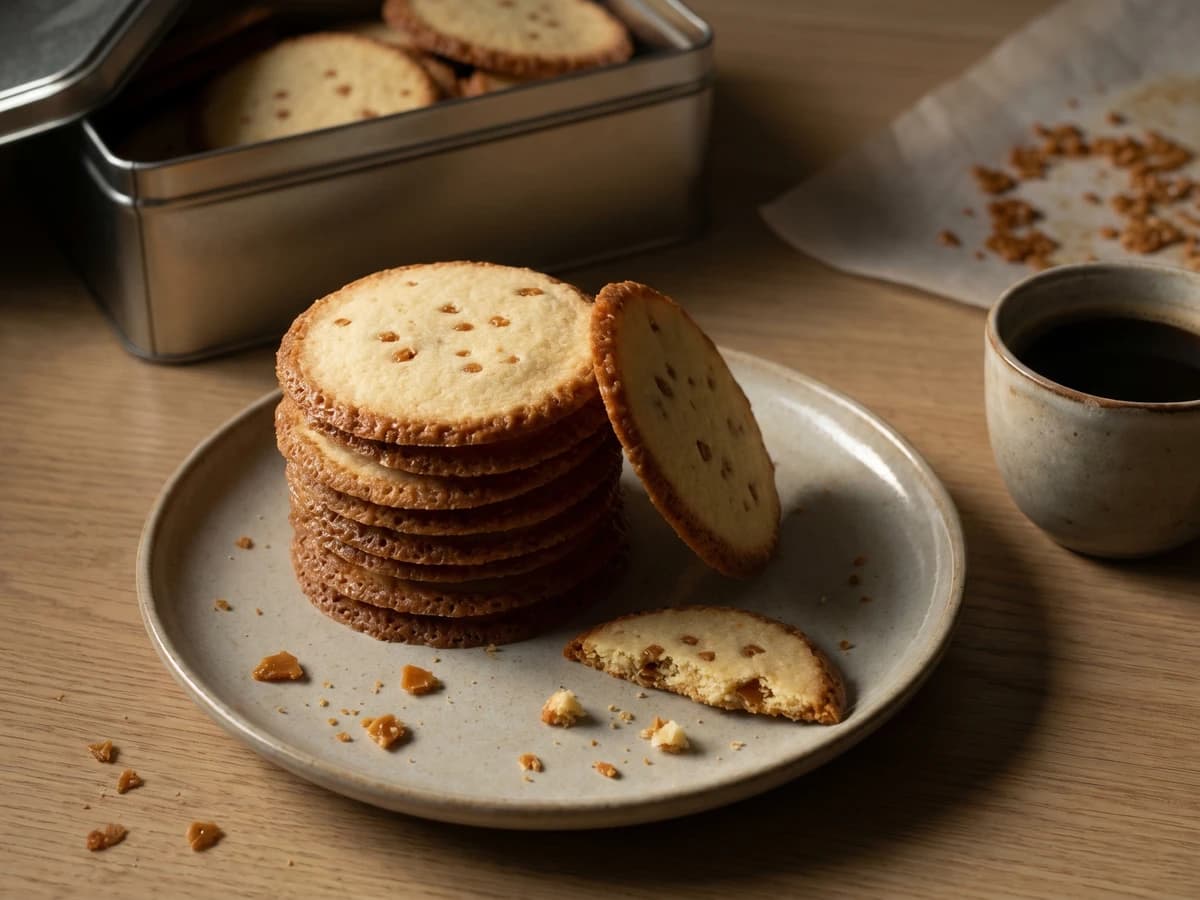
A thin Amsterdam cookie carrying a cog ship in its name: caramelized butter dough, almond nougatine, and a 1934 contest that turned municipal pride into something for coffee.