
Chef Jeong-sun
Aehobak-guk (애호박국, Korean Zucchini Soup)
A clean summer soup of Korean zucchini and salted shrimp, built on quick anchovy-kelp broth and finished before the half-moons lose their shape on a weeknight table.
A cooking platform built around craft, culture, and the stories behind what we eat.
Created by
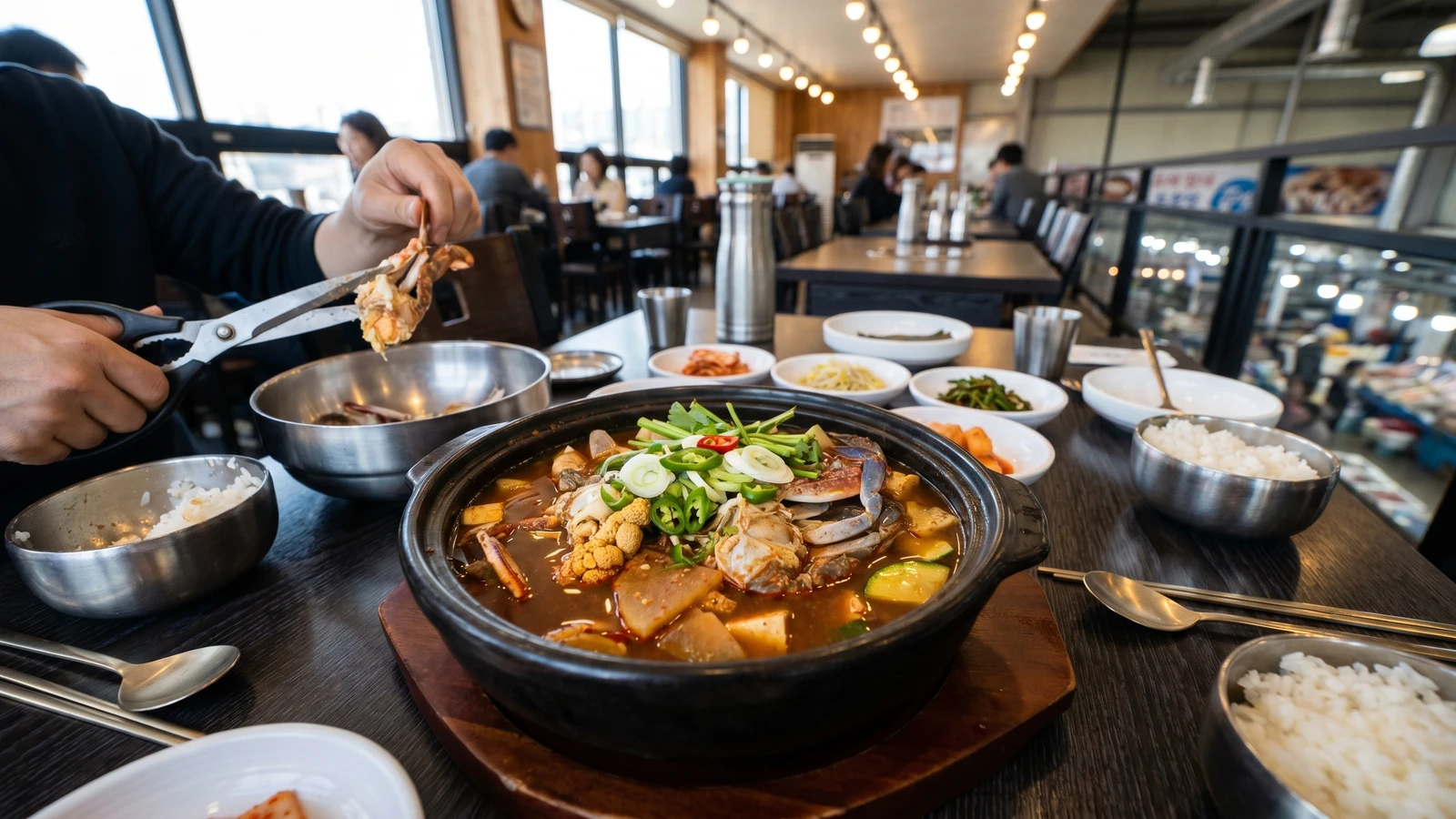
Fresh blue crabs cracked into a spicy doenjang broth, their shells seasoning the pot while radish sweetens underneath, a spring and autumn stew that asks for hands, rice, and attention.
At the spring market the flower crabs sit belly-up in blue tubs, females heavy with roe, and the fishmonger can tell by weight before he opens a single shell. In autumn I buy the males instead, because the meat is cleaner and fuller then. Cook the month you're standing in. If the crab is poor, don't make kkotge-jjigae tonight; make dongtae-jjigae (pollock stew) and keep your money.
Kkotge-jjigae is a stew that looks rough because the shells are cracked and everyone eats with wet fingers, but the seasoning has to be restrained. The shells give the broth sweetness, radish gives it a clean base, and one measured spoon of doenjang keeps the sea smell in line. Too much gochujang turns the pot muddy and sweet. I leave it out.
Master Seong-nyeo made me clean the crabs over a bowl so not one drop of roe or juice went down the sink. Notebook 41 says two large crabs, four cups finished broth, one tablespoon doenjang, two tablespoons gochugaru. 손맛 (hand-taste) is real. I still measure it, so it can be handed on.
Kkotge literally means flower crab, and in Korea it usually refers to the swimming crab Portunus trituberculatus, a West Sea catch associated with Incheon, Yeonpyeong, Taean, and other coastal markets. The prized seasons are spring for roe-heavy females and autumn for meatier males; modern fisheries rules set a summer closed season in many Korean waters to protect spawning. Kkotge-jjigae belongs to coastal home and market cooking rather than court records, a practical pot where cracked shells season the broth and doenjang is used as much for balance as for salt.
Quantity
2 large, about 700 to 800g total
Quantity
5 cups
Quantity
1 piece, about 4 inches square
Quantity
10
heads and guts removed
Quantity
250g
peeled and cut into 1/4-inch half-moons
Quantity
1/2 medium
sliced 1/2 inch thick
Quantity
1/2 small
cut into thick half-moons
Quantity
150g
cut into 1-inch cubes
Quantity
1 tablespoon
Quantity
2 tablespoons
Quantity
1 tablespoon
Quantity
1 tablespoon
minced
Quantity
1 teaspoon
grated
Quantity
1 teaspoon
Quantity
1/4 teaspoon, plus 1/4 teaspoon more only if needed after tasting
Quantity
1
sliced on the diagonal
Quantity
1
sliced on the diagonal
Quantity
2
cut into 2-inch lengths
Quantity
30g
trimmed
| Ingredient | Quantity |
|---|---|
| fresh kkotge (Korean blue crabs or swimming crabs) | 2 large, about 700 to 800g total |
| water | 5 cups |
| dried kelp (dasima) | 1 piece, about 4 inches square |
| large dried anchovies (myeolchi)heads and guts removed | 10 |
| Korean radish (mu)peeled and cut into 1/4-inch half-moons | 250g |
| onionsliced 1/2 inch thick | 1/2 medium |
| Korean zucchini (aehobak)cut into thick half-moons | 1/2 small |
| medium-firm tofu (optional)cut into 1-inch cubes | 150g |
| doenjang (fermented soybean paste) | 1 tablespoon |
| gochugaru (Korean chili flakes) | 2 tablespoons |
| soup soy sauce (guk-ganjang) | 1 tablespoon |
| garlicminced | 1 tablespoon |
| fresh gingergrated | 1 teaspoon |
| Korean fish sauce or saeujeot brine (optional) | 1 teaspoon |
| fine sea salt | 1/4 teaspoon, plus 1/4 teaspoon more only if needed after tasting |
| Cheongyang green chilisliced on the diagonal | 1 |
| red chili (optional)sliced on the diagonal | 1 |
| scallionscut into 2-inch lengths | 2 |
| minari (Korean water parsley) or crown daisy (optional)trimmed | 30g |
Put the water, kelp, and anchovies in a 3 to 4-quart pot over medium heat. The moment the water reaches a steady simmer, pull out the kelp, because kelp left too long turns the broth slick and bitter. Simmer the anchovies 8 minutes more, then lift them out. You should have about 4 1/2 cups of broth; add a little water if it has reduced below 4 cups.
Keep the crabs very cold until the minute you clean them. Scrub the shells under cold running water, lift the apron flap, and pull off the top shell over a bowl so the juices are not lost. Remove the gray feathery gills, mouthparts, and the small stomach sac behind the eyes. Keep the roe. Keep the yellow tomalley only if the crabs are very fresh and from a trusted market. Cut each body in half, then into quarters, and crack the claws lightly with the back of a knife or kitchen shears so the broth can get in.
In a small bowl, loosen the doenjang with 1/2 cup of hot broth. Stir in the gochugaru, soup soy sauce, garlic, ginger, fish sauce if using, and 1/4 teaspoon salt. Mixing the paste first keeps the doenjang from sitting in salty lumps at the bottom of the pot.
Return the broth to a simmer. Add the radish and onion, then stir in the seasoning paste until the broth turns clear red-brown. Simmer 8 to 10 minutes, until the radish edges begin to turn translucent. Radish goes in before the crab because it needs time to sweeten the broth; crab does not forgive long boiling.
Nestle the crab body pieces and cracked claws into the broth. Set the top shells roe side up and spoon broth over them. Simmer 5 minutes, skimming only the rough foam, not the orange fat. Add the zucchini and tofu, then simmer 3 to 4 minutes more, until the shells are red and the meat is opaque at the joints.
Add the green chili, red chili if using, and scallions. Press them under the broth for 1 minute so they soften but stay bright. Taste the broth now. If it tastes flat rather than clean and crab-sweet, add the remaining 1/4 teaspoon salt. If using minari or crown daisy, lay it on top for the last 30 seconds only.
Carry the pot straight to the table on a trivet. Give each person rice, a spoon, chopsticks, and a bowl for shells. This is not a tidy stew. Eat the crab with your hands, spoon the broth over rice, and do not apologize for needing a bib.
1 serving (about 480g)
Culinary guides, cultural storytelling, and the editorial depth that makes cooking meaningful.
Discover Culinary ExplorerChef Jeong-sun
A clean summer soup of Korean zucchini and salted shrimp, built on quick anchovy-kelp broth and finished before the half-moons lose their shape on a weeknight table.
Chef Jeong-sun
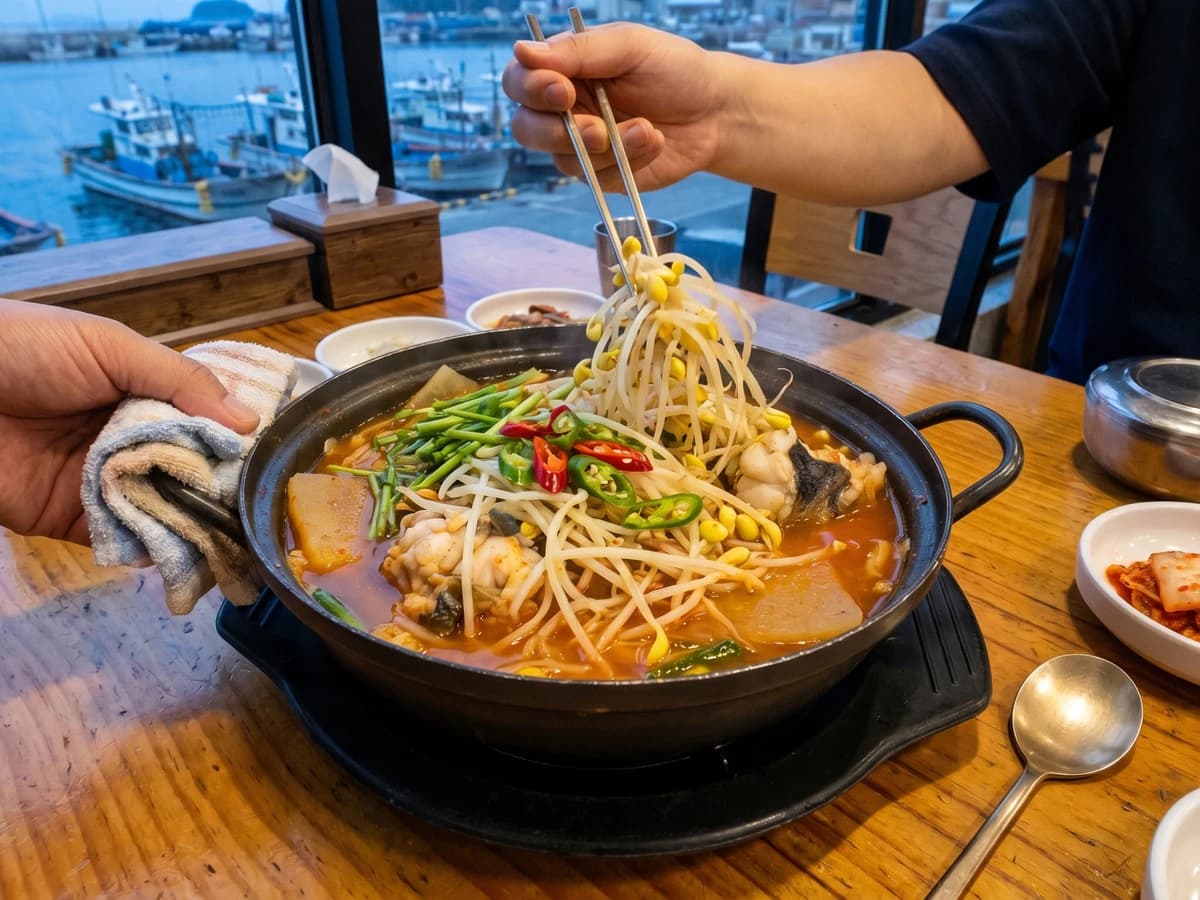
A Masan coast monkfish stew with firm white meat, gelatin at the bones, soybean sprouts for crunch, and a red broth seasoned to carry the fish, not bury it.

Chef Jeong-sun
A weeknight fish roe stew with radish and crown daisy in a clean spicy broth, where the whole success depends on adding the roe late enough that it sets tender, not chalky.

Chef Jeong-sun
Late-summer mallow leaves rubbed with salt until the bitter green water runs off, then simmered in a clean doenjang broth with dried shrimp, the quiet soup a Korean weeknight deserves.