
Chef Makoa
Ahimaʻa Puaʻa (Tahitian Earth-Oven Pork)
Tahitian puaʻa cooked in the spirit of the ahimaʻa, the earth oven of maʻa Tahiti, wrapped in banana leaf and held low and slow until the meat gives in two fingers.
A cooking platform built around craft, culture, and the stories behind what we eat.
Created by
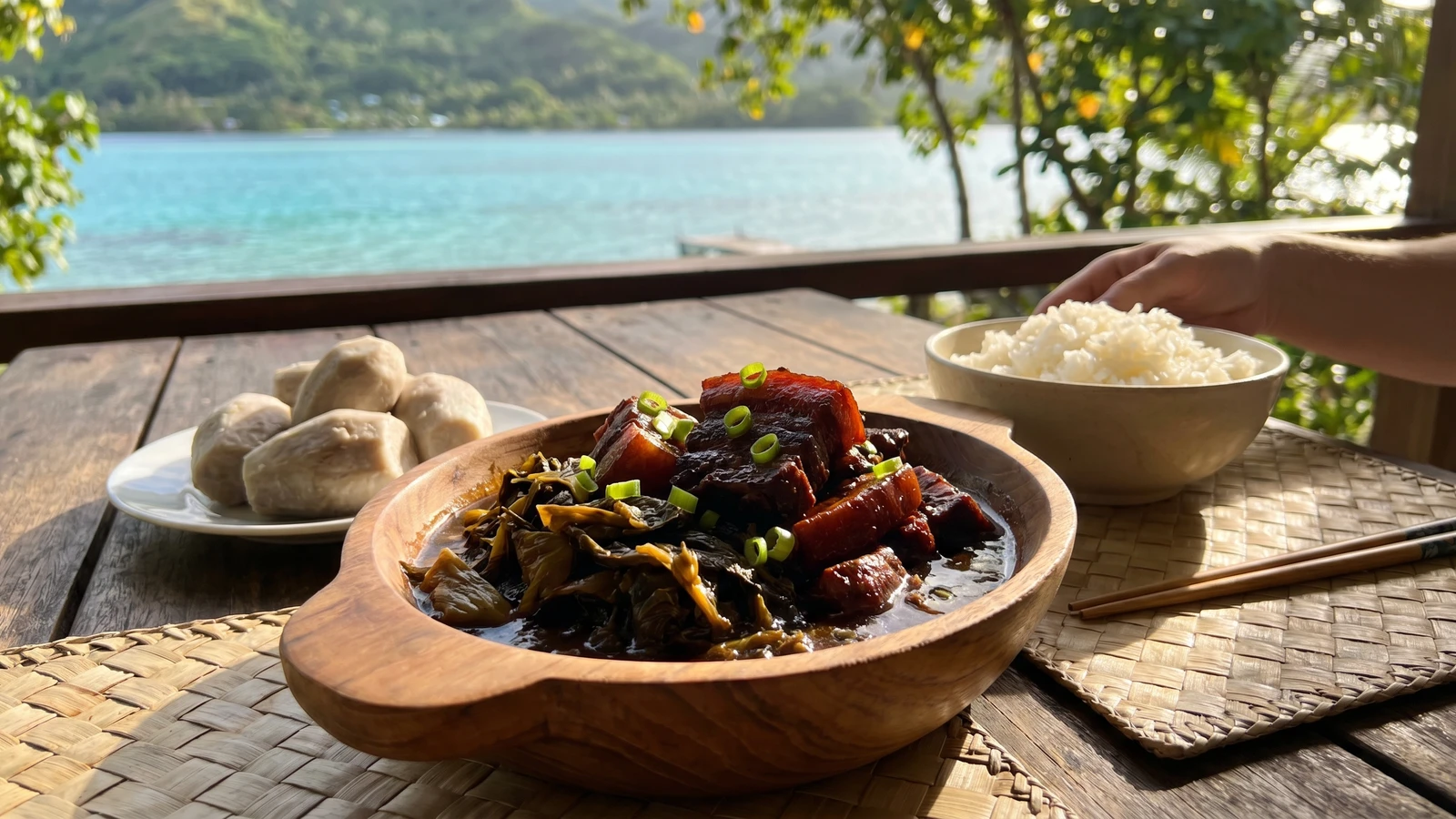
Tahiti's Chinese families held this one close: pork belly steamed deep with preserved mustard greens until the fat softens, the leaf turns dark, and the sauce wants rice.
The table in Tahiti has always known how to receive people. That is the fenua, the land and people together, feeding what came by canoe, what came by ship, what came through work, marriage, market, and Sunday family meals. Kiu nyuk belongs to Tahiti's Chinese-Tahitian families, especially the Hakka line, and I cook it with that name clear in my mouth.
This is not deep canoe food like taro, ʻuru, or ʻia ota, the Tahitian raw fish in coconut and lime. It is later food, migrant food, held onto by families who made Tahiti home and fed the islands from shop counters, gardens, and kitchen tables. Same thing happened across the Triangle in different hands: Sāmoa has sapasui, Hawaiʻi has plate lunch and chow fun beside poi, Tonga folds new meats into old lū. One ocean, one canoe, one root, but also many arrivals after the canoe.
The lesson here is patience and salt. Preserved mustard greens carry their own memory, sharp and briny, and the pork belly needs time until it stops standing apart from the leaf. Steam it slow, let the fat melt into the greens, and serve it with rice, taro, or breadfruit. Eat what you have. No need make it precious. Just name whose table taught it to you.
Kiu nyuk in Tahiti comes through Chinese migration, especially Hakka families who arrived in French Polynesia in the nineteenth century and built lives as farmers, merchants, and neighbors in the islands. The dish is kin to Hakka mui choy kau yuk, pork belly steamed with preserved mustard greens, then made Tahitian by the tables that kept it, served beside rice and the starches of the fenua. It sits in the post-contact food story of Polynesia, the same living layer that gives Sāmoa sapasui and Hawaiʻi plate lunch, not old canoe food, but real island food carried by real families.
Quantity
2 pounds
skin on if available, cut into 2-inch pieces
Quantity
10 ounces
rinsed, squeezed dry, and chopped
Quantity
3 tablespoons
Quantity
2 tablespoons
Quantity
1 tablespoon
Quantity
1 tablespoon
Quantity
1 tablespoon
Quantity
4 cloves
minced
Quantity
1 tablespoon
minced
Quantity
1/2 teaspoon
Quantity
1 cup
Quantity
2 teaspoons
Quantity
for serving
| Ingredient | Quantity |
|---|---|
| pork bellyskin on if available, cut into 2-inch pieces | 2 pounds |
| preserved mustard greensrinsed, squeezed dry, and chopped | 10 ounces |
| soy sauce | 3 tablespoons |
| dark soy sauce | 2 tablespoons |
| oyster sauce | 1 tablespoon |
| Shaoxing wine or dry sherry | 1 tablespoon |
| brown sugar | 1 tablespoon |
| garlicminced | 4 cloves |
| fresh gingerminced | 1 tablespoon |
| ground white pepper | 1/2 teaspoon |
| water or low-sodium pork stock | 1 cup |
| neutral oil | 2 teaspoons |
| cooked rice, taro, or breadfruit | for serving |
Rinse the preserved mustard greens under cool water, then taste a small piece. If they are harsh-salty, soak them 10 minutes, squeeze them dry, and chop them rough. You want their deep salt and tang, not a mouthful that takes over the whole bowl.
Mix the soy sauce, dark soy sauce, oyster sauce, wine, brown sugar, garlic, ginger, white pepper, and water or stock. Coat the pork belly in that sauce and let it sit while you ready the steamer. The belly should look lacquered and dark, with the sauce clinging to the fat.
Warm the oil in a pan over medium heat and stir-fry the chopped mustard greens for 3 to 4 minutes, until they smell savory and sharp instead of flat from the packet. This little step matters. It wakes up the preserved leaf before the long steam.
Lay half the greens in a deep heatproof bowl, tuck the pork belly pieces in skin-side down if they have skin, then cover with the rest of the greens and pour the sauce over everything. Press it down so the greens sit against the pork. Leaf, fat, salt, time. That's the work.
Set the bowl in a large covered steamer over steady simmering water and steam for 2 to 2 1/2 hours, topping up the water as needed, until the pork gives under a spoon and the greens have gone dark, glossy, and soft. Don't rush it with a hard boil. A gentle steam keeps the belly tender and the sauce clean.
Let the bowl rest 10 minutes, then skim only the excess fat if you need to. Spoon the dark sauce over the pork until it shines, and serve with rice, boiled taro, or breadfruit. The sauce is rich enough to feed the starch, and that's how a comfort dish becomes a whole table.
1 serving (about 210g)
Culinary guides, cultural storytelling, and the editorial depth that makes cooking meaningful.
Discover Culinary ExplorerChef Makoa
Tahitian puaʻa cooked in the spirit of the ahimaʻa, the earth oven of maʻa Tahiti, wrapped in banana leaf and held low and slow until the meat gives in two fingers.
Chef Makoa
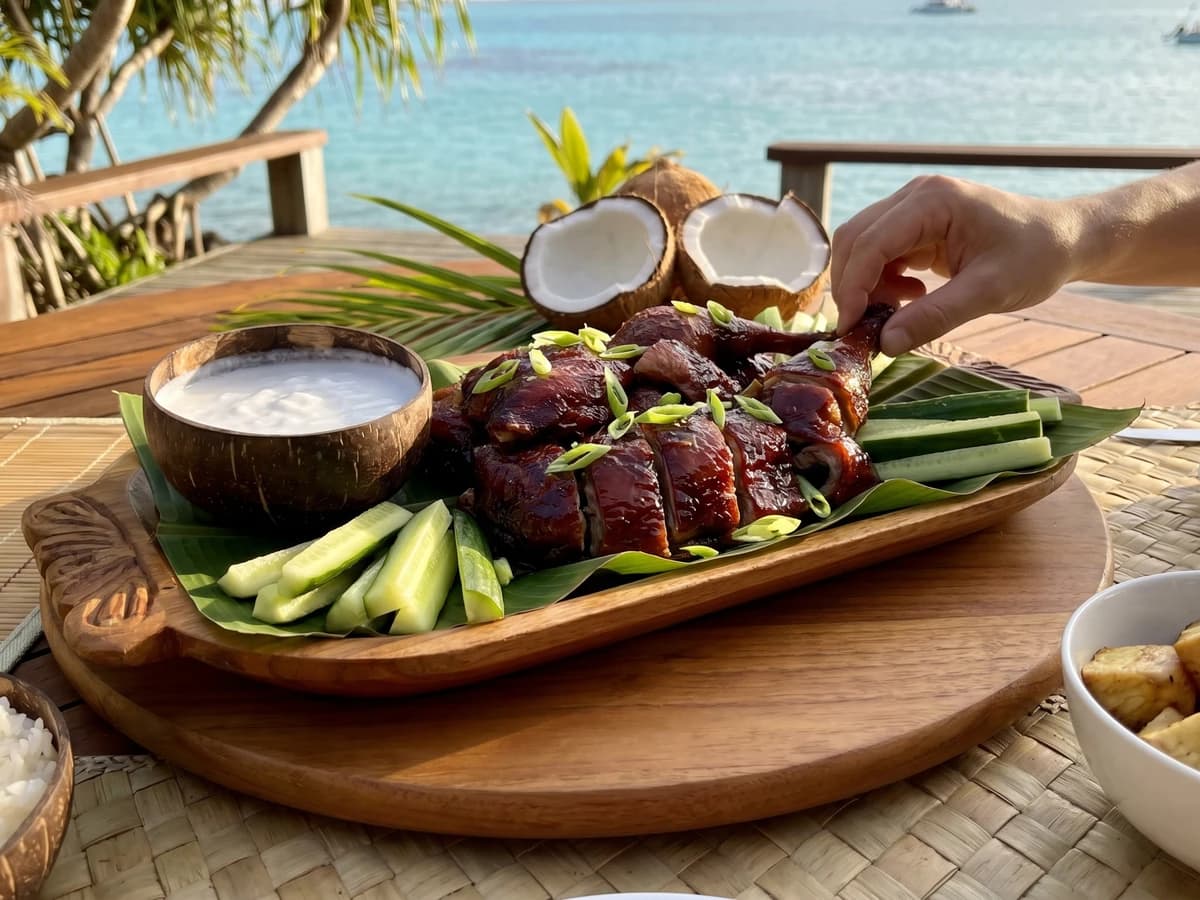
Glossy Chinese-Tahitian roast duck from Papeʻete, lacquered with soy, honey, and five-spice, carved for the lazy Susan, then dipped into thick fresh coconut milk beside rice, ʻuru, and a crowded table.
Chef Makoa
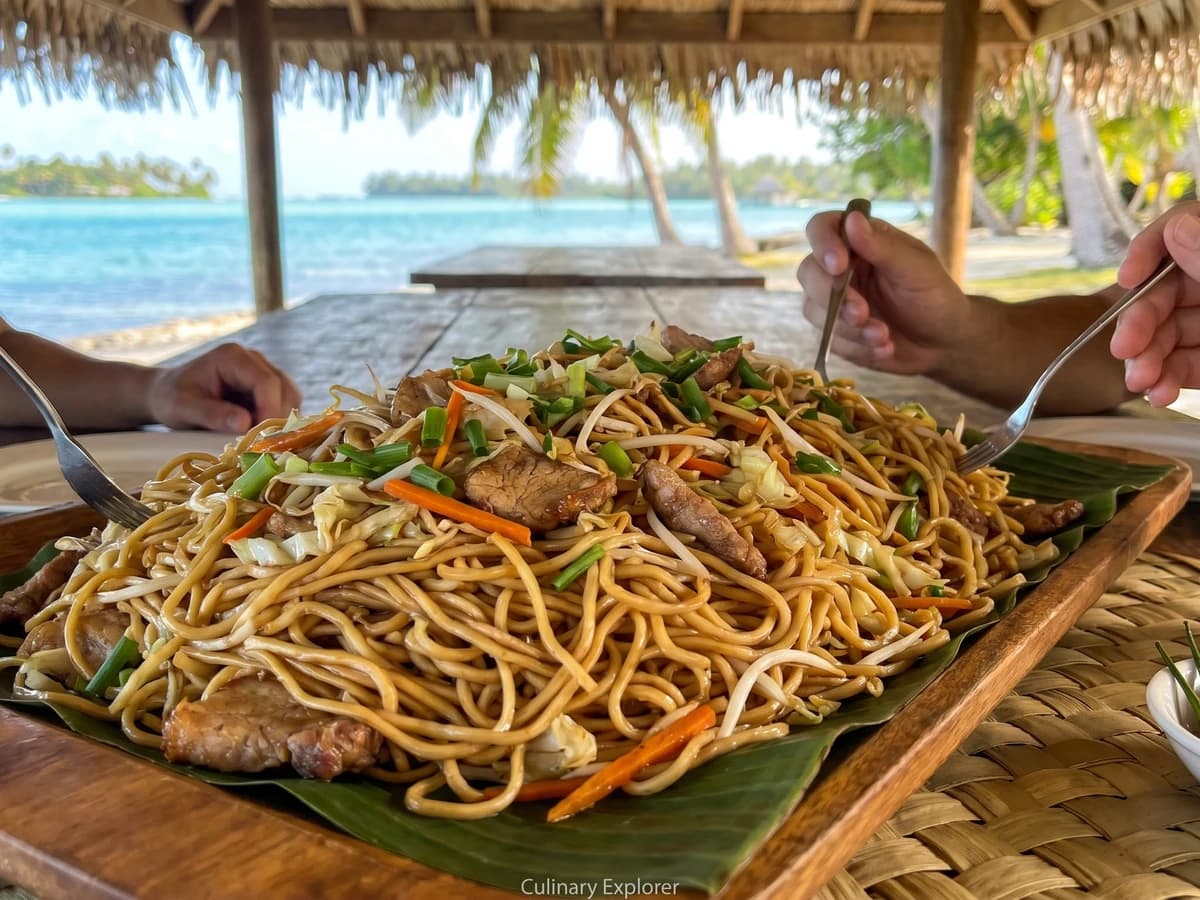
Tahiti's chao men is Hakka chow mein made fully local: glossy egg noodles, pork, cabbage, carrot, and green onion, fast from the wok and generous enough for the table.

Chef Makoa
Tahiti's fāfaru takes raw ʻahi into miti fāfaru, a pungent fermented seawater brine, then brings it back to the table with mitihue, breadfruit, and the lesson that good funk is food kept alive.