Chef Freja
Aebleflaesk
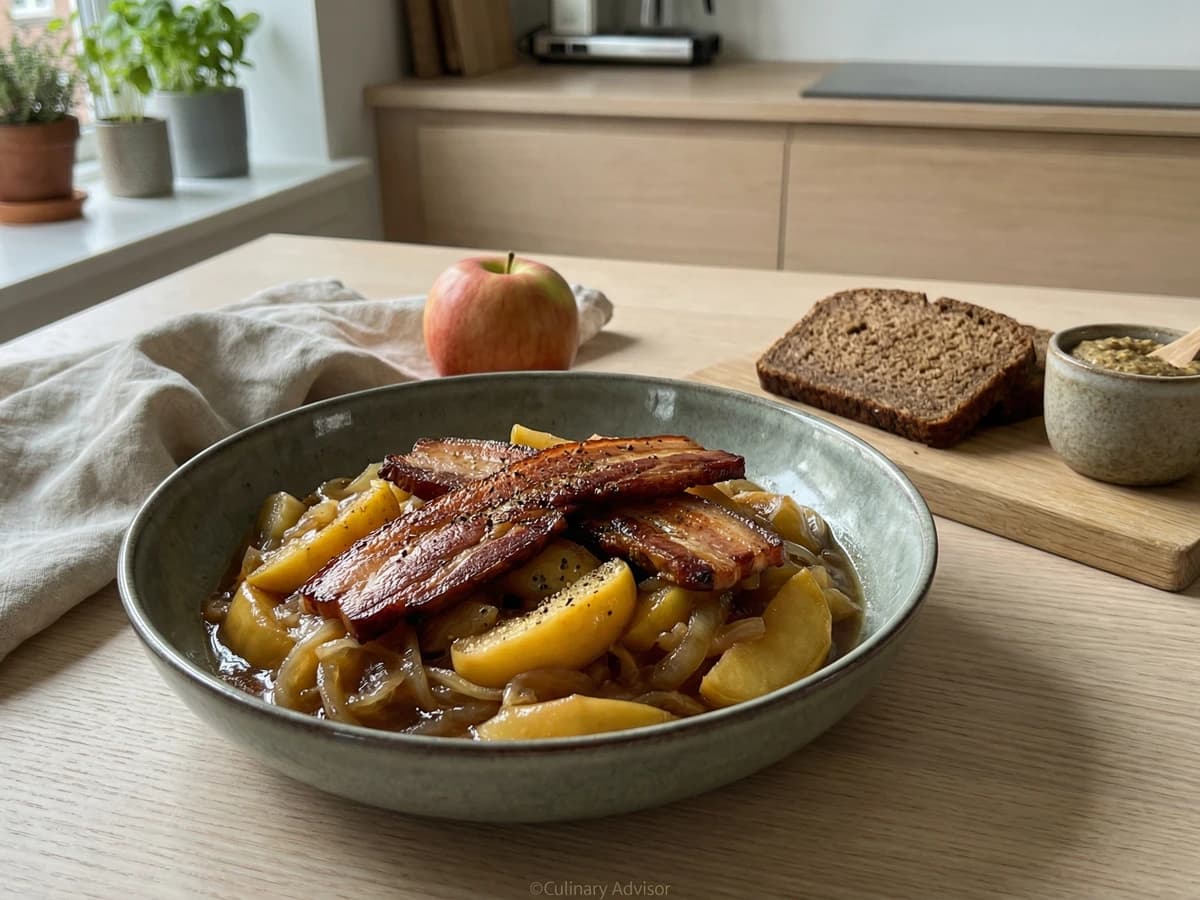
The Fyn autumn supper where thick pork belly renders slowly into its own fat, then meets apples and onions that cook down into a deep amber tangle. Sweet, salt, and the oldest pairing in the Danish larder.
A cooking platform built around craft, culture, and the stories behind what we eat.
Created by Chef Freja
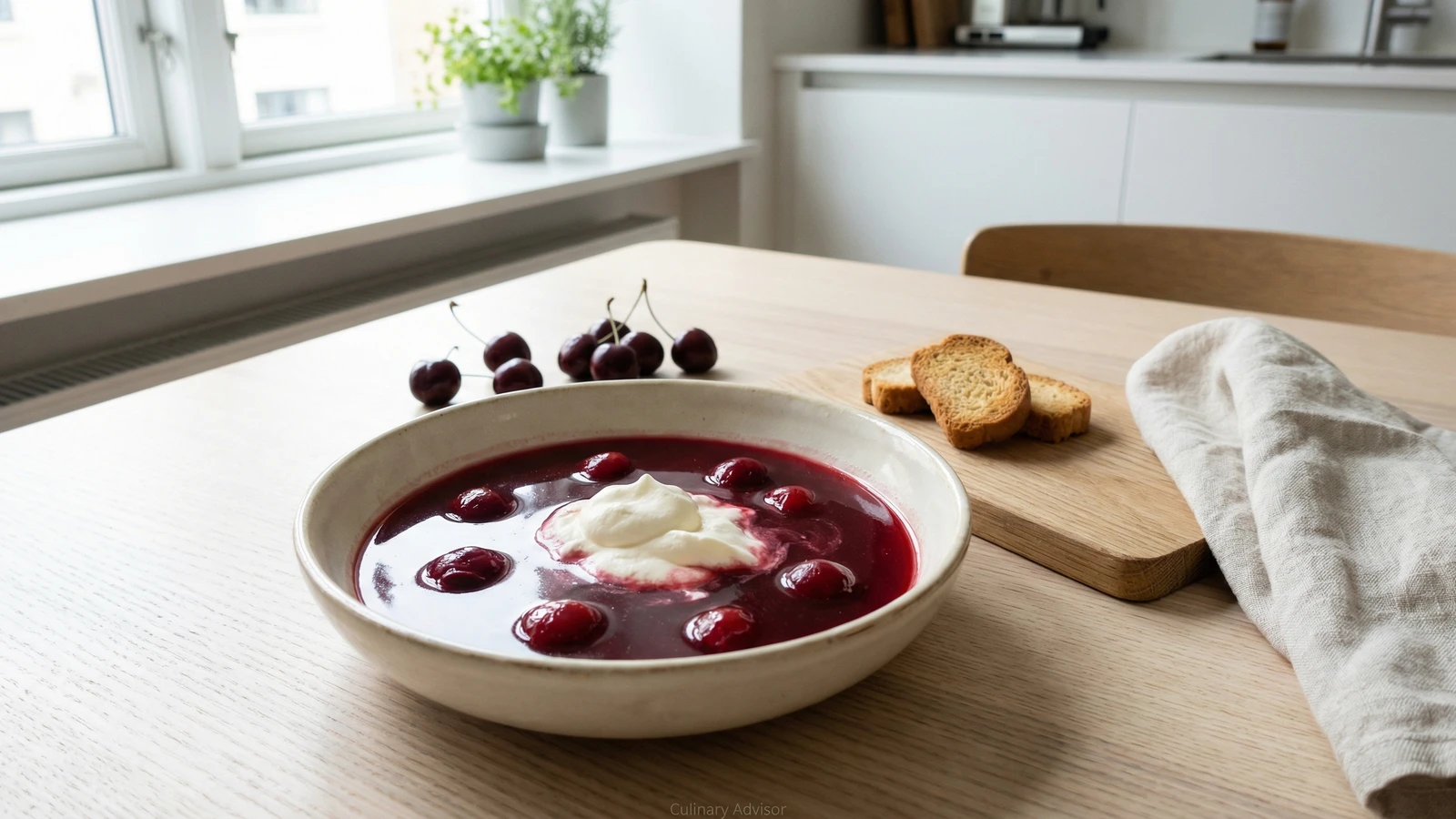
Danish cold cherry soup made in July when the Stevns harvest is in, thickened with potato starch, chilled until deep ruby, served with soft whipped cream and small rusks on the side.
There are two weeks in July when the cherries come in. Not the sweet black ones you buy year-round from somewhere else, the real ones. Stevnsbaer, the dark sour cherries that grow along the chalk cliffs on the eastern edge of Sjaelland, small and tart and almost black when they're ready. For those two weeks, Danish kitchens smell of cherries and cinnamon and sugar, and one of the things that comes out of all that cooking is kirsebaersuppe.
This is Denmark's answer to summer heat. Where potato soup belongs to the dark evenings of October, cherry soup belongs to the long bright ones of July, when the light doesn't leave until after ten and you want something cold and red and alive on the table. You simmer the cherries gently with cinnamon and vanilla and lemon, thicken the soup with potato starch so it takes on a silky body without losing its clarity, and chill it until it's properly cold. Then you spoon soft whipped cream into the center of each bowl and watch the cream swirl through the ruby like weather.
The one thing I want you to pay attention to is the potato starch. Kartoffelmel is the Danish pantry thickener, and it behaves differently from cornflour. It goes into cold water first, always, and it thickens the soup the moment it touches the heat. Once it's in, the soup can't boil again or the starch breaks down. I'll walk you through the moment so you get it right the first time. The season decides when you make this. The cherries tell you they're ready. You'll know when it's right.
The sour cherries of Stevns, on the eastern coast of Sjaelland, have been cultivated since the 1600s in the chalky soil left behind by the region's prehistoric cliffs, and the Stevnsbaer variety was granted protected geographical status by the EU in 2009. The cherries became internationally famous through Peter F. Heering, a Copenhagen grocer who in 1818 began producing a cherry liqueur from them that would travel the world as Cherry Heering and flavor the original Singapore Sling. Kirsebaersuppe itself belongs to the older Danish and Northern European tradition of fruit soups served as summer desserts, a category that has nearly disappeared from restaurant menus but still survives in home kitchens whenever the cherry harvest comes in.
Quantity
1kg
stems removed and pitted, juices reserved
Quantity
1.2 litres
Quantity
150g, plus more to taste
Quantity
1
Quantity
1 strip
pared with a peeler
Quantity
1
split lengthways
Quantity
2 tablespoons
Quantity
3 tablespoons
Quantity
2 tablespoons
Quantity
200ml, cold
Quantity
1 teaspoon
Quantity
to serve
| Ingredient | Quantity |
|---|---|
| sour cherries, Stevns or morellostems removed and pitted, juices reserved | 1kg |
| cold water | 1.2 litres |
| caster sugar | 150g, plus more to taste |
| cinnamon stick | 1 |
| lemon zestpared with a peeler | 1 strip |
| vanilla podsplit lengthways | 1 |
| potato starch (kartoffelmel) | 2 tablespoons |
| cold water, for the slurry | 3 tablespoons |
| Heering cherry liqueur or red wine (optional) | 2 tablespoons |
| whipping cream | 200ml, cold |
| icing sugar | 1 teaspoon |
| small rusks (tvebakker) or almond macaroons | to serve |
Stem the cherries and pit them over a bowl so you catch every drop of juice. The juice is half the color of the finished soup, and you do not want to lose it to the sink. A proper cherry pitter is worth its small price in July. If you do not have one, a chopstick pushed through the stem end works surprisingly well. Keep the pitted cherries and their juices together.
Put the cherries and their juices into a heavy pot with the cold water, sugar, cinnamon stick, lemon zest, and the split vanilla pod. Scrape the vanilla seeds into the pot as well. Bring everything to a gentle simmer over medium heat, stirring once or twice so the sugar dissolves. Do not boil hard. Hard boiling breaks the cherries into mush and turns the soup muddy. You want a lazy simmer that keeps the fruit whole.
Let the soup simmer uncovered for about twenty minutes. The cherries will soften and give up their color, and the liquid will go from pale rose to deep ruby. Taste it. If your cherries are very tart, add a little more sugar now. If they're on the sweet side, leave it alone. Sour cherries want to stay a little sharp. That's what makes this soup refreshing instead of cloying.
Fish out the cinnamon stick, the lemon zest, and the vanilla pod. Mix the potato starch with the three tablespoons of cold water in a small cup until smooth. This is called a slurry, and it matters that the water is cold. Hot water will seize the starch into lumps. Turn the heat down to low. Pour the slurry into the soup in a slow stream, stirring constantly. The soup will thicken within seconds, going from thin liquid to a glossy, lightly bodied soup that coats the back of a spoon.
Take the pot off the heat. If you're using the cherry liqueur or red wine, stir it in now, off the heat, so the alcohol stays bright. Transfer the soup to a large bowl or jug and let it cool on the counter for twenty minutes. Then cover and move it to the fridge for at least two hours. Kirsebaersuppe is a cold soup. It needs to be properly cold, not just cool. The flavor deepens as it chills, and the texture settles into something between a soup and a thin compote.
Just before serving, whip the cold cream with the icing sugar until it holds soft peaks. Not stiff peaks. You want the cream to melt into the soup slowly, not sit on top like a scoop of ice. Ladle the chilled soup into shallow bowls, add a generous spoonful of cream to the center of each, and place a few small rusks on the side. The cream will bleed out in pale swirls across the ruby surface, and that is the whole picture. Tak for mad.
1 serving (about 370g)
Culinary guides, cultural storytelling, and the editorial depth that makes cooking meaningful.
Discover Culinary ExplorerChef Freja
The Fyn autumn supper where thick pork belly renders slowly into its own fat, then meets apples and onions that cook down into a deep amber tangle. Sweet, salt, and the oldest pairing in the Danish larder.

Chef Freja
Warm Danish apple soup for the first cool evenings of autumn. Tart apples simmered with cinnamon and lemon peel, thickened to a soft gloss, and served with cold cream and buttery toasted oats.

Chef Freja
Danish white asparagus velouté with tiny veal meatballs, flour dumplings, and bright green tips scattered on the surface. The Easter soup of Copenhagen, built from five small pans of spring.
Chef Freja
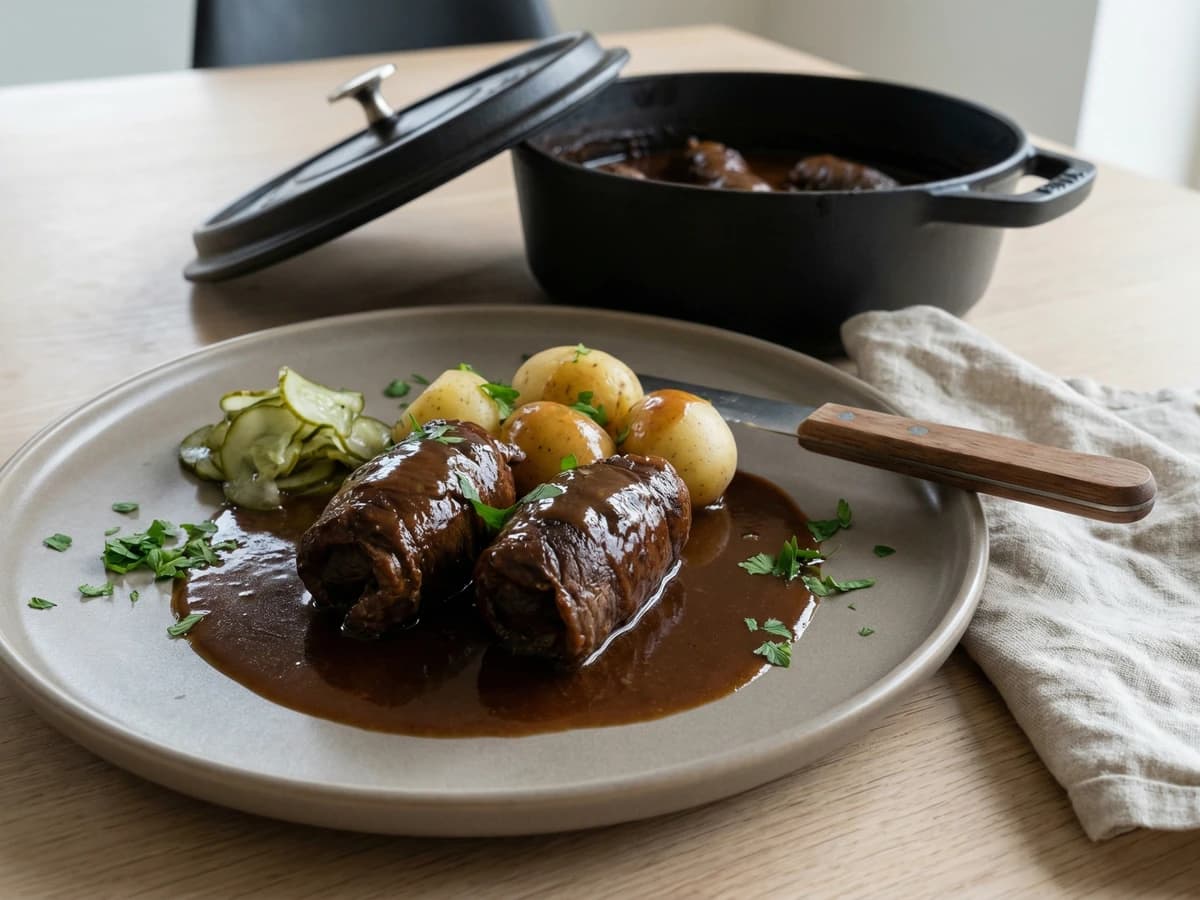
Thin beef slices rolled around bacon and onion, tied with string, and braised slowly in a dark glossy gravy finished with cream and redcurrant jelly. Danish Sunday dinner at its most comforting.