
Chef Dean
Gravlax with Mustard Dill Sauce
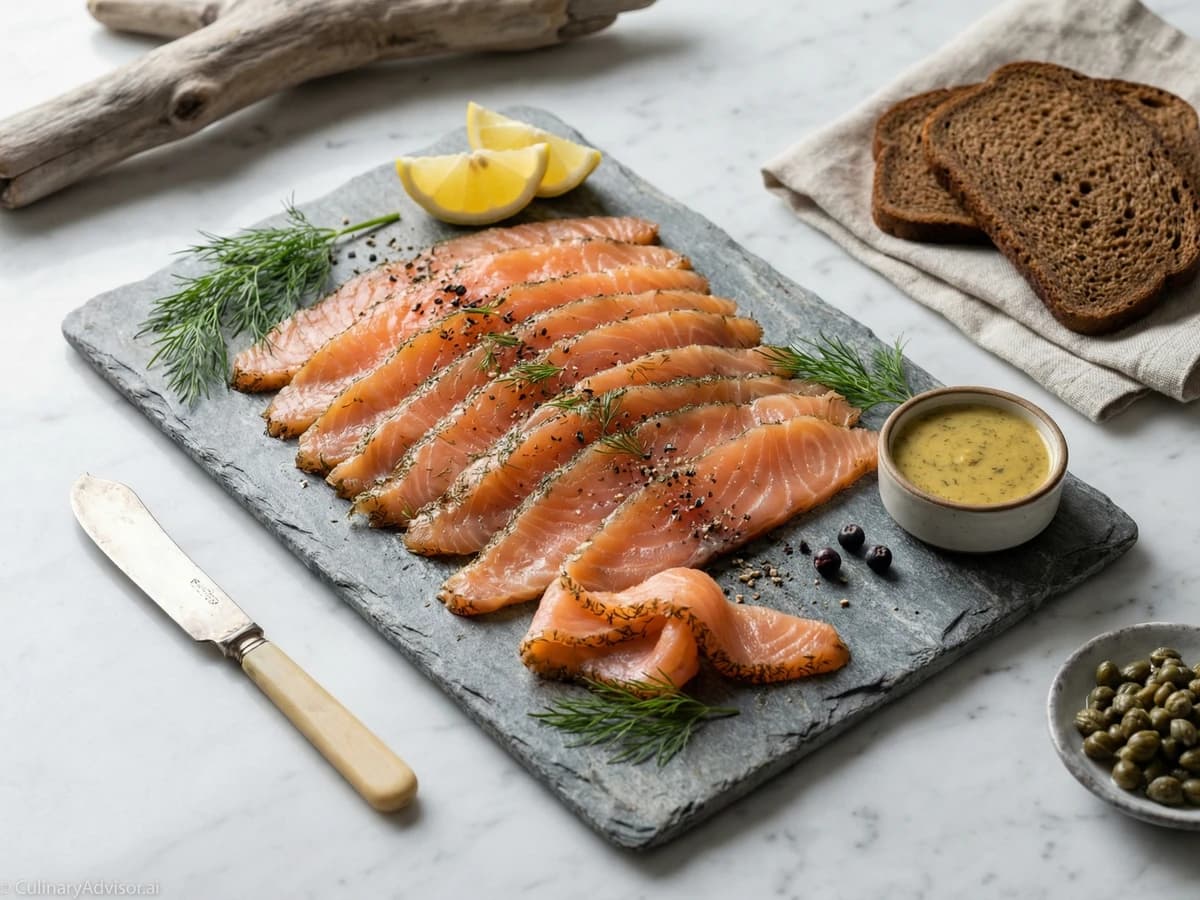
Silky, sugar-and-salt cured salmon draped in ribbons over dark bread, paired with a sweet-sharp mustard sauce that cuts through the richness. This is the centerpiece your holiday table deserves.
A cooking platform built around craft, culture, and the stories behind what we eat.

Created by
Wild salmon fillets cured in brown sugar and salt, then hot-smoked over alder wood until the flesh turns opaque and glistening with rendered fat. This is the Pacific Northwest on a plate, a tradition older than the states that border its waters.
Before refrigeration, before canning, before the modern industrial food system stripped the seasons from our eating, coastal peoples preserved salmon through smoke. The technique arrived from multiple directions. Native tribes of the Pacific Northwest perfected it over thousands of years, building smokehouses near rivers during the great runs. Scandinavian immigrants recognized the method instantly. They'd been doing the same thing with herring and cod for generations. When these traditions met on the misty shores of Puget Sound and the Columbia River, kippered salmon became a regional staple.
The word 'kipper' comes from the British Isles, where it originally meant a male salmon during spawning season. The technique migrated to mean any fish that's been split, salted, and smoked. What distinguishes kippered salmon from its cold-smoked cousin (the silky lox on your bagel) is temperature. Hot-smoking cooks the fish as it smokes, yielding firm, flaky flesh with a more pronounced smoke character.
You don't need an expensive smoker to make this at home. A kettle grill works beautifully. So does a stovetop smoker for smaller batches. The process takes time but almost no active effort. You brine the fish. You let it dry. You smoke it low and slow. The result is salmon that keeps for a week refrigerated, though I've never seen a batch last that long once people discover it.
Seek out wild-caught salmon when the runs are active. King and sockeye offer the richest fat content. Coho works well too. Farm-raised will do in a pinch, but wild fish from sustainable fisheries honor both the ingredient and the traditions that created this dish.
Quantity
2 pounds
pin bones removed
Quantity
1/2 cup
Quantity
1/2 cup
packed
Quantity
2 tablespoons
Quantity
1 tablespoon
Quantity
1 teaspoon
Quantity
1/2 teaspoon
Quantity
2 cups
soaked in water for 1 hour
Quantity
for serving
Quantity
for serving
Quantity
for serving
| Ingredient | Quantity |
|---|---|
| wild salmon fillet, skin-onpin bones removed | 2 pounds |
| kosher salt | 1/2 cup |
| dark brown sugarpacked | 1/2 cup |
| cracked black pepper | 2 tablespoons |
| smoked paprika | 1 tablespoon |
| garlic powder | 1 teaspoon |
| cayenne pepper | 1/2 teaspoon |
| alder wood chipssoaked in water for 1 hour | 2 cups |
| fresh dill fronds (optional) | for serving |
| lemon wedges (optional) | for serving |
| cream cheese or crème fraîche (optional) | for serving |
Combine the kosher salt, brown sugar, black pepper, smoked paprika, garlic powder, and cayenne in a bowl. Mix thoroughly with your fingers, breaking up any sugar clumps. The cure should be evenly colored, the paprika staining everything a rusty orange. This mixture does the real work of preservation, drawing moisture from the fish while seasoning it to the bone.
Line a rimmed baking sheet with plastic wrap, leaving enough overhang to wrap the fish completely. Spread one-third of the cure mixture on the plastic in a rectangle matching the size of your fillet. Lay the salmon skin-side down on the cure. Pack the remaining cure over the flesh side, pressing it into every crevice. The fish should be completely buried. Wrap tightly with the plastic, then wrap the entire packet in another layer. Place another baking sheet on top and weight it down with canned goods or a cast iron skillet.
Refrigerate the weighted salmon for 12 to 24 hours. Thicker fillets need longer. You're looking for flesh that feels firm throughout when pressed, with no soft spots remaining in the center. The cure will draw out a surprising amount of liquid. This is exactly what you want. That liquid would otherwise steam the fish during smoking rather than allowing proper smoke penetration.
Unwrap the salmon and rinse thoroughly under cold running water. The flesh will look darker and feel significantly firmer than when you started. Pat the fillet completely dry with paper towels. Place it on a wire rack set over a baking sheet, skin-side down. Refrigerate uncovered for 6 to 12 hours, or until the surface develops a tacky, slightly glossy skin called the pellicle.
Set up your smoker for indirect heat, aiming for a temperature between 200°F and 225°F. If using a kettle grill, bank coals on one side and place a drip pan filled with water on the other. For a dedicated smoker, follow manufacturer instructions for low-and-slow cooking. Drain your soaked alder chips and add them to the coals or smoker box. When thin blue smoke begins to flow, you're ready.
Place the salmon on the cooler side of the grill, skin-side down, directly on oiled grates or a cedar plank. Close the lid and maintain temperature between 200°F and 225°F. Add more chips every 45 minutes if smoke thins. The fish is done when it reaches an internal temperature of 145°F and the flesh flakes easily but remains moist. This takes 2 to 3 hours depending on thickness. The surface will be a deep amber with darker edges where the smoke concentrated.
Transfer the kippered salmon to a clean wire rack and let it cool to room temperature. The texture improves as it rests, the flavors settling and the flesh firming slightly. Serve at room temperature or chilled, broken into large flakes. Accompany with fresh dill, lemon wedges, and good cream cheese or crème fraîche. Rye crackers or pumpernickel make worthy vehicles.
1 serving (about 113g)
Culinary guides, cultural storytelling, and the editorial depth that makes cooking meaningful.
Discover Culinary ExplorerChef Dean
Silky, sugar-and-salt cured salmon draped in ribbons over dark bread, paired with a sweet-sharp mustard sauce that cuts through the richness. This is the centerpiece your holiday table deserves.
Chef Dean
Wild salmon transformed through salt, sugar, and time into silken slices that melt on the tongue. This is the Pacific Northwest honoring its Scandinavian settlers while celebrating waters that have sustained people for millennia.

Chef Juliette
Tiny éperlans, lightly floured and fried until their tails stand crisp, arrive in a generous heap on a napkin with fried parsley and grooved lemon, a weeknight lesson in heat and restraint.

Chef Juliette
Brandade de Morue turns salt cod, warm olive oil, and milk into a pale, silky emulsion: keep everything warm and add the oil slowly, then crown the generous dome with butter-fried bread.