
Chef Klaus
Apfelschorle
Cloudy apple juice, sharp mineral water, and no sugar bowl: the German Schorle that belongs in school bags, beer gardens, picnic baskets, and the table when supper is quick.
A cooking platform built around craft, culture, and the stories behind what we eat.
Created by
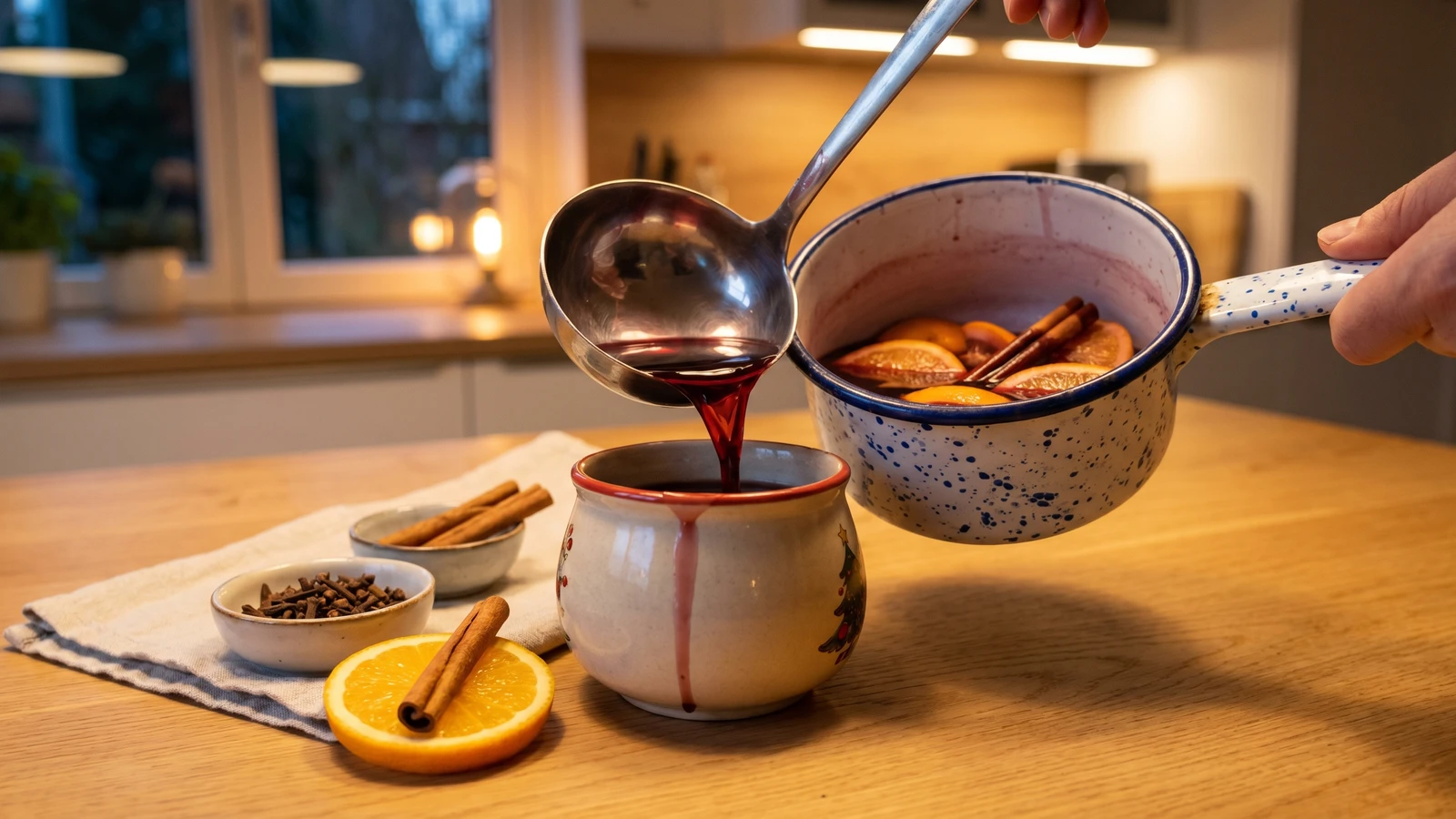
The child's punch of the German Christmas market: red fruit tea, cloudy apple juice, citrus, and whole spice warmed gently, not boiled to death.
Kinderpunsch belongs to the Christmas market and the Advent kitchen, the mug you hand to children while the adults stand over Glühwein. It isn't one region's private property. You'll find it from Hamburg to Munich, but the pot changes as it travels: in the north I like it sharper, with Hagebuttentee, rosehip tea, and cloudy apple juice; farther south, many pots go darker and sweeter with red grape or cherry juice and more orange.
The rule is simple: keep it below a simmer. With wine, boiling drives off alcohol and makes bitterness. Here there is no alcohol to save, but the same rough heat still ruins the drink, because fruit juice boiled with peel and clove turns flat, cooked, and a little bitter. Warm it until the surface trembles, then let the spices steep covered. Das braucht seine Zeit, but not much of it.
Nicht aus dem Glas. A bought bottle or packet mix tastes of sugar first and spice second, and that is the wrong order. Brew the tea strong, use cloudy naturtrueb apple juice if you can get it, count the cloves, and put the lemon in at the end so the sour edge stays alive. Erst verstehen, dann kochen.
Punsch entered German drinking culture in the seventeenth and eighteenth centuries through trade routes that brought the English word punch, itself tied to older South Asian mixed drinks, into ports and court kitchens. German Christmas markets are older than the drink in its modern nonalcoholic form; Dresden's Striezelmarkt is recorded from 1434, while Kinderpunsch became a familiar market offering much later as Advent markets turned into family outings. The name says exactly what it is: Punsch for children, built from tea, juice, citrus, and spice instead of wine or rum.
Quantity
750ml
Quantity
500ml
Quantity
250ml
Quantity
250ml
Quantity
1
sliced
Quantity
1
2 strips of peel and 1 tablespoon juice
Quantity
2
Quantity
5
Quantity
2
Quantity
2 tablespoons, plus more to taste
| Ingredient | Quantity |
|---|---|
| strong fruit tea, preferably rosehip-hibiscus | 750ml |
| cloudy apple juice | 500ml |
| red grape juice or sour cherry juice | 250ml |
| orange juice | 250ml |
| unwaxed orangesliced | 1 |
| unwaxed lemon2 strips of peel and 1 tablespoon juice | 1 |
| cinnamon sticks | 2 |
| whole cloves | 5 |
| star anise (optional) | 2 |
| honey or sugar | 2 tablespoons, plus more to taste |
Brew the fruit tea strong, about twice as strong as you would drink it on its own, and let it steep 8 minutes. The juice will dilute it, so a weak tea disappears under the apple and orange. Rosehip and hibiscus give the right red colour and a clean sour edge.
Put the apple juice, grape or cherry juice, orange juice, orange slices, lemon peel, cinnamon, cloves, and star anise into a pot and warm them gently until the surface just begins to tremble. Do not boil it. Boiling drives the fresh fruit taste flat and pulls bitterness from the peel and cloves, and then you've made hot juice with complaints.
Take the pot off the heat, add the hot tea, cover it, and let everything stand 10 minutes. The covered rest pulls the spice into the drink without reducing the juices, which keeps the Kinderpunsch bright instead of sticky.
Stir in the honey or sugar and the tablespoon of lemon juice, then taste. The lemon goes in at the end because heat dulls its sharpness, and the drink needs sour against sweet. Strain out the spices and fruit once the flavour is right, or the cloves keep working after you've stopped watching them.
Return the strained Kinderpunsch to a low heat only until it is hot enough for the mug, not boiling. Runter mit der Temperatur. Serve in thick mugs with an orange slice if you like, and keep the pot warm on the lowest setting for no more than an hour.
1 serving (about 310g)
Culinary guides, cultural storytelling, and the editorial depth that makes cooking meaningful.
Discover Culinary ExplorerChef Klaus
Cloudy apple juice, sharp mineral water, and no sugar bowl: the German Schorle that belongs in school bags, beer gardens, picnic baskets, and the table when supper is quick.

Chef Klaus
Frankfurt's long drink for a warm table: dry Apfelwein, cold mineral water, and the ribbed Geripptes glass that tells you where you are.

Chef Klaus
Berlin's summer glass: sharp, pale Berliner Weisse softened with a red raspberry or green woodruff Schuss, cold enough to bead the glass and never from bottled syrup.

Chef Klaus
The Easter bottle from yolks, sugar, cream, and good spirit, beaten warm just enough to thicken, then cooled into a yellow liqueur for cake, coffee, and small glasses.