
Chef Jeong-sun
Albaechu-mul-kimchi (Baby Cabbage Water Kimchi)
Tender baby napa cabbage in a clear pear-garlic brine, lightly fermented until the broth turns clean and bright, the summer kimchi a beginner can make without a kimjang floor.
A cooking platform built around craft, culture, and the stories behind what we eat.
Created by
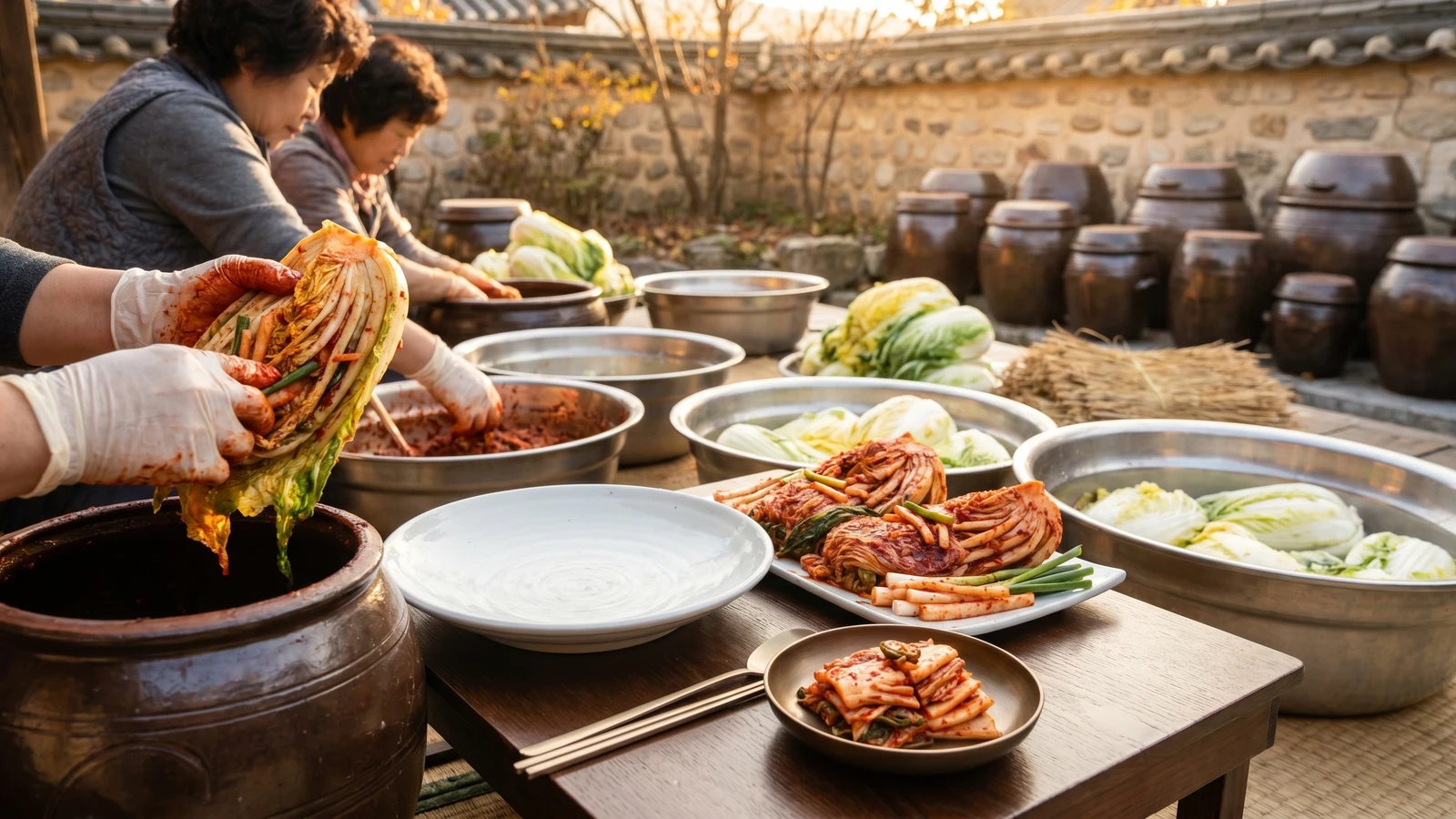
The winter whole-cabbage kimchi made for keeping, salted leaf by leaf and packed with a measured red seasoning so every jar ferments cleanly through the cold months.
Kimjang begins at the market, not at the cutting board. In late autumn the cabbages are heavy and tight, the radishes are sweet from cold soil, and every sensible kitchen starts thinking in batches. Cook the month you're standing in. This kimchi belongs to the edge of winter, when the vegetables have enough strength to survive salting and enough sweetness to feed fermentation.
I won't tell you this is quick. Kimjang asks for space, clean hands, and a cook who doesn't wander away during the salting. Salt until a thick white leaf bends without snapping, then rinse until it tastes seasoned, not harsh. That one test matters more than the clock, because cabbages don't read recipes. My teacher Master Seong-nyeo made us taste the brine off the leaf before we were allowed near the seasoning bowl. 눈동냥, 귀동냥, borrowing with the eyes and ears, and then the tongue corrected us.
The paste must be generous, but not muddy. Gochugaru gives color and heat, saeujeot (salted shrimp) and fish sauce give depth, garlic and ginger wake it up, and the rice paste helps the seasoning cling between the leaves instead of falling to the bottom of the jar. Radish matchsticks keep the filling alive and crisp. Pack the heads tight into onggi or glass, press out the air, and leave enough room for the kimchi to rise as it ferments.
Write it down. Memory is a borrowed bowl. The cabbage weight, the salt weight, the room temperature, the day it turned pleasantly sour: these numbers are how a family keeps its kimchi instead of guessing at it every winter.
Kimjang, the communal late-autumn making of winter kimchi, was inscribed on UNESCO's Representative List of the Intangible Cultural Heritage of Humanity in 2013 for the social practice of making and sharing it. Chili peppers reached Korea after the Columbian exchange, and red napa cabbage kimchi in its familiar form developed much later than older white brined kimchi. Modern refrigeration changed kimjang from a winter necessity into a chosen seasonal practice, but the method still follows the older rhythm of salting, packing, and letting lactic fermentation do its work.
Quantity
4 large, about 8 kg total
Quantity
2 cups, about 560g
for salting
Quantity
12 cups
for brine and rinsing as needed
Quantity
1/2 cup
Quantity
3 cups
for rice paste
Quantity
2 cups
medium grind
Quantity
1 1/4 cups
Quantity
1/2 cup
finely chopped
Quantity
1/4 cup syrup or 3 tablespoons sugar
Quantity
2 medium, about 1.5 kg total
julienned
Quantity
1 large
peeled and grated
Quantity
1 medium
grated
Quantity
24 cloves
minced or grated
Quantity
80g
peeled and grated
Quantity
12
cut into 2-inch lengths
Quantity
1 small bunch
cut into 2-inch lengths
Quantity
1 small bunch
cut into 2-inch lengths
| Ingredient | Quantity |
|---|---|
| napa cabbages | 4 large, about 8 kg total |
| coarse Korean sea saltfor salting | 2 cups, about 560g |
| waterfor brine and rinsing as needed | 12 cups |
| sweet rice flour | 1/2 cup |
| waterfor rice paste | 3 cups |
| gochugaru (Korean chili flakes)medium grind | 2 cups |
| fish sauce | 1 1/4 cups |
| saeujeot (salted shrimp)finely chopped | 1/2 cup |
| maesil cheong (green plum syrup) or sugar | 1/4 cup syrup or 3 tablespoons sugar |
| Korean radishesjulienned | 2 medium, about 1.5 kg total |
| Korean pearpeeled and grated | 1 large |
| oniongrated | 1 medium |
| garlicminced or grated | 24 cloves |
| fresh gingerpeeled and grated | 80g |
| scallionscut into 2-inch lengths | 12 |
| minari (Korean water parsley) (optional)cut into 2-inch lengths | 1 small bunch |
| gat (mustard greens) (optional)cut into 2-inch lengths | 1 small bunch |
Trim only the browned base of each cabbage. Cut a 3-inch slit into the stem end, then pull the cabbage apart with your hands into halves. Slit each half again at the stem and pull into quarters. Pulling keeps the leaves whole and ragged in the right way; slicing straight through the leaves bruises them.
Dissolve 1 cup of the coarse salt in 12 cups water to make a light brine. Dip each cabbage quarter into the brine, then lift it out and sprinkle the remaining 1 cup salt mostly into the thick white stem layers, using about 2 tablespoons salt per quarter. The leafy green ends need little salt; the white ribs need persuasion. Stack the quarters in a large tub, cut side up.
Let the cabbage salt for 6 to 8 hours, turning the stack every 2 hours so the top and bottom trade places. The cabbage is ready when a thick white leaf bends in a U shape without snapping. Taste a piece from the stem. It should be salty enough to season the cabbage through, not so salty that your mouth tightens.
Rinse each cabbage quarter under cold running water, opening the leaves gently to wash away loose salt. Rinse 2 or 3 times, then drain cut side down in a colander for at least 1 hour. Do not squeeze the cabbage. You want excess water gone, but the leaves still supple.
Whisk the sweet rice flour with 3 cups water in a small pot until smooth. Cook over medium heat, stirring, until it thickens to a loose porridge, 5 to 7 minutes. Cool completely. The paste is not filler; it helps the seasoning cling to the leaves and gives fermentation a steady food source.
In a very large bowl, stir the cooled rice paste with the gochugaru, fish sauce, chopped saeujeot, maesil cheong or sugar, grated pear, grated onion, garlic, and ginger. Let it sit 20 minutes so the chili flakes bloom and soften. Taste a fingertip's worth. It should be salty, garlicky, and deeper than you would eat alone, because the cabbage will carry it.
Fold the julienned radish, scallions, minari, and gat into the red seasoning. Mix by hand with gloves until the radish softens slightly and gives off a little juice. Keep the radish cut fine, about matchstick width, so it tucks between the leaves instead of breaking them.
Working with one cabbage quarter at a time, spread seasoning between the leaves, using more near the thick white stems and less near the tender green tips. Use about 3/4 cup filling per quarter. Fold the leafy end over toward the stem and wrap the outer leaf around the bundle. This keeps the seasoning inside the head, where it belongs.
Pack the cabbage bundles tightly into clean onggi, glass jars, or kimchi containers, stem ends alternating so there are fewer gaps. Press down firmly to push out air pockets, but leave 2 inches of headspace because kimchi rises as it ferments. Scrape any remaining seasoning over the top and press a piece of food-safe wrap directly on the surface if your container has extra air.
Leave the packed kimchi at cool room temperature, about 18 to 20 C, for 18 to 24 hours. Open the lid once to release pressure and press the kimchi back under its juices with a clean spoon. When the smell turns pleasantly sour and tiny bubbles appear at the sides, move it to the refrigerator or kimchi fridge.
Refrigerate at least 5 days before eating if you want young kimchi, or 2 to 3 weeks for deeper winter flavor. To serve, lift out one quarter with clean tongs, cut crosswise into bite-size pieces, and spoon a little kimchi juice over it. Always press the remaining kimchi back down before closing the container.
1 serving (about 100g)
Culinary guides, cultural storytelling, and the editorial depth that makes cooking meaningful.
Discover Culinary ExplorerChef Jeong-sun
Tender baby napa cabbage in a clear pear-garlic brine, lightly fermented until the broth turns clean and bright, the summer kimchi a beginner can make without a kimjang floor.

Chef Jeong-sun
The kimchi from before chili, salted napa cabbage packed with radish, pear, jujube, and pine nuts in a clear brine that turns quietly tart in the jar.

Chef Jeong-sun
A pale summer cucumber kimchi, split and stuffed with radish and chives, then held in a cool pear brine so the cucumber stays clean, crunchy, and plainly itself.

Chef Jeong-sun
Flat spring bomdong cabbage, lightly brined and tucked into a clear pear-radish kimchi broth, made without chili and eaten young while the leaves still taste like spring.