Chef Jeong-sun
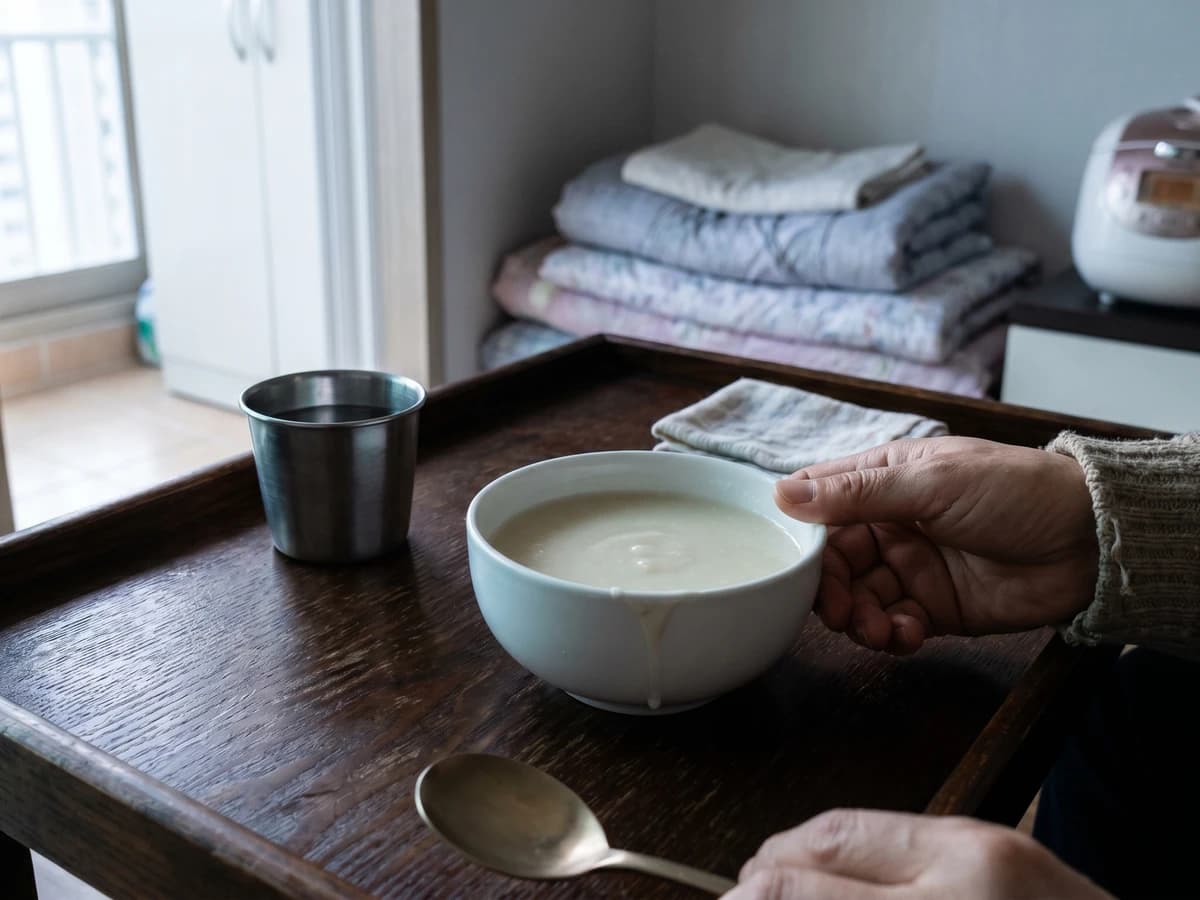
Amjuk (Dried-Grain Weaning Porridge)
Powdered rice or dried baekseolgi cooked thin in cloudy rice water, an old Korean first-spoon porridge that asks for patience at the sieve and gentleness at the stove.
A cooking platform built around craft, culture, and the stories behind what we eat.

Created by
A soft Korean rice porridge for cold mornings and tired bodies, made by cooking sour kimchi down first so its sharpness mellows before it meets the rice.
Kimchi-juk belongs to the bottom of the jar. Not the pretty cabbage leaves you bring out for guests, but the sour pieces, the red juice, the little scraps that have gone too sharp to eat plain. Waste nothing. That is not thrift as punishment. That is how a Korean kitchen thinks.
The dish lives or dies before the rice goes in. Chop the kimchi small, then cook it in a little sesame oil until the raw sour edge softens and the cabbage turns darker at the edges. If you skip that, the porridge tastes thin and harsh. If you take five minutes there, the whole pot becomes rounder, warmer, and easier to eat.
Use leftover cooked rice without shame. 시대가 바뀌면 음식도 바뀌어야 해요. When times change, food must change too, and a morning pot should not ask more from you than the day can give. But measure the liquid, simmer gently, and stir often enough that the grains break down into juk (rice porridge), not rice floating in soup.
Notebook 31 says the right balance for two hungry people is 2 cups cooked rice, 1 cup chopped aged kimchi, and 4 cups anchovy-kelp broth or water. Taste at the end, not the beginning. Kimchi changes by the jar, and 손맛 is real. I still measure it, so it can be handed on.
Juk, Korean rice porridge, has long been food for breakfast, illness, old age, and recovery because rice stretches gently when simmered with plenty of liquid. Kimchi-juk is an everyday home variation rather than a court dish, tied to the practice of using well-fermented winter kimchi and the sour juice left in the jar. Its frugality grew naturally from kimjang households, where no cabbage scrap or spoonful of kimchi brine was wasted.
Quantity
1 cup
chopped small
Quantity
1/3 cup
Quantity
2 cups
Quantity
4 cups
Quantity
1 tablespoon
Quantity
1 teaspoon
Quantity
1 small
thinly sliced
Quantity
1 teaspoon
Quantity
1 sheet
torn into thin strips
Quantity
1
| Ingredient | Quantity |
|---|---|
| aged napa cabbage kimchichopped small | 1 cup |
| kimchi juice | 1/3 cup |
| cooked short-grain white rice | 2 cups |
| anchovy-kelp broth or water | 4 cups |
| toasted sesame oil | 1 tablespoon |
| soup soy sauce (guk-ganjang) | 1 teaspoon |
| scallionthinly sliced | 1 small |
| toasted sesame seeds | 1 teaspoon |
| roasted gim (optional)torn into thin strips | 1 sheet |
| egg (optional) | 1 |
Chop the kimchi into pieces no larger than 1/2 inch. Juk is eaten by the spoonful, so large cabbage pieces fight the rice and make the bowl awkward. Save 1/3 cup of the red kimchi juice separately; it seasons more cleanly than adding extra paste or chili.
Warm the sesame oil in a heavy pot over medium heat. Add the chopped kimchi and cook 5 to 6 minutes, stirring often, until the kimchi darkens slightly and the sharp smell softens. This step matters because cooked-down kimchi gives the porridge body; raw kimchi dropped into liquid only makes it sour.
Add the cooked rice, kimchi juice, and 4 cups broth or water. Stir well, pressing some grains against the side of the pot to help them break. Bring it to a gentle boil, then lower the heat so it bubbles quietly. Hard boiling makes the bottom catch before the rice softens.
Simmer 15 to 18 minutes, stirring every few minutes, until the grains swell and the pot looks thick and spoonable. If it thickens too quickly, add water 1/4 cup at a time. You are looking for porridge, not dry rice, and not soup with rice floating in it.
Stir in 1 teaspoon soup soy sauce, then taste. Add more only 1/2 teaspoon at a time if the pot tastes flat. Kimchi already carries salt, garlic, and chili, so season after the rice has absorbed the broth. Let the kimchi still taste like kimchi.
If using the egg, beat it lightly and stir it into the porridge in a thin stream during the last minute, just until soft ribbons form. Ladle into bowls and finish with scallion, sesame seeds, and torn gim if you like. Serve right away, before the rice tightens as it sits.
1 serving (about 515g)
Culinary guides, cultural storytelling, and the editorial depth that makes cooking meaningful.
Discover Culinary ExplorerChef Jeong-sun
Powdered rice or dried baekseolgi cooked thin in cloudy rice water, an old Korean first-spoon porridge that asks for patience at the sieve and gentleness at the stove.

Chef Jeong-sun
A soft summer rice porridge of kneaded mallow greens, dried shrimp, and careful doenjang broth, plain enough for breakfast and exact enough to keep the grit and bitterness out.
Chef Jeong-sun
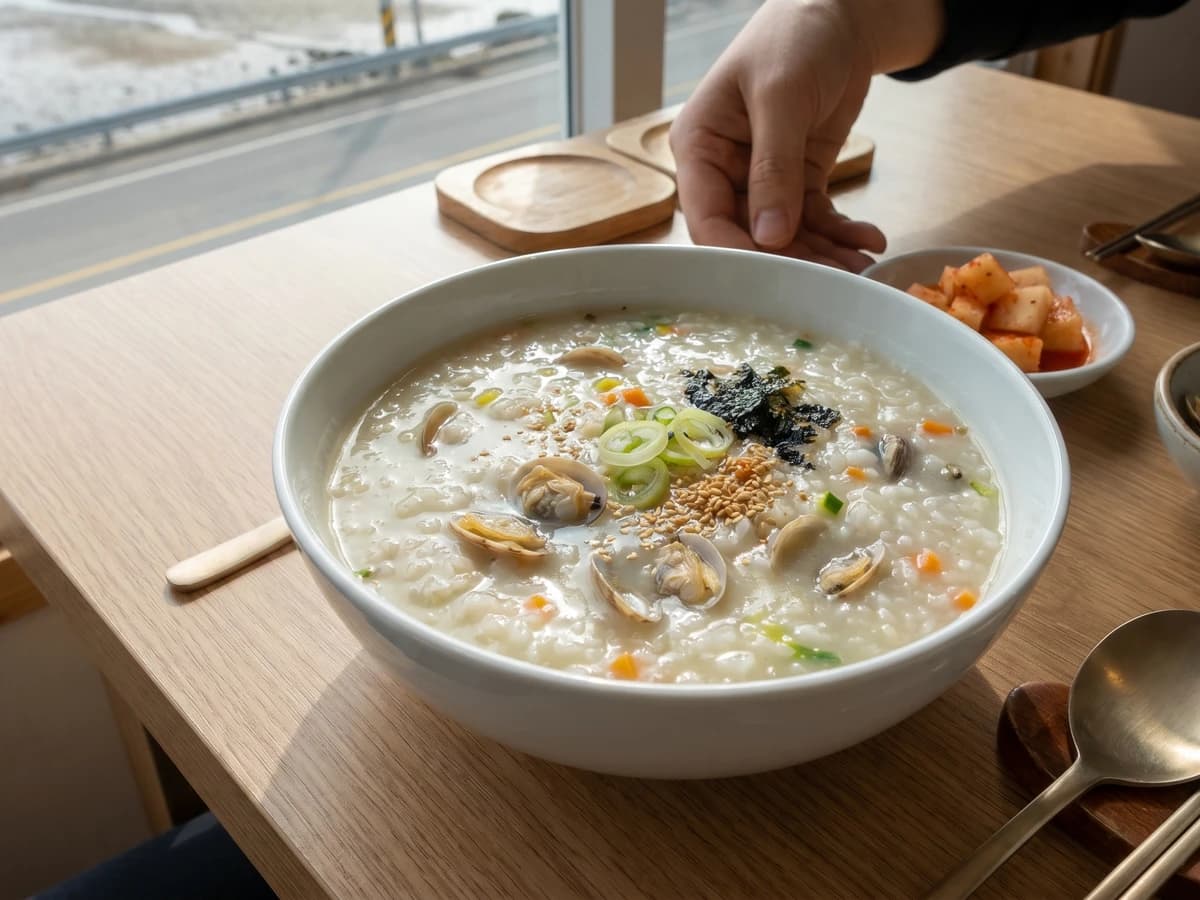
A west-coast clam porridge from Buan's tidal flats: live bajirak opened for their liquor, sesame-slicked rice toasted in the pot, and vegetables cut small enough to comfort without hiding the clams.

Chef Jeong-sun
An autumn juk of boiled chestnuts and soaked short-grain rice, simmered low until smooth and softly sweet, the kind of bowl you set before an elder, a child, or yourself.