
Chef Jeong-sun
Aehobak-guk (애호박국, Korean Zucchini Soup)
A clean summer soup of Korean zucchini and salted shrimp, built on quick anchovy-kelp broth and finished before the half-moons lose their shape on a weeknight table.
A cooking platform built around craft, culture, and the stories behind what we eat.

Created by
The stew made to rescue kimchi gone too sour to eat plain, with fatty pork, tofu, and kimchi brine simmered until the broth turns deep and steady.
Kimchi-jjigae begins with the jar everyone has started avoiding. The cabbage is too sour for the table, too sharp to eat cold, and that is exactly when it is ready for the pot. Fresh kimchi makes a thin stew. Old kimchi makes dinner.
My mother cooked this when the rice was already steaming and nobody wanted a grand meal, only something honest and hot enough to pull everyone to the table. The technique is simple, but it has one rule: saute the kimchi and pork first. The kimchi loses its raw edge, the pork fat melts into the cabbage, and the broth gains body before water ever enters the pot.
Do not bury this stew under gochujang or sugar. Use kimchi brine, a little gochugaru if the color needs it, and enough broth to cover without drowning. Taste before you salt, because every jar of kimchi carries its own measure. 손맛 is real; I measure it anyway, so the next pot can be handed on.
Kimchi-jjigae is an everyday home dish tied to kimjang, the late-autumn making of winter kimchi, because it depends on cabbage kimchi aged past its crisp raw stage. Its red form is newer than kimchi itself: chili peppers reached Korea after the Columbian exchange, and red napa cabbage kimchi became widespread only in the later Joseon period. In the twentieth century the stew widened into many household versions, including pork, tuna, mackerel, and budae-style additions, but the older logic stayed the same: sour kimchi becomes broth.
Quantity
500g
cut into 2-inch pieces
Quantity
1/2 cup
Quantity
250g
cut into bite-size pieces
Quantity
1 teaspoon
Quantity
1 teaspoon
Quantity
1/2 medium
sliced
Quantity
2 cloves
minced
Quantity
1 tablespoon, plus more only if needed
Quantity
1 teaspoon
use only if the kimchi is harshly sour
Quantity
3 cups
Quantity
1 tablespoon
Quantity
300g
cut into thick rectangles
Quantity
2
cut into 1-inch lengths
Quantity
1
sliced
Quantity
to serve
| Ingredient | Quantity |
|---|---|
| well-fermented napa cabbage kimchicut into 2-inch pieces | 500g |
| kimchi brine | 1/2 cup |
| pork belly or pork shouldercut into bite-size pieces | 250g |
| toasted sesame oil | 1 teaspoon |
| neutral oil | 1 teaspoon |
| onionsliced | 1/2 medium |
| garlicminced | 2 cloves |
| gochugaru (Korean chili flakes) | 1 tablespoon, plus more only if needed |
| sugar (optional)use only if the kimchi is harshly sour | 1 teaspoon |
| anchovy-kelp broth, rice water, or water | 3 cups |
| soup soy sauce (guk-ganjang) or regular soy sauce | 1 tablespoon |
| firm tofucut into thick rectangles | 300g |
| scallionscut into 1-inch lengths | 2 |
| green chili or Cheongyang chili (optional)sliced | 1 |
| cooked short-grain rice | to serve |
Taste the kimchi before you cut it. It should be sour enough to make your jaw tighten a little, with plenty of red brine in the container. If it tastes fresh and crisp, leave it on the counter for half a day, then refrigerate again, or save this stew for another week. Kimchi-jjigae needs age.
Set a heavy pot or ttukbaegi over medium heat. Add the sesame oil and neutral oil, then the pork. Cook 4 to 5 minutes, stirring, until the edges lose their raw color and some fat renders into the pot. This fat is not extra. It is what carries the sour kimchi into the broth.
Add the kimchi, onion, garlic, and gochugaru. Cook 6 to 8 minutes, stirring often, until the cabbage softens, darkens slightly, and smells rounded instead of raw. Do not rush this. If you put water in too soon, the stew tastes like boiled kimchi instead of kimchi-jjigae.
Pour in the kimchi brine and 3 cups broth, rice water, or water. Stir in the soup soy sauce. The liquid should just cover the kimchi and pork by about 1/2 inch. Bring it to a lively simmer, then lower the heat and cook uncovered for 20 minutes. The cabbage should slump and the broth should turn a deep red-orange, glossy at the edges.
Taste the broth now. If it needs salt, add 1 teaspoon more kimchi brine or 1/2 teaspoon soup soy sauce, not a heavy hand of paste. If it is too strong, add 1/4 cup water and simmer 3 minutes. Every jar is different, so this is where the cook has to pay attention.
Slide the tofu into the stew and spoon broth over the top. Simmer gently for 5 to 7 minutes, just until the tofu is heated through and stained at the edges. Do not stir hard after the tofu goes in, or you will break it into the broth.
Scatter in the scallions and sliced chili, if using, and simmer 1 minute more. Carry the pot to the table with rice. This stew is not finished until someone spoons broth over their rice and reaches back for another piece of kimchi.
1 serving (about 645g, including about 1 cup cooked rice)
Culinary guides, cultural storytelling, and the editorial depth that makes cooking meaningful.
Discover Culinary ExplorerChef Jeong-sun
A clean summer soup of Korean zucchini and salted shrimp, built on quick anchovy-kelp broth and finished before the half-moons lose their shape on a weeknight table.
Chef Jeong-sun
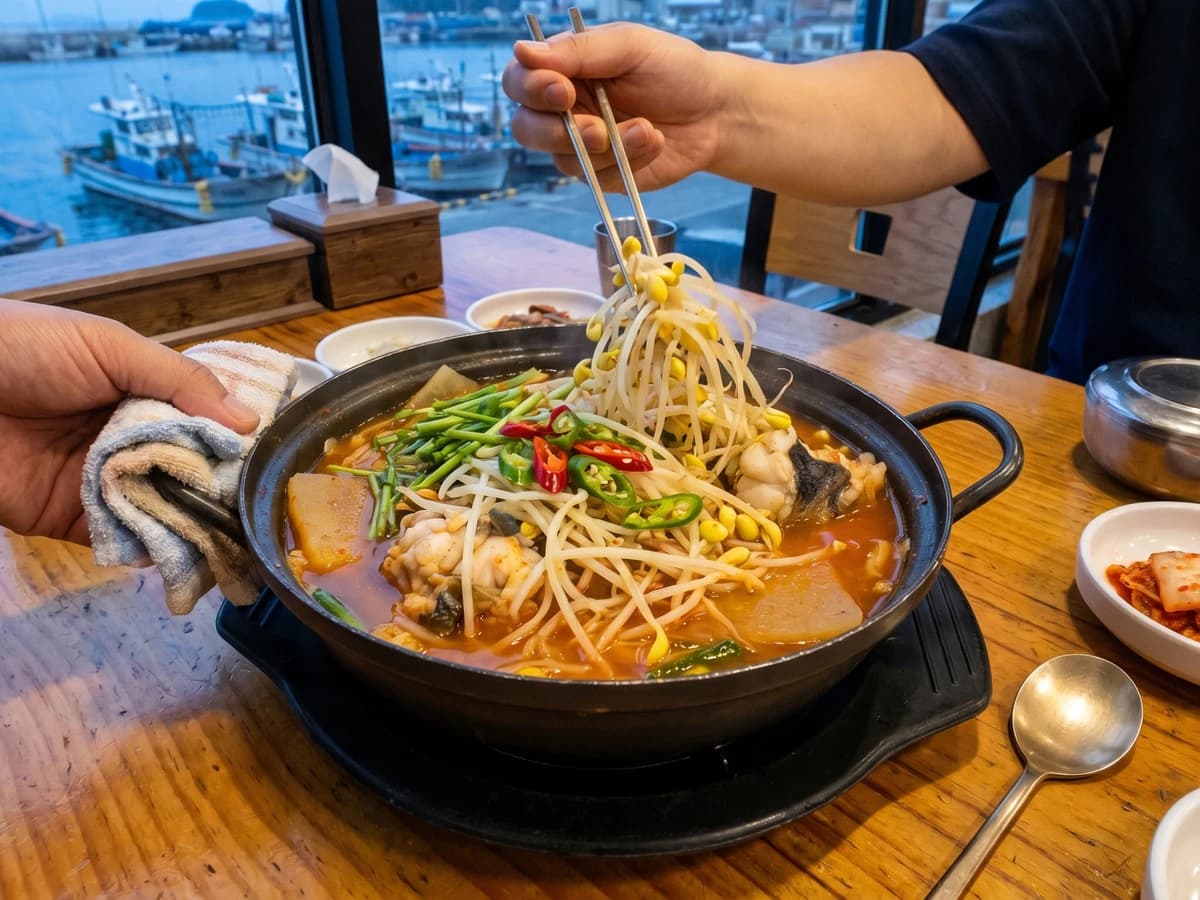
A Masan coast monkfish stew with firm white meat, gelatin at the bones, soybean sprouts for crunch, and a red broth seasoned to carry the fish, not bury it.

Chef Jeong-sun
A weeknight fish roe stew with radish and crown daisy in a clean spicy broth, where the whole success depends on adding the roe late enough that it sets tender, not chalky.

Chef Jeong-sun
Late-summer mallow leaves rubbed with salt until the bitter green water runs off, then simmered in a clean doenjang broth with dried shrimp, the quiet soup a Korean weeknight deserves.