Chef Juliana
Abará
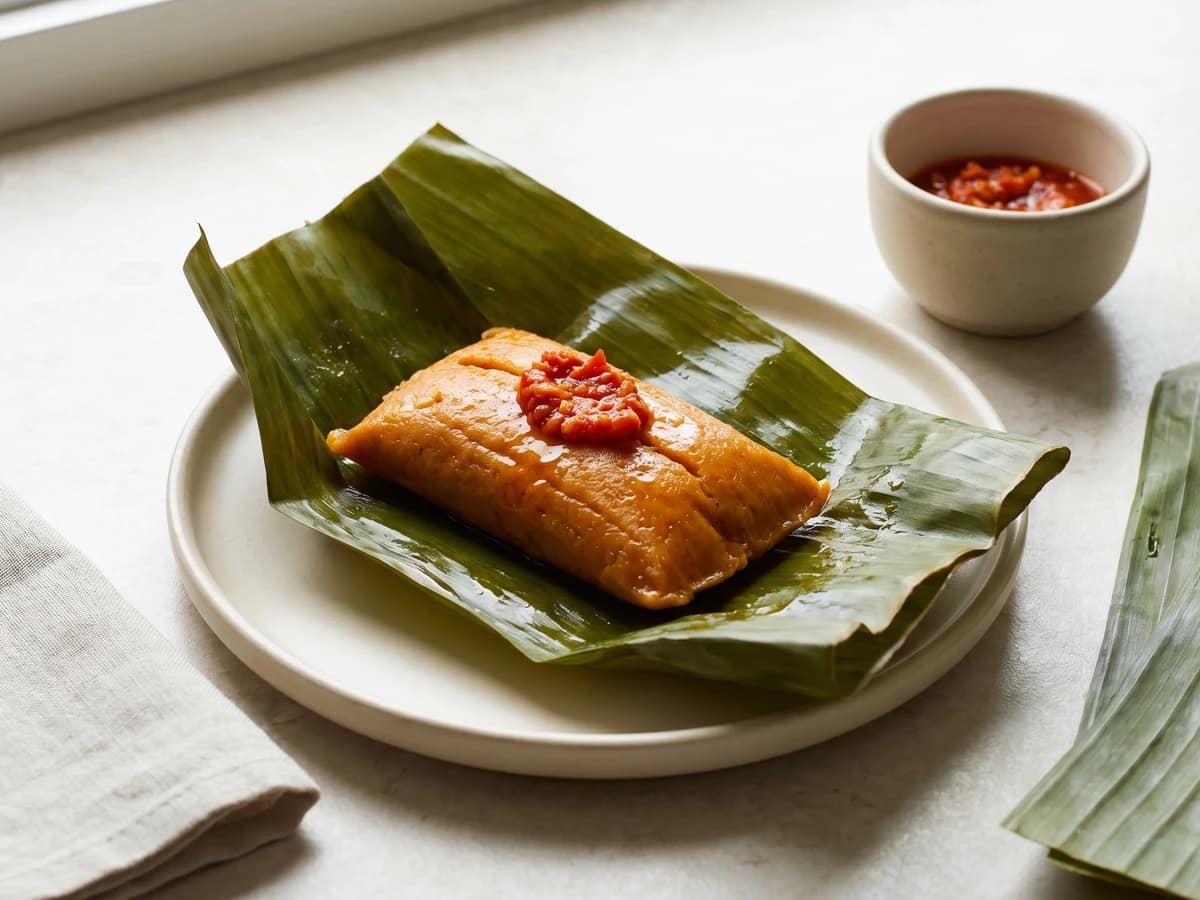
You think banana leaves and hand-whipped bean massa mean “isso não é pra mim.” Wrong. Soak, peel, beat, wrap, steam. Abará is learned by touch, not inherited by magic.
A cooking platform built around craft, culture, and the stories behind what we eat.

Created by
You think shaping kibe is not for you. Anota aí: soak the bulgur, season the beef, close the little footballs, and fry until deep brown. It's method, not magic.
You look at that little football shape on the padaria counter and think, isso não é pra mim. I know. I used to look at food like that too, as if someone had been born knowing how to close dough around filling and I had missed the family meeting. Nonsense. Cozinhar não é dom, é um aprendizado.
Kibe frito became Brazilian because a gente is very good at adopting a food and putting it to work. It sits on the counter with coxinha and pastel, it goes to game day, it feeds a potluck, it disappears from the plate before anyone admits who took the last one. And still, it's comida de verdade: wheat, beef, onion, garlic, herbs, salt, oil. No packet pretending to be dinner.
The method is kinder than it looks. You soak the trigo para kibe so the grain softens and can hold the shell together. You squeeze it dry because extra water makes the kibe crack and spit in the oil. You cook the filling until it smells sweet and browned, not wet and grey, because a filling with water inside turns the shell soggy from the inside out.
Make a batch and serve it with lime, salad, rice and beans if you want to resolver o jantar instead of just snack. The everyday plate, the pê-efe, is still the compass: rice, beans, a piece of meat, something green. Kibe just walks in wearing its party clothes.
Kibe entered Brazil with Syrian and Lebanese immigration in the late nineteenth and early twentieth centuries, especially through cities like São Paulo, where Middle Eastern home cooking met bakeries, bars, and lunch counters. In Brazil, it became a salgado as much as a family dish, usually shaped like a small football and fried, with regional and household variations including plain, stuffed, baked, or filled with requeijão. The name comes from kibbeh, a broader Levantine family of bulgur-and-meat preparations, but the padaria kibe is now part of Brazilian everyday food culture.
Quantity
1 1/2 cups
Quantity
2 cups
for soaking
Quantity
450 g
divided between shell and filling
Quantity
1 medium
finely grated or very finely chopped, divided
Quantity
3 cloves
minced, divided
Quantity
1/2 cup
finely chopped, divided
Quantity
1/4 cup
finely chopped
Quantity
1 1/2 teaspoons
divided
Quantity
1 teaspoon
or 1/2 teaspoon ground allspice plus 1/4 teaspoon cinnamon and 1/4 teaspoon black pepper
Quantity
1/2 teaspoon
Quantity
2 tablespoons
for the filling
Quantity
2 tablespoons
only if needed for shaping
Quantity
4 cups, or enough to fill a heavy pot 5 cm deep
for frying
Quantity
1
cut into wedges, for serving
| Ingredient | Quantity |
|---|---|
| fine bulgur wheat for kibe (trigo para kibe) | 1 1/2 cups |
| warm waterfor soaking | 2 cups |
| ground beefdivided between shell and filling | 450 g |
| onionfinely grated or very finely chopped, divided | 1 medium |
| garlicminced, divided | 3 cloves |
| fresh mint leavesfinely chopped, divided | 1/2 cup |
| fresh parsleyfinely chopped | 1/4 cup |
| saltdivided | 1 1/2 teaspoons |
| pimenta síriaor 1/2 teaspoon ground allspice plus 1/4 teaspoon cinnamon and 1/4 teaspoon black pepper | 1 teaspoon |
| ground cumin | 1/2 teaspoon |
| olive oil or neutral oilfor the filling | 2 tablespoons |
| cold water (optional)only if needed for shaping | 2 tablespoons |
| neutral oilfor frying | 4 cups, or enough to fill a heavy pot 5 cm deep |
| limecut into wedges, for serving | 1 |
Put the trigo para kibe in a bowl and cover with the warm water. Let it sit for 20 to 25 minutes, until the grains look swollen and feel tender between your fingers. Soaking softens the wheat so it can bind with the meat instead of staying gritty and falling apart in the oil.
Tip the soaked wheat into a clean kitchen towel and squeeze hard over the sink until water stops running out. Be a little dramatic here. Wet wheat makes a loose shell, and a loose shell cracks, spits, and lets the filling escape. We are making kibe, not fishing beef out of hot oil.
Warm 2 tablespoons oil in a skillet over medium-high heat. Add half the onion and cook until it murcha, soft and a little golden at the edges, about 4 minutes. Add 2 minced garlic cloves and stir for 1 minute, just until you smell them. Add 200 g of the beef, 1/2 teaspoon salt, 1/2 teaspoon pimenta síria, and the cumin. Cook, breaking it up, until the meat browns and the pan looks dry, about 6 to 8 minutes. If the filling is wet, it will soften the shell from inside, so let the moisture cook off.
Turn off the heat and stir in half the mint and all the parsley. Taste it. It should be savory and fragrant, because this is the bite in the middle, not a decoration. Spread the filling on a plate to cool while you make the shell. Hot filling softens the raw shell and makes shaping annoying, and nobody needs extra drama before frying.
In a large bowl, mix the squeezed wheat with the remaining 250 g raw beef, the remaining onion, the remaining garlic, the remaining mint, 1 teaspoon salt, and 1/2 teaspoon pimenta síria. Knead with your hands for 3 to 4 minutes, until the mixture goes from crumbly to sticky and holds together when you press a fistful. This kneading is what makes the shell strong enough to close around the filling.
Wet your hands lightly. Take about 2 tablespoons of shell mixture and roll it into an oval. Press your thumb into the center to make a little cup, add 1 teaspoon of filling, then pinch the shell closed and roll it gently into the football shape, pointed at both ends. Keep the shell even and closed with no cracks. Cracks become exits in hot oil, and the filling is very rude about leaving.
Set the shaped kibes on a tray and refrigerate for 15 minutes. They should feel firmer when you touch them. Cold kibes hold their shape better in the oil, which gives you a crisp outside before the inside has time to loosen.
Pour neutral oil into a heavy pot until it is about 5 cm deep and heat to 180°C (350°F). No thermometer? Drop in a tiny pinch of shell mixture. It should bubble right away and rise, not sink sadly and not darken in seconds. Oil that is too cool makes greasy kibe. Oil that is too hot burns the outside before the shell cooks through.
Lower in 4 or 5 kibes at a time and fry, turning now and then, until deep brown and crisp all over, about 3 to 4 minutes. Don't crowd the pot. Too many at once drop the oil temperature, and then the kibes soak up oil instead of frying clean. Listen for a steady, lively bubbling sound. That's the oil doing its job.
Lift the kibes onto a rack or a plate lined with paper towels. Let them sit for 3 minutes so the crust settles and the filling stops being dangerous. Serve with lime wedges. They should be crisp at the edge, juicy in the middle, and sturdy enough to eat with your hands.
1 serving (about 55g)
Culinary guides, cultural storytelling, and the editorial depth that makes cooking meaningful.
Discover Culinary ExplorerChef Juliana
You think banana leaves and hand-whipped bean massa mean “isso não é pra mim.” Wrong. Soak, peel, beat, wrap, steam. Abará is learned by touch, not inherited by magic.
Chef Juliana
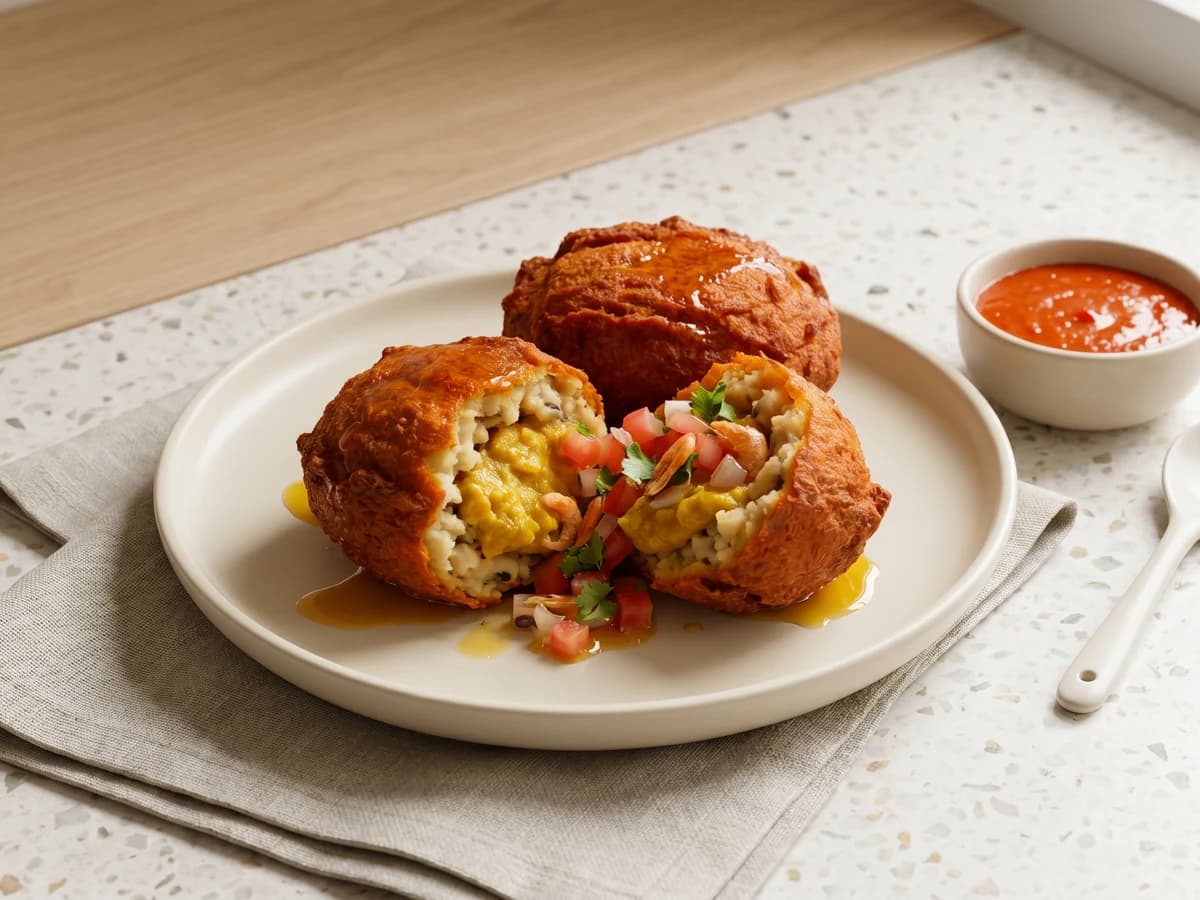
You think food of Iansã from the baianas' tabuleiro is not for your stove. Anota aí: soaked feijão-fradinho, real dendê, and hand-whipping make a home version learnable.

Chef Juliana
You think fried salgados belong to the birthday table you buy, not the one you make. Wrong. Learn the dough, seal the cheese, and the freezer starts working for you.

Chef Juliana
You think stuffed fried bolinhos are for the boteco cook, not your kitchen. Wrong. Mash the aipim warm, keep the filling dry, fry in small batches, and the tray disappears.