
Chef Fai
Dry Egg Noodles (Ba Mee Haeng)
The four pillars live at the bottom of the bowl before the noodles ever touch it: nam pla for salt, sugar for sweet, vinegar for sour, chili for heat. Every noodle cart in Bangkok runs on this principle.
A cooking platform built around craft, culture, and the stories behind what we eat.
Created by
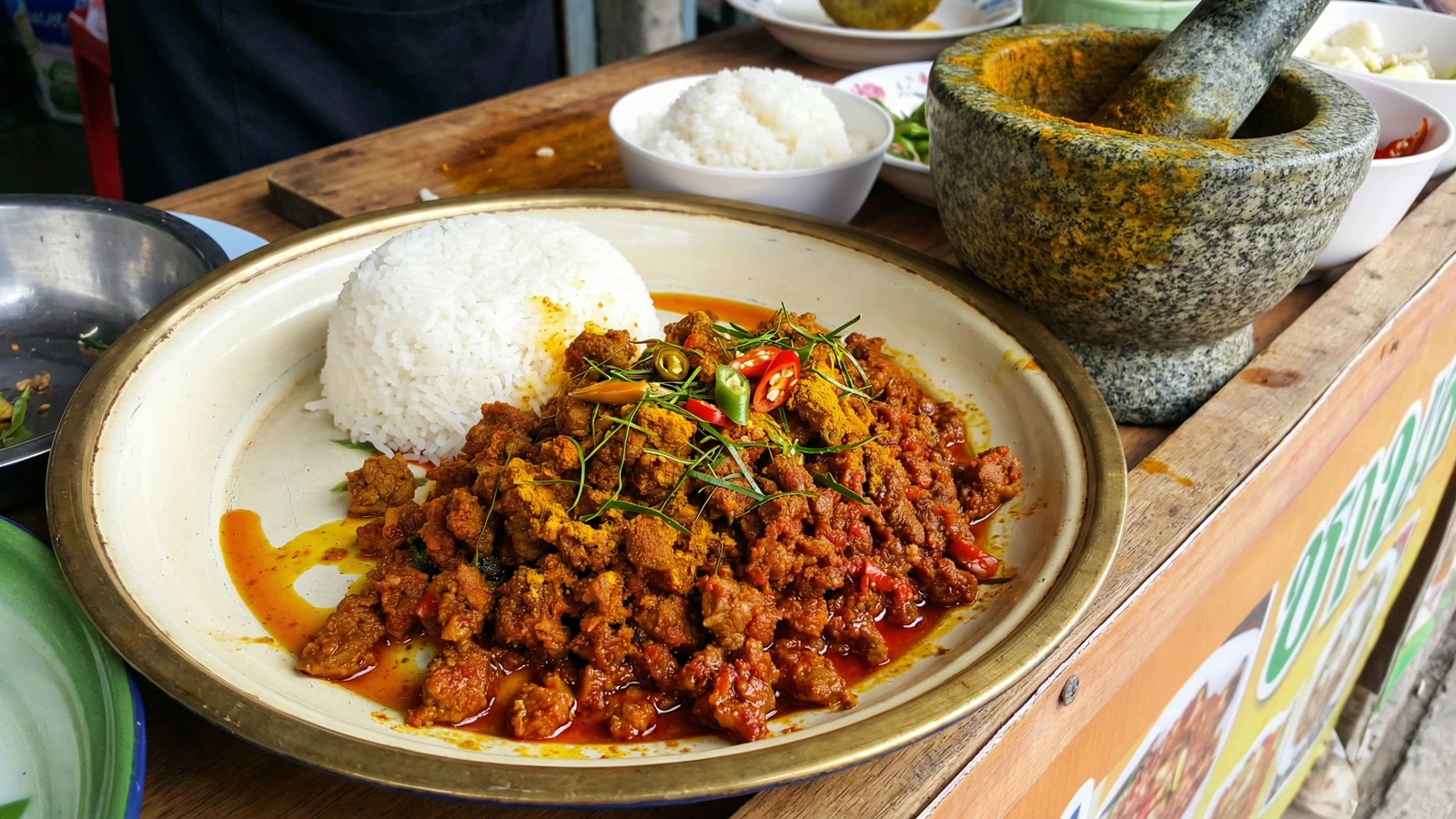
Zero liquid. Paste clings to meat. The Southern kreung tam stripped bare, no coconut to hide behind, no broth to dilute. This is the kreung tam test: if your paste is wrong, there is nowhere to run.
Khua kling is the kreung tam with nowhere to hide. No coconut milk. No broth. No liquid at all. Just paste and meat in a hot wok until every drop of moisture surrenders and the spice paste fuses to the protein. If your paste is good, the dish is extraordinary. If your paste is lazy, you'll taste every shortcut. That's the test.
Ajarn always said the kreung tam is the foundation of Thai food. Khua kling proves it. This is the purest expression of paste-based cooking in the entire Thai system. Southern cooks pound a kreung tam so loaded with dried chilies and fresh turmeric that the mortar turns golden and your eyes water before you've even lit the stove. Then they dry-fry it with minced meat until the paste coats every grain. The result is concentrated, relentless, and hot in a way that Central Thai curries never attempt.
The south doesn't use coconut to soften. It doesn't add sugar to round things out. Fish sauce for salt. A barely perceptible touch of palm sugar to cut bitterness, nothing more. The sour pillar comes from the kreung tam itself: lemongrass and kaffir lime zest carrying citric acid into the paste. The heat? Fifteen to twenty dried long chilies and a fistful of bird's eye. Southern Thai food does not negotiate with your comfort level.
I learned this dish from a Muslim vendor in Nakhon Si Thammarat who'd been cooking khua kling for thirty years. She pounded her paste every morning in a granite mortar the size of a car tire. The rhythm was steady, violent, and beautiful. She told me beef was more common in Southern Muslim kitchens because pork was off the table. Same technique. Different animal. The principles don't change. That's the whole point.
Khua kling originates from Thailand's deep south, particularly the provinces of Nakhon Si Thammarat, Songkhla, Pattani, and Trang, where Buddhist and Muslim culinary traditions coexist and cross-pollinate. The beef version (nua) is prevalent in Muslim communities where pork is forbidden, while pork (moo) dominates in Buddhist households. The technique of dry-frying paste with meat likely predates the arrival of coconut-based curries in the region and represents one of the oldest forms of Thai curry preparation, where preservation through intense spicing was practical in the humid tropical south.
Quantity
400g
not lean, 15-20% fat content
Quantity
15
soaked in warm water 15 minutes, drained, roughly chopped
Quantity
7
fresh
Quantity
3 tablespoons
tender inner part only, thinly sliced
Quantity
2 tablespoons
sliced
Quantity
1 tablespoon (about a 3-inch piece)
sliced
Quantity
1 teaspoon
Quantity
8
sliced
Quantity
10 cloves
sliced
Quantity
1 tablespoon
Quantity
1 teaspoon
Quantity
zest of 2 fruits
finely minced
Quantity
1 teaspoon
toasted
Quantity
1 teaspoon
toasted
Quantity
2 tablespoons
Quantity
2 tablespoons
Quantity
1 teaspoon
Quantity
6
center vein removed, very finely shredded
Quantity
for serving
| Ingredient | Quantity |
|---|---|
| beef mincenot lean, 15-20% fat content | 400g |
| dried long red chilies (prik haeng)soaked in warm water 15 minutes, drained, roughly chopped | 15 |
| bird's eye chilies (prik khi nu)fresh | 7 |
| lemongrass (takhrai)tender inner part only, thinly sliced | 3 tablespoons |
| galangal (kha)sliced | 2 tablespoons |
| fresh turmeric (kha min)sliced | 1 tablespoon (about a 3-inch piece) |
| ground dried turmeric (kha min haeng) | 1 teaspoon |
| shallotssliced | 8 |
| garlicsliced | 10 cloves |
| shrimp paste (kapi) | 1 tablespoon |
| white peppercorns (prik thai khao) | 1 teaspoon |
| kaffir lime zest (bai makrut)finely minced | zest of 2 fruits |
| coriander seeds (met pak chi)toasted | 1 teaspoon |
| cumin seeds (yee ra)toasted | 1 teaspoon |
| vegetable oil | 2 tablespoons |
| fish sauce (nam pla) | 2 tablespoons |
| palm sugar (nam tan pip) | 1 teaspoon |
| kaffir lime leaves (bai makrut)center vein removed, very finely shredded | 6 |
| steamed jasmine rice | for serving |
Put the coriander seeds, cumin seeds, and white peppercorns in a dry pan over medium heat. Shake the pan constantly. Two minutes, maybe three. When you can smell them from across the kitchen, they're done. The coriander should be deeply fragrant and slightly darkened. The cumin will smell warm and almost smoky. These toasted spices are a Southern signature. Central Thai pastes rarely include cumin. Down south, it's standard. Let them cool, then grind to powder in your mortar.
Start with the hardest ingredients. Dried chilies go in first with the ground spice powder and a pinch of salt for grip. Pound until the chilies break down into fibrous shreds, then into paste. This takes work. Five minutes of real pounding, not tapping. Add the fresh bird's eye chilies and pound them in. Then the lemongrass, galangal, and both turmerics (fresh and dried). Pound each addition until it disappears into the paste before adding the next. Then the shallots and garlic. Finally, the kaffir lime zest and the shrimp paste. The finished paste should be deep red-orange with gold streaks from the turmeric, rough-textured, and so aromatic it stings your nostrils. Your mortar will be stained yellow. That's turmeric doing its job.
Heat the oil in a wok over medium-high heat. When it shimmers, add all the paste at once. Spread it across the wok surface and let it fry. Stir every ten seconds or so. You're looking for the paste to darken slightly, for the oil to start separating at the edges, for the raw shrimp paste smell to transform into something rich and roasted. Three to four minutes. The kitchen will smell like the south of Thailand: turmeric, dried chili, and fermented shrimp paste hitting hot oil. If your eyes aren't watering slightly, you haven't used enough chilies.
Add the minced beef to the wok. Break it apart immediately. Press it against the wok surface, toss it through the paste, press it down again. Every piece of meat needs to be coated. The beef will release liquid. This is where the method earns its name. Khua means to stir-fry or to roast dry. You cook through that liquid. All of it. Don't cover the wok. Don't add water. Keep the heat at medium-high and keep stirring. The moisture evaporates, the paste concentrates, and the beef begins to fry in the spiced oil that remains. This takes eight to ten minutes. You're done when the wok is dry, the meat is deeply colored, and the paste clings to every piece. No pooling liquid. None.
Add the fish sauce and palm sugar. The fish sauce reinforces salt and adds depth. The palm sugar is barely there, just enough to take the bitter edge off the dried chili and turmeric. This is Southern cooking. It's not sweet. Toss the beef through the seasoning for another thirty seconds. Taste. It should be: spicy first, salty second, with an earthy turmeric warmth underneath. If you need more salt, add fish sauce, not table salt. The fermented complexity of nam pla is part of the flavor.
Kill the heat. Scatter the shredded kaffir lime leaves over the beef and toss once. The residual heat will release their citrus oil instantly. That sharp, floral perfume is the finishing note that lifts the entire dish. If you added them too early, they'd go bitter. Last second. That's the rule. Plate the khua kling in a mound. No sauce. No garnish needed. The color alone tells you what this is: gold from turmeric, red from chili, dark from the sear. Serve with jasmine rice and nothing else.
1 serving (about 125g)
Culinary guides, cultural storytelling, and the editorial depth that makes cooking meaningful.
Discover Culinary ExplorerChef Fai
The four pillars live at the bottom of the bowl before the noodles ever touch it: nam pla for salt, sugar for sweet, vinegar for sour, chili for heat. Every noodle cart in Bangkok runs on this principle.

Chef Fai
The kreung tam fried in cracked coconut cream until the oil bleeds red. That's the technique. Concentrated, semi-dry, spooned thick over crispy fish. This is what happens when the four pillars meet restraint.

Chef Fai
Isan foraging in a bowl: wild taro stems stripped of their sting, simmered in padaek broth with a pounded chili paste and yanang leaf extract. The land feeds you if you know the rules.

Chef Fai
Lanna's kreung tam breaks from Central Thai rules: ginger over galangal, cumin and coriander from Burmese spice routes, tamarind for sour instead of lime. The North has its own system, and this curry is its crown.