
Chef Lesia
Adzhyka po-Ukrainsky (аджика, tomato-pepper relish)
The tomatoes go from garden-red to brick-red while the peppers slump and the garlic waits. By the end, the spoon leaves a path and the whole south fits in one jar.
A cooking platform built around craft, culture, and the stories behind what we eat.
Created by
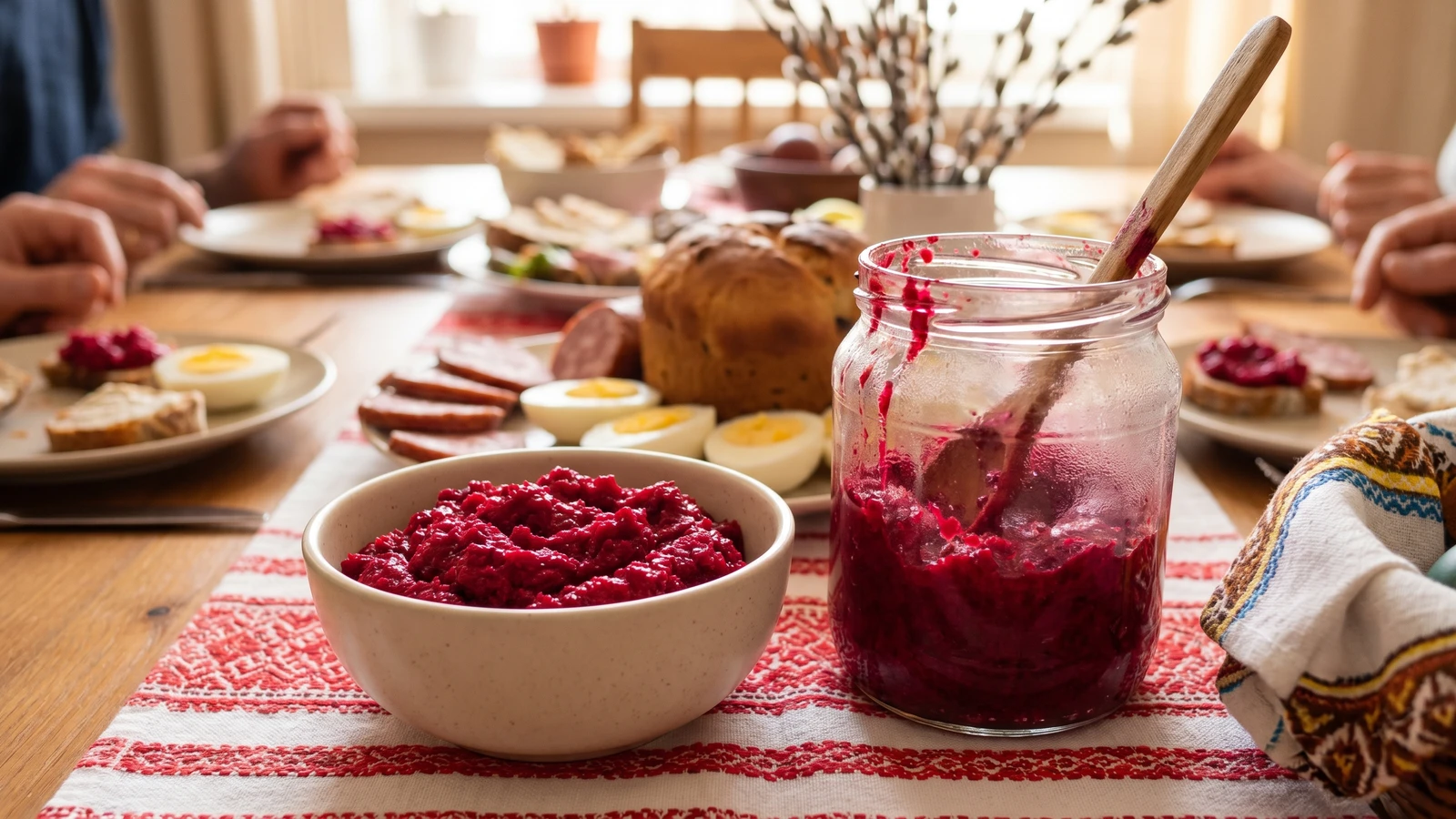
The beet makes it glow like a church window, then the horseradish comes up through your nose and reminds everyone at the Easter table to sit straighter.
The color is almost too pretty for how rude it is. Beet turns the jar ruby, glossy, innocent-looking, and then fresh horseradish climbs straight through your nose like it has business upstairs. This is the Easter table's little thunderclap: a spoonful beside cold roast pork, kovbasa, eggs, paska, anything rich that needs waking up.
The whole dish depends on one thing: grate the horseradish fresh and cover it quickly. The sharpness is volatile, which is a polite kitchen word for "it will run away if you let it." Aunt Nadia wrote only, "close the jar before it bites you back," and for once she was giving an exact measurement. Mix it into the beet while it's still loud, then balance with vinegar, salt, and just enough sugar to round the edges without making it sweet.
Wear gloves if you like your hands unstained, open a window if you like your eyes, and make more than one jar. There is no tradition of a tiny Easter table.
Khrin z buryakom belongs especially to the Ukrainian Easter basket and Easter breakfast, where grated horseradish stands for bitterness and strength, while beet softens its fire with sweetness and color. Across regions the balance shifts: some households make it nose-clearing and dry, others looser and sweeter, but the pairing with cold meats, eggs, and paska is fixed enough that the table looks unfinished without it.
Quantity
500g
scrubbed, tails left on
Quantity
80g
peeled
Quantity
3 tablespoons
Quantity
1 tablespoon, plus more if needed
Quantity
1 teaspoon
Quantity
1 to 2 teaspoons
to taste
Quantity
1 tablespoon
| Ingredient | Quantity |
|---|---|
| beetsscrubbed, tails left on | 500g |
| fresh horseradish rootpeeled | 80g |
| apple cider vinegar or white wine vinegar | 3 tablespoons |
| cold water | 1 tablespoon, plus more if needed |
| fine sea salt | 1 teaspoon |
| sugarto taste | 1 to 2 teaspoons |
| unrefined sunflower oil (optional) | 1 tablespoon |
Put the whole beets in a pan, cover with cold water, and simmer gently until a knife slides through without a fight. Keep the tails on so they don't bleed all their color into the water. Drain, cool until you can handle them, then slip the skins off with your fingers.
Grate the beets on the fine or medium side of a box grater, depending how smooth you like the relish. Fine gives you a spoonable ruby paste; medium leaves little threads that catch against cold meat beautifully. Spoon the beet into a mixing bowl and admire the mess. This is why aprons exist.
Grate the peeled horseradish finely, or pulse it in a small food processor with the vinegar and water. Keep your face back when you lift the lid. It should smell bright, sharp, almost mustardy, the kind of smell that clears the whole room.
Stir the horseradish into the grated beet with the salt and one teaspoon of sugar. Taste after a minute, once the vinegar has moved through the beet. It should be sweet at first, then sharp enough to make your eyes blink. Add the second teaspoon of sugar only if the beet tastes flat, and a splash more vinegar if the relish needs lifting.
Pack the relish into clean jars, pressing it down so there are no dry pockets. Spoon a little sunflower oil over the top if you want a softer, rounder finish, then close the lids and chill. It is good straight away, but better after a night, when the beet and horseradish stop shouting over each other and start singing the same song.
1 serving (about 30g)
Culinary guides, cultural storytelling, and the editorial depth that makes cooking meaningful.
Discover Culinary ExplorerChef Lesia
The tomatoes go from garden-red to brick-red while the peppers slump and the garlic waits. By the end, the spoon leaves a path and the whole south fits in one jar.

Chef Lesia
A jar of grated beets turns ordinary water into sour red light, the kind that wakes borshch from inside instead of shouting over it.

Chef Lesia
Raw garlic, salt, and green sunflower oil turn into a sauce that announces itself from the doorway, sharp enough for pampushky, potatoes, grilled meat, and any tired Tuesday plate.

Chef Lesia
The gravy should start dark as wet bark, then soften when smetana goes in. Spoon it over buckwheat, potatoes, or mlyntsi and nobody asks where the meat went.