
Chef Lesia
Bessarabskyi Borshch (бессарабський борщ, fish borshch)
The catch goes into the pan before it ever meets the pot, so Danube fish stays whole in a tomato-red broth sour enough to wake the table.
A cooking platform built around craft, culture, and the stories behind what we eat.
Created by
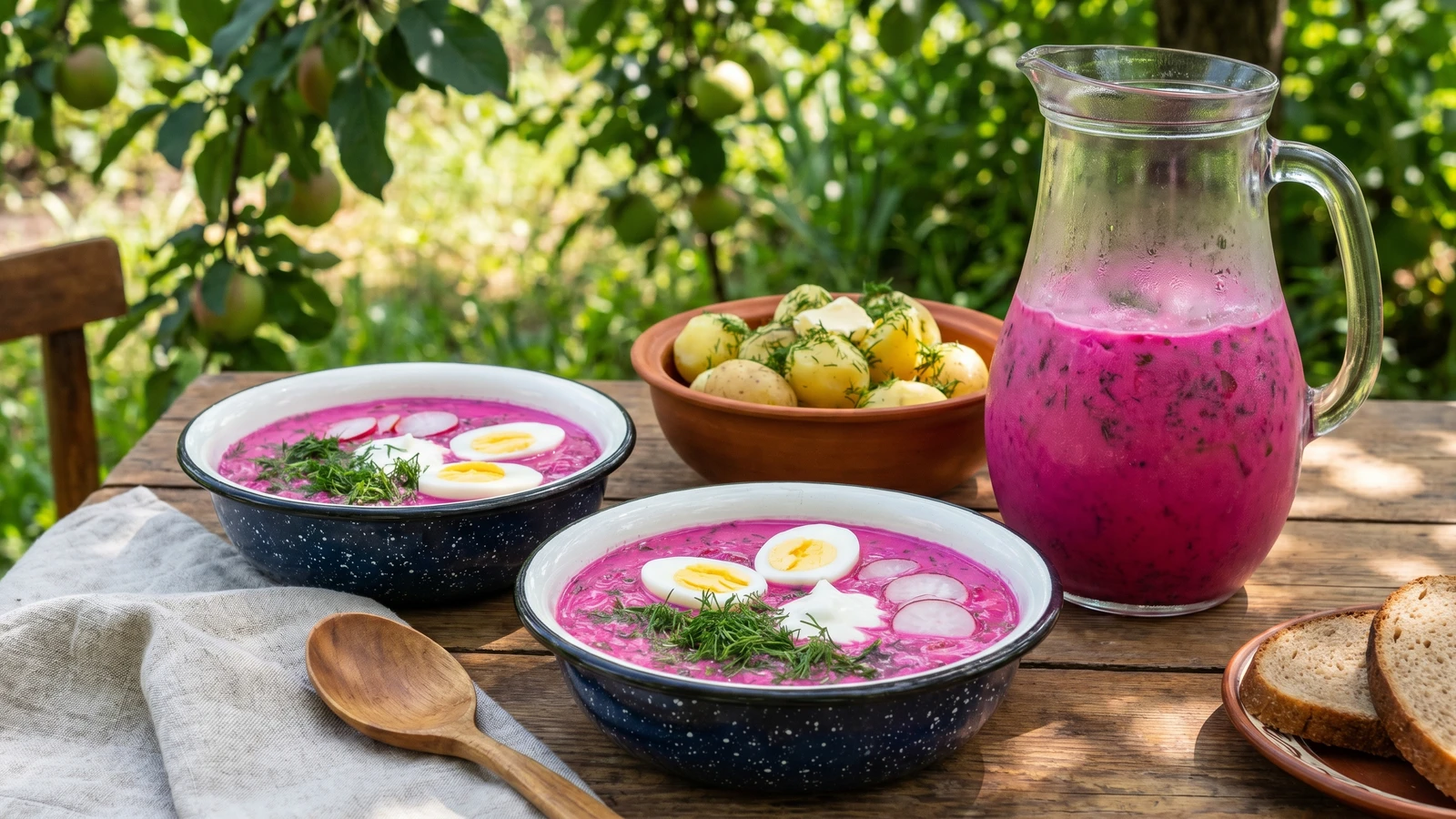
The beet bleeds into the kefir and the whole bowl turns raspberry-pink, cold enough to fog the spoon, sharp with cucumber, scallion, and dill.
The color arrives before the taste does. White kefir takes one spoonful of grated beet and turns raspberry-pink, then the cucumber snaps, the dill hits your nose, and suddenly lunch feels possible in the kind of heat that makes the litnya kuhnia, the summer kitchen, hum like a jar shelf.
Kholodnyk is borshch that took its coat off. No meat broth, no long argument with the stove, just cooked beet, cold sour dairy, raw garden crunch, and enough dill to make the bowl look alive. It belongs to summer tables: courtyard lunches, outdoor supper after watering the tomatoes, something made in the morning and eaten when the sun gets rude.
The one thing that decides it is balance. Kefir gives the tang, beet gives the sweetness, cucumber and scallion keep it awake; if the bowl tastes flat, it doesn't need fuss, it needs salt and a sharper spoon of beet liquid, lemon, or beet zakwas. Aunt Nadia would have written, "until it sounds right," which is useless on paper and perfect in the mouth.
Make a big jugful. There is no tradition of a small one, and cold borshch in the fridge is a kindness your future self will bless.
Cold beet soups have long belonged to the summer kitchens of Ukraine, especially across the north and west where sour milk, beet kvass, and garden herbs were natural warm-weather bases. The kefir version is a modern home-kitchen branch of the same family: faster than beet-kvass kholodnyk, lighter than hot borshch, and still recognizably Ukrainian in its beet, dill, egg, and sour dairy. Neighboring cuisines have their own cold beet soups, but Ukraine's versions move by region, household, and season, which is how living food behaves.
Quantity
1 kg
scrubbed, tails left on
Quantity
1 litre
well chilled
Quantity
300ml
cold and strained
Quantity
2 medium
finely diced or coarsely grated
Quantity
8
thinly sliced
Quantity
4
finely sliced
Quantity
1 large bunch
finely chopped
Quantity
4
halved or chopped
Quantity
2 tablespoons, plus more to taste
Quantity
1 teaspoon, plus more to taste
Quantity
1/2 teaspoon
Quantity
200g
Quantity
to serve
| Ingredient | Quantity |
|---|---|
| small beetsscrubbed, tails left on | 1 kg |
| plain kefirwell chilled | 1 litre |
| beet cooking liquidcold and strained | 300ml |
| cucumbersfinely diced or coarsely grated | 2 medium |
| radishesthinly sliced | 8 |
| scallionsfinely sliced | 4 |
| dillfinely chopped | 1 large bunch |
| hard-boiled eggshalved or chopped | 4 |
| beet zakwas, fermented beet brine, or lemon juice | 2 tablespoons, plus more to taste |
| sea salt | 1 teaspoon, plus more to taste |
| black pepper | 1/2 teaspoon |
| smetana or sour cream (optional) | 200g |
| boiled young potatoes (optional) | to serve |
Put the beets in a pot, cover with cold water, and simmer gently until a knife slides through without bullying them. Keep the tails on so the color stays inside. When they smell sweet and earthy rather than raw and dusty, lift them out, save the cooking liquid, and let both go completely cold.
Slip the skins from the cold beets with your fingers, then grate them coarse into a big bowl. Strain the beet cooking liquid and chill it hard. You want it clean-tasting, ruby, and cold enough that it sharpens the kefir instead of warming it.
Dice or grate the cucumbers, slice the radishes and scallions, and chop the dill. Add them to the beets with the salt and pepper. Stir once and listen to the bowl change: dry vegetables become juicy, the salt wakes them up, and the dill starts bossing everyone around.
Pour in the cold kefir and 300ml of chilled beet liquid, then stir until the soup turns a clear raspberry-pink. Add the beet zakwas, fermented beet brine, or lemon juice. Taste for the old triangle: sweet beet, sour dairy, clean salt. If one side is missing, fix that side and stop.
Cover and chill until the flavors sit together, at least long enough for the dill to perfume the kefir and the cucumber to soften its edges. The soup should pour easily from a ladle but still carry plenty of beet and crunch.
Ladle into deep bowls and top each with egg, more dill, and a spoon of smetana if you want it richer. Serve with boiled young potatoes on the side, warm or cold, sprinkled with salt and dill. Eat outside if you can.
1 serving (about 390g)
Culinary guides, cultural storytelling, and the editorial depth that makes cooking meaningful.
Discover Culinary ExplorerChef Lesia
The catch goes into the pan before it ever meets the pot, so Danube fish stays whole in a tomato-red broth sour enough to wake the table.

Chef Lesia
The fish leaves the pot before the soup reaches the table: broth in the bowl, river fish on a platter, garlic salamur waiting to wake both.

Chef Lesia
Brick-red paprika blooms in bacon fat, beef darkens at the edges, and potatoes thicken the cauldron until it stands between soup and stew. This is comfort with a fire under it.
Chef Lesia
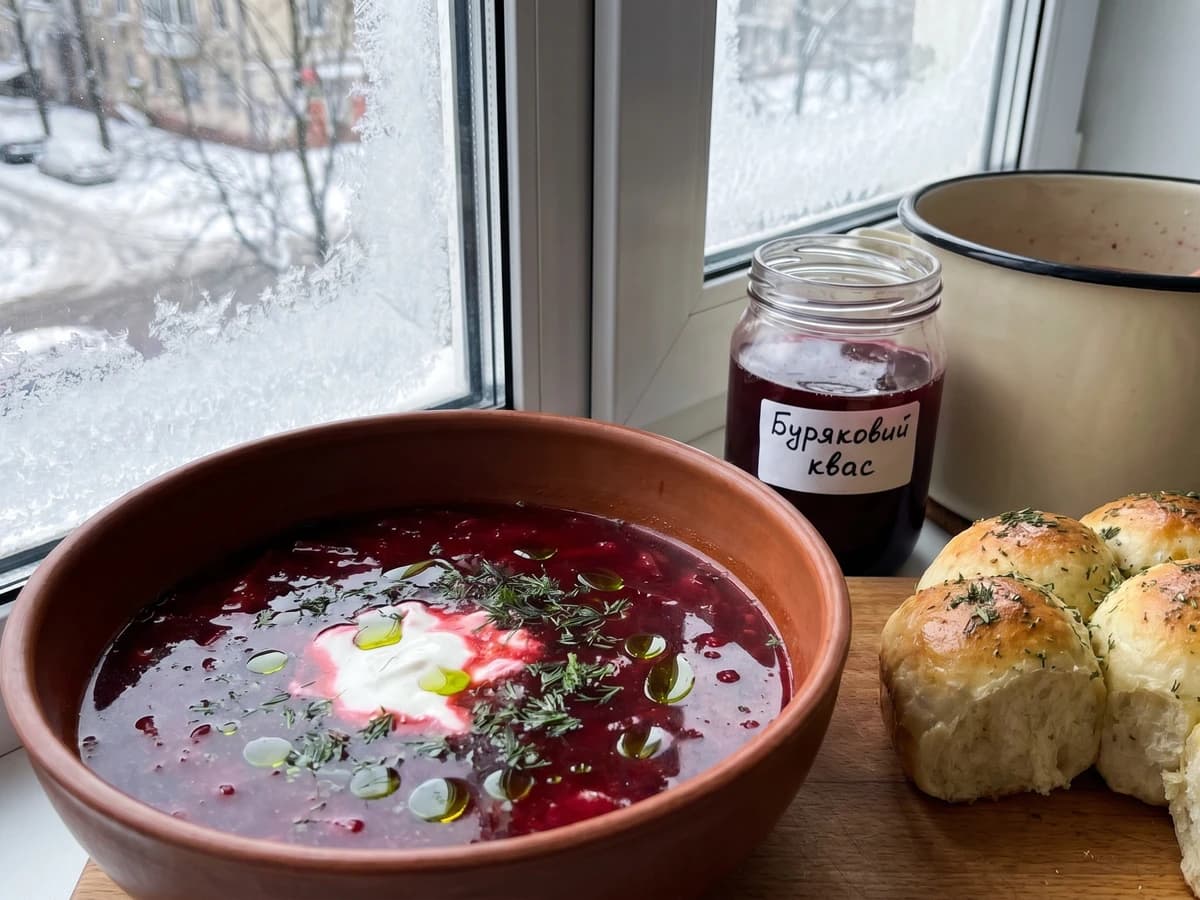
Beets hit slow-sweated zasmazhka and the broth goes dark ruby, sour from beet zakwas, sweet from bone and garden, thick enough for the spoon to stand up straight.