
Chef Lesia
Bessarabskyi Borshch (бессарабський борщ, fish borshch)
The catch goes into the pan before it ever meets the pot, so Danube fish stays whole in a tomato-red broth sour enough to wake the table.
A cooking platform built around craft, culture, and the stories behind what we eat.

Created by
The shocking thing is the color: cold beet-crimson soup, sharpened with beet kvass and softened with soured milk, eaten when the kitchen is too hot to light.
The bowl arrives pink enough to make the table go quiet. Not polite pink. Beet-crimson turned cloudy with soured milk, green with dill and cucumber, cold enough that the spoon sweats in your hand. This is summer borshch for the days when lighting the stove feels like an insult.
Kholodnyk means the cold one, and it behaves exactly like that. You cook the beets gently, then cool their liquor instead of throwing it away, because that ruby water is the spine of the soup. Beet kvass gives the sourness depth, kefir or prostokvasha gives it body, and the chopped cucumber, radish, spring onion and dill make it eat like a garden that fell into a bowl.
The one thing that decides the dish is balance. Add the soured milk slowly into the cold beet base, tasting as you go, until the color blooms and the sharpness softens but doesn't disappear. Aunt Nadia wrote only, "make it lively," which is very helpful if you already know. Now you know: it should taste cold, sour, grassy, and sweet from the beets, never milky and flat.
Make a big pot. It sits in the fridge better than we do in August, and the next day the dill has spoken to everybody.
Kholodnyk, also called kholodnyi borshch, belongs to the summer kitchens of Ukraine, especially in central and northern regions where beet broth, beet kvass, cucumbers, herbs and sour milk made a cooling meal before refrigerators were common. Older household versions often used young beets with their tops, while later city versions leaned on kefir, smetana and hard-boiled eggs for speed and richness. Its relatives appear across neighboring cuisines, but the Ukrainian bowl keeps the borshch logic: beet first, sourness from fermentation when you have it, dill without apology.
Quantity
1 kg
scrubbed, tails left on
Quantity
2 litres
Quantity
1 teaspoon, plus more to taste
Quantity
1 tablespoon
Quantity
250ml
Quantity
750ml
Quantity
250ml, plus more to serve
Quantity
3
diced
Quantity
8
thinly sliced
Quantity
6
finely sliced
Quantity
1 large bunch
finely chopped
Quantity
4
halved or chopped
Quantity
600g
boiled and cooled
Quantity
1 tablespoon
for the potatoes
Quantity
to taste
| Ingredient | Quantity |
|---|---|
| small beetsscrubbed, tails left on | 1 kg |
| cold water | 2 litres |
| sea salt | 1 teaspoon, plus more to taste |
| sugar or honey (optional) | 1 tablespoon |
| beet kvass or brine from fermented beets | 250ml |
| kefir, prostokvasha, or thin plain yogurt | 750ml |
| smetana | 250ml, plus more to serve |
| small cucumbersdiced | 3 |
| radishesthinly sliced | 8 |
| spring onionsfinely sliced | 6 |
| dillfinely chopped | 1 large bunch |
| hard-boiled eggshalved or chopped | 4 |
| new potatoesboiled and cooled | 600g |
| unrefined sunflower oilfor the potatoes | 1 tablespoon |
| black pepper | to taste |
Put the whole beets in a large pot with the cold water and salt. Bring to a quiet simmer, not a rolling boil, and cook until a knife slides in without a fight and the kitchen smells sweet and earthy, not raw. Leave the tails on; they keep the color inside the beet instead of bleeding it all away.
Lift the beets out and keep every drop of the cooking liquor. When the beets are cool enough to handle, slip off the skins and grate them coarsely. Stir the grated beets back into the ruby liquor, then let the whole pot cool completely.
Stir in the beet kvass and taste. It should wake up at the sides of your tongue. If your beets are a little flat, add the sugar or honey, not to make it sweet but to put the beet back on its feet. Chill until properly cold.
Whisk the kefir with the smetana in a bowl until smooth, then stir it slowly into the cold beet base. Watch the color bloom from ruby to deep raspberry. Taste before you add it all; some kefir is sharper than others, and kholodnyk should be bright, not chalky.
Fold in the cucumbers, radishes, spring onions and most of the dill. Grind in black pepper and adjust the salt. The spoon should move through little crisp things, and the smell should be beet, sour milk and dill in that order.
Chill the soup for at least a few hours, until the bowl feels cold before you taste it. Serve with hard-boiled eggs, more dill, a spoon of smetana if you like, and boiled new potatoes on the side dressed with unrefined sunflower oil and salt. Enough for eight guests or one hungry Ukrainian.
1 serving (about 650g)
Culinary guides, cultural storytelling, and the editorial depth that makes cooking meaningful.
Discover Culinary ExplorerChef Lesia
The catch goes into the pan before it ever meets the pot, so Danube fish stays whole in a tomato-red broth sour enough to wake the table.

Chef Lesia
The fish leaves the pot before the soup reaches the table: broth in the bowl, river fish on a platter, garlic salamur waiting to wake both.

Chef Lesia
Brick-red paprika blooms in bacon fat, beef darkens at the edges, and potatoes thicken the cauldron until it stands between soup and stew. This is comfort with a fire under it.
Chef Lesia
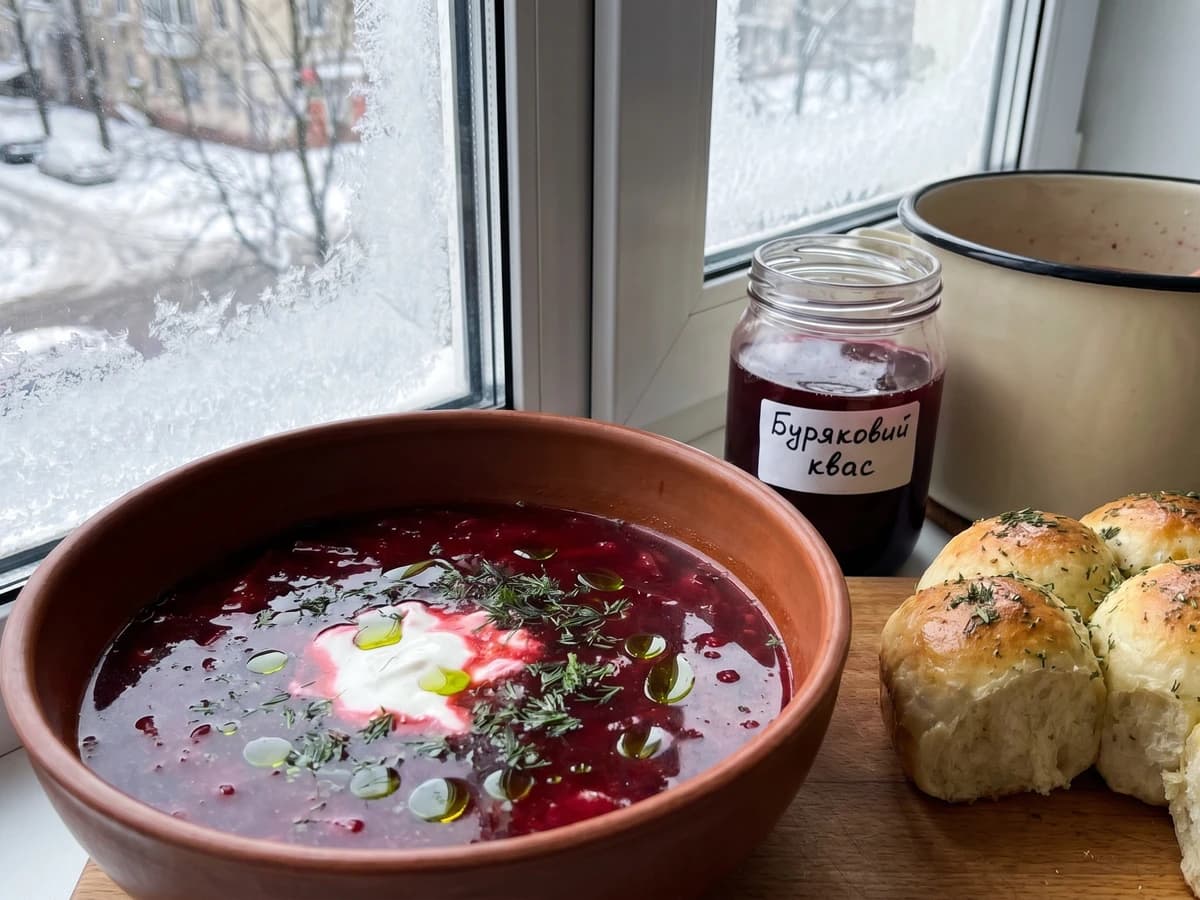
Beets hit slow-sweated zasmazhka and the broth goes dark ruby, sour from beet zakwas, sweet from bone and garden, thick enough for the spoon to stand up straight.