Chef Lesia
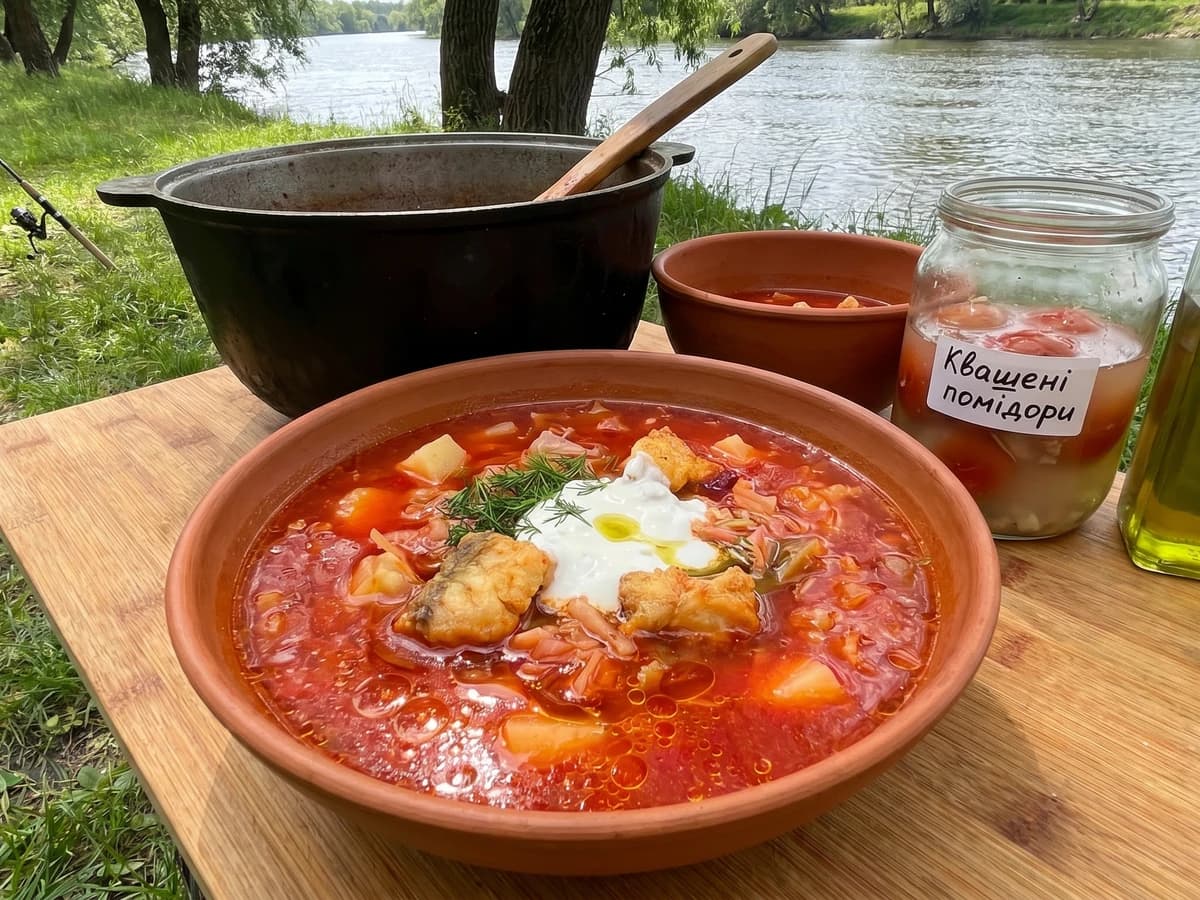
Bessarabskyi Borshch (бессарабський борщ, fish borshch)
The catch goes into the pan before it ever meets the pot, so Danube fish stays whole in a tomato-red broth sour enough to wake the table.
A cooking platform built around craft, culture, and the stories behind what we eat.
Created by
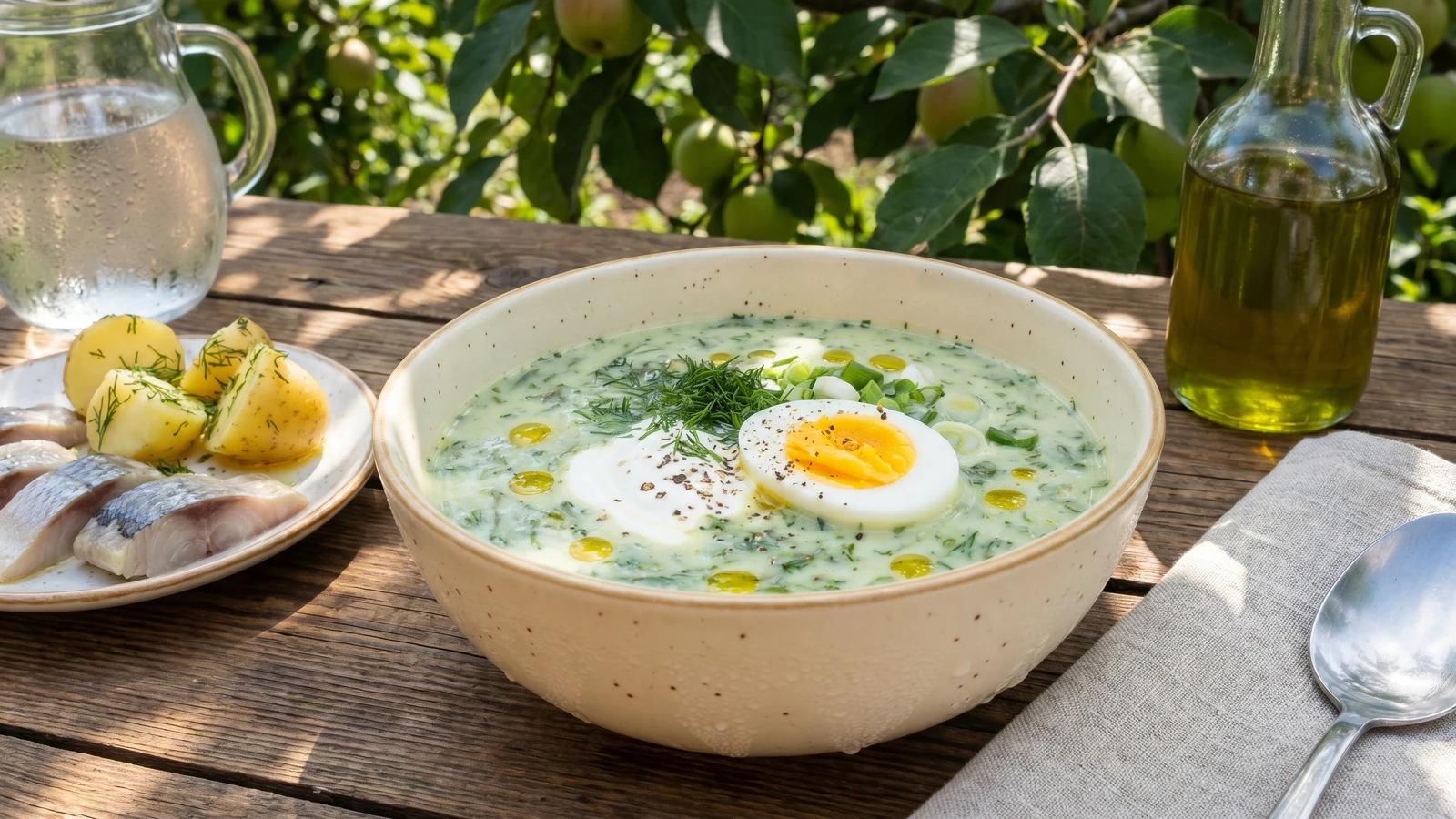
Sorrel turns the broth sharp and green, then the cold smetana softens it. This is summer borshch for a table under leaves, tart enough to wake you properly.
The first spoonful should make your jaw tighten a little. That is the sorrel doing its work, bright and lemony without a lemon in sight, turning a plain broth into something green, cold, and very awake. Add egg, dill, cucumber, smetana, and suddenly the bowl feels like shade after a hot road.
This is the summer cousin of green borshch, served chilled when the garden is too loud and the stove feels like a punishment. Around Kharkiv villages, you'll see it with salty herring on the side, and that makes sense: cold tart soup, oily fish, boiled potato, dill everywhere. It is not delicate. It is lunch with its sleeves rolled up.
The one thing that decides it is the zasmazhka, the slow-sweated onion and carrot. Add it near the end so its sweetness sits brightly on the broth instead of flattening into the stock. Aunt Nadia would have written, "until the smell changes," which means the raw onion smell has gone, the carrot has softened, and the oil has turned gold. You'll know.
Make a big pot. Cold borshch is kinder the next day, when the sorrel has settled, the dill has spoken to everybody, and the boiled eggs are waiting in the fridge like they knew guests were coming.
Green borshch belongs to Ukraine's sorrel season, especially late spring and early summer, when gardens and market bundles fill with shchavel (щавель). The cold version is strongly at home in Slobozhanshchyna and the Kharkiv region, where village tables often serve it with salted herring beside the bowl rather than stirred into it. Soviet canteens flattened many green soups into one mild formula, but home cooks kept the sharper regional habits alive: sorrel first, dill always, egg for richness, and a proper zasmazhka for sweetness.
Quantity
2 litres
Quantity
600g
peeled and cut into small cubes
Quantity
2 tablespoons
Quantity
1 large
finely diced
Quantity
1 large
coarsely grated
Quantity
250g
washed, tough stems removed, roughly chopped
Quantity
100g
roughly chopped
Quantity
1 small
diced
Quantity
4
thinly sliced
Quantity
1 large bunch
finely chopped
Quantity
4
halved or chopped
Quantity
250g, plus more to serve
Quantity
2 tablespoons
Quantity
to taste
Quantity
to serve
| Ingredient | Quantity |
|---|---|
| chicken broth or light vegetable broth | 2 litres |
| waxy potatoespeeled and cut into small cubes | 600g |
| unrefined sunflower oil | 2 tablespoons |
| onionfinely diced | 1 large |
| carrotcoarsely grated | 1 large |
| fresh sorrelwashed, tough stems removed, roughly chopped | 250g |
| young spinach or beet greensroughly chopped | 100g |
| cucumberdiced | 1 small |
| spring onionsthinly sliced | 4 |
| dillfinely chopped | 1 large bunch |
| hard-boiled eggshalved or chopped | 4 |
| smetana or sour cream | 250g, plus more to serve |
| fermented cucumber brine or sorrel brine (optional) | 2 tablespoons |
| sea salt and black pepper | to taste |
| salted herring fillets, boiled new potatoes, and rye bread (optional) | to serve |
Bring the broth to a gentle bubble and add the potatoes with a good pinch of salt. Cook until the edges soften and a piece breaks cleanly under a spoon, but don't let them collapse into paste. Cold soup needs texture, not mash.
Warm the sunflower oil in a wide pan, add the onion, and let it soften quietly before the carrot joins it. You're not browning anything. Sweat it until the raw onion smell disappears, the carrot turns soft, and the oil glows yellow-orange.
Stir the zasmazhka into the pot, then add the sorrel and spinach or beet greens. The sorrel will darken almost at once, from spring green to olive, and the broth will smell sharp and grassy. Stop there. Overcooked sorrel sulks.
Take the pot off the heat and let it cool until it is no longer hot to the touch, then stir in the cucumber, spring onions, and most of the dill. Taste before you add anything else. Cold dulls salt, so season a little more than you would for a hot soup, and add fermented cucumber brine if the sorrel needs help.
Chill the borshch until properly cold, at least two hours. Whisk the smetana with a ladleful of the cold broth in a bowl, then stir it back into the pot so it turns pale green instead of clumping. Serve with boiled egg, more dill, black pepper, and herring on the side if your table is in a Kharkiv mood.
1 serving (about 465g)
Culinary guides, cultural storytelling, and the editorial depth that makes cooking meaningful.
Discover Culinary ExplorerChef Lesia
The catch goes into the pan before it ever meets the pot, so Danube fish stays whole in a tomato-red broth sour enough to wake the table.

Chef Lesia
The fish leaves the pot before the soup reaches the table: broth in the bowl, river fish on a platter, garlic salamur waiting to wake both.

Chef Lesia
Brick-red paprika blooms in bacon fat, beef darkens at the edges, and potatoes thicken the cauldron until it stands between soup and stew. This is comfort with a fire under it.
Chef Lesia
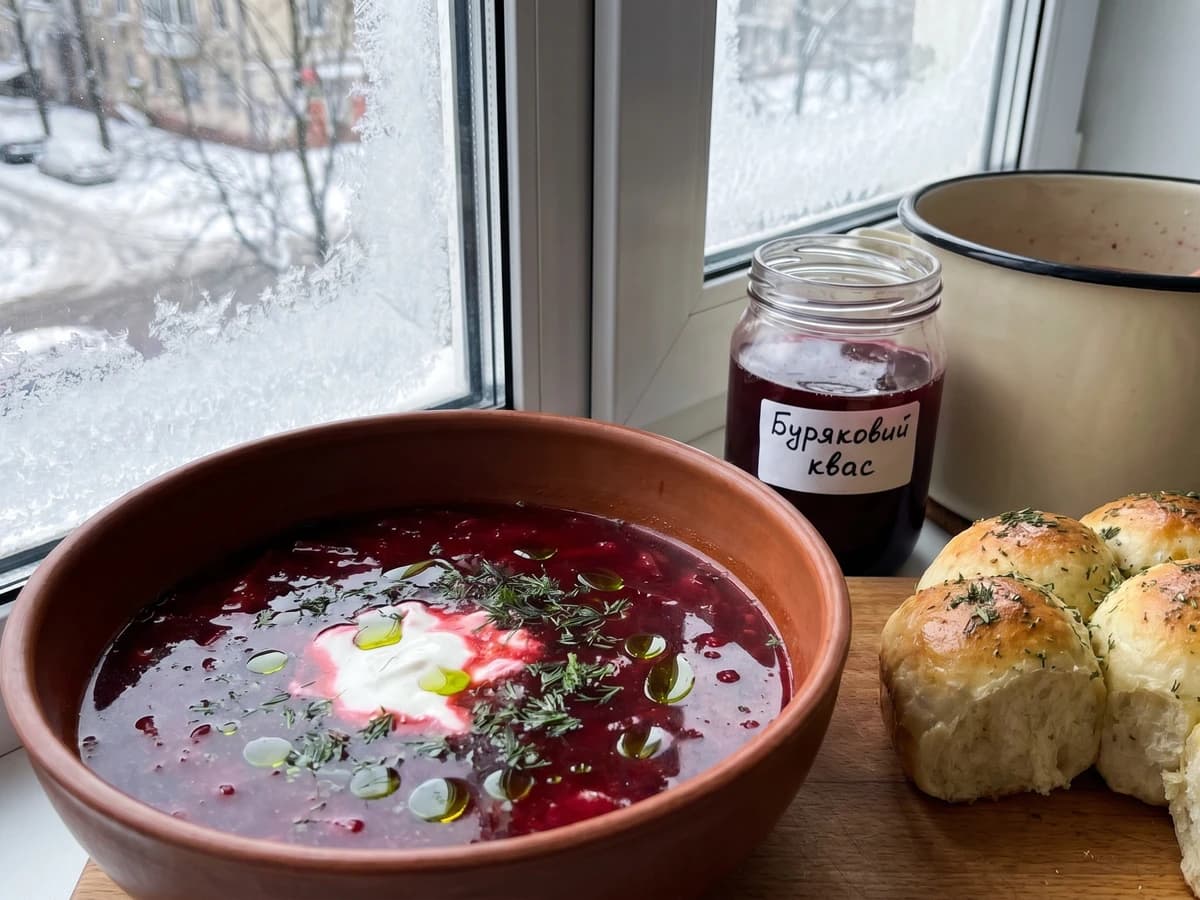
Beets hit slow-sweated zasmazhka and the broth goes dark ruby, sour from beet zakwas, sweet from bone and garden, thick enough for the spoon to stand up straight.