Chef Lesia
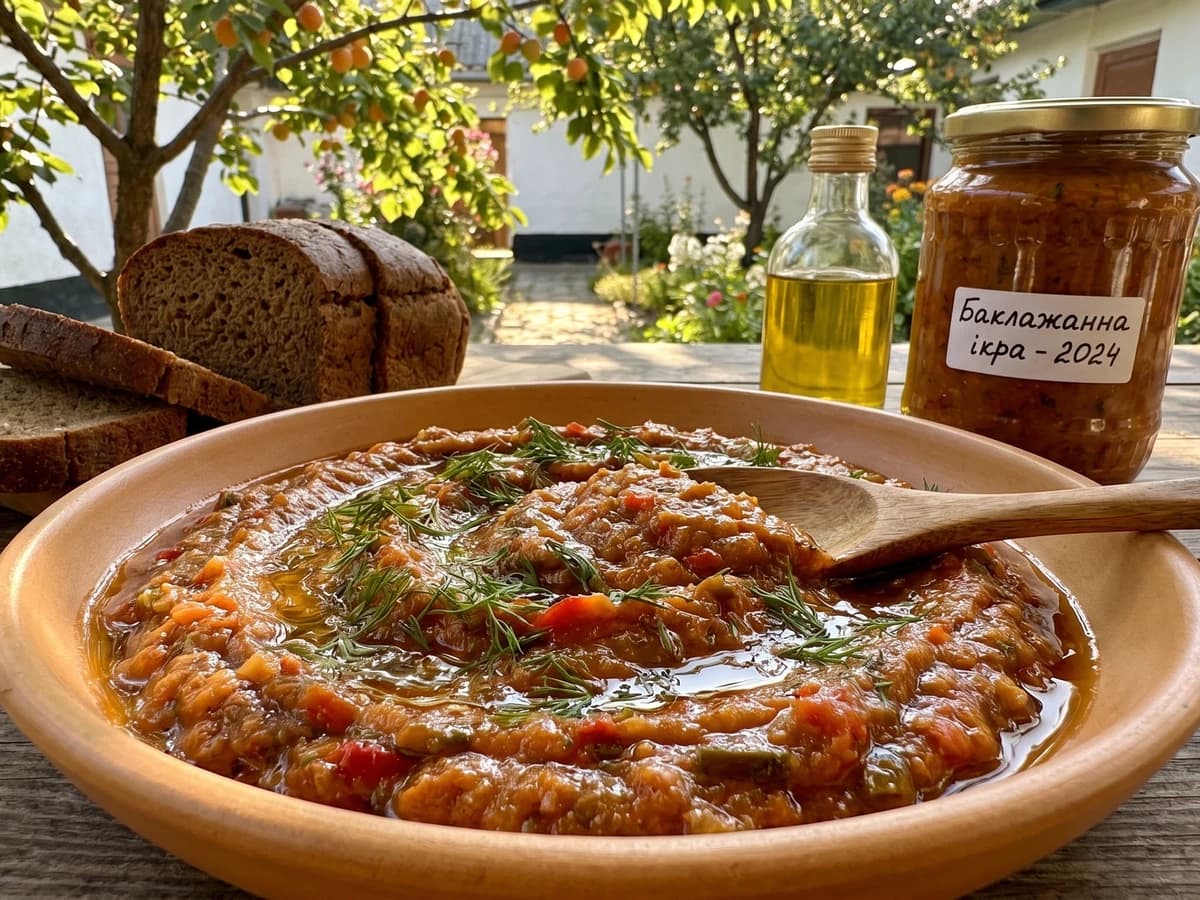
Baklazhanna Ikra (баклажанна ікра, eggplant caviar)
Eggplants collapse into silk, tomatoes give up their summer, and the pan turns sweet and smoky enough that a spoon dragged through leaves a clean path.
A cooking platform built around craft, culture, and the stories behind what we eat.
Created by
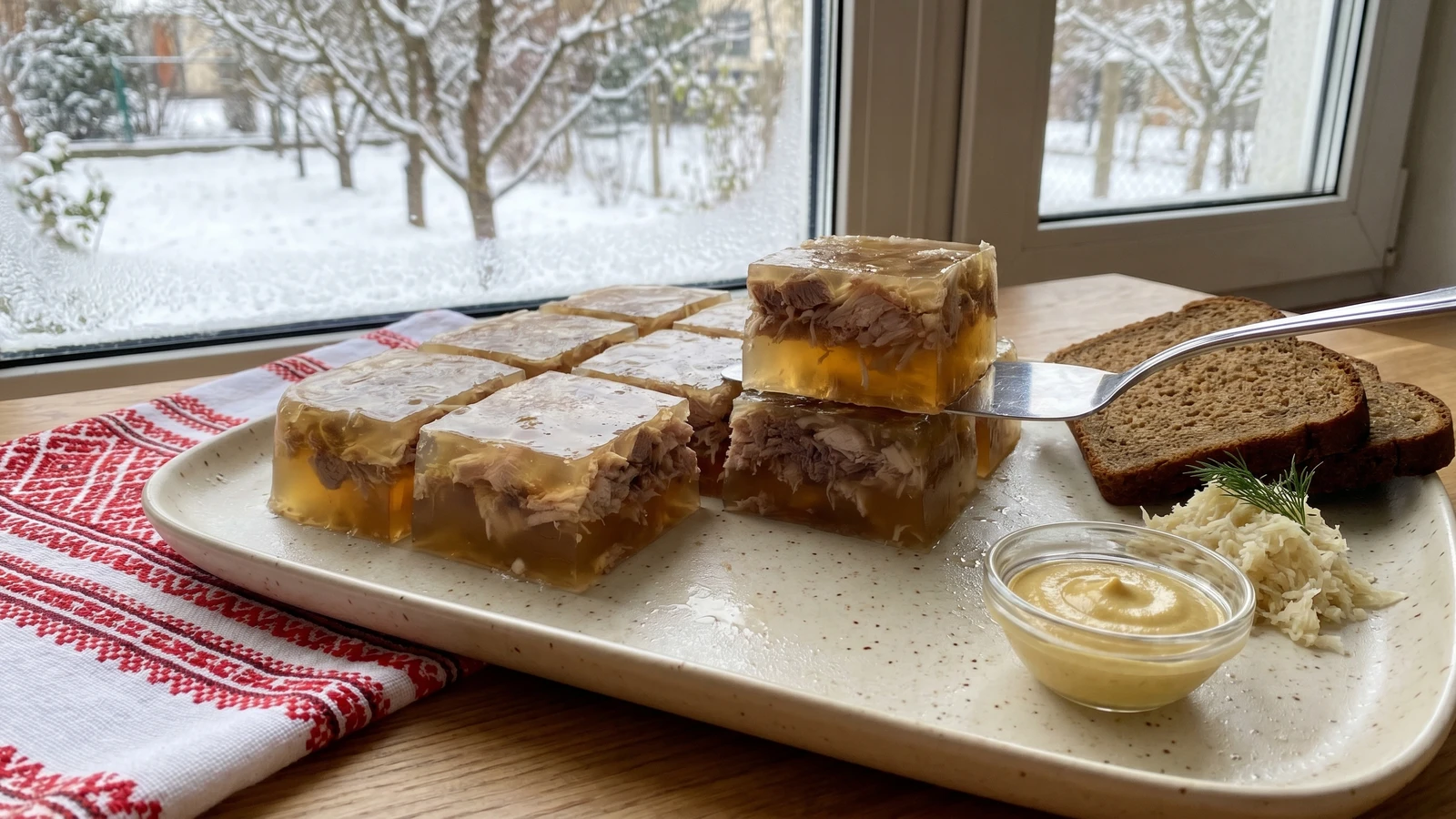
The clearest holiday jelly begins with the least glamorous pieces: feet, knuckles, skin, and bones, all the parts that know how to turn water into glass.
The clearest holiday jelly begins with the least glamorous pieces: feet, knuckles, skin, and bones, all the parts that know how to turn water into glass. Kholodets is cold, trembling, garlic-sharp, and completely unreasonable if you judge it before the first bite with horseradish. Then it makes sense. Fatty meat, clean broth, a little burn in the nose. The table wakes up.
This is holiday food because it asks for time, not because it asks for fuss. You start with cold water, bring it up slowly, skim like a patient person, then keep the pot at the barest murmur until the broth smells round and roasted at the edges. Aunt Nadia wrote only, "until it holds," which made me mutter at the paper for three winters. Now I know: a drop of broth should dry sticky between your fingers, like it has glue in its bones.
The one thing that decides the dish is gentleness. A hard boil smashes fat into the broth and makes it cloudy; a quiet simmer draws collagen out cleanly so the jelly sets clear without powdered help. Make a big tray. There is no tradition of a small one, and someone will always cut another square when the khrrin, the sharp horseradish, comes round.
Kholodets belongs to the old Ukrainian winter table, especially Christmas and New Year zakusky, when a cold pantry or balcony could set a whole tray naturally before refrigerators made the timing easier. Across regions the bones change: pork legs and ears in central and southern kitchens, beef shank in some western homes, rooster feet where the household kept birds. Soviet canteens made aspic look grey and joyless, but the home version is older, clearer, and much more specific: a preservation-minded winter dish built from the animal parts that carry collagen.
Quantity
2
split lengthwise by the butcher
Quantity
about 1.2 kg
Quantity
700g
Quantity
1 large
peeled and halved
Quantity
1 large
peeled
Quantity
2
Quantity
10
Quantity
1 tablespoon, plus more to taste
Quantity
4 to 5
finely grated or crushed
Quantity
2.5 to 3 litres
enough to cover the meat by 3 cm
Quantity
to serve
Quantity
to serve
Quantity
a few
| Ingredient | Quantity |
|---|---|
| pork trotterssplit lengthwise by the butcher | 2 |
| pork knuckle or hock | about 1.2 kg |
| beef shin or oxtail (optional) | 700g |
| onionpeeled and halved | 1 large |
| carrotpeeled | 1 large |
| bay leaves | 2 |
| black peppercorns | 10 |
| sea salt | 1 tablespoon, plus more to taste |
| garlic clovesfinely grated or crushed | 4 to 5 |
| cold waterenough to cover the meat by 3 cm | 2.5 to 3 litres |
| fresh khrrin (horseradish) | to serve |
| Ukrainian mustard (optional) | to serve |
| dill sprigs (optional) | a few |
Put the trotters, knuckle, and beef if using into a big bowl, cover with cold water, and leave for one hour, changing the water once if it looks very bloody. Rinse well. This little bath gives you a cleaner broth later, and kholodets is one of the few dishes where clarity is not vanity.
Move the meat to a large stockpot and cover with cold water by about 3 cm. Bring it up slowly over medium heat. As the grey foam rises, skim it off with a spoon. Do not wander away at the start; the first half hour decides whether your jelly will be clear or muddy.
Add the onion, carrot, bay leaves, peppercorns, and salt. Keep the pot at a bare tremble, one or two bubbles breaking the surface now and then, until the meat slips from the bones and the broth feels sticky between your fingers when a cooled drop is rubbed together. This may take five to six hours. Listen for the pot: it should murmur, not shout.
Lift the meat and bones onto a tray and let them cool just enough to handle. Pull the meat into small pieces with your fingers, discarding bones, excess fat, and anything too chewy for your table. Keep a little of the soft skin if you like a firmer set; it melts into the jelly and helps it hold.
Strain the broth through a fine sieve into a clean pot or jug. Skim off visible fat from the top. Stir in the crushed garlic while the broth is still hot, then taste for salt. Cold food tastes flatter, so the broth should be just a little bolder than soup, garlicky enough to announce itself but not bully the meat.
Scatter the picked meat into a shallow glass dish or enamel tray. Slice the cooked carrot into coins if you want the old holiday look, and tuck in a few dill sprigs if using. Pour the hot broth over gently so the meat is covered by a finger's depth. Let it cool at room temperature, then chill until fully set, at least overnight.
Cut the kholodets into squares or spoon it out in soft pieces. Serve cold with grated khrrin, sharp mustard, dark bread, and pickles if you have them. The jelly should tremble when the plate moves, hold its edge when cut, and melt cleanly on the tongue.
1 serving (about 260g)
Culinary guides, cultural storytelling, and the editorial depth that makes cooking meaningful.
Discover Culinary ExplorerChef Lesia
Eggplants collapse into silk, tomatoes give up their summer, and the pan turns sweet and smoky enough that a spoon dragged through leaves a clean path.

Chef Lesia
The salt hits first, then the pasture: sheep's milk turned into a white, crumbly cheese that tastes of grass, weather, and the mountain air that made it.

Chef Lesia
The first cheese from the mountain vat is barely cheese yet: sweet milk caught into a warm springy round, unsalted, alive with whey, waiting to become brynza if you let it.

Chef Lesia
Roasted beets turn almost black at the edges, then grind with garlic and walnuts into a crimson spread so dense the spoon leaves a path through it.