Chef Lesia
Bessarabskyi Borshch (бессарабський борщ, fish borshch)
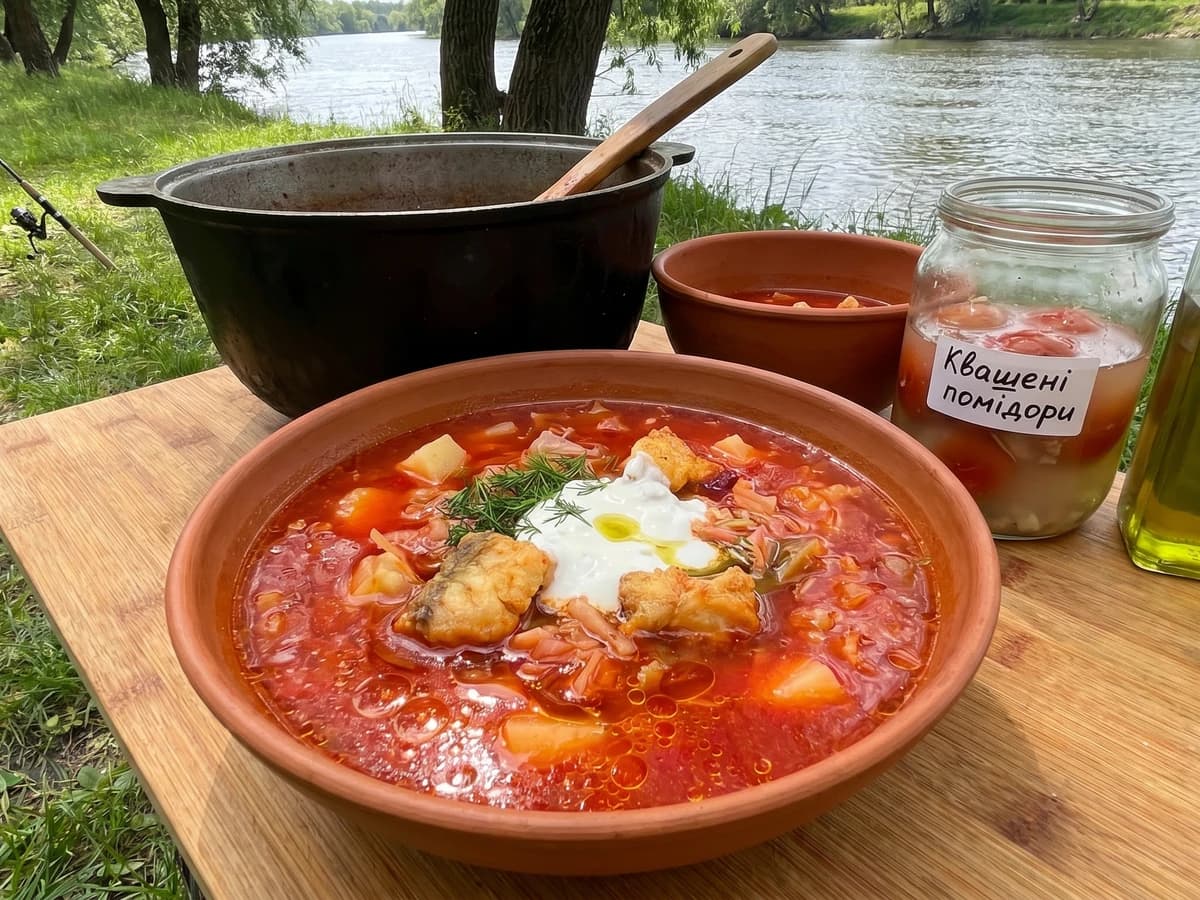
The catch goes into the pan before it ever meets the pot, so Danube fish stays whole in a tomato-red broth sour enough to wake the table.
A cooking platform built around craft, culture, and the stories behind what we eat.
Created by
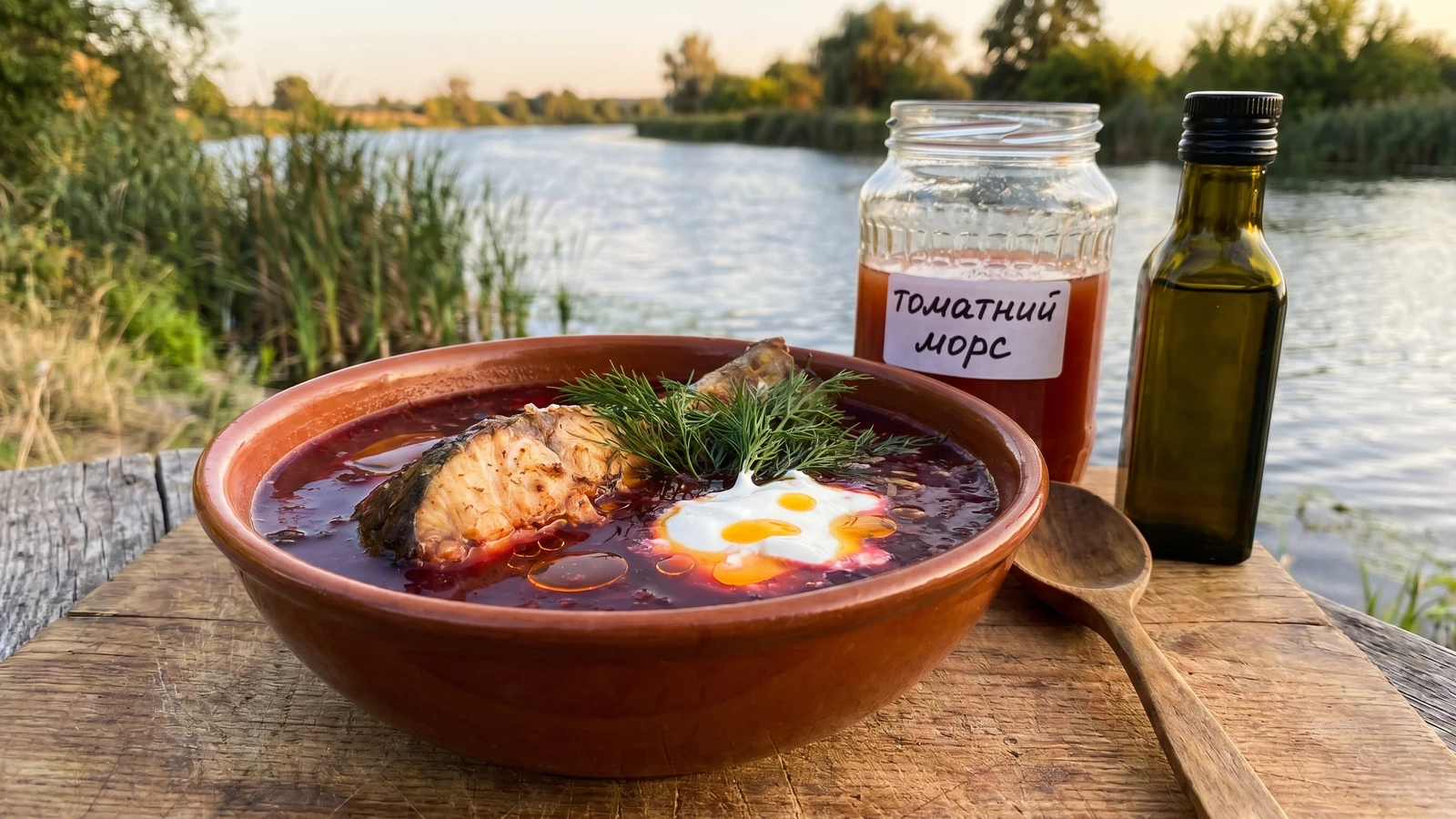
The Dnipro feeds this borshch, not the barn: beet-crimson broth sharpened with fermented tomato, then poured over baked som, catfish, rich enough to make meat unnecessary.
The most beautiful thing is that the fish is not hidden. Som, catfish from the river, sits in the bowl in pale flakes under beet-crimson broth, and the first spoonful tastes of mud-bottom water, tomato sourness, dill, and the sweet earth of beets. This is Kherson food, southern and river-fed. The steppe gives you vegetables; the Dnipro gives you the rest.
This is a lean borshch, the kind you make when the table still wants generosity but the pot is not built on pork ribs. The catfish is baked separately so it stays clean and meaty, then the hot broth is ladled over it at the end. If you boil the fish hard in the borshch, it clouds the pot and disappears. Bake it, and it keeps its dignity.
The one thing that decides the dish is the zasmazhka, the slow-sweated onion and carrot. Add it near the end so its sweetness sits brightly on the broth instead of flattening into the stock. Aunt Nadia would have written, "until the smell changes," and she was right: the onion goes from sharp to sweet, the carrot stains the oil orange, and suddenly the pot knows where it is going.
Make a big pot. There is no tradition of a small one. Tomorrow the beet, the fermented tomato mors, and the fish will have made better friends.
Kherson borshch belongs to the lower Dnipro and Black Sea steppe, where river fish such as som, carp, and pike stood in for meat in lean and fasting-season pots. Southern Ukrainian borshch often leans on tomato sourness, fermented tomato mors, or beet zakwas rather than vinegar, a preservation habit from the litnya kuhnia, the summer kitchen. Fish borshch is one of the regional proofs that Ukrainian borshch was never one standardized canteen recipe.
Quantity
1.2 kg
skin on if possible
Quantity
2 tablespoons, plus more
for baking the fish
Quantity
2 teaspoons, plus more
to taste
Quantity
1 teaspoon
Quantity
2
Quantity
1 large
halved, for the broth
Quantity
2 stalks or 1 small root
for the broth
Quantity
3 medium
scrubbed, tails left on
Quantity
3 medium
peeled and cubed
Quantity
1/2 small
finely shredded
Quantity
2 large
finely diced, for the zasmazhka
Quantity
2 large
coarsely grated
Quantity
3 tablespoons
for the zasmazhka
Quantity
2 tablespoons
Quantity
250ml
Quantity
3 cloves
smashed with salt
Quantity
1 small bunch
chopped
Quantity
to serve
Quantity
to serve
| Ingredient | Quantity |
|---|---|
| catfish steaks or thick filletsskin on if possible | 1.2 kg |
| unrefined sunflower oilfor baking the fish | 2 tablespoons, plus more |
| sea saltto taste | 2 teaspoons, plus more |
| black pepper | 1 teaspoon |
| bay leaves | 2 |
| onionhalved, for the broth | 1 large |
| celery stalks or parsley root (optional)for the broth | 2 stalks or 1 small root |
| beetsscrubbed, tails left on | 3 medium |
| potatoespeeled and cubed | 3 medium |
| white cabbagefinely shredded | 1/2 small |
| onionsfinely diced, for the zasmazhka | 2 large |
| carrotscoarsely grated | 2 large |
| unrefined sunflower oilfor the zasmazhka | 3 tablespoons |
| tomato paste | 2 tablespoons |
| fermented tomato mors, fermented tomato brine, or beet zakwas | 250ml |
| garlicsmashed with salt | 3 cloves |
| dillchopped | 1 small bunch |
| smetana (optional) | to serve |
| lemon wedges (optional) | to serve |
Heat the oven to 200C. Rub the catfish with sunflower oil, salt, and black pepper, lay it skin-side down on a tray, and bake until the flesh turns opaque and lifts in large flakes when pressed with a fork. Keep it in generous pieces. You want fish that can sit in the bowl, not fish that dissolves into the pot.
Put the catfish skin, any bones, the halved onion, bay leaves, and celery or parsley root into a big stockpot with 2.5 litres cold water. Bring it slowly to the quietest simmer and skim what rises. Let it murmur until it smells clean and river-sweet, then strain it. No rolling boil. Fish broth likes manners.
Simmer the whole beets in a separate pot until a knife slides through without argument, then cool, peel, and grate them coarse. Leave the tails on while they cook so the color stays inside. When the beet smell turns from raw earth to something sweeter and rounder, almost like warm bread, you're there.
Return the strained fish broth to the pot and salt it lightly. Add the potatoes and let them soften at the edges, then add the shredded cabbage. Stir in the grated beets and watch the broth go dark ruby. The spoon must stand up straight, not from thickness alone, but from enough vegetables to make a proper bowl.
Warm the sunflower oil in a wide pan and add the diced onions. Sweat them gently until they lose their sharp smell and turn glossy, then add the grated carrots. Cook until the carrot softens and stains the oil orange. Stir in the tomato paste and let it darken a little, until it smells sweet and roasted rather than tinny.
Scrape the zasmazhka into the borshch, then add the fermented tomato mors or beet zakwas. Taste before adding all of it. You want the broth sweet first, then sour enough to make your mouth wake up. Vinegar can do the job in an emergency, but fermented tomato tastes like the south remembering August.
Add the smashed garlic and most of the dill, then turn off the heat and let the pot sit so the flavors settle. Put a large piece of baked catfish into each deep bowl and ladle the hot borshch over it. Serve with smetana if you want softness, more dill because we are not shy, and a little lemon only if your ferment was gentle.
1 serving (about 520g)
Culinary guides, cultural storytelling, and the editorial depth that makes cooking meaningful.
Discover Culinary ExplorerChef Lesia
The catch goes into the pan before it ever meets the pot, so Danube fish stays whole in a tomato-red broth sour enough to wake the table.

Chef Lesia
The fish leaves the pot before the soup reaches the table: broth in the bowl, river fish on a platter, garlic salamur waiting to wake both.

Chef Lesia
Brick-red paprika blooms in bacon fat, beef darkens at the edges, and potatoes thicken the cauldron until it stands between soup and stew. This is comfort with a fire under it.
Chef Lesia
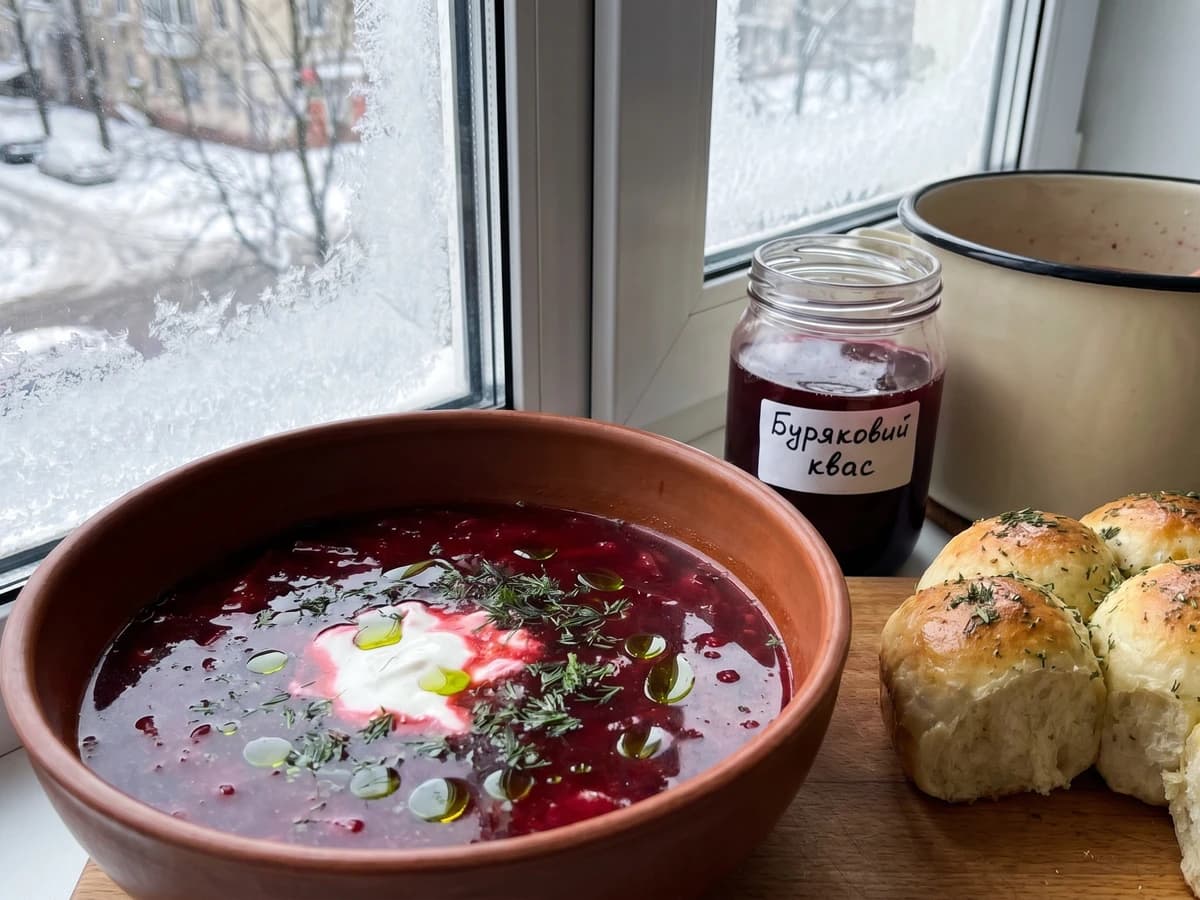
Beets hit slow-sweated zasmazhka and the broth goes dark ruby, sour from beet zakwas, sweet from bone and garden, thick enough for the spoon to stand up straight.