
Chef Fai
Dry Egg Noodles (Ba Mee Haeng)
The four pillars live at the bottom of the bowl before the noodles ever touch it: nam pla for salt, sugar for sweet, vinegar for sour, chili for heat. Every noodle cart in Bangkok runs on this principle.
A cooking platform built around craft, culture, and the stories behind what we eat.
Created by
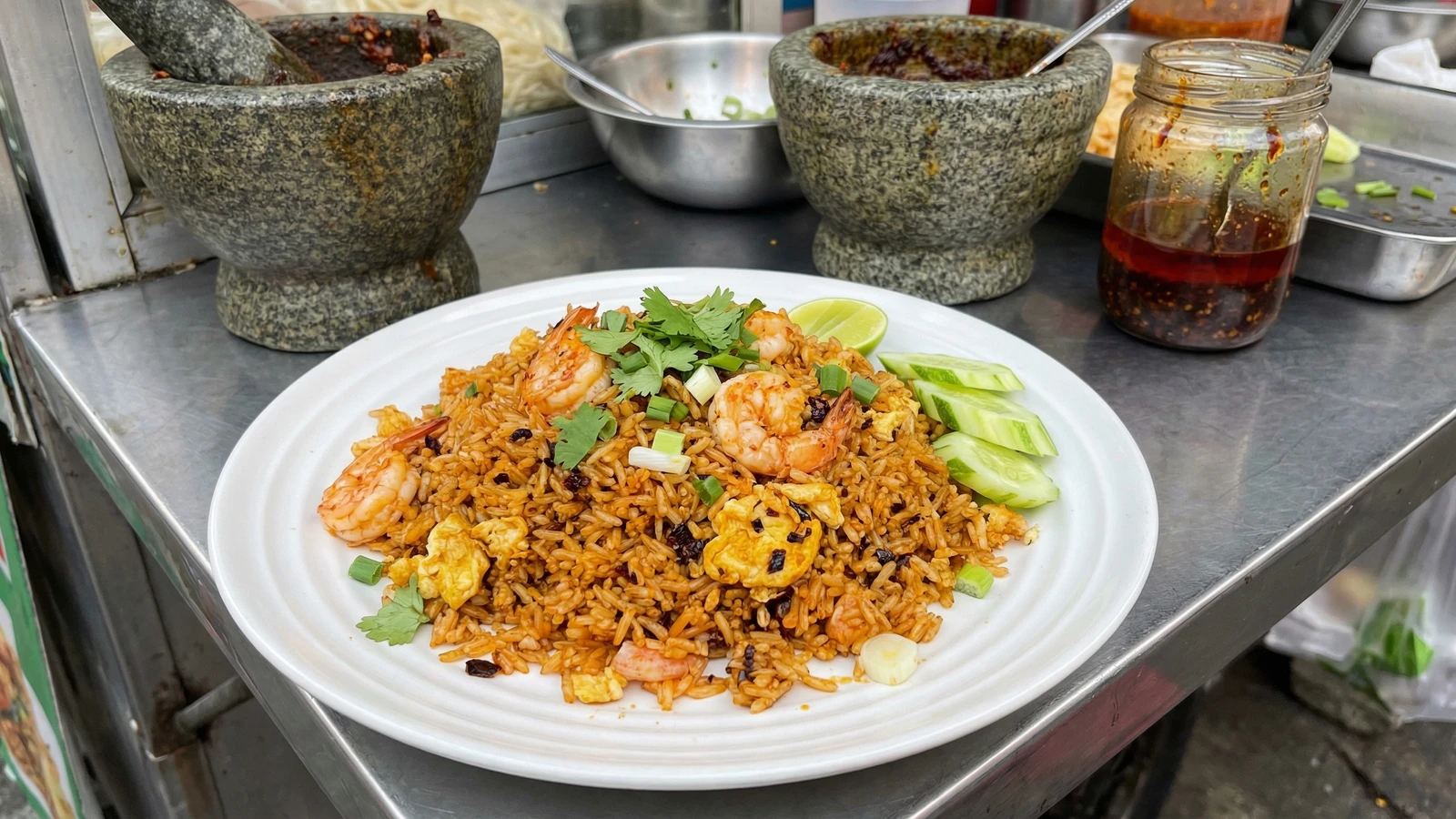
Nam prik pao is a kreung tam: pounded dried chilies, shrimp paste, shallots, garlic, all caramelized in palm sugar and fish sauce. Coat day-old rice in it. That's the whole dish. One paste. Total command.
Nam prik pao is the kreung tam most people don't realize is a kreung tam. They buy it in a jar. They think it's a condiment. It's not. It's a pounded paste of dried chilies, shallots, garlic, dried shrimp, and shrimp paste, caramelized in palm sugar and tamarind until it goes dark, smoky, and sticky. It follows every rule Ajarn taught me. The kreung tam is everything.
This fried rice is proof of concept. One paste. Day-old rice. A hot wok. Fish sauce. That's it. The nam prik pao does all the heavy lifting because the paste itself already contains the four pillars: the shrimp paste and fish sauce bring salt, the palm sugar brings sweet, the tamarind brings sour, the dried chilies bring heat. When you fry rice in this paste, every grain gets coated in a system that's already balanced. You're not building flavor in the wok. You built it in the mortar.
Ajarn always said: if you understand the paste, you understand Thai food. Nam prik pao is the cleanest proof of that principle. It's one paste that can season a tom yam, dress a yam (salad), or carry this entire plate of fried rice by itself. The paste is the dish. The rice is just the vehicle.
I teach this at every Fai Thai workshop as the gateway lesson. You pound the paste from scratch. You fry the rice. You taste the difference between your krok-pounded nam prik pao and the stuff from the jar. Nobody argues after that. The mortar transforms. The factory just processes. Krok ก่อน, krok ก่อน.
Nam prik pao evolved from the broader Thai tradition of nam prik (chili relishes), which are among the oldest preparations in Thai cuisine, predating curry pastes. The commercial bottling of nam prik pao by Maepranom brand in the 1970s made it a household staple and launched its crossover from dipping relish to all-purpose cooking paste. Khao pad nam prik pao emerged from street stalls as a quick, one-paste fried rice that showcased the jam's versatility, becoming a staple of Central Thai made-to-order stalls (ร้านอาหารตามสั่ง) by the 1980s.
Quantity
10
deseeded and soaked in warm water 15 minutes, drained
Quantity
5
optional, for extra heat
Quantity
8
unpeeled
Quantity
10 cloves
unpeeled
Quantity
2 tablespoons
Quantity
1 tablespoon
Quantity
3 tablespoons
shaved or chopped
Quantity
2 tablespoons
Quantity
1 tablespoon
Quantity
1/2 cup
Quantity
3 cups
cold from the fridge
Quantity
3 tablespoons
Quantity
200g
peeled and deveined
Quantity
2
Quantity
1 tablespoon
Quantity
1 teaspoon
Quantity
2 tablespoons
Quantity
for serving
Quantity
1/4
sliced
Quantity
2
sliced
Quantity
small handful
Quantity
for serving
| Ingredient | Quantity |
|---|---|
| dried red spur chilies (prik chee fah haeng)deseeded and soaked in warm water 15 minutes, drained | 10 |
| dried bird's eye chilies (prik khi nu haeng)optional, for extra heat | 5 |
| shallots (hom daeng)unpeeled | 8 |
| garlicunpeeled | 10 cloves |
| dried shrimp (goong haeng) | 2 tablespoons |
| shrimp paste (kapi) | 1 tablespoon |
| palm sugar (nam tan pip)shaved or chopped | 3 tablespoons |
| fish sauce (nam pla) | 2 tablespoons |
| tamarind paste (nam makham piak) | 1 tablespoon |
| vegetable oil (for paste frying) | 1/2 cup |
| day-old jasmine ricecold from the fridge | 3 cups |
| nam prik pao (from paste above) | 3 tablespoons |
| large shrimppeeled and deveined | 200g |
| eggs | 2 |
| fish sauce (nam pla) for fried rice | 1 tablespoon |
| granulated sugar | 1 teaspoon |
| vegetable oil (for fried rice) | 2 tablespoons |
| lime wedges | for serving |
| cucumbersliced | 1/4 |
| spring onions (ton hom)sliced | 2 |
| fresh cilantro leaves (pak chi) | small handful |
| dried chili flakes (prik pon) (optional) | for serving |
Heat a dry wok or heavy pan over medium heat. Add the unpeeled shallots and garlic cloves. Roast them, turning occasionally, until the skins are charred and blistered and the insides are soft, about 10 to 12 minutes. The shallots take longer than the garlic, so pull the garlic out first when it gives easily under pressure. Set aside to cool slightly, then peel. In the same dry pan, toast the drained dried chilies (both spur and bird's eye) for 2 to 3 minutes, pressing them flat against the surface until they darken a shade and smell smoky. Don't burn them. There's a line between roasted and bitter, and it's about ten seconds wide. Add the dried shrimp to the pan and toast for 1 minute until fragrant and slightly golden.
Start with the toasted dried chilies in a heavy granite mortar (krok hin). They're the hardest, so they go in first. Pound them to coarse flakes, not dust. You want texture. Add the toasted dried shrimp and pound until they break apart and merge with the chili. Next, the roasted garlic. Pound it in. Then the roasted shallots, one or two at a time, pounding each addition into the paste before adding the next. The mortar will get full. That's fine. Keep working. Last goes the shrimp paste (kapi). Pound it in until the whole mass is a rough, fragrant, slightly oily paste. It should smell smoky, sweet, and intensely savory. Your arm will be tired. Good.
Heat the half cup of vegetable oil in a wok or saucepan over medium-low heat. Add the pounded paste and stir constantly. This is where the paste becomes jam. The oil will turn deep red-orange as the chilies release their pigment. Keep stirring. After about 8 minutes, the paste will darken and the oil will start to separate, pooling at the edges. That's when you add the palm sugar. Stir until dissolved. Add the tamarind paste and fish sauce. Keep cooking and stirring for another 3 to 4 minutes. The mixture should be thick, glossy, and dark reddish-brown, like a sticky, smoky marmalade. Taste it. You should get sweet first, then smoky heat, then salt and a whisper of sour from the tamarind. All four pillars. In one jar.
Break up the cold day-old rice with your hands. Separate every clump. Every grain should be individual. Fresh rice is too wet for fried rice. It'll steam and clump in the wok instead of frying. Day-old rice from the fridge has lost enough surface moisture that each grain can make contact with the hot wok and actually fry. This is physics, not preference.
Get your wok screaming hot over high heat. Add the 2 tablespoons of oil. When it shimmers, crack in the eggs. Scramble them roughly, breaking them into large curds. Don't overwork them. Twenty seconds, tops. Push the egg to one side. Add the shrimp to the open space in the wok. Sear them until they just turn pink, about 1 minute per side. The shrimp should have a little char. Pull everything out and set it aside.
Wok back on high heat. Add a splash more oil if needed. When it's smoking, add 3 tablespoons of your homemade nam prik pao to the wok. Let it sizzle for 5 seconds, then add all the rice at once. Now toss. Hard. You want every grain coated in that dark, smoky paste. The rice should go from white to a deep caramel-orange. Keep tossing and pressing the rice against the hot wok surface. You're frying, not stirring. Add the fish sauce and sugar. Toss again. The wok should sound violent. That's correct.
Return the egg and shrimp to the wok. Toss twice to incorporate. Kill the heat. The rice should be glistening, each grain stained that smoky reddish-brown, with bits of egg and pink shrimp throughout. Mound it on a plate. Scatter sliced spring onions and cilantro over the top. Arrange cucumber slices and a lime wedge on the side. The lime is not decoration. Squeeze it over the rice before eating. That hit of fresh acid against the deep, roasted sweetness of the nam prik pao is the whole point. The system talking.
1 serving (about 460g)
Culinary guides, cultural storytelling, and the editorial depth that makes cooking meaningful.
Discover Culinary ExplorerChef Fai
The four pillars live at the bottom of the bowl before the noodles ever touch it: nam pla for salt, sugar for sweet, vinegar for sour, chili for heat. Every noodle cart in Bangkok runs on this principle.

Chef Fai
The kreung tam fried in cracked coconut cream until the oil bleeds red. That's the technique. Concentrated, semi-dry, spooned thick over crispy fish. This is what happens when the four pillars meet restraint.

Chef Fai
Isan foraging in a bowl: wild taro stems stripped of their sting, simmered in padaek broth with a pounded chili paste and yanang leaf extract. The land feeds you if you know the rules.

Chef Fai
Lanna's kreung tam breaks from Central Thai rules: ginger over galangal, cumin and coriander from Burmese spice routes, tamarind for sour instead of lime. The North has its own system, and this curry is its crown.