
Chef Fai
Dry Egg Noodles (Ba Mee Haeng)
The four pillars live at the bottom of the bowl before the noodles ever touch it: nam pla for salt, sugar for sweet, vinegar for sour, chili for heat. Every noodle cart in Bangkok runs on this principle.
A cooking platform built around craft, culture, and the stories behind what we eat.
Created by
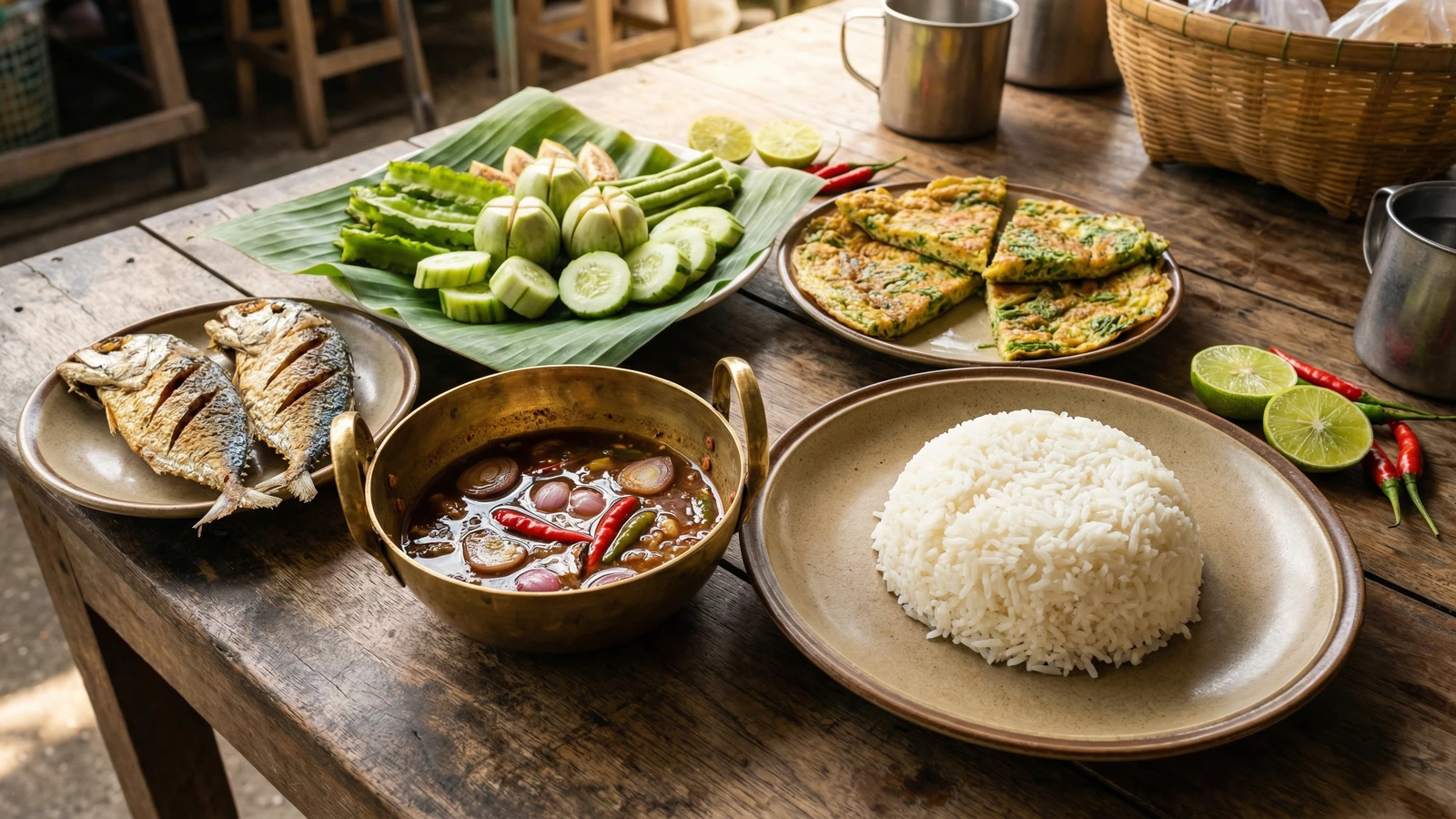
Budu is the South's fish sauce: thicker, funkier, fermented from whole anchovies. This rice set is the Southern Thai condiment table in action. You build the balance on your plate, bite by bite.
The four pillars don't always live inside one dish. Sometimes they're spread across the whole table.
Khao budu is the Southern Thai proof. A plate of jasmine rice in the center. Around it: a bowl of cooked nam budu (น้ำบูดู) sauce, a whole fried mackerel with shatteringly crisp skin, a cha-om omelette, and a platter of raw vegetables and herbs. Salt lives in the budu. Sweet lives in the palm sugar dissolved into the sauce. Sour comes from lime squeezed at the table. Heat comes from the raw bird's eye chilies you bite into between mouthfuls. The four pillars are all present. They're distributed. And you're the one who brings them together on your plate, bite by bite. The diner completes the dish. That's the design.
Budu is not nam pla. I need you to understand that. Nam pla (fish sauce) is pressed and filtered from fermented fish: clear, amber, precise. Budu is the whole ferment. Anchovies packed in salt, left for months until they break down into something thick, murky, and deeply funky. If nam pla is the Central Thai salt pillar, budu is the Southern one. Same role in the system. Completely different character. South of Surat Thani, budu starts appearing on every table. By the time you hit Pattani and Narathiwat near the Malaysian border, it IS the table. It's the first thing that comes out, and it's the last thing you taste.
Ajarn always said Thai food is a system, not a menu. Khao budu makes that system visible. There's no single technique to master here. The skill is in cooking the budu sauce with the right ratio of palm sugar and aromatics, in frying the pla thu until you can hear the skin crack when you press it with a fork, and in knowing what belongs on the vegetable platter. Wing beans (thua phu) sliced thin so they pop between your teeth. Thai round eggplant (makeua pro) quartered raw, faintly bitter and crunchy. Cha-om (ชะอม, acacia leaves): pungent, slightly bitter, a taste that defines Southern home cooking. Nobody pretends cha-om is delicate. It's strong and honest, and when it hits hot oil in an omelette, that bitterness mellows into something you'll crave. You take a pinch of rice, top it with flaked fish, drizzle the budu sauce, add a sliver of chili, a piece of raw wing bean. That's one bite. The next bite is completely different. Principles, not recipes.
Nam budu (น้ำบูดู) is the defining fermented condiment of Thailand's deep south, produced primarily in the Muslim-majority provinces of Pattani, Yala, and Narathiwat near the Malaysian border. The word 'budu' shares its root with the Malay fermented anchovy sauce of the same name, reflecting centuries of culinary exchange between Southern Thai and Malay fishing communities along the Gulf of Thailand. Khao budu is daily food, not special occasion cooking: the Southern Thai equivalent of rice with nam prik, assembled from whatever the morning's catch and garden provided.
Quantity
3 cups
Quantity
4 tablespoons
Quantity
2 tablespoons
Quantity
3
thinly sliced
Quantity
1 stalk
tender part only, thinly sliced
Quantity
3
finely shredded
Quantity
5 sliced, plus whole for serving
sliced for sauce, whole for table
Quantity
2 tablespoons (about 2 limes)
plus wedges for serving
Quantity
2 whole
gutted and cleaned
Quantity
for frying
Quantity
pinch
Quantity
3
Quantity
1 cup
picked from stems
Quantity
1 tablespoon
Quantity
100g
sliced crosswise into thin rounds
Quantity
4
quartered
Quantity
1
sliced into rounds
Quantity
4
cut into 3-inch pieces
| Ingredient | Quantity |
|---|---|
| steamed jasmine rice | 3 cups |
| nam budu (Southern fermented fish sauce) | 4 tablespoons |
| palm sugar (nam tan pip) | 2 tablespoons |
| shallots (hom daeng)thinly sliced | 3 |
| lemongrass (takhrai)tender part only, thinly sliced | 1 stalk |
| kaffir lime leaves (bai makrut)finely shredded | 3 |
| bird's eye chilies (prik khi nu)sliced for sauce, whole for table | 5 sliced, plus whole for serving |
| lime juice (nam manao)plus wedges for serving | 2 tablespoons (about 2 limes) |
| short mackerel (pla thu)gutted and cleaned | 2 whole |
| vegetable oil | for frying |
| salt | pinch |
| eggs | 3 |
| cha-om leaves (acacia pennata)picked from stems | 1 cup |
| fish sauce (nam pla) | 1 tablespoon |
| wing beans (thua phu)sliced crosswise into thin rounds | 100g |
| Thai round eggplant (makeua pro)quartered | 4 |
| cucumbersliced into rounds | 1 |
| long beans (thua fak yao)cut into 3-inch pieces | 4 |
Combine the nam budu and palm sugar in a small saucepan over low heat. Stir until the sugar dissolves completely. Add the sliced shallots, lemongrass, and shredded kaffir lime leaves. Let it simmer gently for 3 to 4 minutes. The kitchen will smell funky and sweet and herbal all at once. That's the budu opening up. The shallots should soften but not brown. Remove from heat. Stir in the sliced chilies and lime juice. Taste it. The balance should hit salty first (that's the budu doing its job), then sweet from the palm sugar, with sour and heat coming in at the edges. The South leans sour and spicy, not sweet, so keep the sugar restrained. Let the sauce cool to room temperature. Budu sauce is a condiment, not a hot soup. Its flavors are fullest when it's not screaming hot.
Score each mackerel with three diagonal cuts on both sides, deep enough to hit the bone. Rub a pinch of salt into the cuts and the cavity. Heat about 2 centimeters of vegetable oil in a pan over medium-high heat. When the oil shimmers, lay the fish in gently, away from you. Fry for 4 to 5 minutes per side without moving them. Don't touch, don't poke, don't flip early. The skin needs to form a crust against the pan before it will release cleanly. When it's ready, the skin is deep golden and crackles when you press it. Drain on paper. The fish should be crisp enough that you can hear it when you set it on the plate.
Beat the eggs with the fish sauce in a bowl. Stir in the cha-om leaves. They'll look like a lot. That's correct. The omelette should be more leaf than egg. Heat 2 tablespoons of oil in a pan over medium-high heat. Pour the egg mixture in and let it set on the bottom without stirring, about 1 minute. Flip it (or fold it in half if flipping makes you nervous). Cook another 30 seconds. The edges should be golden and slightly crispy, the center just set. Cha-om smells strong when it hits the oil. Pungent, almost sulfurous. Don't panic. That bitterness mellows into something earthy and savory once it's cooked. This is the flavor of Southern Thai home kitchens.
Arrange the wing beans, quartered eggplant, cucumber rounds, and long bean pieces on a plate or banana leaf. These are all raw. No blanching, no cooking. The crunch and bitterness of raw vegetables are part of the design. They're there to contrast the richness of the fried fish and the intensity of the budu sauce. Add whole bird's eye chilies and lime wedges to the platter. Everything should look abundant but casual. This isn't a composed salad. It's a spread.
Mound the jasmine rice on a plate or in individual bowls. Place the fried fish on its own plate. Cut the cha-om omelette into wedges. Set the budu sauce in a small bowl with a spoon. Lay the vegetable platter where everyone can reach it. That's the table. Now eat the way the South eats: take a bit of rice, flake off a piece of fish, drizzle some budu sauce over it, add a piece of vegetable and a sliver of chili if you want heat. One bite at a time. Every bite different. The balance is in your hands. That's the system at work.
1 serving (about 550g)
Culinary guides, cultural storytelling, and the editorial depth that makes cooking meaningful.
Discover Culinary ExplorerChef Fai
The four pillars live at the bottom of the bowl before the noodles ever touch it: nam pla for salt, sugar for sweet, vinegar for sour, chili for heat. Every noodle cart in Bangkok runs on this principle.

Chef Fai
The kreung tam fried in cracked coconut cream until the oil bleeds red. That's the technique. Concentrated, semi-dry, spooned thick over crispy fish. This is what happens when the four pillars meet restraint.

Chef Fai
Isan foraging in a bowl: wild taro stems stripped of their sting, simmered in padaek broth with a pounded chili paste and yanang leaf extract. The land feeds you if you know the rules.

Chef Fai
Lanna's kreung tam breaks from Central Thai rules: ginger over galangal, cumin and coriander from Burmese spice routes, tamarind for sour instead of lime. The North has its own system, and this curry is its crown.