
Chef Joost
Acar Ketimun (Indo-Dutch Cucumber Pickle)
Acar means pickle, ketimun means cucumber, and this little bowl of sweet vinegar, chilli, and crunch is the cool note that lets an Indo-Dutch rijsttafel keep its balance.
A cooking platform built around craft, culture, and the stories behind what we eat.
Created by
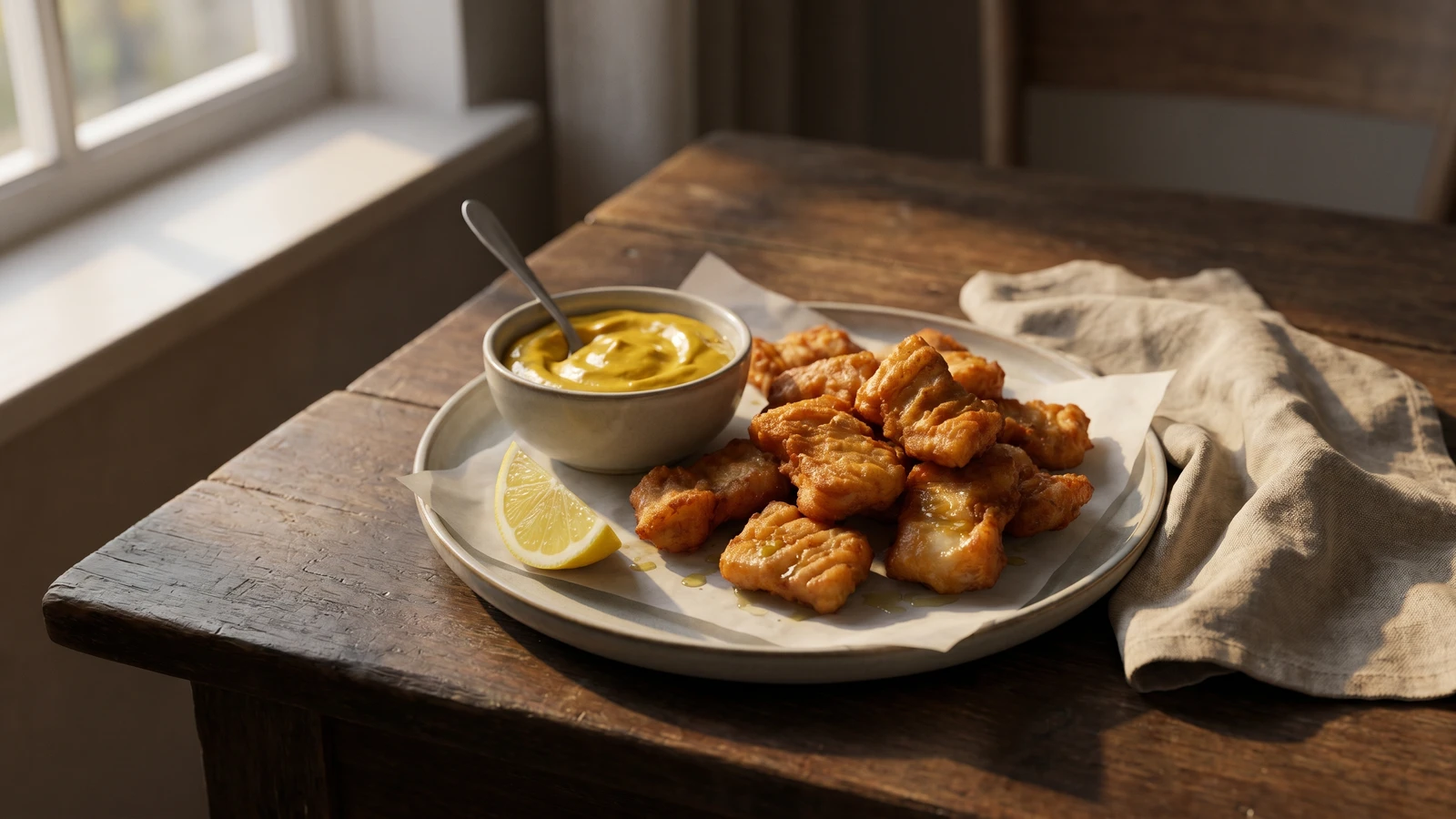
The golden snack-bar sauce where the VOC spice cupboard, the Indo-Dutch table, and a paper cone of fried fish meet in one mild spoonful.
Kerriesaus is what happens when a seafaring country grows casual about spices. The Dutch once counted nutmeg, mace, cloves, and cinnamon like treasure, then a few centuries later stirred a yellow spoonful of kerriepoeder into mayonnaise and handed it to you beside kibbeling at a kraam, a street stall. History and cookery, they cannot be separated. Sometimes they arrive in a silver archive box. Sometimes in a plastic cup next to fried fish.
The name already tells you enough, if you listen politely. Kerrie is the Dutch kitchen's word for curry powder, a colonial and commercial blend rather than one spice, shaped by the British word curry and by the Indo-Dutch table, with older roots in South Asian kari, sauce or relish. But let me tell you a secret: this sauce is not trying to be an Indonesian kari, and it should not pretend to be one. It is a Dutch snackbar sauce, mild, golden, a little sweet, a little sharp, made for salt and fat and the clean bite of hot fish.
So we keep it honest. Hou het altijd simpel, always keep it simple. Use a curry powder that smells alive, bloom it for half a minute in a spoon of neutral oil if it tastes dusty, then cool it before it meets the mayonnaise. That tiny warm step wakes the spices without turning a cold sauce into cooking theatre. Lemon brings the quay back into the room, mustard gives backbone, and a little honey rounds the edge. Then let it rest, because even a sauce sold in a hurry tastes better when the spices have had time to introduce themselves.
Dutch kerriepoeder became a household pantry item in the nineteenth and twentieth centuries through the combined influence of British curry powder, colonial trade, and the Indo-Dutch table, where spice mixtures were adapted to Dutch domestic cooking. Kerriesaus as a cold mayonnaise-based dip belongs especially to the postwar Dutch snackbar and viskraam culture, served with fried fish such as kibbeling, chips, and frikandel. Its mild sweetness is not an accident but a Dutch adaptation: spices from long trade routes made practical for quick, salty street food.
Quantity
200g
Quantity
2 teaspoons
Quantity
1 teaspoon
Quantity
2 teaspoons
Quantity
1 teaspoon
Quantity
1 teaspoon
Quantity
1 teaspoon
finely grated
Quantity
1 tablespoon
as needed
Quantity
to taste
Quantity
a pinch
| Ingredient | Quantity |
|---|---|
| good mayonnaise | 200g |
| Dutch kerriepoeder or mild curry powder | 2 teaspoons |
| neutral oil | 1 teaspoon |
| lemon juice | 2 teaspoons |
| Dijon mustard or Dutch sharp mustard | 1 teaspoon |
| honey or white basterdsuiker | 1 teaspoon |
| onion (optional)finely grated | 1 teaspoon |
| cold wateras needed | 1 tablespoon |
| fine sea salt | to taste |
| white pepper | a pinch |
Warm the neutral oil in a small pan over low heat, add the kerriepoeder, and stir for about thirty seconds, just until it smells round and fragrant. Do not brown it. Curry powder burns quickly, and bitterness is a very poor historian. Scrape it into a small bowl and let it cool completely.
Put the mayonnaise in a bowl and stir in the cooled curry oil, lemon juice, mustard, honey, grated onion if using, salt, and white pepper. Mix until the sauce is smooth and evenly golden, with no dry spice streaks left against the spoon.
Add cold water a teaspoon at a time until the sauce drops softly from the spoon. Taste it with the thing you plan to eat it with, not from a bare spoon if you can help it. Fried fish asks for more lemon; chips may want a touch more salt; a frikandel likes the sweeter side.
Cover and refrigerate for at least thirty minutes. This is not decoration, it's the moment the spices settle into the mayonnaise and the onion loses its raw shout. Stir once before serving, then spoon it beside kibbeling, chips, or fried fish.
1 serving (about 42g)
Culinary guides, cultural storytelling, and the editorial depth that makes cooking meaningful.
Discover Culinary ExplorerChef Joost
Acar means pickle, ketimun means cucumber, and this little bowl of sweet vinegar, chilli, and crunch is the cool note that lets an Indo-Dutch rijsttafel keep its balance.

Chef Joost
Appelcompote is the apple left with its dignity: soft enough to spoon beside pork or potatoes, still chunky enough to remind you autumn did the real work.

Chef Joost
The little bowl beside the plate is never decoration: appelmoes is the Dutch treaty between sweet and savoury, spooned beside sausage, potatoes, pancakes, and childhood itself.

Chef Joost
Appelstroop is the orchard made patient: apples, pears, and beet syrup boiled down until morning bread, farmhouse cheese, and zuurvlees taste of Limburg in autumn.