
Chef Takumi
Agedashi Tofu (揚げ出し豆腐)
Agedashi tofu looks like a fryer test. It is only drained tofu, potato starch, clean oil, and a hot dashi broth waiting nearby.
A cooking platform built around craft, culture, and the stories behind what we eat.
Created by
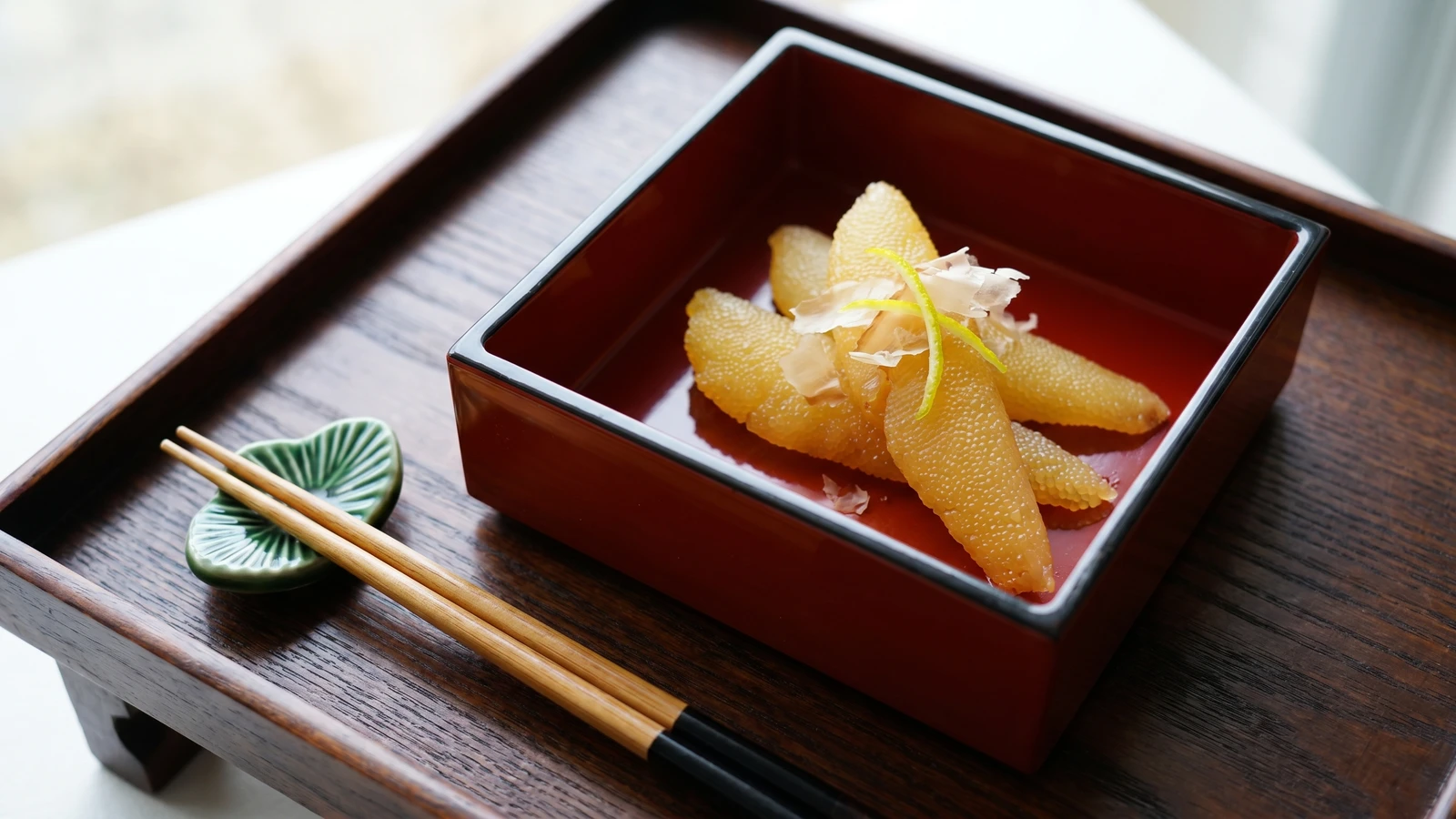
Kazunoko asks for patience, not skill: soak away the harsh salt, peel the thin membrane, then let clear dashi and soy season the golden roe without hiding its clean crunch.
Kazunoko looks like a small gold ingot and sounds like dry snow under the teeth. That crisp little crackle is the whole point. For New Year, we put it in the jubako, the stacked lacquer box, because the countless eggs carry an old wish: many children, many years, the household continuing without fuss. A serious wish, packed into a bite you can make while the kettle behaves itself.
The fear is the salt. Salted herring roe comes to you preserved, firm, and far too sharp to eat as it is. Soaking is not a nuisance step, it's the dish. Draw out too little salt and the roe tastes briny and hard. Draw out too much and it turns flat, with no backbone for the dashi to hold. The first secret is to soak it in weak salt water, not plain water, because a gentle brine pulls the harshness out evenly without making the roe taste washed and tired.
After that, there's almost no cooking. Make a clear dashi, season it lightly with soy and mirin, cool it, and let the peeled roe rest in it overnight. The marinade should support, not cover. Nothing hidden. When it's right, the pieces stay golden, the beads crunch cleanly, and the flavor is quiet enough to sit beside kuromame, datemaki, and the other New Year dishes without elbowing them off the tray.
Serve it restrained. Three short pieces, a pinch of katsuobushi if you like, a sliver of yuzu peel if the citrus is good. Leave it room. Osechi is not a heap of lucky things, however tempting luck may be. It is the method, not the menu: each little dish carrying its work clearly.
Kazunoko became fixed in osechi ryōri, the Japanese New Year foods, during the Edo period, when symbolic foods were arranged in jūbako for the first days of the year. The name is often linked to nishin, herring, which was also called kado in parts of Japan, making kazunoko literally the child of herring. Hokkaido's herring fisheries supplied large quantities of roe, and the dish came to stand for fertility and continuity because each piece holds thousands of eggs.
Quantity
200g
Quantity
4 cups
for the first soak
Quantity
2 teaspoons
for soaking water
Quantity
2 cups
Quantity
2 tablespoons
Quantity
1 tablespoon
Quantity
1 tablespoon
Quantity
1 teaspoon
for deeper color
Quantity
small handful
for serving
Quantity
a few thin strips
| Ingredient | Quantity |
|---|---|
| salted kazunoko (herring roe) | 200g |
| cold waterfor the first soak | 4 cups |
| sea saltfor soaking water | 2 teaspoons |
| dashi | 2 cups |
| usukuchi shōyu (light soy sauce) | 2 tablespoons |
| mirin | 1 tablespoon |
| sake | 1 tablespoon |
| soy sauce (optional)for deeper color | 1 teaspoon |
| katsuobushi (optional)for serving | small handful |
| yuzu peel (optional) | a few thin strips |
Dissolve the sea salt in the cold water, then add the salted kazunoko. Soak for 6 to 8 hours in the refrigerator, changing to fresh weak salt water once if the roe is very salty. Use weak brine, not plain water. Plain water pulls too hard and leaves the roe dull, while a little salt draws out the excess more gently.
Lift out the roe and pat it dry. With your fingertips, rub away the thin white membrane clinging to the surface, working carefully so the piece stays whole. The membrane blocks the marinade and gives the bite a papery toughness, so removing it is not vanity. It is how the seasoning reaches the beads evenly.
Put the dashi, usukuchi shōyu, mirin, sake, and optional soy sauce in a small pot. Bring it just to a gentle simmer, then take it off the heat and cool completely. Heating drives off the raw edge of the alcohol and joins the seasonings; cooling matters because warm liquid would toughen the roe and cloud its clean flavor.
Place the peeled kazunoko in a shallow container and pour the cooled marinade over it. Press a small piece of parchment directly on the surface, then cover and refrigerate overnight, 12 to 18 hours. The parchment keeps the top from drying and helps every surface sit in the seasoning without turning the pieces too often.
Lift the kazunoko from the marinade and drain briefly. Cut each piece into short lengths, or break along the natural sections if they separate cleanly. Arrange three pieces per serving in a jubako compartment or small dish, sprinkle lightly with katsuobushi, and add a thread of yuzu peel if using. Serve chilled or cool room temperature, while the beads still crunch.
1 serving (about 65g)
Culinary guides, cultural storytelling, and the editorial depth that makes cooking meaningful.
Discover Culinary ExplorerChef Takumi
Agedashi tofu looks like a fryer test. It is only drained tofu, potato starch, clean oil, and a hot dashi broth waiting nearby.

Chef Takumi
Aspara-bacon is late-spring asparagus treated with common sense: thin bacon, hot grill, and a last brush of shōyu and mirin so the spear stays sweet while the wrap crisps.

Chef Takumi
This is Osaka street food at its plainest and best: good beef cut small, a thin batter, fine panko, hot beef tallow, and one clean dip in sauce.

Chef Takumi
Buta-bara is not a trick of the grill. Good pork belly, even cutting, steady heat, and the patience to let the fat turn glossy do most of the work.