
Chef Klaus
Allgäuer Krautkrapfen
The Allgäu pan dish that makes a meal from noodle dough, winter kraut, onion, and fat: brown the cut sides first, then cook gently so the rolls hold.
A cooking platform built around craft, culture, and the stories behind what we eat.
Created by
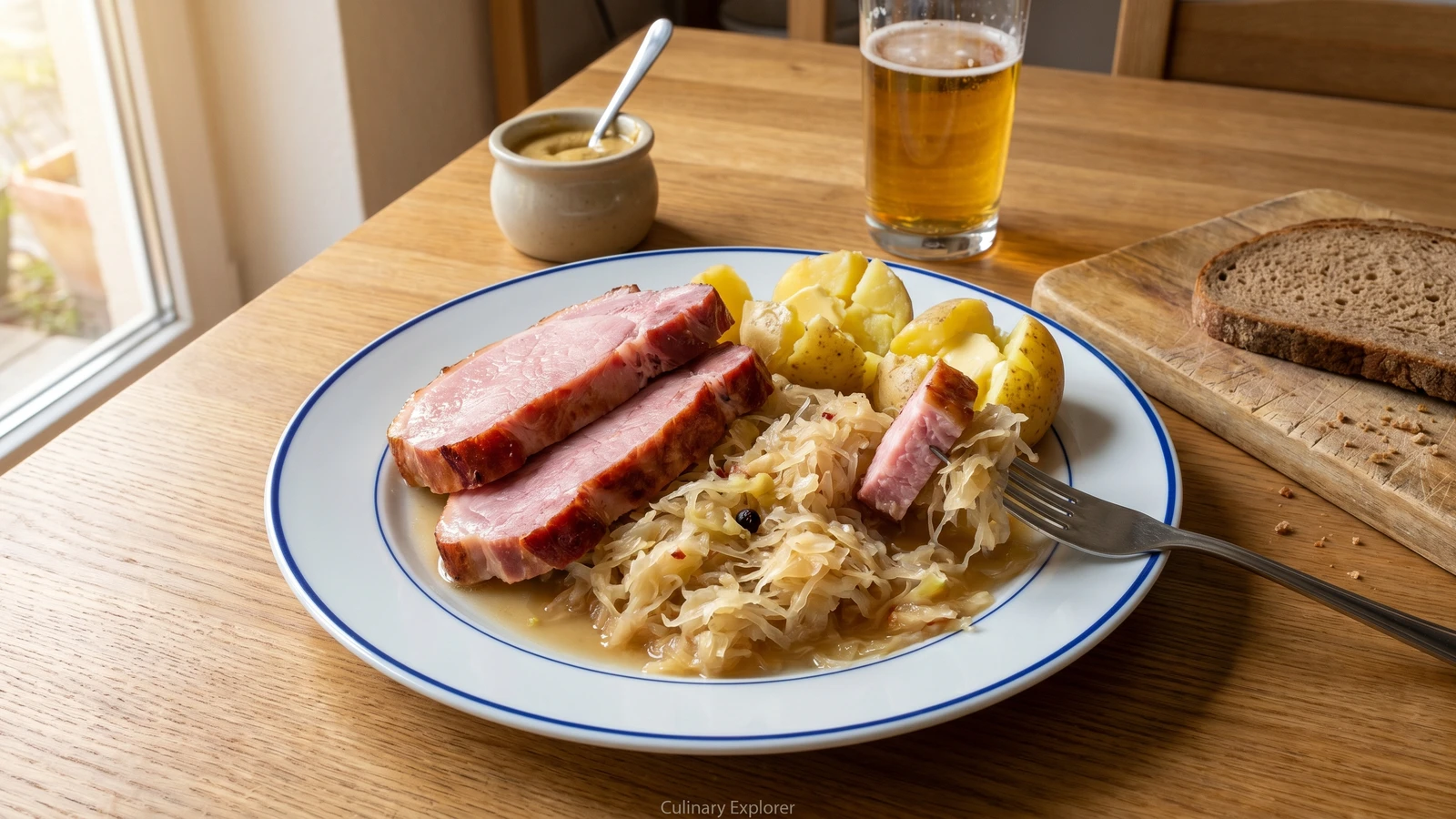
Kasseler works because you don't cook it like fresh pork. Warm the cured, smoked loin gently, then let the kraut carry the sour, fat, and smoke.
Kasseler mit Sauerkraut is winter larder cooking, especially strong around Berlin, Saxony, and the middle of the country, where cured smoked pork and a crock of kraut could feed a table without ceremony. It belongs on a weeknight as easily as a Sunday, because the work was already done weeks earlier in the curing, smoking, and fermenting.
The regions argue in the usual useful way. Around Berlin and Saxony you see lean Kasseler Rücken, the loin, sliced over kraut; further south a shoulder or neck piece gives more fat and forgives a longer pot. Some cooks sweeten the kraut with apple, some keep it sharper with only wine and onion. Im Norden anders, im Süden anders, and nobody needs a beer tent to settle it.
The rule is simple: don't boil the Kasseler hard. It is cured and smoked already, so a rolling pot drives out the moisture and leaves you with salty pink wood. Warm it gently on top of the sauerkraut, covered, until the meat is hot through and still juicy. The kraut can simmer; the pork should only be carried by that heat.
Taste the sauerkraut before you do anything to it. If it's lively and clean, use it as it is. If it's brutally salty, rinse it once and stop. Nicht aus dem Glas if you can help it, but if a jar is what you have, cook it properly with onion, apple, juniper, and stock. The jar doesn't get the last word.
Kasseler is usually traced to a Berlin butcher named Cassel, who is said to have popularised the cured and smoked pork cut in the late nineteenth century; despite the name, it is not named for the city of Kassel. Sauerkraut is older larder work, tied to the lactic fermentation of cabbage that let German households carry vitamin-rich vegetables through winter before refrigeration. The pairing shows the practical logic of the German table: preserved pork and preserved cabbage made a full meal long after the fresh garden had shut.
Quantity
800g
in one piece
Quantity
800g
drained, rinsed only if very salty
Quantity
1 large
finely sliced
Quantity
1
peeled, cored, and grated
Quantity
2 tablespoons
Quantity
150ml
Quantity
250ml
Quantity
1
Quantity
6
lightly crushed
Quantity
1 teaspoon
Quantity
1 teaspoon
Quantity
500g
peeled and cut into chunks
Quantity
1 tablespoon
Quantity
to taste
Quantity
to serve
| Ingredient | Quantity |
|---|---|
| Kasseler Rücken or Kasseler Kamm, cured smoked pork loin or neckin one piece | 800g |
| sauerkrautdrained, rinsed only if very salty | 800g |
| onionfinely sliced | 1 large |
| tart applepeeled, cored, and grated | 1 |
| lard, bacon fat, or neutral oil | 2 tablespoons |
| dry white wine | 150ml |
| pork stock, chicken stock, or water | 250ml |
| bay leaf | 1 |
| juniper berrieslightly crushed | 6 |
| caraway seeds (optional) | 1 teaspoon |
| sugar (optional) | 1 teaspoon |
| floury potatoespeeled and cut into chunks | 500g |
| butter | 1 tablespoon |
| salt and black pepper | to taste |
| German mustard | to serve |
Taste the sauerkraut before rinsing it. Good kraut should be sour, not harsh and salty; rinse it only if the salt bites harder than the cabbage, because washing away all the brine throws away the flavour the fermentation built.
Warm the lard or bacon fat in a wide heavy pot and cook the onion until soft and pale gold. Don't brown it hard; browned onion pushes the kraut sweet and dark, while this dish wants clean sour cabbage carrying smoke from the pork.
Add the sauerkraut, grated apple, wine, stock, bay, juniper, and caraway if using. Stir well, cover, and simmer gently for 35 minutes. The apple softens into the kraut and rounds the acid without making it taste sweet, which is the point. If the pot dries out, add a splash more stock; Weggeworfen wird nichts, and that cooking liquor is part of the dish.
Lay the Kasseler on top of the kraut, cover the pot, and keep the heat low so the kraut murmurs rather than boils. Warm the pork for 25 to 35 minutes, turning it once, until it reaches 63C in the centre if it was sold raw cured and smoked, or until fully hot through if it was sold cooked. Runter mit der Temperatur: hard boiling tightens cured lean pork and dries it out.
While the pork warms, boil the potatoes in salted water until they break easily under a knife. Drain them well and return them to the hot pot for a minute so surface moisture leaves; wet potatoes dilute the butter and make the plate taste flat.
Lift the Kasseler to a board and rest it 5 minutes so the juices settle instead of running out under the knife. Stir the butter through the potatoes, then taste the kraut and adjust with black pepper, salt only if needed, and a pinch of sugar only if the cabbage is too sharp. Würzen, Fett, Salz zum Schluss, because the cured pork has already brought salt to the pot.
Slice the Kasseler thickly across the grain and set it over the sauerkraut with potatoes alongside and mustard on the table. Spoon a little of the kraut liquor over the meat. Schön ist, was schmeckt.
1 serving (about 620g)
Culinary guides, cultural storytelling, and the editorial depth that makes cooking meaningful.
Discover Culinary ExplorerChef Klaus
The Allgäu pan dish that makes a meal from noodle dough, winter kraut, onion, and fat: brown the cut sides first, then cook gently so the rolls hold.

Chef Klaus
Swabian egg pasta turned toward the apple cellar: fresh Spätzle tossed with browned butter, tart apples, cinnamon, and enough restraint to stay supper, not cake.

Chef Klaus
Hesse's pork goulash belongs to Apfelwein country: shoulder, onions, and tart cider cooked low until the cheap cut turns soft and the sauce lands sweet-sour, not sour-sweet.

Chef Klaus
The old sweet supper that saves yesterday's loaf: stale bread drinks eggy milk, the pan stays moderate, and butter browns the outside only after the centre has set.