
Chef Elsa
Bröselnudeln
Broad egg noodles tossed in golden butter-toasted breadcrumbs until every strand is coated and crackling. Four ingredients, fifteen minutes, and a dish that has kept Austrian families fed and happy for centuries.
A cooking platform built around craft, culture, and the stories behind what we eat.
Created by
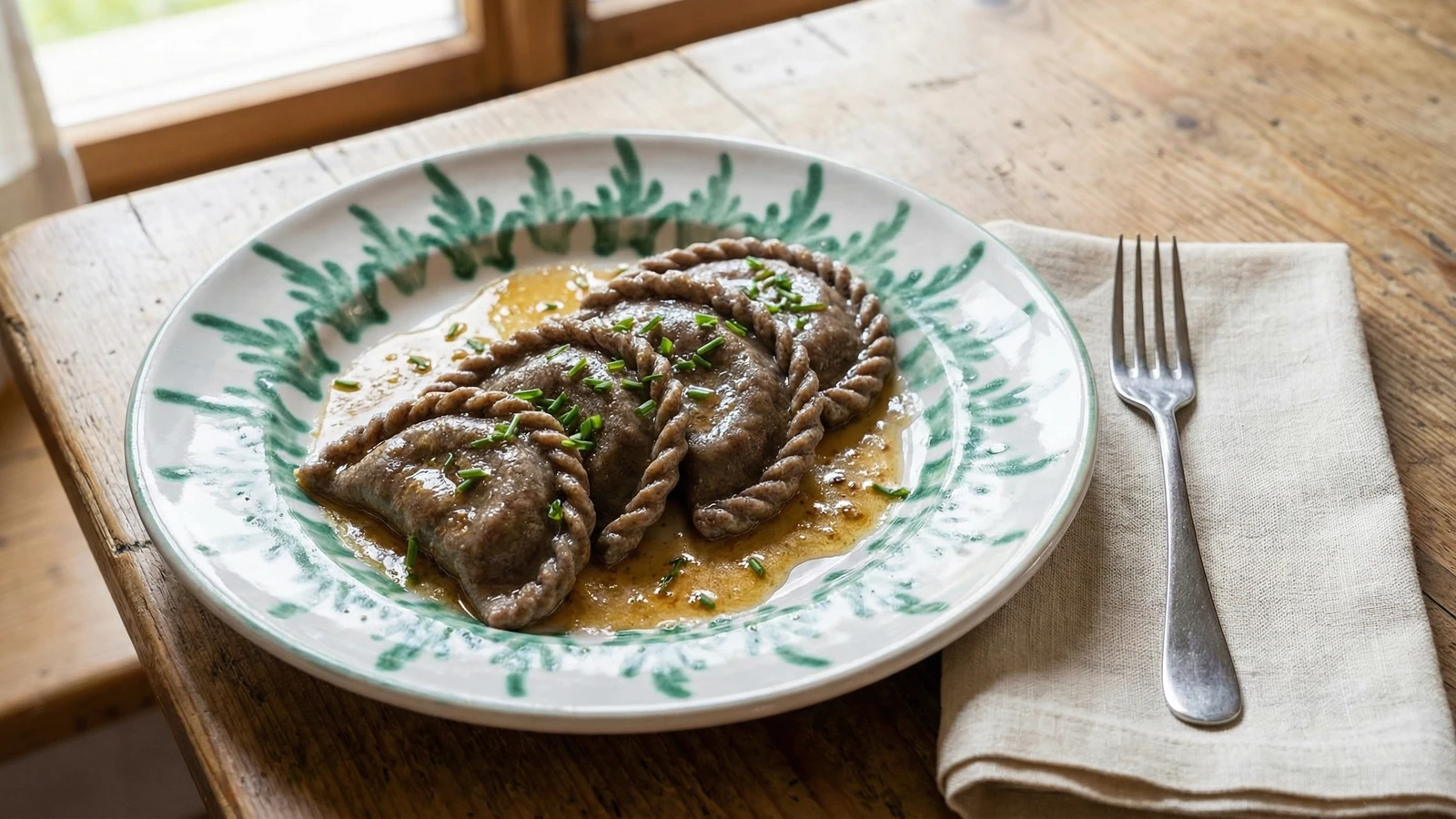
Buckwheat pasta from the Jauntal valley, filled with Topfen and fresh mint, sealed with the old Carinthian krendeln twist, and finished in brown butter that smells like autumn in the Alps.
The first time I ate Hadnnudeln I was twelve years old, sitting in a Gasthaus in the Jauntal valley on one of those summer trips through Austria with Gretel and my grandmother Eva. The plate arrived and I remember thinking they looked wrong. The pasta was dark, almost the color of rye bread, nothing like the pale Kasnudeln I'd eaten in Salzburg and Vienna. Gretel saw my face and laughed. "Taste it," she said. So I did. The buckwheat dough had this deep, earthy nuttiness that the wheat version can't touch, and inside was the same soft Topfen filling with fresh mint that makes all Kärntner Nudeln worth the trouble of making them.
Hadnnudeln belong to the Jauntal, the valley in southern Carinthia where buckwheat has grown for centuries. The word "Haden" is Carinthian dialect for Buchweizen, buckwheat, and it tells you everything about where this dish comes from. Buckwheat loves poor soil and short growing seasons. It thrived in the hills where wheat wouldn't, and Carinthian farm cooks built a whole kitchen around it. Hadnnudeln are the crown of that tradition.
The krendeln is the part that scares people, and I understand why. You fold each half-moon of filled dough and then twist the edge into a tight, rope-like seal using just your thumb and forefinger. It takes practice. Your first few will look rough. Gretel always said the filling knows no difference between a pretty krendeln and an ugly one, so don't let vanity slow you down. Make them, eat them, make them again next week. Your hands will learn.
What you'll taste when you get it right is something no restaurant Kasnudeln can give you. The buckwheat dough is firmer, a little chewy, with a flavor that stands up to the brown butter you pour over the top. The Topfen filling is cool and tangy against that warmth. The mint comes through last, bright and clean. This is good Austrian home cooking from a valley most tourists never visit, and it deserves to be on your table.
Buckwheat arrived in Carinthia from Central Asia via trade routes in the late Middle Ages and found ideal growing conditions in the Jauntal valley's hilly terrain and short seasons. The Carinthian tradition of filled pasta, Nudeln, likely reflects centuries of Slovenian and Italian influence across the southern Austrian border. Kärntner Kasnudeln were granted Traditional Speciality Guaranteed (TSG) status by the European Union, and the krendeln sealing technique is considered so culturally significant that Carinthians hold annual competitions to crown the fastest and most skilled Nudelkrendlerin.
Quantity
200g
Quantity
100g
plus more for dusting
Quantity
2 large
Quantity
1 tablespoon
Quantity
pinch
Quantity
60-80ml
Quantity
300g
well-drained
Quantity
250g
boiled and riced
Quantity
3 tablespoons
finely chopped
Quantity
2 tablespoons
finely cut
Quantity
to taste
Quantity
80g
Quantity
for serving
finely cut
| Ingredient | Quantity |
|---|---|
| buckwheat flour (Buchweizenmehl) | 200g |
| plain wheat flourplus more for dusting | 100g |
| eggs | 2 large |
| neutral oil | 1 tablespoon |
| salt (for dough) | pinch |
| lukewarm water | 60-80ml |
| Topfen or quarkwell-drained | 300g |
| waxy potatoesboiled and riced | 250g |
| fresh mint leavesfinely chopped | 3 tablespoons |
| fresh chivesfinely cut | 2 tablespoons |
| salt and black pepper | to taste |
| unsalted butter | 80g |
| fresh chivesfinely cut | for serving |
Combine the buckwheat flour and wheat flour on a clean work surface. Make a wide well in the center. Crack in the eggs, add the oil and a pinch of salt. Start working the flour into the wet ingredients with a fork, then switch to your hands. Add the lukewarm water a tablespoon at a time until the dough comes together. You may not need all of it. Knead for eight to ten minutes. The dough will feel different from a pure wheat dough: grainier, a little less elastic, darker. That's the buckwheat. It should be smooth and firm but not stiff. Wrap it tightly in cling film and let it rest for thirty minutes at room temperature.
While the dough rests, make the filling. The potatoes should already be boiled and cooled enough to handle. Rice them or press them through a sieve into a bowl. No lumps. Add the drained Topfen and mix until smooth. The Topfen must be dry. If it's wet, your filling will be soupy and your Nudeln will burst open in the water. Fold in the chopped mint and chives. Season generously with salt and pepper. Taste it. The filling should be distinctly minty and well-seasoned because the dough is unseasoned and needs the filling to carry the flavor.
Dust your work surface with wheat flour. Unwrap the dough and roll it out to about two millimeters thick. The buckwheat makes it slightly crumblier than wheat dough, so work with confidence and don't overhandle it. Cut circles about ten to twelve centimeters across. A large glass or a round cutter works fine. Gather the scraps, press them together gently, and reroll once. You should get about twenty circles.
Place a heaped tablespoon of filling on one half of each circle, leaving a centimeter border. Don't overfill. Brush the edges lightly with water. Fold the dough over to form a half-moon and press the edges together firmly, pushing out any air pockets. Air trapped inside will expand in the boiling water and tear the dough open.
This is the step that makes a Kärntner Nudel a Kärntner Nudel. Hold the half-moon in one hand. Starting at one corner, take the edge between your thumb and forefinger and twist it inward, folding it over itself in a tight, continuous rope pattern. Work your way along the entire curved edge to the other corner. Each twist should overlap the last slightly, creating a sealed braid. Press firmly as you go. The krendeln is not decoration. It's a seal. A properly krendeln'd Nudel will not open in the water. Your first few will be clumsy. That's fine. Speed comes with practice. What matters now is that they're sealed tight.
Bring a large pot of generously salted water to a boil, then reduce to a gentle simmer. The water should tremble, not roll. Drop the Nudeln in batches of five or six so they don't crowd. They'll sink to the bottom. After three to four minutes they'll float to the surface. Let them cook two minutes more after floating. Lift them out with a slotted spoon and drain on a clean towel. Handle them gently. The buckwheat dough is sturdier than wheat, but they still deserve respect.
While the Nudeln cook, melt the butter in a wide pan over medium heat. Swirl it gently. It will foam, then the foam will subside, and the milk solids will begin to toast. Watch it closely. You want Nussbutter, nut-brown butter, the color of hazelnuts, with a warm, toasty fragrance that fills the kitchen. The moment it reaches that color, pull the pan off the heat. Ten seconds too long and it turns bitter.
Arrange the drained Hadnnudeln on warm plates. Spoon the Nussbutter over them generously, letting it pool around the edges and settle into the krendeln grooves. Scatter fresh chives over the top. Serve immediately. The brown butter cools fast and you want your guests to taste it while it's still warm and fragrant against the cool mint filling. Mahlzeit!
1 serving (about 310g)
Culinary guides, cultural storytelling, and the editorial depth that makes cooking meaningful.
Discover Culinary ExplorerChef Elsa
Broad egg noodles tossed in golden butter-toasted breadcrumbs until every strand is coated and crackling. Four ingredients, fifteen minutes, and a dish that has kept Austrian families fed and happy for centuries.

Chef Elsa
Vienna's weeknight answer to everything: soft flour Nockerl fried golden in butter, scrambled through with eggs and buried under fresh chives. A sharp green salad on the side because the Viennese know that richness needs a counterpoint.

Chef Elsa
Soft Austrian potato dumplings in browned butter with warm, caraway-scented sauerkraut. A meatless Gasthaus meal that's been filling up Alpine kitchens for centuries.

Chef Elsa
Braised beef steaks in a velvety sauce of julienned root vegetables, capers, mustard, and sour cream, the kind of dish that made the Esterházy name famous in kitchens long after it faded from politics.