Culinary Explorer

A cooking platform built around craft, culture, and the stories behind what we eat.
Discover Culinary Explorer
Kānga Pirau (Māori Fermented Corn Porridge from Aotearoa)

Kānga Pirau (Māori Fermented Corn Porridge from Aotearoa)

Created by

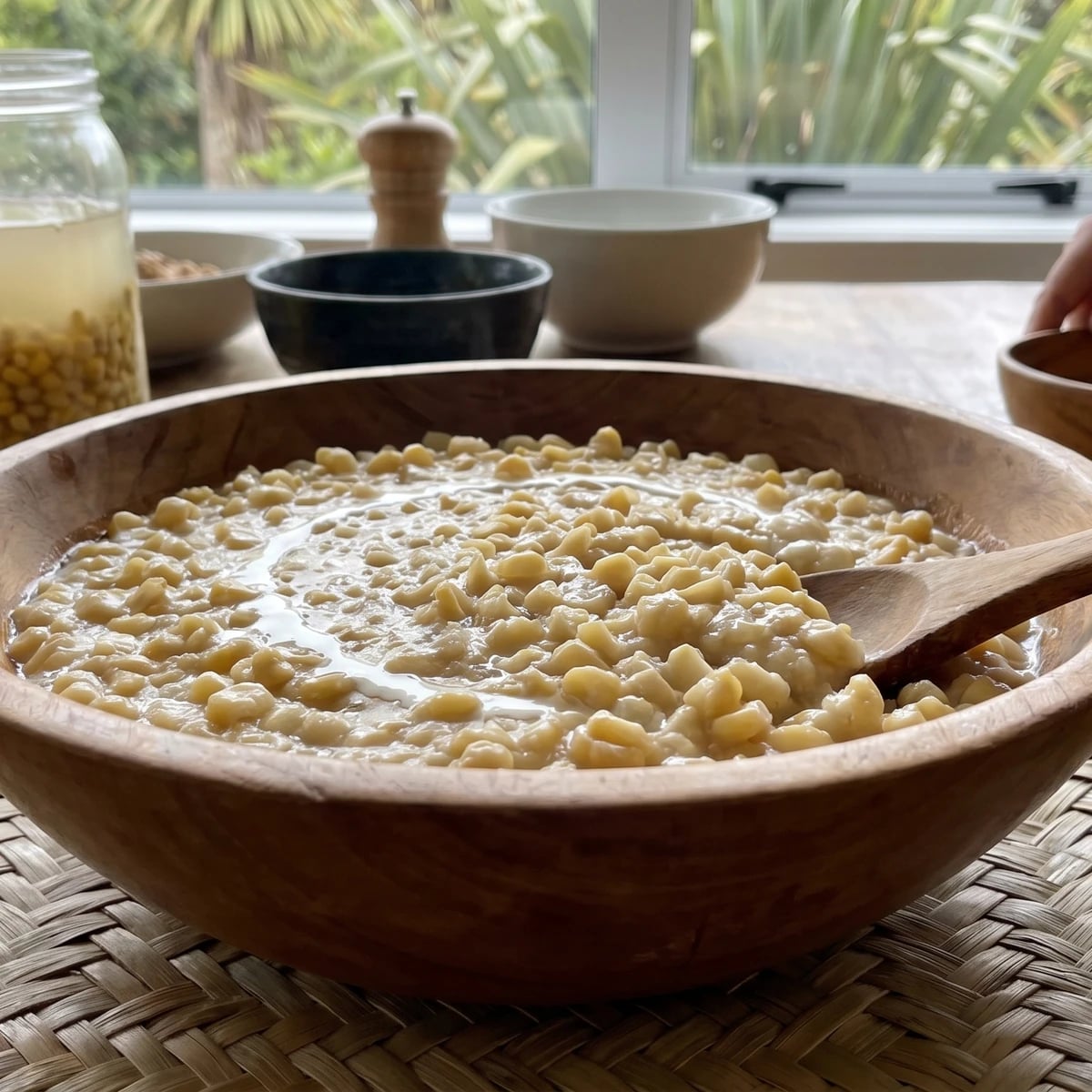
Māori kānga pirau from Aotearoa, corn kept in cool water until it turns sharp and strong, then boiled soft into a plain porridge that tastes like patience, river, and whānau.

Side Dishes
Polynesian, Māori
Make Ahead
Comfort Food
Budget Friendly
30 min
Active Time
3 hr cook507 hr 30 min total
Yield6 to 8 servings

At a Māori table in Aotearoa, whānau (family) comes before the bowl. I learned that quick down in the southern corner of our Triangle, sitting where the talk ran in te reo Māori, the Māori language, and the food made no apology for being strong. Kānga pirau, rotten corn, also called kānga wai, corn in water, belongs to Māori hands and Māori waterways. This is not Hawaiian food. I cook it open-handed, and for the river way and the stories under it, I send you to Māori kaumātua, elders, who carry that knowledge from the inside.

The old people taught a keeping food by smell. The corn sits in cool water until it changes: sweet goes sour, hard goes swollen, and that clean sharpness comes up strong enough to make the shy ones step back. That's not failure. That's the point. Tahiti keeps breadfruit by fermentation, the Marquesas have their own fermented breadfruit keeping, and back home poi can sour in the ʻumeke, the wooden bowl. Same keeping law, different bowl. Aotearoa made this one with kānga after that crop arrived, and made it Māori by whenua (land), water, and whānau.

For the kitchen now, I don't tell you to sink a sack in a river you don't know. This home version uses a clean jar, cool water, and a light brine to keep the fermentation honest. Let it get sour. Then boil it long until the kernels give up, thicken, and turn into plain comfort. Deep food isn't always pretty. It feeds the people.

Maize was not a pre-contact canoe crop in Aotearoa; it arrived after European contact and was taken into Māori gardens and trade in the early 1800s, especially where river and coastal routes carried food to market. Kānga pirau, also called kānga wai, belongs to that post-contact Māori keeping practice: whole kernels or cobs held in cold running water for weeks, then boiled soft. The older lesson is still Polynesian in the family sense, not a generic flavor: island by island, people used fermentation to turn scarcity into food, from Tahitian fermented breadfruit to Hawaiian sour poi at the table.

The technique, the tradition, and the story behind every dish.

Discover Culinary Explorer

Ingredients

dried whole-kernel field corn or dent corn (kānga)

Quantity

3 cups

rinsed and picked over

cool filtered or spring water

Quantity

2 quarts, plus more as needed

fine sea salt

Quantity

2 tablespoons

for a light modern kitchen brine

fresh water

Quantity

8 cups, plus more as needed

for boiling

baking soda (optional)

Quantity

1/2 teaspoon

to help tough hulls soften

sea salt

Quantity

1/2 teaspoon, plus more to taste

milk or cream (optional)

Quantity

1 cup

for serving

sugar or honey (optional)

Quantity

2 to 4 tablespoons

for serving

Equipment Needed

  • 1-gallon glass jar or food-safe fermentation bucket with loose lid
  • Fermentation weight, clean saucer, or food-safe bag filled with brine
  • Heavy 5-quart pot or Dutch oven
  • pH strips for fermentation, optional but useful

Instructions

  1. 1

    Wake the kānga

    Rinse the kānga, the corn, until the water runs mostly clear, then pick out stones, broken black bits, or anything that looks damaged. Put the kernels in a clean 1-gallon glass jar or food-safe bucket. Leave room above them, because the corn will swell as it takes in water and begins to change.

    Use field corn or dent corn if you can. Sweet corn goes soft too fast, and popcorn fights you all the way to the pot.
  2. 2

    Cover and weigh

    Stir the 2 tablespoons sea salt into 2 quarts cool filtered water until dissolved, then pour it over the corn by at least 3 inches. Weight the kernels down with a fermentation weight, a clean saucer, or a food-safe bag filled with the same brine. Cover loosely so gas can escape. The old river way uses clean running water and Māori hands that know that place; this jar method uses a light brine because your kitchen counter is not the Waikato.

    Chlorinated water slows the ferment. Filter it, boil and cool it, or use spring water.
  3. 3

    Let it sour

    Set the jar in a cool, shaded place, about 60F to 68F, for 3 to 4 weeks. Check it every day for the first week, then every few days after that, and keep every kernel submerged. Top up with the same light brine if the level drops. The water will cloud, the kernels will swell, and the smell will move from plain corn to sharp, sour, and a little cheesy. That funk is flavor, not failure.

    Clean sourness is the sign. Fuzzy mold, pink, orange, or black growth, an oily surface, or a harsh solvent smell means throw it out. We no waste food, but we don't play around with unsafe food. If you use pH strips, look for below 4.6 before tasting.
  4. 4

    Drain and rinse

    When the corn smells cleanly sour and the kernels have softened, drain off the brine. Rinse the corn once under cool water if the smell is very strong, but don't scrub all the character away. Kānga pirau means rotten corn, yeah, but what you're keeping is controlled sourness, the old preservation taste.

  5. 5

    Boil it soft

    Put the drained corn in a heavy pot with 8 cups fresh water. Bring it to a boil, then lower to a steady simmer. Add the baking soda if the hulls feel tough. Cook 2 1/2 to 3 hours, stirring now and then, until the kernels split, the skins give under your teeth, and the pot starts to thicken into a rough porridge. Add more water as needed so it never catches on the bottom.

  6. 6

    Thicken and serve

    Mash a cup of the soft corn against the side of the pot, or pulse it briefly, then stir it back through so the porridge holds together but still shows whole kernels. Season with sea salt. Serve warm in bowls, plain and sharp, or with milk or cream and a little sugar or honey. Eat what you have. This food isn't trying to be fancy. It kept people fed.

Chef Tips

  • This is Aotearoa's dish. If you grew up with a whānau river method, follow your elders before you follow this jar. The brine here is a modern kitchen stand-in for clean running water.
  • The smell should be sharp, sour, and corn-sweet underneath. If it smells like chemicals, sewage, or rot without sourness, let it go. No blame the kānga. Start clean again.
  • Cook it all the way. The boil is not only for softness; it settles the ferment and turns hard kernels into food your body can handle.
  • Serve it how the table wants it: cream and sugar for comfort, salt and butter if your house leans savory, or plain beside pork, greens, or boil-up. Keeper, not gatekeeper.
  • No field corn where you live? Dried hominy can make a sour-corn porridge if you ferment it the same way, but it won't taste exactly like old kānga pirau. Eat what you have and name the difference.

Advance Preparation

  • Start the ferment 3 to 4 weeks before you want to cook. In colder rooms it may need closer to 5 weeks; in warmer rooms, watch it closely and keep it submerged.
  • Cooked kānga pirau keeps 4 days in the refrigerator. Reheat gently with a splash of water, milk, or cream, stirring until glossy again.
  • For a gathering, boil the corn the day before, cool it quickly, and reheat it low and slow before serving. The flavor deepens overnight.

Frequently Asked Questions

Nutrition Information

1 serving (about 230g)

Calories
230 calories
Total Fat
3 g
Saturated Fat
1 g
Trans Fat
0 g
Unsaturated Fat
2 g
Cholesterol
5 mg
Sodium
230 mg
Total Carbohydrates
48 g
Dietary Fiber
5 g
Sugars
7 g
Protein
7 g

Note: Chef personas and recipes are created with AI assistance. Cook with care: follow safe food-handling practices, check doneness with a thermometer when needed, and adapt for allergies and your kitchen.

Where cooking meets culture.

Culinary guides, cultural storytelling, and the editorial depth that makes cooking meaningful.

Discover Culinary Explorer

More from Fermented & Preserved: Polynesia's Keeping Traditions

Browse the full collection