
Chef Lupita
Agua de Alfalfa
Ciudad de México's highland market agua fresca, fresh alfalfa blended with pineapple and lime until bright green, strained clean, and poured cold from the vitrolero.
A cooking platform built around craft, culture, and the stories behind what we eat.
Created by
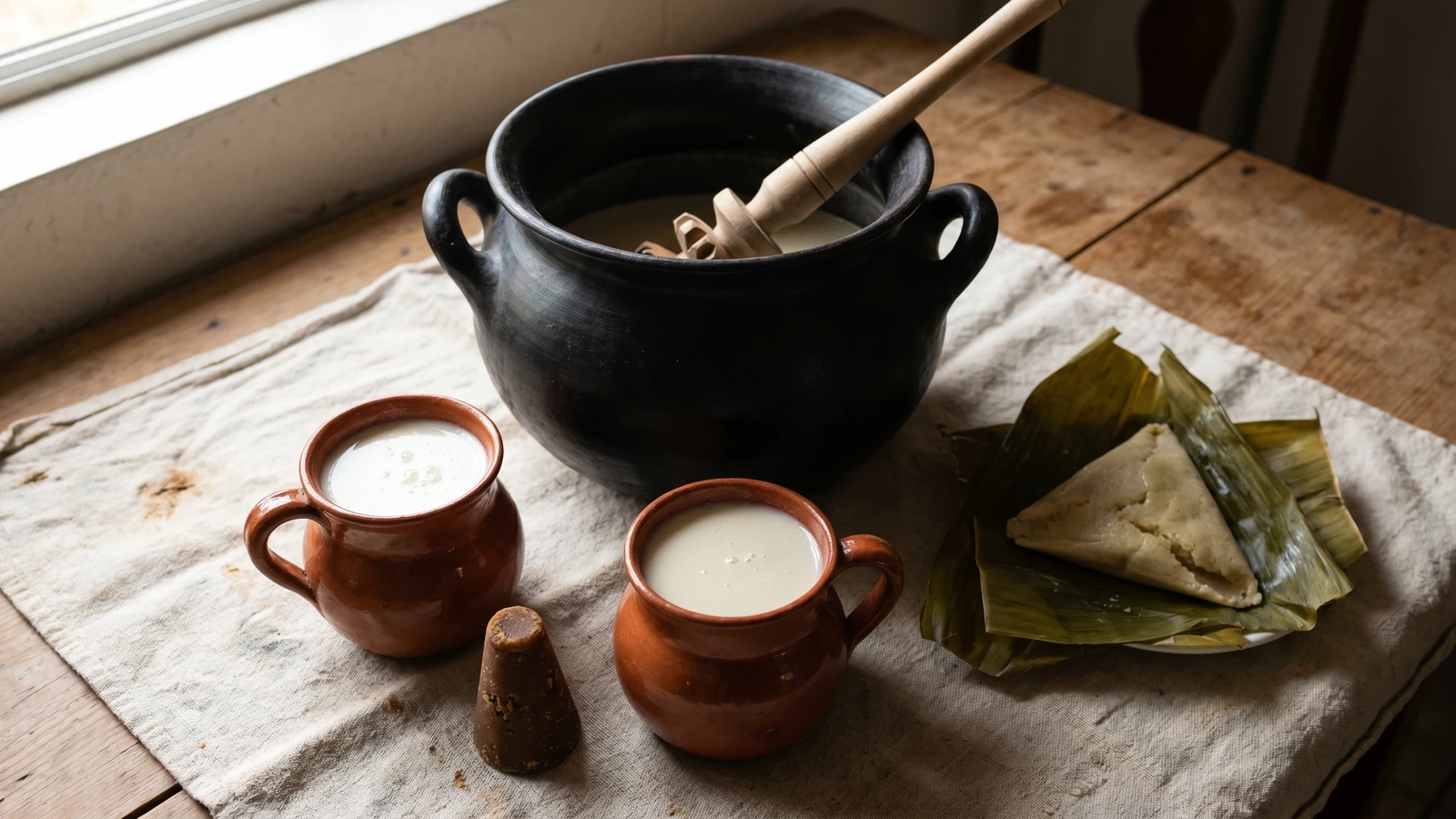
Michoacán's Meseta P'urhépecha white atole, made from fresh nixtamal masa and water, beaten smooth in an olla until it thickens into the clean corn base behind every other kamáta.
Michoacán, the Meseta P'urhépecha around Cherán, Paracho, Angahuan, and the communities near Lago de Pátzcuaro, is where kamáta urápiti belongs. Kamáta is atole. Urápiti is white. The name already tells you the discipline of the drink: nixtamalized white corn masa, water, and enough patience to let the corn speak without cinnamon, chocolate, or sugar covering it up.
I learned this one from cocineras tradicionales who stirred it in clay ollas close to the leña, not over a fierce flame. The technique is quiet but demanding. You break the masa cold, strain it, then cook it slowly while scraping the bottom so the starch thickens evenly. If you walk away, it catches. If you rush it, it tastes raw. La cocina no es decoración, es trabajo.
The corn is the ingredient that defines the dish. Use fresh masa de nixtamal made from maíz blanco, the kind a molino or tortillería sells in the morning. Masa harina will make a drink, yes, but it will not carry the same smell of wet corn and cal. A substitution is a compromise, not an upgrade.
Serve it in clay: Patamban black clay, Tzintzuntzan red clay, Capula glazed earthenware. A señora from the Meseta would recognize that table before she tasted the first sip. Cada estado, su propia cocina, and this one is Michoacán.
Kamáta is the P'urhépecha word for atole, and urápiti means white, placing the drink within the Indigenous corn kitchens of Michoacán's Meseta P'urhépecha and Lago de Pátzcuaro region. Nixtamalization, the alkaline cooking of maize with cal, has been practiced in Mesoamerica for more than three thousand years and made corn nutritionally useful enough to sustain daily life. Before colonial sugar, cinnamon, and chocolate transformed many atoles, white atole remained the foundation: a basic preparation of nixtamalized maize and water that later regional drinks such as kamáta de chaqueta and kamáta de nurite could build on.
Quantity
1 pound
plain masa para tortillas, not masa preparada for tamales
Quantity
8 cups, divided
plus more as needed
Quantity
1/4 teaspoon
Quantity
for serving on the side
| Ingredient | Quantity |
|---|---|
| fresh nixtamalized white corn masaplain masa para tortillas, not masa preparada for tamales | 1 pound |
| waterplus more as needed | 8 cups, divided |
| sal de grano or kosher salt (optional) | 1/4 teaspoon |
| piloncillo (optional) | for serving on the side |
Put the fresh nixtamal masa in a large bowl. Add 2 cups of cool water and work it with your fingers until the masa loosens into a smooth slurry. Cool water matters. Hot water grabs the masa too fast and gives you lumps before the pot has even started. No me vengas con atajos.
Set a fine-mesh strainer or a piece of clean manta cloth over a clay olla or heavy pot. Pour the masa slurry through it, pressing with your hand or a wooden spoon. Rinse the bowl with 1 more cup of water and strain that in too. The strainer catches coarse bits of pericarp and dry masa. Kamáta urápiti should be smooth enough to drink from a jarro.
Stir in the remaining 5 cups of water. If using a clay olla, warm it slowly over low heat first so the clay does not crack. Over leña, the olla sits close to the fire, not in the angry center of it. On a stove, that means medium-low heat and patience. The women of the Meseta did not perfect this by scorching the bottom.
Cook the atole over medium-low heat, stirring constantly with a wooden pala, spoon, or molinillo. Scrape the bottom in slow circles and figure eights. After 12 to 15 minutes, the liquid will thicken and turn from watery white to a satin ivory. Keep cooking another 10 to 15 minutes, until the raw masa taste is gone and the flavor is clean corn.
The atole should coat the spoon lightly and still pour easily. If it stands like porridge, add hot water 1/4 cup at a time. If it runs like plain water, cook it longer. Add the sal de grano only if the masa tastes flat. Do not add cinnamon, vanilla, chocolate, or sugar to the pot. Those are other atoles. This one is urápiti, white.
Ladle the kamáta urápiti into warm clay jarros. Serve it plain, with piloncillo on the side only if the household wants it, and something made of corn beside it: a corunda, an uchepo, or a thick hand-pressed tortilla. This is a working drink, not a dessert. Saber cocinar es saber vivir.
1 serving (about 305g)
Culinary guides, cultural storytelling, and the editorial depth that makes cooking meaningful.
Discover Culinary ExplorerChef Lupita
Ciudad de México's highland market agua fresca, fresh alfalfa blended with pineapple and lime until bright green, strained clean, and poured cold from the vitrolero.

Chef Lupita
Aguascalientes' Lenten agua fresca, jewel-red from cooked beet and full of apple, banana, orange, lettuce, and ground peanuts, served cold when Holy Week meets the Feria de San Marcos.

Chef Lupita
Sonora and Sinaloa's creamy malted barley water, built on toasted cebada perla, Mexican canela, vanilla from Papantla, and evaporated milk. Pink-beige, rich, and served cold over heavy ice in a heavy glass tumbler. Liquid cookie comfort the northwest way.

Chef Lupita
Yucatán's everyday tonic of boiled chaya leaves blended with lima agria, sugar, and ice. The bright green jarra that sits on every Peninsula table from Mérida to Valladolid.