
Chef Freja
Andelår med Rødkål
Slow-roasted duck legs with crisp, deeply golden skin, served with braised red cabbage and caramelized potatoes. The weeknight Danish duck that proves the best part of the bird is the one that takes its time.
A cooking platform built around craft, culture, and the stories behind what we eat.
Created by Chef Freja
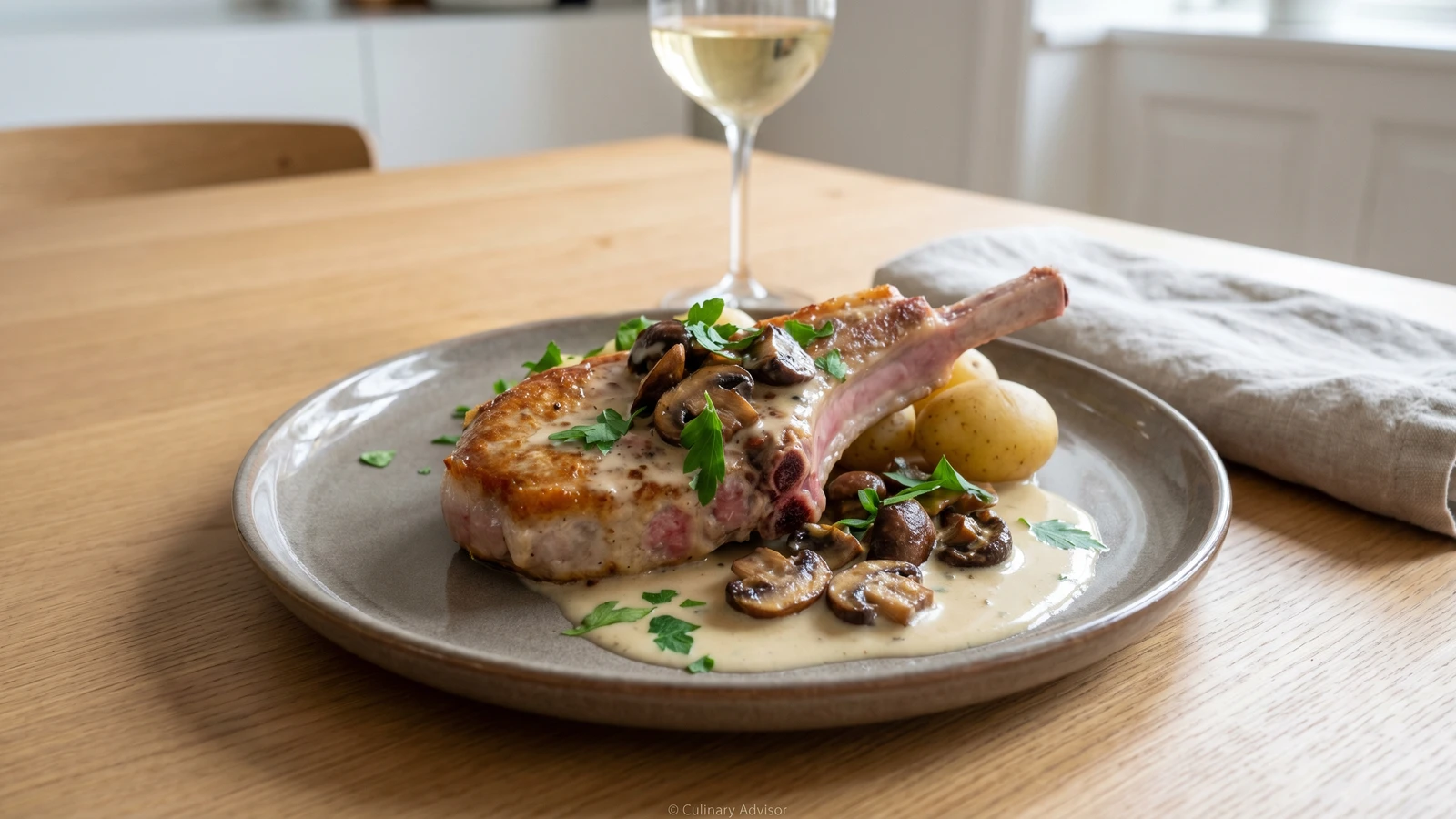
Bone-in veal chop pan-fried in butter until golden, served with mushrooms sautéed in the same pan and finished with cream and parsley. A gentler Danish meat dinner, the quiet cousin of the Sunday schnitzel.
October kitchens want different things. The salads retreat. The pans come forward. And somewhere around the first real cold evening, you find yourself reaching for butter and mushrooms and something substantial to cook in them.
Kalvekotelet med champignoner is one of those Danish dishes that sits quietly in the repertoire, never shouting for attention. A bone-in veal chop, pan-fried in butter until the outside carries a deep golden crust and the inside stays faintly pink. Mushrooms sautéed in the same pan, catching all the browned butter and meat juices, finished with cream and a handful of chopped parsley. It's a weeknight dinner that feels like a dinner party, and a dinner party dish that never feels like too much work. The kind of meal you set on the table and watch someone's face change.
The thing to watch is the heat. Veal is leaner than pork, gentler than beef. It dries out if you rush it or overcook it. I'll tell you exactly what to look for: the color of the crust, the feel of the meat under your finger, the moment to pull the pan off the heat and let the chop rest. The mushrooms go in the same pan afterward, because everything that's collected on the bottom of that pan, the browned butter, the caramelized juices, belongs to them. You'll know when it's right.
Veal has held a quiet prestige in Danish home cooking since the 19th century, when French culinary influence reshaped the bourgeois kitchens of Copenhagen and introduced the pan-fried kotelet as a weeknight alternative to roasted joints. The pairing with mushrooms followed naturally: Denmark's autumn fields and beech forests produce chanterelles, Karl Johan (porcini), and common champignoner in abundance, and the combination of butter-fried kalv with svampe in a cream sauce became a standard of husmandsret, the honest home-cooked meal that defined Danish middle-class dining well into the 20th century.
Quantity
2, about 300g each
approximately 3cm thick
Quantity
250g
cleaned, thickly sliced
Quantity
60g
Quantity
1 tablespoon
Quantity
1 large
finely sliced
Quantity
100ml
Quantity
100ml
Quantity
1 sprig
Quantity
small bunch
roughly chopped
Quantity
to taste
Quantity
to taste
Quantity
to serve
boiled
| Ingredient | Quantity |
|---|---|
| bone-in veal chopsapproximately 3cm thick | 2, about 300g each |
| mixed mushroomscleaned, thickly sliced | 250g |
| unsalted butter | 60g |
| neutral oil | 1 tablespoon |
| shallotfinely sliced | 1 large |
| dry white wine | 100ml |
| double cream | 100ml |
| fresh thyme | 1 sprig |
| flat-leaf parsleyroughly chopped | small bunch |
| fine sea salt | to taste |
| white pepper | to taste |
| new potatoesboiled | to serve |
Take the chops out of the fridge thirty minutes before you cook. Lay them on a board and let them come toward room temperature. Cold meat in a hot pan seizes. The outside burns before the center warms through, and you end up with a grey, tough chop instead of a pink, tender one. While they rest, pat them thoroughly dry with kitchen paper. Season both sides generously with fine sea salt and white pepper. Press the seasoning in with your fingers.
Heat half the butter and the oil in a heavy frying pan over medium-high heat. You use both because butter alone burns before the veal develops a proper crust, and oil alone has no flavor. Wait until the butter foams, the foam subsides, and it begins to smell faintly of hazelnuts. That is the moment. Lay the chops in the pan, bone side toward you, and leave them alone. Do not move them for three minutes. Moving them breaks the crust before it forms. After three minutes, flip them. The underside should be a deep, even gold. Cook the second side for two and a half minutes. Add the thyme sprig to the pan for the last minute, letting it sizzle in the butter alongside the meat.
Transfer the chops to a warm plate and cover loosely with foil. Let them rest for five minutes. Resting is not optional. When meat cooks, the juices rush to the center. If you cut into it now, those juices run out onto the plate and the chop dries out. Five minutes lets them redistribute, and when you do cut in, the meat stays moist from edge to bone. Do not wash the pan. Everything in there, the browned butter, the fond on the bottom, the thyme, belongs to the sauce.
Return the pan to medium-high heat and add the remaining butter. When it foams, add the mushrooms in a single layer. Do not stir them. This is the step most cooks get wrong. Mushrooms are full of water, and if you crowd them or move them too early, they steam instead of browning. Let them sit for two minutes until the undersides are golden and the edges have crisped. Only then toss or stir. Cook for another two minutes, until they are deeply browned all over and have shrunk by about half. Season with a pinch of salt.
Push the mushrooms to one side and add the sliced shallot. Let it soften for a minute in the butter, stirring it gently. Pour in the white wine and let it bubble hard, scraping the fond from the bottom of the pan with a wooden spoon. That fond is concentrated flavor, and the wine lifts it back into liquid. Let the wine reduce by half, about one minute. Pour in the cream and stir everything together. Let the sauce simmer gently for two minutes until it thickens enough to coat the back of the spoon. Taste it. Adjust the salt. Add most of the chopped parsley and stir it through.
Place each rested chop on a warm plate. Any juices that have collected on the resting plate go into the sauce. Pour them in, stir once. Spoon the mushrooms and cream sauce generously over and around the chops. Scatter the remaining parsley on top. Serve with boiled new potatoes, the small waxy kind that hold their shape, dressed in nothing but butter and a little salt. This is a dish that needs no more than that. Tak for mad.
1 serving (about 350g)
Culinary guides, cultural storytelling, and the editorial depth that makes cooking meaningful.
Discover Culinary ExplorerChef Freja
Slow-roasted duck legs with crisp, deeply golden skin, served with braised red cabbage and caramelized potatoes. The weeknight Danish duck that proves the best part of the bird is the one that takes its time.

Chef Freja
The whole roasted duck of juleaften, stuffed with tart apples and dark prunes, slow-roasted for four patient hours until the skin crackles like something earned and the meat underneath gives way without resistance.
Chef Freja
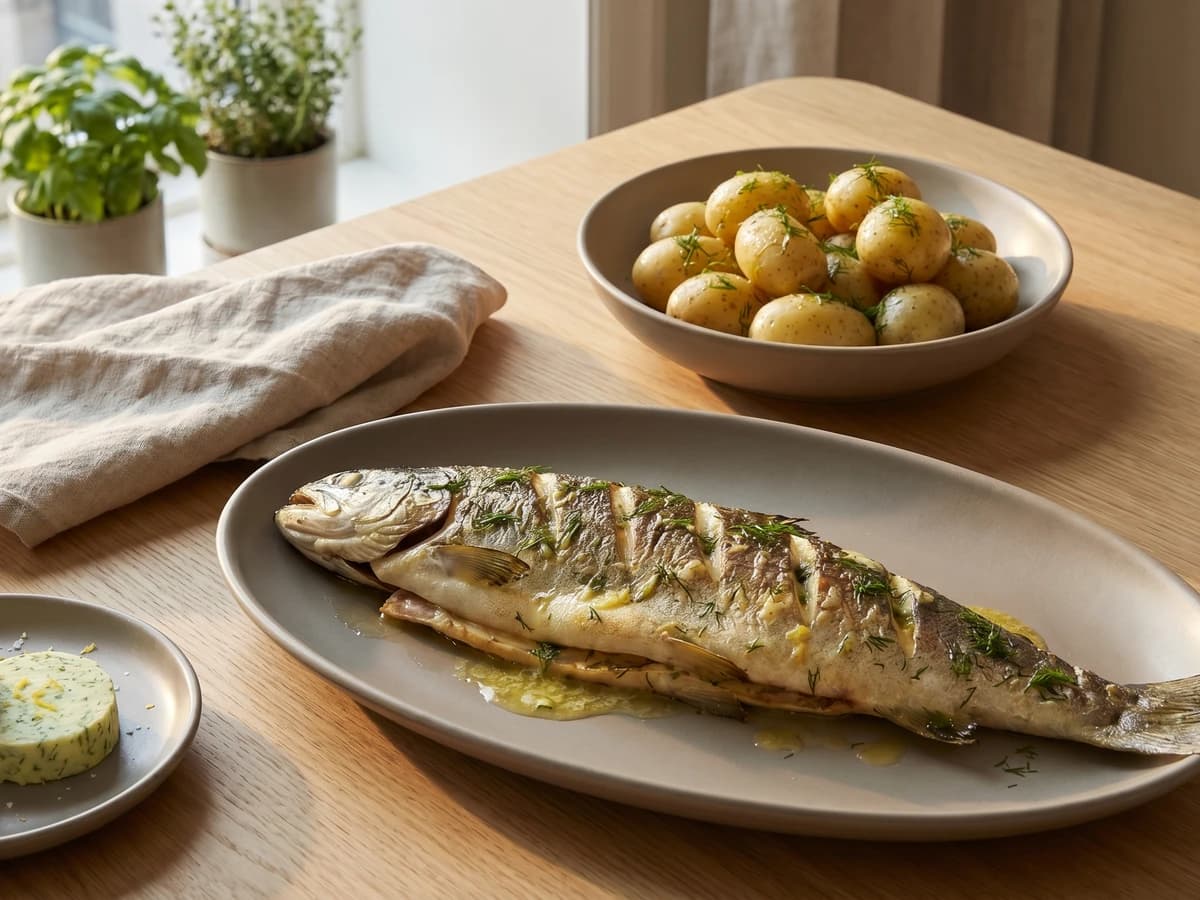
Whole sea trout baked with butter, lemon, and armfuls of dill, served beside the first nye kartofler of the season and a melting slab of dildsmor. The Danish summer table at its most generous.
Chef Freja
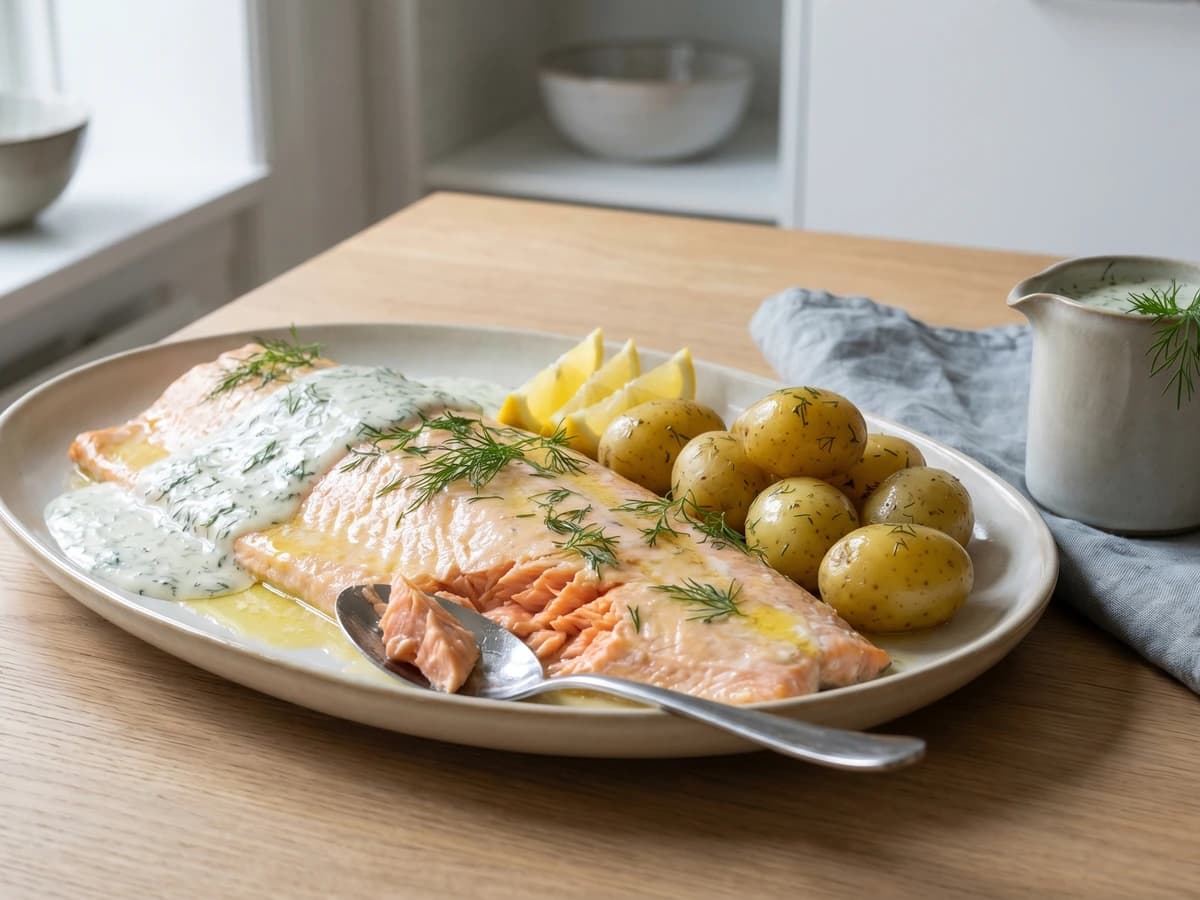
A side of salmon baked gently in butter and white wine, served warm with a bright dill cream sauce and the season's first nye kartofler. Late spring on a Danish table, cooked with love.