Culinary Explorer
A cooking platform built around craft, culture, and the stories behind what we eat.
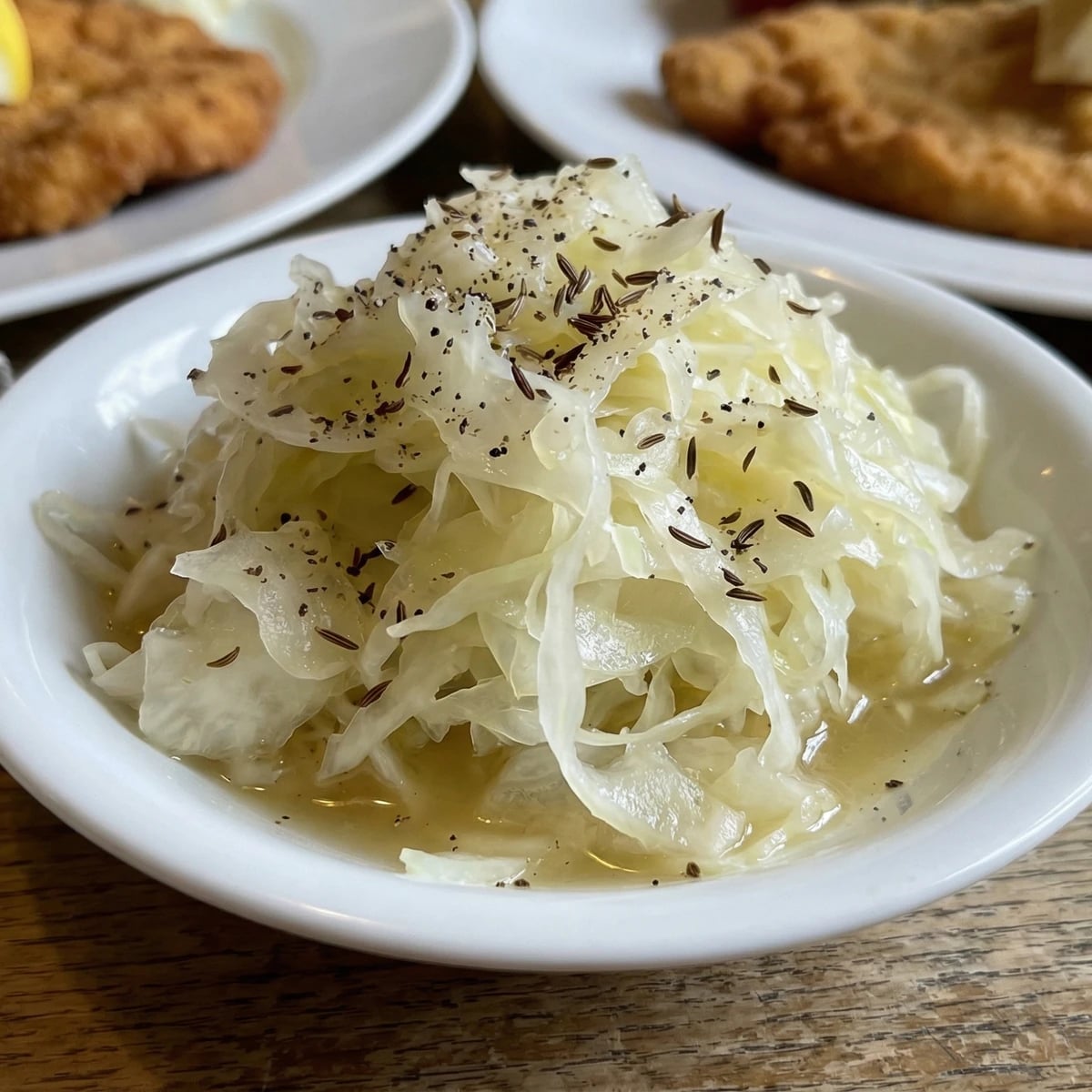
Kalter Krautsalat mit Kümmel
Created by Chef Elsa
Finely shredded white cabbage, salted until it weeps and softens, dressed in a sharp vinegar Marinade with whole caraway seeds. The salad that sits in a small white bowl next to every Schnitzel in Austria.
Every Beisl in Salzburg has a version of this salad in the kitchen at all times. It sits in a big ceramic bowl in the cold station, ready to be spooned onto a plate the moment someone orders a Schnitzel or a Schweinsbraten. You don't think about Krautsalat the way you think about a main course. You just expect it to be there, cool and sharp and clean, cutting through whatever rich thing it's sitting next to. When it's missing, you notice immediately.
Gretel always said that Austrian salads are not about the dressing. They're about the ingredient. With Krautsalat, the ingredient is a head of white cabbage and your job is to make it give up its crunch without losing its character. You shred it fine, almost translucent, then salt it heavily and work it with your hands until the cell walls break down and the cabbage starts to weep. That liquid carries bitterness out. What stays behind is sweeter, more tender, but still alive with texture. Skip this step, dress raw cabbage straight from the knife, and you'll have a salad that fights your teeth and tastes like nothing.
The caraway is the signature. Whole seeds, not ground, so they release their flavor slowly as the salad sits. Austrians put caraway in everything from bread to roast pork to cabbage, and there's a reason for it. Caraway and cabbage belong together the way lemon belongs with fish. It's one of those pairings that just works, and you taste it once and wonder why anyone would make cabbage salad without it.
Ingredients
white cabbage
Quantity
1 small head (about 800g)
fine salt
Quantity
1 tablespoon
for salting the cabbage
Apfelessig (apple cider vinegar) or Hesperidenessig (citrus vinegar)
Quantity
3 tablespoons
| Ingredient | Quantity |
|---|---|
| white cabbage | 1 small head (about 800g) |
| fine saltfor salting the cabbage | 1 tablespoon |
| Apfelessig (apple cider vinegar) or Hesperidenessig (citrus vinegar) | 3 tablespoons |
Where cooking meets culture.
Culinary guides, cultural storytelling, and the editorial depth that makes cooking meaningful.
Discover Culinary Explorer