Chef Dimitra
Aegean Islands Ladolemono (Λαδολέμονο)
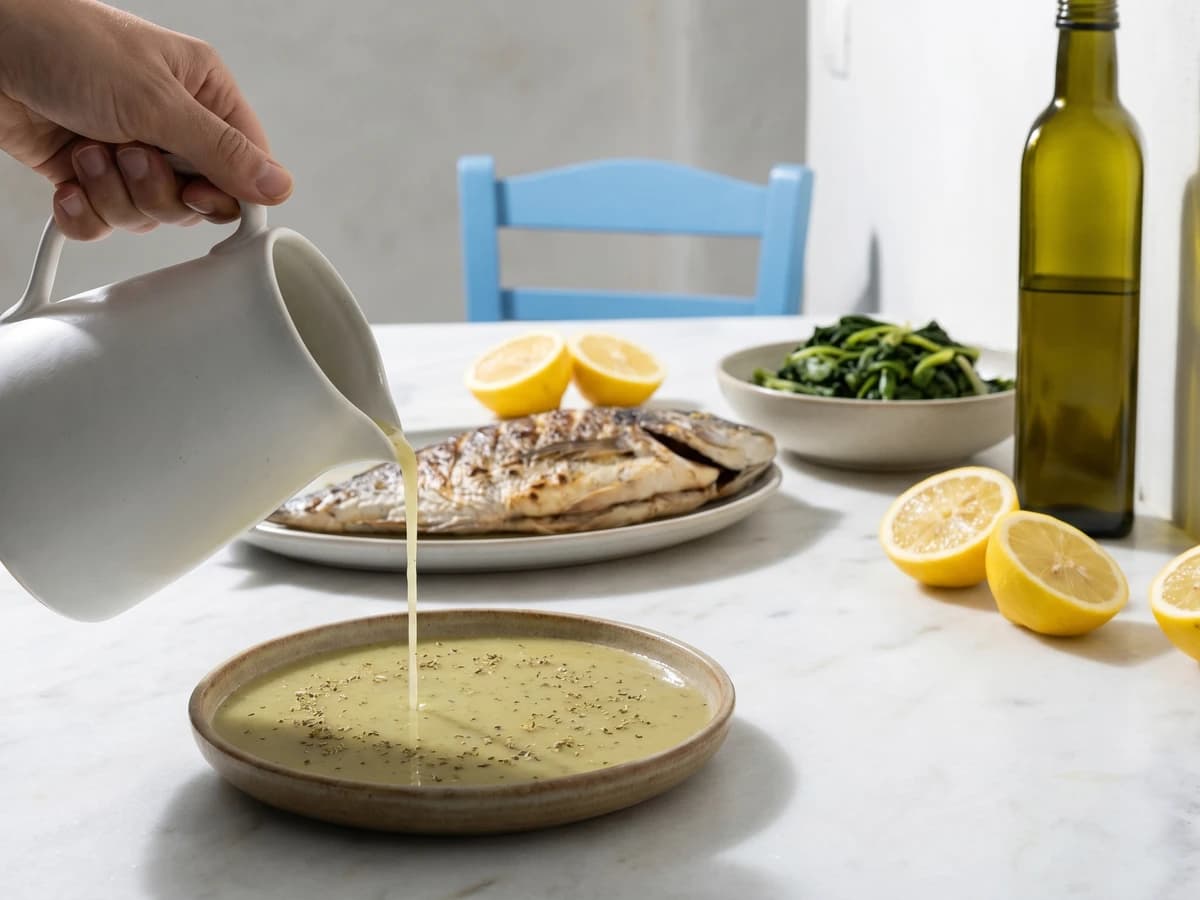
Aegean ladolemono is the quick oil-and-lemon sauce for grilled fish, boiled greens, and potatoes: cloudy when beaten hard, sharp enough to wake everything it touches on the plate.
A cooking platform built around craft, culture, and the stories behind what we eat.
Created by
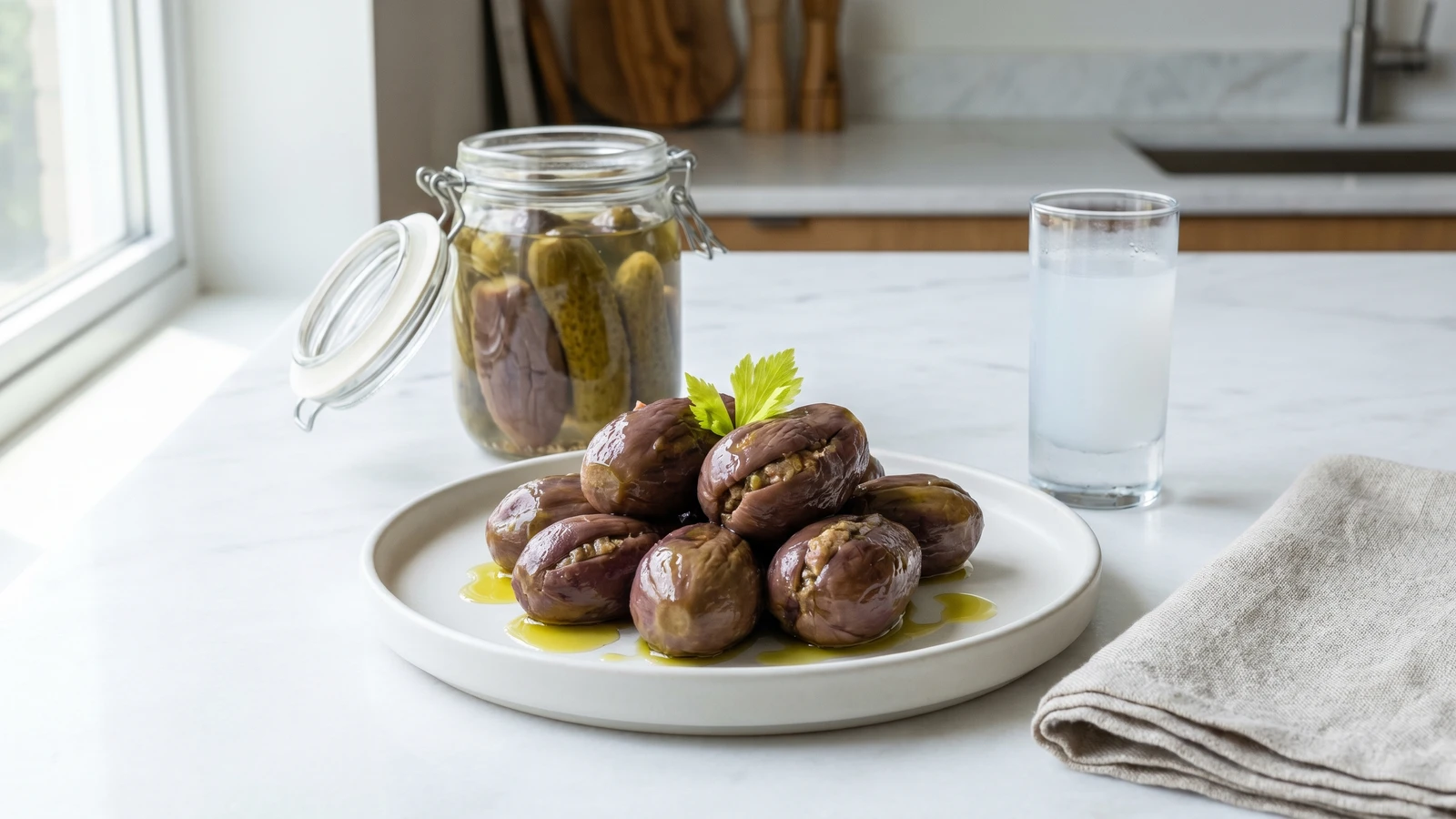
Kalamata's little eggplants are slit, filled with garlic and celery, tied closed, and left under vinegar brine until they turn firm, sour, and ready for the meze plate.
Melitzanaki toursi is Kalamata's little eggplant pickle, a Messinian jar for the weeks after the late-summer garden gives too much at once. The eggplants are small enough to hold whole in the hand, slit down the belly, packed with garlic and selino, Greek leaf celery, then tied shut with a blanched celery strip. It should taste sharp, green, and garlicky, with the flesh still firm under your teeth.
One method decides the jar: keep the cut eggplants under brine from the moment they go in. Air reaches the slit flesh and it browns, softens, and invites trouble. A small glass weight on top is not decoration. It is the difference between a clean pickle and a sad jar.
I serve it as meze, sliced thick, with olive oil poured only on the plate and bread nearby. It is nistisimo by nature, the kind of plant table the fasting calendar protected for centuries. In my Thessaloniki notebook, Kalamata is written in the margin because the region is the dish's surname.
Melitzanaki toursi is recorded across Messinia, especially around Kalamata, where late-summer baby eggplants were preserved for autumn meze rather than cooked into another pan of ladera. The word toursi entered Greek through Ottoman Turkish turşu, from Persian torshi, meaning sour pickles; Greek cooks made it local with celery, garlic, wine vinegar, and the small eggplants their gardens actually grew. In the Peloponnese it sat naturally beside olives and salted fish, a cheap sharpness for the table when fresh vegetables thinned.
Quantity
1kg
7-9cm long, firm and unblemished
Quantity
2L
for blanching
Quantity
60ml
for blanching
Quantity
20g
for blanching
Quantity
250g
stalks and leaves kept separate
Quantity
12 cloves, about 45g
very thinly sliced
Quantity
900ml
for the brine
Quantity
450ml
for the brine
Quantity
45g
for the brine
Quantity
2
Quantity
1 teaspoon
Quantity
30ml
for serving
| Ingredient | Quantity |
|---|---|
| baby eggplants (melitzanakia)7-9cm long, firm and unblemished | 1kg |
| waterfor blanching | 2L |
| white wine vinegar, 5% acidityfor blanching | 60ml |
| fine sea saltfor blanching | 20g |
| Greek celery (selino, σέλινο)stalks and leaves kept separate | 250g |
| garlic clovesvery thinly sliced | 12 cloves, about 45g |
| white wine vinegar, 5% acidityfor the brine | 900ml |
| waterfor the brine | 450ml |
| coarse sea saltfor the brine | 45g |
| bay leaves | 2 |
| black peppercorns | 1 teaspoon |
| extra virgin Koroneiki olive oil (optional)for serving | 30ml |
Wash two 1-liter glass jars and their nonreactive lids well. Pour boiling water over them, drain, and let them dry upside down on a clean towel. Have glass weights ready, or use a small boiled saucer that fits inside the jar mouth.
Trim only the rough stem ends from the eggplants, leaving the caps to help them hold their shape. Cut one deep lengthwise slit in each eggplant, stopping 1cm short of both ends so it opens like a pocket. Bring 2L water, 60ml vinegar, and 20g salt to a boil, then blanch the eggplants in batches for 4 to 6 minutes, until the skins dull and a skewer enters the shoulder with slight resistance.
Lift the eggplants into a colander, slit side down. Cover with a plate and a 1kg weight, then leave them to drain for 2 to 4 hours, or overnight in the refrigerator. This is not punishment. It lets the extra water leave now, so the brine stays sharp later.
Choose the longest celery stalks and blanch them in boiling water for 30 seconds, just until flexible. Rinse under cold water, then split them into thin ribbons for tying. Finely chop the celery leaves and tender inner stems for the stuffing.
Mix the chopped celery leaves and tender stems with the sliced garlic. Open each eggplant gently and tuck in a small pinch of the garlic-celery filling. Close the slit and tie the eggplant once or twice with a celery ribbon. Firmly closed, not strangled. A pickle needs to keep its shape.
Combine 900ml vinegar, 450ml water, 45g coarse salt, the bay leaves, and peppercorns in a saucepan. Bring just to a boil, stirring until the salt dissolves, then cool completely. Pack the tied eggplants snugly into the jars without crushing them, pour in the cold brine to cover by 2cm, and slide a clean skewer down the sides to release trapped air.
Set a glass weight or boiled saucer on top so the eggplants stay fully under the brine. Close the jars and refrigerate. Check after 24 hours; if the level has dropped, make a small top-up with 200ml vinegar, 100ml water, and 10g salt, cooled before adding. The pickle is ready after 7 days and better after 10.
Lift the eggplants out with a clean fork, drain briefly, and serve whole or sliced thick. Drizzle olive oil only on the plate, not into the storage jar. Eat with bread, olives, beans, or salted fish. It keeps 6 weeks refrigerated as long as the eggplants remain under brine.
1 serving (about 950g)
Culinary guides, cultural storytelling, and the editorial depth that makes cooking meaningful.
Discover Culinary ExplorerChef Dimitra
Aegean ladolemono is the quick oil-and-lemon sauce for grilled fish, boiled greens, and potatoes: cloudy when beaten hard, sharp enough to wake everything it touches on the plate.
Chef Dimitra
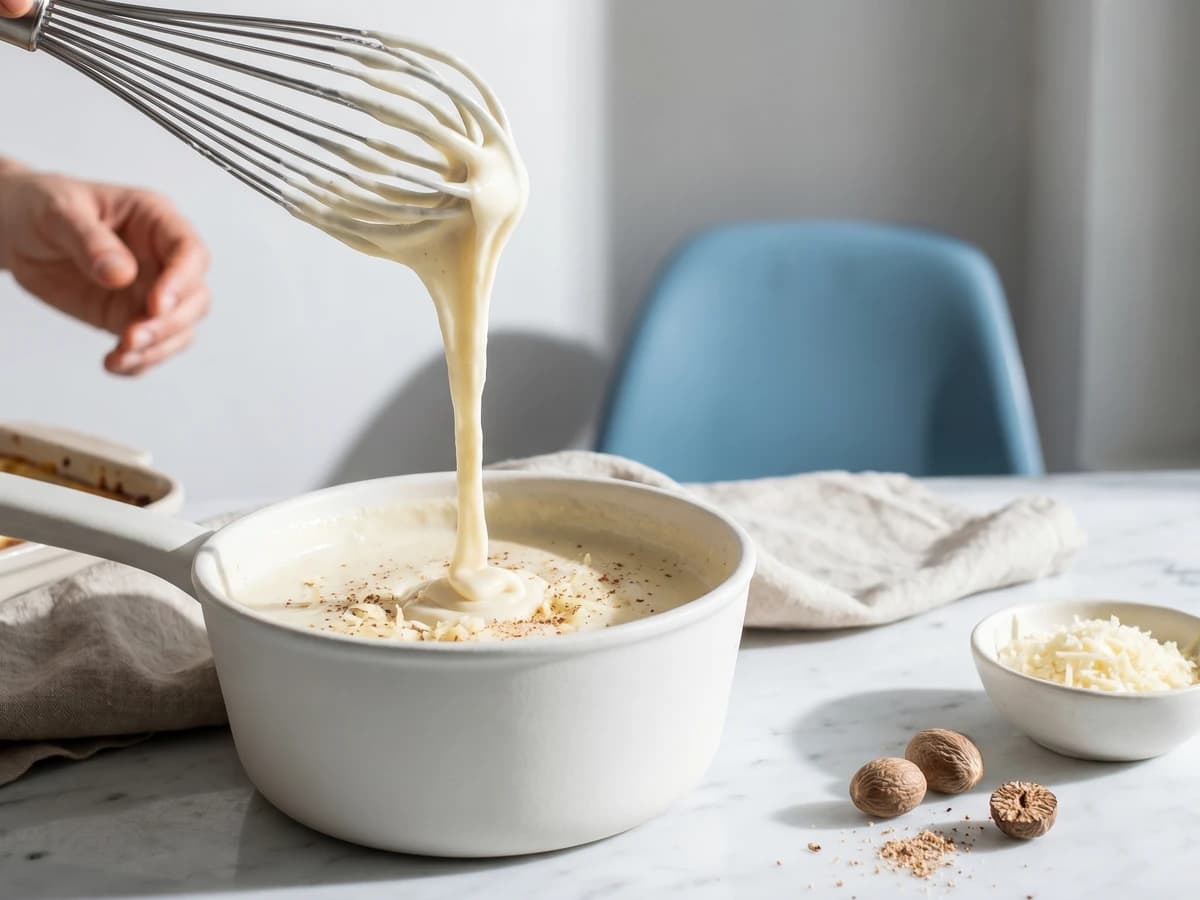
Athens gave Greek baking this thick white crown: a cooked butter-flour sauce enriched with eggs and cheese for moussaka, pastitsio, and the Sunday pan.
Chef Dimitra
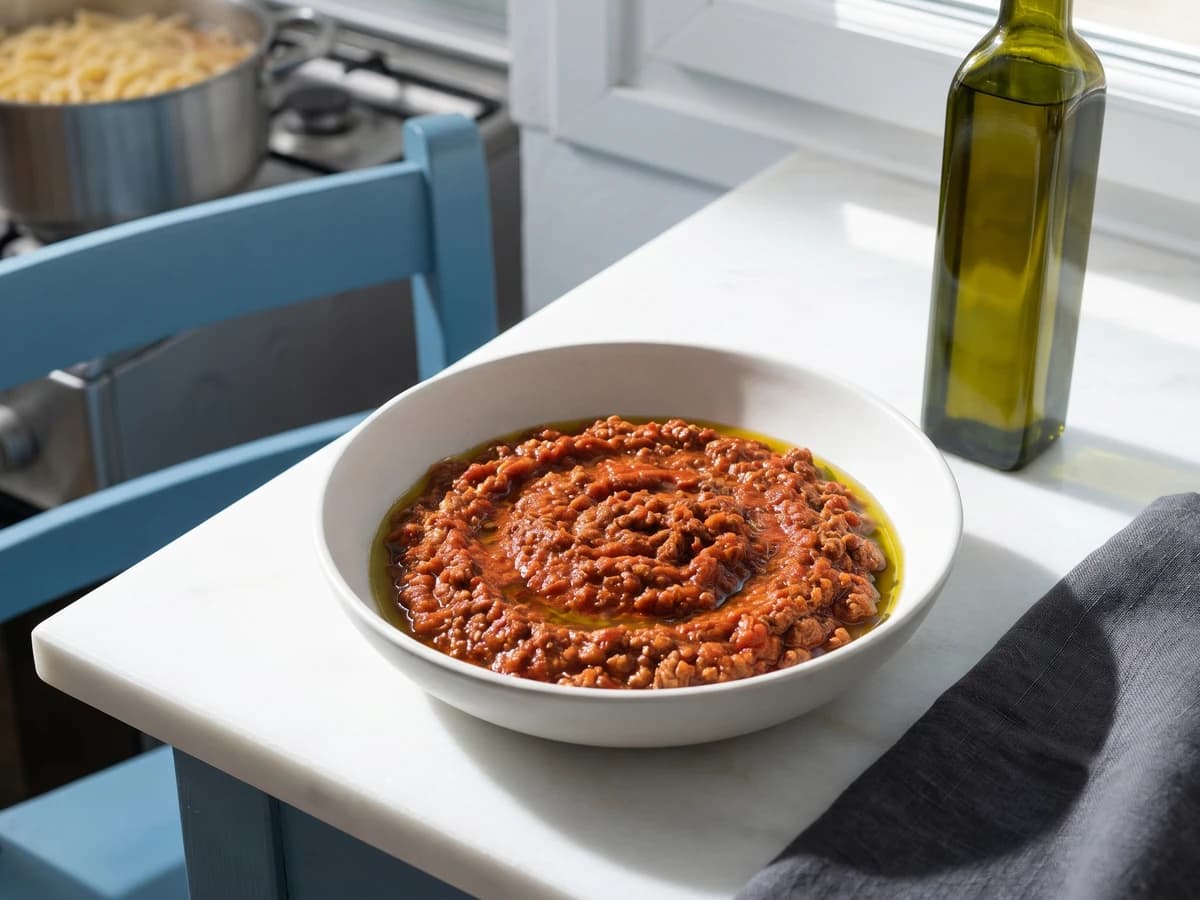
Athenian saltsa kima is minced beef, tomato, cinnamon, and allspice, cooked slowly until the sauce tightens and the green-gold oil pools at the top.
Chef Dimitra
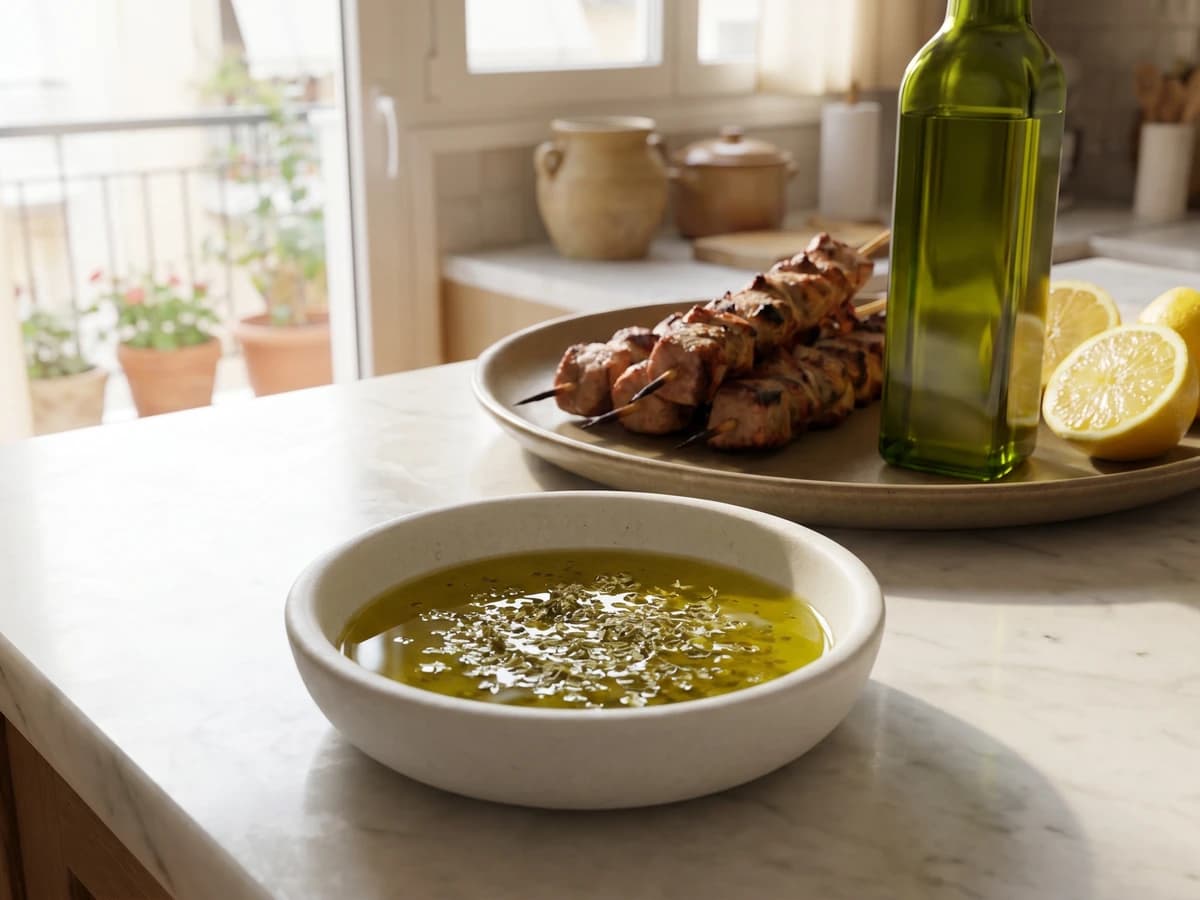
Attica's quick ladorigani is the oil, lemon, and oregano dressing that makes souvlaki taste like souvlaki. Bruise the rigani first, then let good olive oil do its work.