
Chef Dimitra
Aegean Island Chtapodi me Kritharaki (Χταπόδι με Κριθαράκι)
Aegean island octopus, tomato, red wine, and toasted kritharaki share one pot, so the pasta drinks the briny sauce and stays glossy instead of turning heavy.
A cooking platform built around craft, culture, and the stories behind what we eat.
Created by
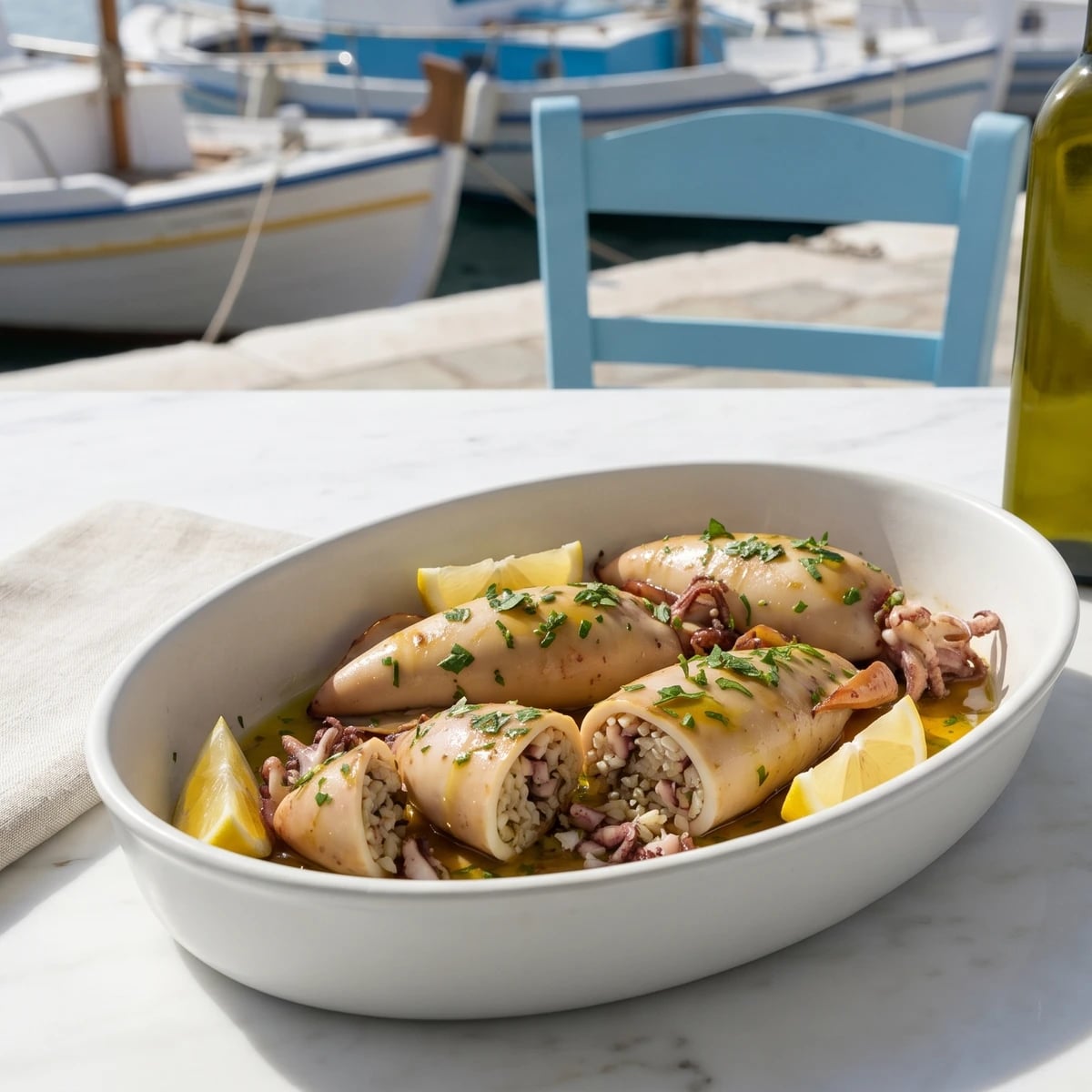
Cycladic stuffed squid is a quiet dinner-party dish: rice, herbs and chopped tentacles inside tender tubes, baked with wine and olive oil until the pan juices turn glossy.
Kalamaria gemista of the Cyclades are squid tubes filled with rice, chopped tentacles, onion, and herbs, then baked in olive oil and white wine until the rice is tender and the squid gives under the fork. The region is the dish's surname. This is island cooking with a good memory: one modest catch stretched into a proper table, without making noise about it.
The method that decides the dish is the filling. You fill each tube only two-thirds. Rice swells, even when half-cooked, and a packed squid splits open in the pan, which is not a tragedy, just untidy and avoidable. Leave it room, pin the mouth closed, and the tube comes out plump rather than burst.
I keep this version in the Cycladic line, plain and good: no minced meat, no sweet fruit hiding inside, no heavy spice. The tentacles go back into the rice because nothing from the animal should be wasted. Good olive oil, and patience. That is enough.
Stuffed squid belongs to Aegean island cooking, especially the Cyclades and the Dodecanese, where a small catch had to become a whole family plate. Squid also sat comfortably in the Orthodox fasting calendar: as a mollusk, it was eaten on many meatless and dairy-free days, with oil and wine added when the day allowed. The word kalamari itself is old and practical, linked through medieval usage to an ink case or reed pen, a name the animal earned by carrying its own ink.
Quantity
1.2kg
cleaned, tubes intact and tentacles reserved
Quantity
150g
rinsed and drained
Quantity
120ml
divided
Quantity
1 large, about 180g
finely chopped
Quantity
2
minced
Quantity
250g
grated and divided
Quantity
220g
use only if tomatoes are out of season
Quantity
1 tablespoon
Quantity
150ml
Quantity
250ml
divided
Quantity
30g
finely chopped and divided
Quantity
10g
finely chopped
Quantity
8g
divided
Quantity
1/2 teaspoon
Quantity
1
Quantity
1
cut into wedges, for serving
| Ingredient | Quantity |
|---|---|
| medium squidcleaned, tubes intact and tentacles reserved | 1.2kg |
| short-grain rice (Carolina or glacé)rinsed and drained | 150g |
| extra virgin Koroneiki olive oildivided | 120ml |
| yellow onionfinely chopped | 1 large, about 180g |
| garlic clovesminced | 2 |
| ripe tomatoesgrated and divided | 250g |
| canned crushed tomatoes (optional)use only if tomatoes are out of season | 220g |
| tomato paste | 1 tablespoon |
| dry white wine | 150ml |
| water or light fish stockdivided | 250ml |
| flat-leaf parsleyfinely chopped and divided | 30g |
| dill or fennel frondsfinely chopped | 10g |
| fine sea saltdivided | 8g |
| freshly ground black pepper | 1/2 teaspoon |
| bay leaf | 1 |
| lemoncut into wedges, for serving | 1 |
Check each squid tube with your finger and pull out any bit of clear cartilage the fishmonger missed. Rinse quickly, pat very dry, and set the tubes aside. Chop the tentacles into small pieces, no larger than peas, so they fold neatly into the rice.
Heat 60ml of the olive oil in a wide pan over medium heat. Add the onion and cook for 8 minutes, until soft and sweet but not browned. Stir in the chopped tentacles and cook for 3 minutes, then add the garlic, tomato paste, and rice. Turn everything for 2 minutes, until the rice is glossy.
Add 100g of the grated tomato, 100ml of the water or stock, 4g of the salt, and the pepper. Simmer for 6 to 7 minutes, until the liquid is mostly absorbed but the rice is still firm in the center. Take the pan off the heat and fold in 25g of the parsley and all the dill or fennel fronds. Let the filling cool for 10 minutes.
Spoon the filling into the squid tubes, filling each one only two-thirds full, then close the opening with a wooden toothpick. This is the step that decides the dish. Rice swells in the oven, and a packed squid splits open before the rice finishes. Leave it room and the tubes stay plump and whole.
Heat the oven to 180C. Lay the stuffed squid in a shallow 30cm baking dish. Pour over the remaining grated tomato, the wine, the remaining 150ml water or stock, the remaining 60ml olive oil, the remaining 4g salt, and the bay leaf. Cover tightly with baking paper and foil. Bake for 45 minutes, until the tubes have tightened gently and the rice has had time to drink the pan juices.
Uncover the dish and baste the squid with the sauce. Bake for another 15 to 20 minutes, until the pan juices are glossy and reduced and a test grain of rice from one tube is tender. If the pan looks dry before the rice is done, add 3 tablespoons of water around the edges, not over the tops.
Let the stuffed squid rest for 10 minutes. Remove the toothpicks, spoon the sauce over the top, and finish with the reserved parsley and lemon wedges. Serve warm, not scalding hot, with bread for the oil and wine in the pan.
1 serving (about 400g)
Culinary guides, cultural storytelling, and the editorial depth that makes cooking meaningful.
Discover Culinary Explorer
Chef Dimitra
Aegean island octopus, tomato, red wine, and toasted kritharaki share one pot, so the pasta drinks the briny sauce and stays glossy instead of turning heavy.

Chef Dimitra
Aegean coast psari plaki is the quiet whole-fish bake: onions and tomato softened first, fish laid on top, and olive oil doing its slow work until the bones release cleanly.

Chef Dimitra
Astakomakaronada is the Aegean islands' celebration pasta: spiny lobster, tomato, olive oil, and long noodles cooked in the shell broth, never drowned in cream or cheese.

Chef Dimitra
Aegean island octopus, simmered tender in its own juices, then marked hard on the grill and finished with oil, vinegar, oregano, and lemon.