
Chef Takumi
Agar Jelly with Anko and Fruit (あんみつ, Anmitsu)
Anmitsu looks like a tray of small tasks, but the work is calm: dissolve the kanten fully, chill the pieces clean, then let fruit, anko, and kuromitsu do the speaking.
A cooking platform built around craft, culture, and the stories behind what we eat.
Created by
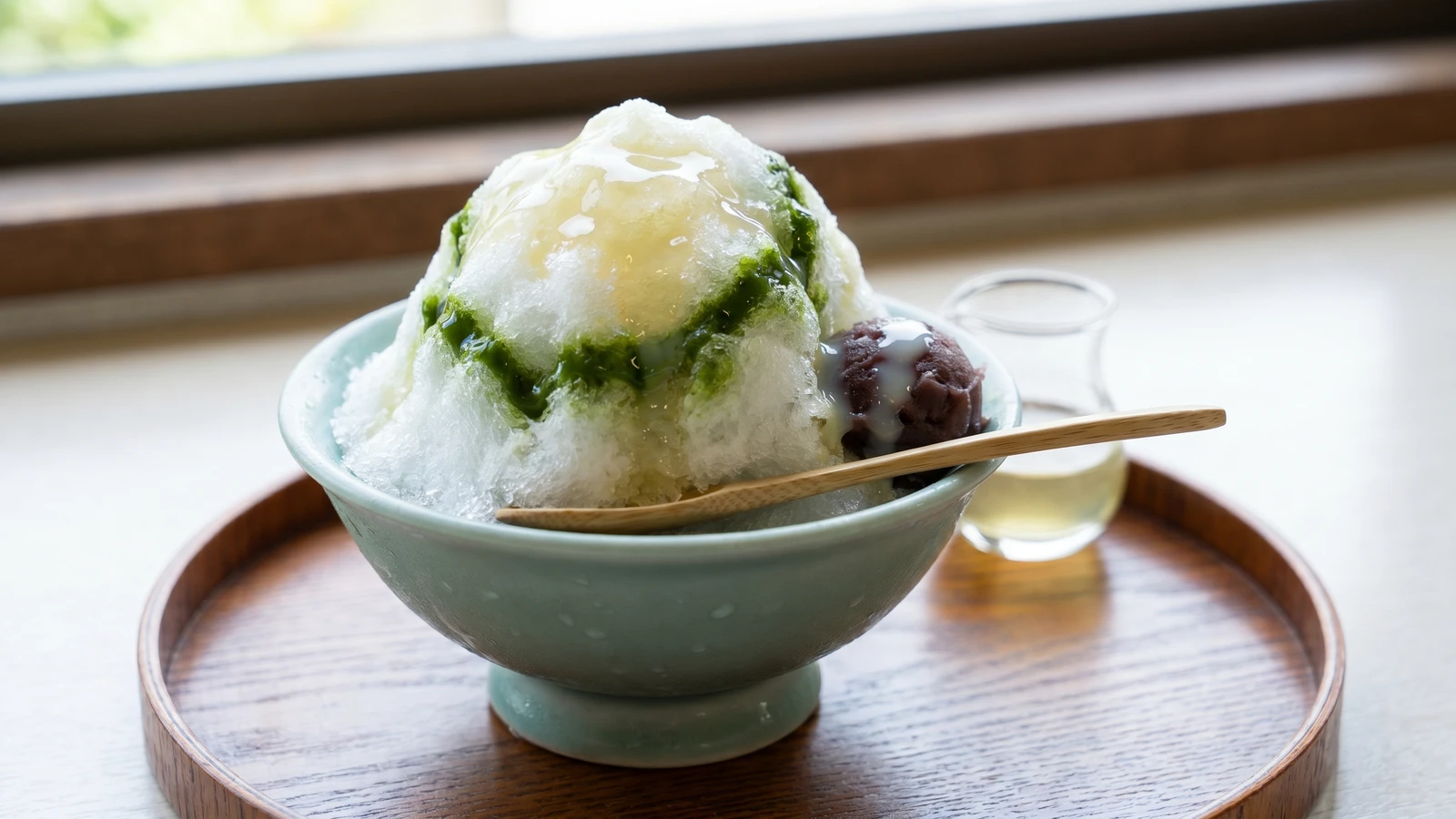
Kakigori is not crushed ice with syrup. It is a mound of slow-shaved block ice, soft enough to drink from the spoon, sweetened simply and eaten before summer wins.
Kakigori belongs to the hottest part of summer, when a bowl of ice begins to look like a perfectly reasonable meal. The mistake is to think the syrup is the dish. It isn't. The ice is the dish, and the syrup is only there to help it speak.
The one detail that decides everything is the shave. Crushed ice is hard and noisy under the teeth. Kakigori should fall from the blade in thin, soft sheets, piling up like fresh snow. Use clear, well-frozen block ice, let it temper until the surface just begins to gloss, then shave it slowly. Ice straight from the freezer is too brittle and breaks into grit. Ice that has softened a little meets the blade cleanly.
For the most plain version, mizore, we pour a clear sugar syrup over the mound and stop there. Add matcha syrup, strawberry syrup, or a little anko if you like, but don't bury the bowl. This is outdoor food, festival food, food for a day when shade feels like a kindness. Leave it room, turn the bowl as you eat, and let each spoonful stay cold.
Shaved ice appears in Japan's Heian-period court literature, where Sei Shōnagon mentions ice shaved fine and sweetened with syrup in The Pillow Book, written around the year 1000. Ice was once stored in winter ice houses and reserved for aristocratic use, but kakigori became broadly available in the Meiji period as commercial ice making and ice shops spread. The summer festival form, brightly syruped and served from hand-cranked machines, grew from that modern public life rather than from the court table.
Quantity
1 large block (about 1kg), or 4 round machine molds
frozen solid and tempered before shaving
Quantity
1 cup
Quantity
1 cup
Quantity
1 pinch
Quantity
2 teaspoons
Quantity
2 tablespoons
for whisking matcha
Quantity
1/2 cup
Quantity
4 tablespoons
| Ingredient | Quantity |
|---|---|
| clear block icefrozen solid and tempered before shaving | 1 large block (about 1kg), or 4 round machine molds |
| water | 1 cup |
| granulated sugar | 1 cup |
| sea salt | 1 pinch |
| matcha (optional) | 2 teaspoons |
| hot water (optional)for whisking matcha | 2 tablespoons |
| anko (sweet red bean paste) (optional) | 1/2 cup |
| sweetened condensed milk (optional) | 4 tablespoons |
Combine the water, sugar, and salt in a small pan. Warm gently, stirring only until the sugar disappears, then take it off the heat. Don't boil it hard. A clear syrup should taste clean and sweet, not cooked, because it has nowhere to hide on plain ice.
Pour the syrup into a clean jar and chill it until cold. Warm syrup melts the shaved ice too quickly and gives you a sweet puddle before you have taken three proper spoonfuls.
If making matcha syrup, whisk the matcha with the hot water until smooth, then stir in 1/2 cup of the cold sugar syrup. Strain if you see lumps. Matcha clumps because the powder is fine, so wetting it first gives you a clean green syrup instead of bitter specks.
Set the block ice at room temperature for 10 to 15 minutes, until the surface looks slightly wet and glossy. This small wait is the first secret. Rock-hard ice chips under the blade, while tempered ice shaves into thin sheets.
Put the serving bowls in the freezer for a few minutes. A cold bowl slows melting from below, which matters because kakigori is eaten slowly enough to enjoy but quickly enough to stay itself.
Set the tempered ice into a kakigōriki, a Japanese shaved-ice machine, and shave slowly into each chilled bowl, turning the bowl as the ice falls. Build a loose mound rather than pressing it down. Pressing compacts the flakes, and the whole pleasure is their lightness.
Pour 2 to 3 tablespoons of syrup over each mound, letting it run through the ice instead of drowning it. Add a spoonful of anko or a thin ribbon of condensed milk if you like. Serve at once, with the bowl on a small tray, and turn the bowl as you eat so the cold stays even.
1 serving (about 410g)
Culinary guides, cultural storytelling, and the editorial depth that makes cooking meaningful.
Discover Culinary ExplorerChef Takumi
Anmitsu looks like a tray of small tasks, but the work is calm: dissolve the kanten fully, chill the pieces clean, then let fruit, anko, and kuromitsu do the speaking.

Chef Takumi
A cool square of almond-scented milk, set softly and served with mikan in thin syrup, is dinner-party food without theater. The only stern demand is restraint with the fragrance.

Chef Takumi
Azuki bar asks for patience twice: once while the beans soften, and once while the frozen bar yields. That hardness is not a flaw. It is the character of the thing.
Chef Takumi
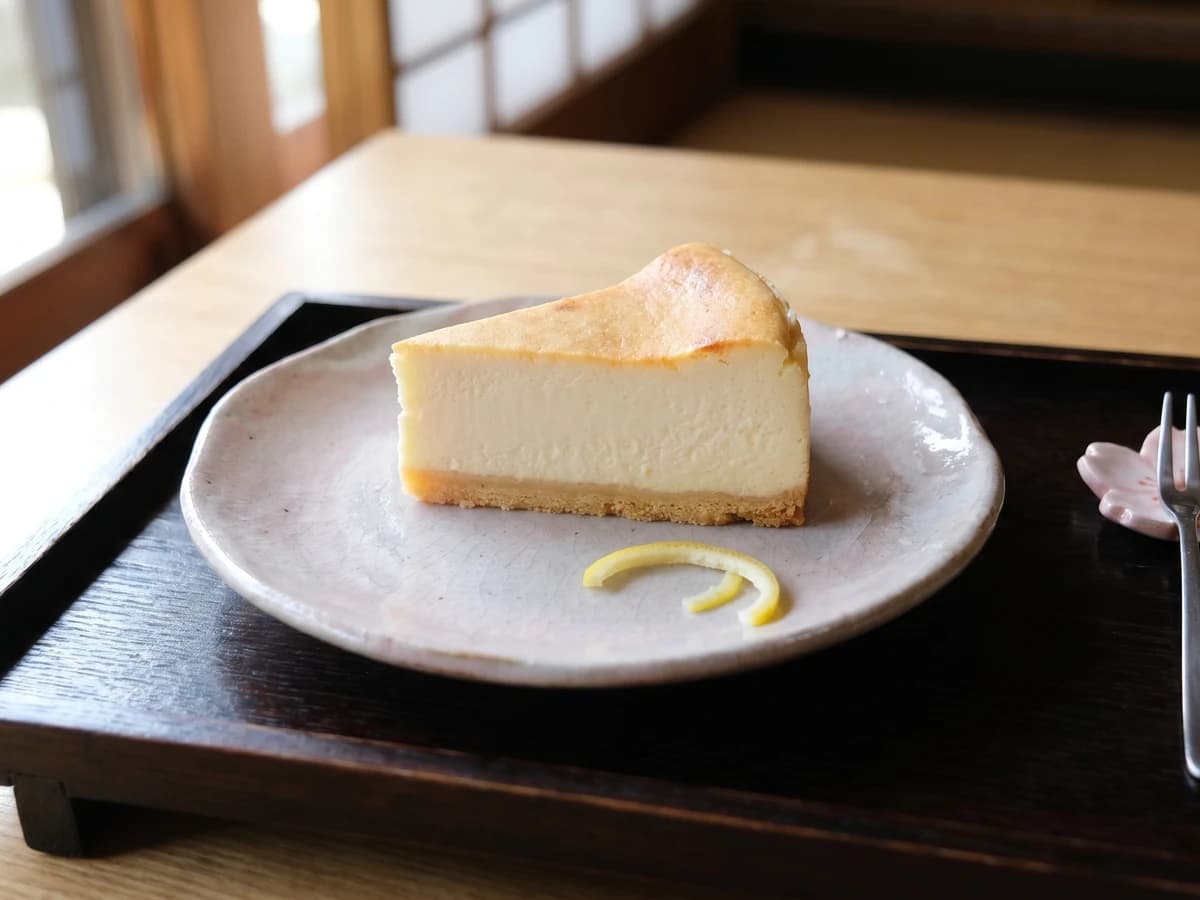
A Japanese baked cheesecake is not trying to float away. It is dense, smooth, and quietly tart, with a clean slice doing the work of decoration.