
Chef Takumi
Agedashi Tofu (揚げ出し豆腐)
Agedashi tofu looks like a fryer test. It is only drained tofu, potato starch, clean oil, and a hot dashi broth waiting nearby.
A cooking platform built around craft, culture, and the stories behind what we eat.
Created by
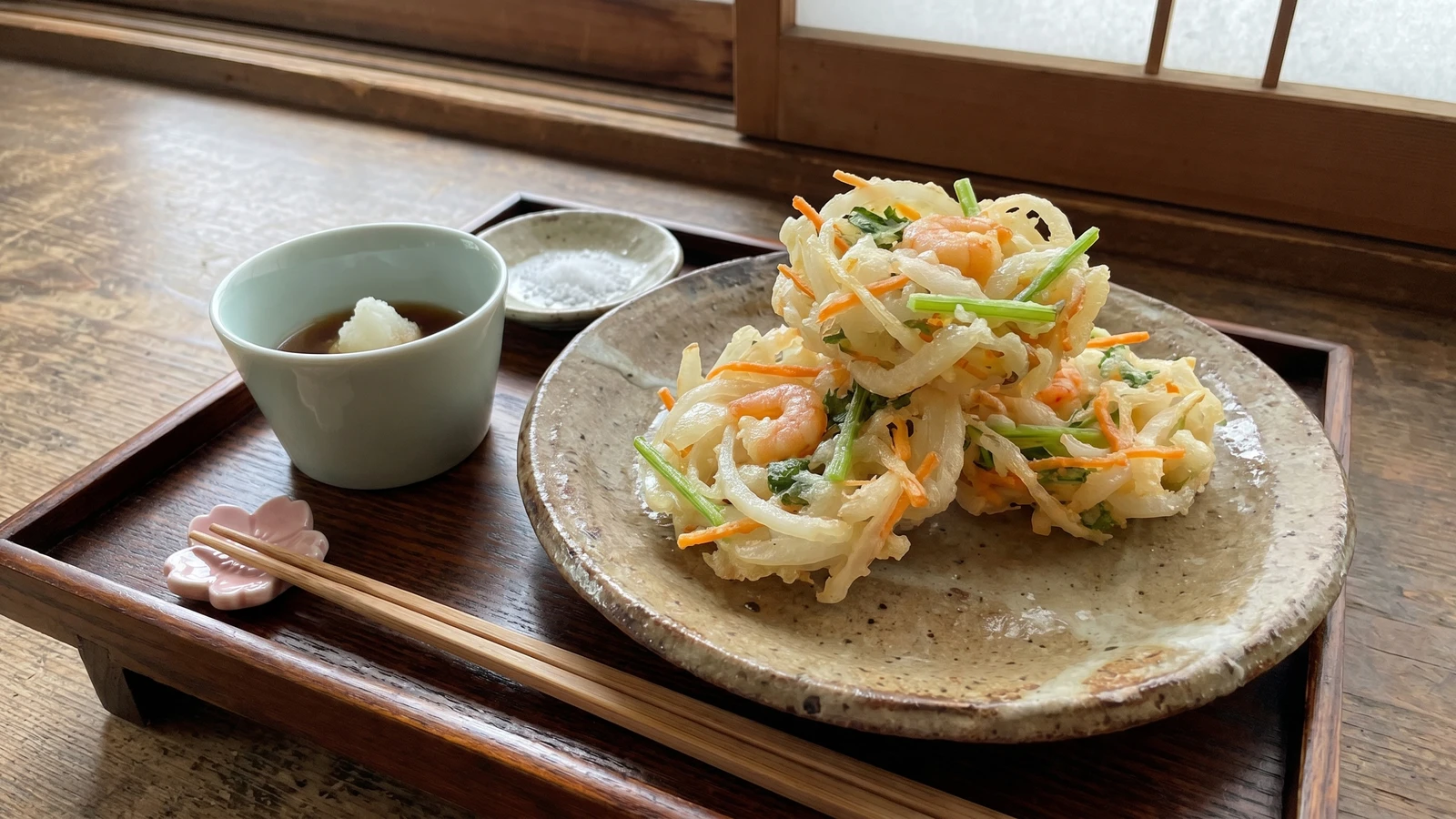
Kakiage is tempura gathered into one loose disc: sweet onion, carrot, mitsuba, and optional shrimp held by just enough cold batter to fry crisp without turning into a pancake.
Kakiage looks like the part of tempura that might fall apart just to embarrass you. It won't, if you understand what holds it. Onion, carrot, mitsuba, and sometimes a few small shrimp are cut small, dusted with flour, barely touched with cold batter, then lowered into the oil as one loose disc.
The one detail that decides it is the word loose. Too much batter gives you a heavy pancake, too little leaves the vegetables drifting away like they have appointments elsewhere. Dusting the pieces first gives the batter something to cling to, and keeping the batter cold keeps it light. You're binding, not burying.
Kakiage belongs comfortably to a quick table. Set it beside rice and miso soup, tuck it over soba or udon, or serve one small fritter with salt or tentsuyu, the tempura dipping sauce built from dashi, shōyu, and mirin. The vegetables do the speaking, especially when onion is sweet and mitsuba is glistening fresh. Nothing hidden, no heavy sauce. A clean fry, a little room on the plate, and the dish is honmono without becoming theatrical.
Kakiage belongs to tempura's Edo-period development, when fried seafood and vegetables were sold from urban stalls and later folded into soba-shop cooking. The name is commonly explained from kakiageru, to gather up and fry, which describes the method exactly: small pieces that would disappear as separate tempura are bound together and lowered into the oil as one. Edo versions often used small shrimp and shellfish from the bay, while everyday home versions lean on onion, carrot, burdock, and mitsuba.
Quantity
1 medium (about 150g)
halved and sliced 1/4 inch thick
Quantity
1 small (about 60g)
cut into fine matchsticks
Quantity
8 stems
cut into 1-inch lengths
Quantity
80g
peeled, deveined, cut into 1/2-inch pieces, and patted dry
Quantity
2 tablespoons
for dusting
Quantity
1
chilled
Quantity
about 3/4 cup
enough with the egg to total 1 cup
Quantity
1 cup (120g)
chilled
Quantity
as needed for 2 inches in the pot
Quantity
to serve
Quantity
3/4 cup
Quantity
3 tablespoons
Quantity
3 tablespoons
Quantity
1/2 cup
grated and lightly squeezed
| Ingredient | Quantity |
|---|---|
| yellow onionhalved and sliced 1/4 inch thick | 1 medium (about 150g) |
| carrotcut into fine matchsticks | 1 small (about 60g) |
| mitsuba (Japanese wild parsley)cut into 1-inch lengths | 8 stems |
| small raw shrimp (optional)peeled, deveined, cut into 1/2-inch pieces, and patted dry | 80g |
| hakurikiko (low-protein flour) or all-purpose flourfor dusting | 2 tablespoons |
| large eggchilled | 1 |
| ice waterenough with the egg to total 1 cup | about 3/4 cup |
| hakurikiko (low-protein flour) or all-purpose flourchilled | 1 cup (120g) |
| neutral frying oil | as needed for 2 inches in the pot |
| flaky sea salt | to serve |
| dashi (optional) | 3/4 cup |
| shōyu (Japanese soy sauce) (optional) | 3 tablespoons |
| mirin (optional) | 3 tablespoons |
| daikon (optional)grated and lightly squeezed | 1/2 cup |
If you're serving tentsuyu, put the mirin in a small saucepan and simmer it for 30 seconds, just long enough to soften its alcoholic edge. Add the dashi and shōyu, warm until the surface just trembles, then take it off the heat. Boiling hard drives off the dashi's clean aroma, and this sauce is meant to sit beside the fritter, not smother it. If you don't have dashi ready, serve the kakiage with salt today.
Slice the onion into narrow arcs, cut the carrot into fine matchsticks, and cut the mitsuba into 1-inch lengths. If using shrimp, cut it small and pat it very dry. Matching the size matters because every piece must cook in the same few minutes; drying matters because water spits in the oil and makes batter slide off.
Pour oil 2 inches deep into a heavy pot and heat it to 340°F to 350°F. Set a rack over a tray before you begin. At this heat, the vegetables cook through while the batter crisps; lower oil makes the fritter drink oil, hotter oil browns the outside before the onion sweetens.
Beat the cold egg lightly in a measuring cup, then add ice water to reach 1 cup total liquid. Pour it into a bowl, scatter in the chilled flour, and mix with chopsticks about ten strokes. Lumps are welcome. Cold, under-mixed batter keeps gluten from tightening, which is why good tempura feels crisp and light instead of bready.
Toss the onion, carrot, mitsuba, and shrimp, if using, with the 2 tablespoons flour until the pieces look dusty. Add about 1/2 cup batter and fold gently, adding only a spoonful more if dry flour remains. The mixture should look barely bound, with vegetable edges still visible. Batter is glue here, not plaster.
Place one quarter of the mixture on a flat metal ladle or wide slotted spoon, spread it into a loose 4-inch disc, and lower it to the oil's surface before sliding it in. Do not drop it from above; it will scatter and splash. Let it fry untouched for 90 seconds so the underside sets, then turn once and fry 1 to 2 minutes more, nudging any stray strands back with saibashi or tongs. The fritter is ready when the bubbles around it grow smaller and the edges are pale gold and crisp.
Lift the kakiage to the rack and hold it on its edge for a moment so oil runs off instead of settling inside. Salt it while the surface is still bright, or serve with warm tentsuyu and grated daikon in a small bowl. Don't stack the fritters; trapped oil softens the lace. Eat at once.
1 serving (about 200g)
Culinary guides, cultural storytelling, and the editorial depth that makes cooking meaningful.
Discover Culinary ExplorerChef Takumi
Agedashi tofu looks like a fryer test. It is only drained tofu, potato starch, clean oil, and a hot dashi broth waiting nearby.

Chef Takumi
Aspara-bacon is late-spring asparagus treated with common sense: thin bacon, hot grill, and a last brush of shōyu and mirin so the spear stays sweet while the wrap crisps.

Chef Takumi
This is Osaka street food at its plainest and best: good beef cut small, a thin batter, fine panko, hot beef tallow, and one clean dip in sauce.

Chef Takumi
Buta-bara is not a trick of the grill. Good pork belly, even cutting, steady heat, and the patience to let the fat turn glossy do most of the work.