
Chef Takumi
Agar Jelly with Anko and Fruit (あんみつ, Anmitsu)
Anmitsu looks like a tray of small tasks, but the work is calm: dissolve the kanten fully, chill the pieces clean, then let fruit, anko, and kuromitsu do the speaking.
A cooking platform built around craft, culture, and the stories behind what we eat.

Created by
Karukan is Kagoshima's snowy yam cake: fresh mountain yam beaten until sticky and light, folded with rice flour and sugar, then steamed into a tender wagashi that needs no decoration.
Mountain yam is an unlikely beginning for a cake. Grate it and it pulls into pale, sticky threads, the sort of texture that makes a sensible cook wonder whether something has gone wrong. Nothing has. That stretch, nebari, is the lift, and karukan depends on it more than on any clever hand.
Use yamaimo at its shun, from late autumn into winter, when it is dense, sticky, and faintly sweet. Jinenjo or yamatoimo gives the best rise; nagaimo is a sensible stand-in, wetter and less stubborn, so you use less water and accept a softer cake. We say that plainly. Honmono is not pretending a substitute changed its nature.
Once the yam is right, the method is calm. Beat in sugar, then water by spoonfuls, so the sticky paste loosens without collapsing. Fold in rice flour only after the mixture is glossy and light, because the flour's job is to set the air the yam has already caught. Rush that order and the cake becomes heavy; keep it unhurried and the steamer gives you a snowy crumb with tiny even pores.
Karukan sits in the wagashi corner of the table, a sweet for tea, not a dessert trying to win an argument. Cut it small. Leave it room. Its whiteness is the point: rice, yam, sugar, and nothing hidden.
Karukan is a specialty of Kagoshima, the former Satsuma domain, and its written name, 軽羹, means light yōkan, a useful clue to its airy texture rather than its ingredients. By the late Edo period it was established in southern Kyushu, where mountain yam, rice flour, and sugar from the southern trade routes met in local confectionery. Akashiya, one of Kagoshima's famous makers, traces its founding to 1854 during the rule of Shimazu Nariakira, and its history helped fix karukan as one of the prefecture's signature sweets.
Quantity
180g peeled
jinenjo or yamatoimo preferred; nagaimo acceptable
Quantity
150g
Quantity
60-90ml
start with 60ml if using nagaimo
Quantity
170g
or jōshinko rice flour
| Ingredient | Quantity |
|---|---|
| sticky Japanese mountain yamjinenjo or yamatoimo preferred; nagaimo acceptable | 180g peeled |
| fine granulated sugar | 150g |
| cold waterstart with 60ml if using nagaimo | 60-90ml |
| karukan-ko (coarse non-glutinous rice flour)or jōshinko rice flour | 170g |
Line a 15cm square nagashi-kan, a small heatproof cake pan, or eight shallow cups with parchment. Set up a steamer with plenty of water and wrap the lid in a clean cloth, tying the corners up away from the heat. Bring the water to a lively boil before the batter is finished; once rice flour goes in, you want the cake cooking at once so the trapped air doesn't sit and fade.
Peel the yam just before using. Wear gloves if yamaimo irritates your skin, which it often does, not politely. Grate it on an oroshigane, a Japanese grater, or a fine ceramic grater until it becomes a smooth white paste that clings to the spoon and stretches in threads. If it slides loosely like a puree, you are probably using nagaimo, so keep the water toward 60ml.
Move the grated yam to a suribachi, a Japanese grinding bowl, or a wide mixing bowl. Beat it with a surikogi or balloon whisk for 3 minutes, until glossy and slightly paler. Add the sugar in three additions, beating well after each one until the grit disappears and the paste looks smooth again.
Add the cold water a spoonful at a time, beating after each addition. Stop when the mixture falls from the whisk in a slow, thick ribbon. Use the full 90ml for dense jinenjo or yamatoimo; with watery nagaimo, stop earlier. The batter should be light, not soupy.
Sift or rain the karukan-ko into the yam mixture in three additions, folding gently but thoroughly after each one. Scrape the bottom of the bowl, where dry flour likes to hide. Let the batter rest for 10 minutes, then fold once more. It should be thick, glossy, and able to hold a shallow line for a moment before closing.
Spoon the batter into the prepared mold, about 2.5cm deep, and smooth the top with a wet spatula. Tap the mold once on the counter, only once, to settle large gaps without knocking out the fine air. Set it in the steamer, cover, and steam over strong steady heat for 22 to 25 minutes, or 14 to 16 minutes for small cups. It is done when the top is matte, springs back lightly, and a skewer comes out clean with no wet paste.
Lift the mold out and let the cake cool for 15 to 20 minutes. Unmold it, peel away the parchment, and cut it into small rectangles with a damp knife, wiping the blade between cuts. Cooling gives the rice starch time to settle; cut too soon and the face tears instead of showing those tiny even pores.
Serve the karukan the same day with sencha or matcha, in small pieces with space around them. Three pieces on a plate looks more generous than a crowd of them. If you have made it ahead, wrap it airtight once fully cool and refresh it briefly in the steamer before serving.
1 serving (about 72g)
Culinary guides, cultural storytelling, and the editorial depth that makes cooking meaningful.
Discover Culinary ExplorerChef Takumi
Anmitsu looks like a tray of small tasks, but the work is calm: dissolve the kanten fully, chill the pieces clean, then let fruit, anko, and kuromitsu do the speaking.

Chef Takumi
A cool square of almond-scented milk, set softly and served with mikan in thin syrup, is dinner-party food without theater. The only stern demand is restraint with the fragrance.

Chef Takumi
Azuki bar asks for patience twice: once while the beans soften, and once while the frozen bar yields. That hardness is not a flaw. It is the character of the thing.
Chef Takumi
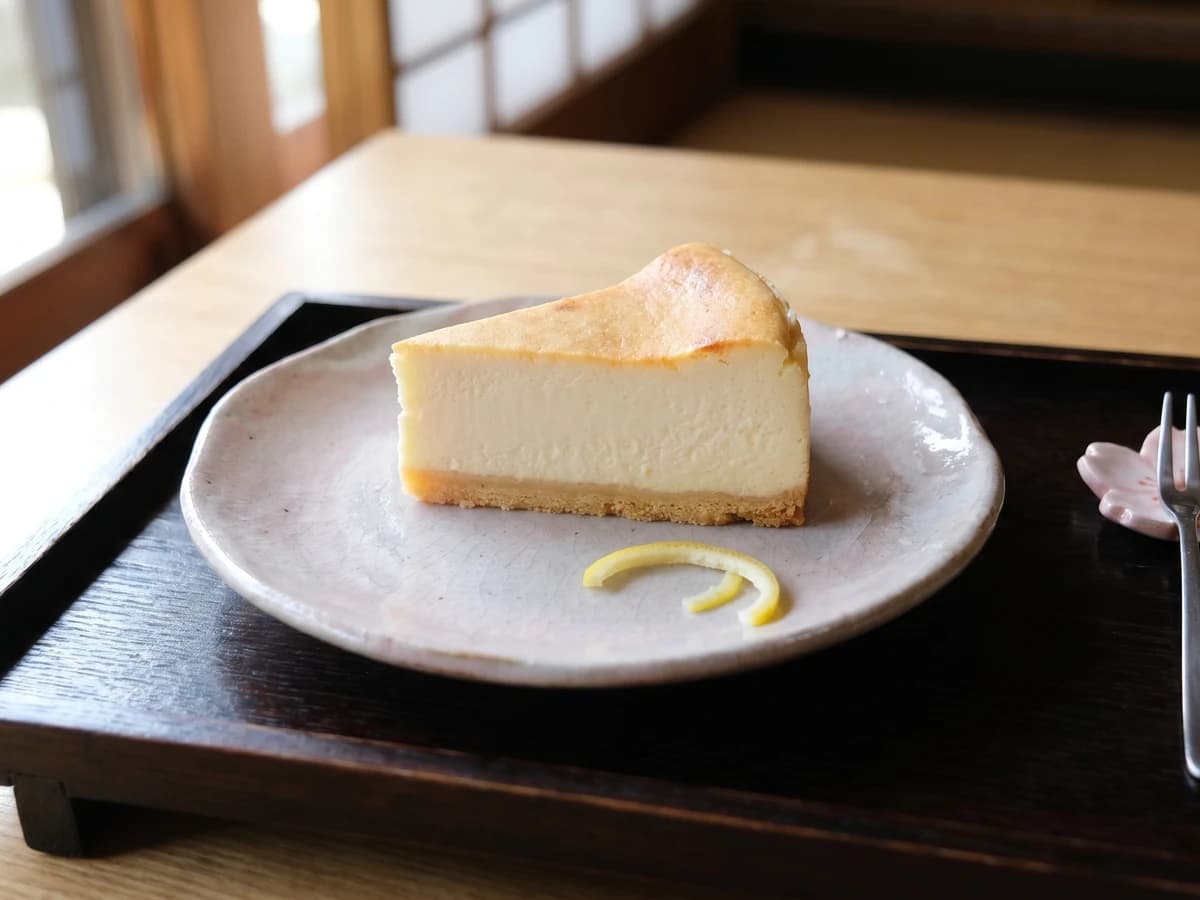
A Japanese baked cheesecake is not trying to float away. It is dense, smooth, and quietly tart, with a clean slice doing the work of decoration.