Culinary Explorer
A cooking platform built around craft, culture, and the stories behind what we eat.
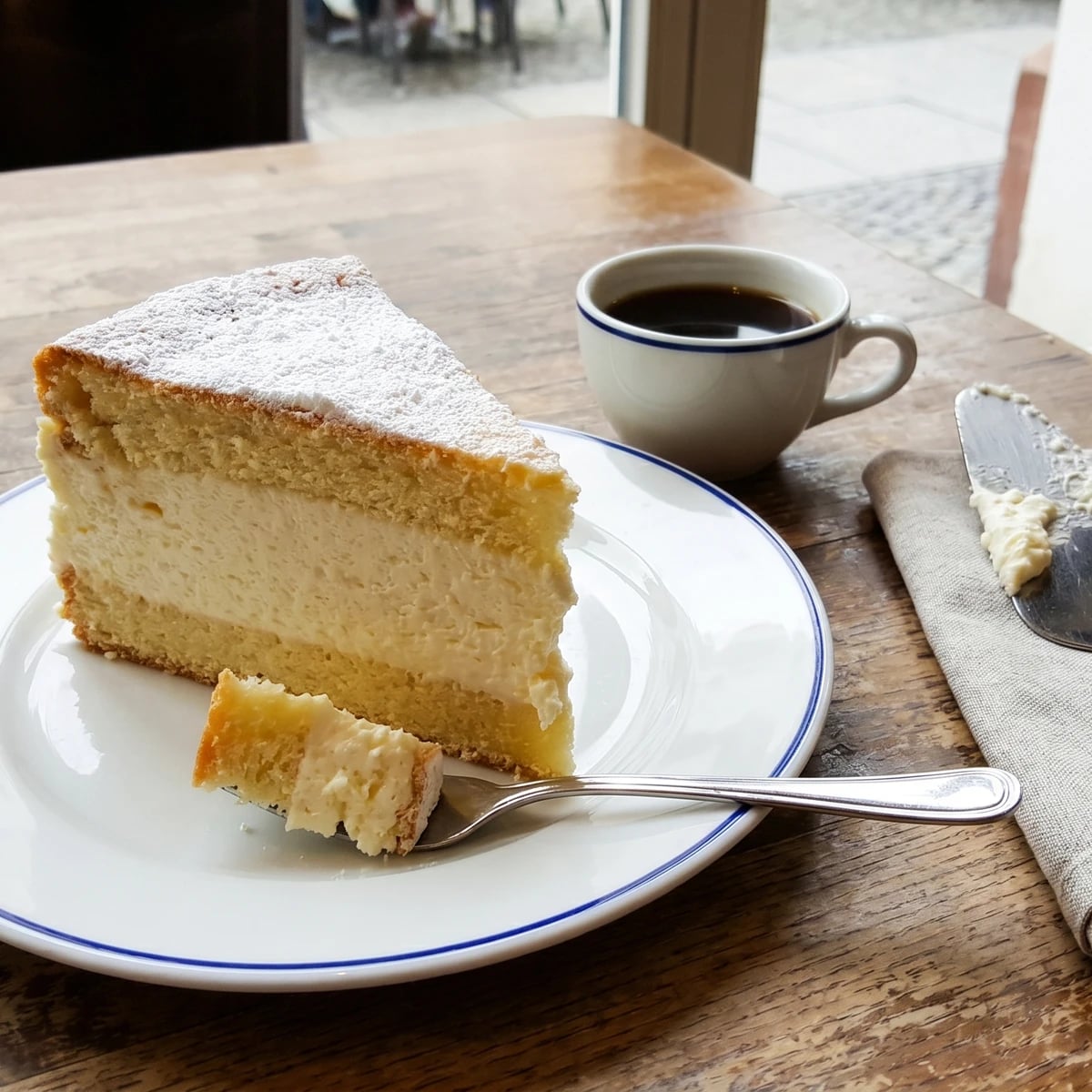
Käse-Sahne-Torte
Created by Chef Klaus
The German coffee-table torte that stays light because quark, cream, and gelatine do the setting, not a hot oven and a heavy block of cream cheese.
Käse-Sahne-Torte belongs to Kaffee und Kuchen, the German afternoon coffee table, where a cake can be festive without being a sugar monument. You see it in Konditoreien from north to south, but the south and Austria lean harder into clean sponge layers and a tall quark cream, while many northern home kitchens make it lower, plainer, and less sweet. Im Norden anders, im Süden anders. The argument is usually over fruit: mandarins folded through, peaches under the cream, or no fruit at all. I like the plain version first, because then you taste the quark.
This is not a baked cheesecake. German quark is fresh and sharp, lighter than cream cheese, and the cream gives it lift. The gelatine gives it manners. The technique that decides the cake is temperature: the dissolved gelatine must meet a spoonful of quark cream first, then go back into the bowl, because cold dairy grabs warm gelatine into rubber threads if you pour it straight in. Temper it, and the filling sets clean and tender.
The sponge matters too. Bake it thin, cool it fully, and split it cleanly; warm sponge melts the cream and turns the bottom wet before the gelatine can hold. Das braucht seine Zeit, but most of that time is the refrigerator doing its work. Make it the day before, dust the top with sugar just before serving, and don't bury it under decoration. Schön ist, was schmeckt.
Ingredients
large eggs
Quantity
4
separated
sugar
Quantity
120g
divided
vanilla sugar or vanilla extract
Quantity
1 teaspoon
| Ingredient | Quantity |
|---|---|
| large eggsseparated | 4 |
| sugardivided | 120g |
| vanilla sugar or vanilla extract | 1 teaspoon |
Where cooking meets culture.
Culinary guides, cultural storytelling, and the editorial depth that makes cooking meaningful.
Discover Culinary Explorer