
Chef Klaus
Ahle Wurst
North Hesse's old sausage is cured, not cooked: coarse pork, pepper, garlic, and cold weeks in a chamber until the slice turns firm enough for rye and cider.
A cooking platform built around craft, culture, and the stories behind what we eat.
Created by
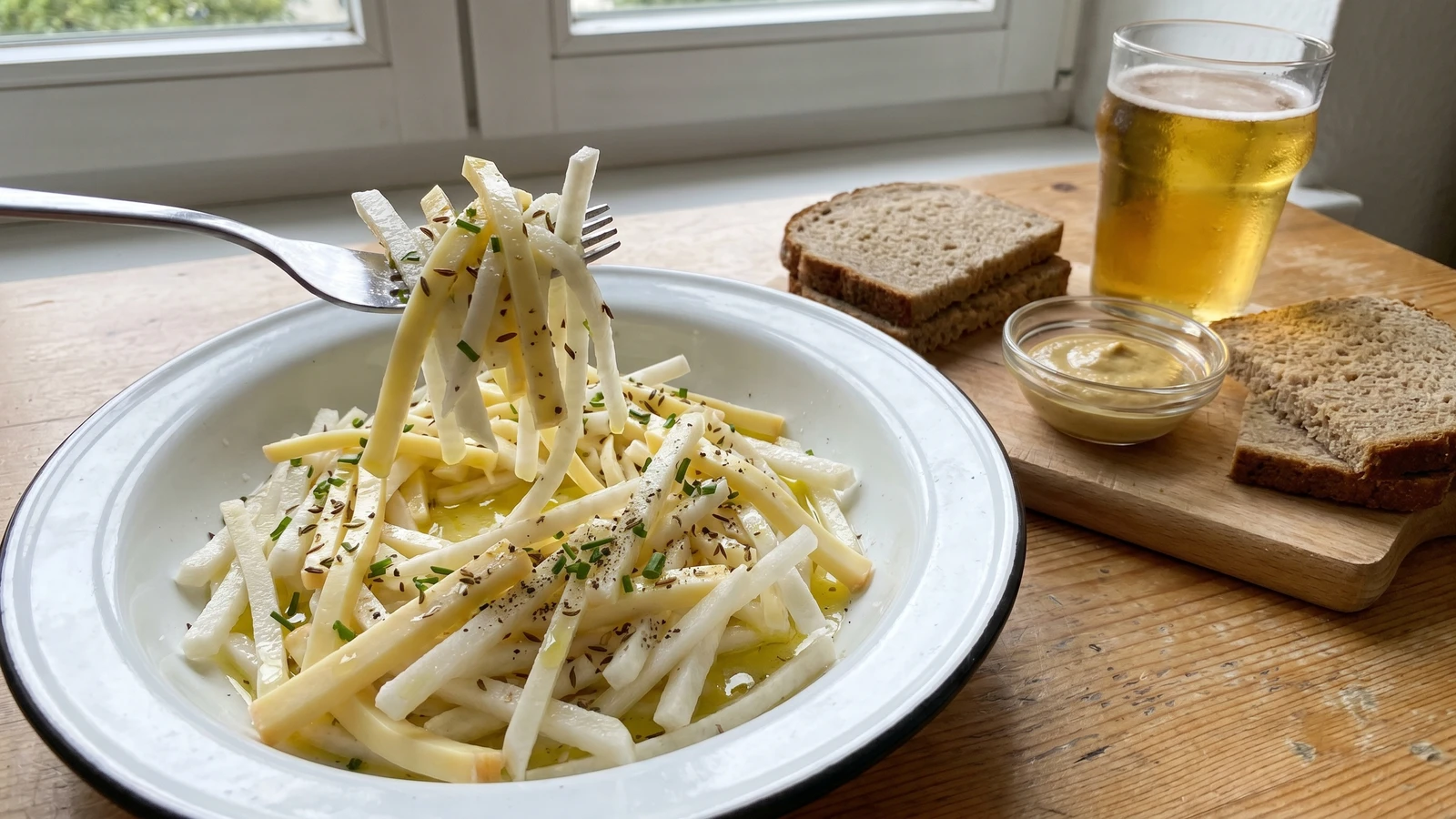
White Rettich has bite, Bergkäse has salt and fat, and the salad works only if the radish is salted first so it weeps before the cheese goes in.
Käse-Rettich-Salat belongs to the Bavarian and Alpine Brotzeit table, the cold board you set down with rye bread, butter, sausage, cheese, mustard, and a beer that knows its glass. It is picnic food, beer-garden food, and weeknight food when cooking would be too much and eating properly still matters.
Im Norden anders, im Süden anders. In the north, the cold table leans toward rye, herring, cucumber, and dairy; in Bavaria and the Allgäu, the white Radi, the long white radish, sits beside mountain cheese and gets cut fine enough to take salt and vinegar properly. Some cooks add onion, some caraway, some only chives. I keep the onion light and the caraway optional, because the radish and cheese are the argument.
The whole dish turns on one plain step: salt the cut Rettich first and let it weep. Raw white radish can bite like a cheap knife. Salt pulls out water, softens the burn, and gives the dressing somewhere to go. Skip that and you get watery salad with angry radish and tired cheese. Das braucht seine Zeit, but only twenty minutes.
Use a firm Bergkäse, not a rubbery sliced cheese from a packet. Nicht aus dem Glas for the dressing either: vinegar, oil, mustard, pepper, and the radish's own seasoning do the work. Toss it just before serving so the cheese stays distinct and the radish still has snap. Schön ist, was schmeckt.
The Bavarian Brotzeit table grew around working meals and beer-garden eating, especially after Munich's nineteenth-century lager cellars became public drinking places with simple cold food brought or sold alongside the beer. White radish, called Radi in Bavaria, became one of the standard beer-garden accompaniments because salt made it juicy, sharp, and thirst-making, which suited the Maßkrug table very well. Adding Alpine Bergkäse ties the salad to the southern mountain dairy belt, where hard cheeses from summer milk were built to keep long after the pasture season ended.
Quantity
1 large, about 500g
peeled and cut into matchsticks
Quantity
1 teaspoon
Quantity
200g
cut into matchsticks
Quantity
2 tablespoons
Quantity
1 teaspoon
Quantity
3 tablespoons
Quantity
1 small red onion or 2 spring onions
very thinly sliced
Quantity
2 tablespoons
finely snipped
Quantity
1/2 teaspoon
lightly crushed
Quantity
to taste
freshly ground
Quantity
to serve
| Ingredient | Quantity |
|---|---|
| white Rettich radishpeeled and cut into matchsticks | 1 large, about 500g |
| fine salt | 1 teaspoon |
| Bergkäse or Allgäuer Emmentalercut into matchsticks | 200g |
| white wine vinegar | 2 tablespoons |
| medium German mustard | 1 teaspoon |
| neutral oil or mild rapeseed oil | 3 tablespoons |
| red onion or spring onionsvery thinly sliced | 1 small red onion or 2 spring onions |
| chivesfinely snipped | 2 tablespoons |
| caraway seeds (optional)lightly crushed | 1/2 teaspoon |
| black pepperfreshly ground | to taste |
| dense rye bread | to serve |
Peel the Rettich and cut it into thin matchsticks, not thick batons. Thin cuts take salt evenly and bend into the dressing; thick ones stay raw in the middle and fight the cheese.
Toss the radish with the salt in a bowl and leave it for 20 minutes. The salt pulls out water and takes the hard raw bite down, so the salad tastes sharp and clean instead of harsh. Drain off the liquid and squeeze the radish once with your hands, gently, so it stays crisp.
Whisk the vinegar and mustard together first, then whisk in the oil. Mustard helps the vinegar and oil hold for a little while, which means the dressing clings to the radish instead of running to the bottom of the bowl.
Cut the Bergkäse into matchsticks about the same size as the radish and add it with the onion, chives, caraway if using, and black pepper. Matching the cut matters: radish and cheese should land on the fork together, one sharp and wet, one salty and firm.
Fold in the dressing just before serving and taste once more. Add vinegar if the cheese has made it too round, oil if the radish is too sharp, and salt only if the salted radish did not carry enough. Serve with dense rye bread and butter, because the bread catches the dressing. Weggeworfen wird nichts.
1 serving (about 250g)
Culinary guides, cultural storytelling, and the editorial depth that makes cooking meaningful.
Discover Culinary ExplorerChef Klaus
North Hesse's old sausage is cured, not cooked: coarse pork, pepper, garlic, and cold weeks in a chamber until the slice turns firm enough for rye and cider.

Chef Klaus
Baden's Vesper spread is nothing more than quark, cream, onion, and chives, but the whole dish depends on controlling the whey so the bowl stays spoonable beside hot potatoes.

Chef Klaus
Baden's lard spread is thrift in a crock: pork fat rendered slowly, onion and apple added when the water is gone, and the crisp Grieben stirred back before it sets.

Chef Klaus
The Bavarian beer-garden salad that lives by the cut: thin sausage strips, raw onion, vinegar and oil, no cheese, rested long enough to taste like supper.