
Chef Klaus
Allgäuer Krautkrapfen
The Allgäu pan dish that makes a meal from noodle dough, winter kraut, onion, and fat: brown the cut sides first, then cook gently so the rolls hold.
A cooking platform built around craft, culture, and the stories behind what we eat.
Created by
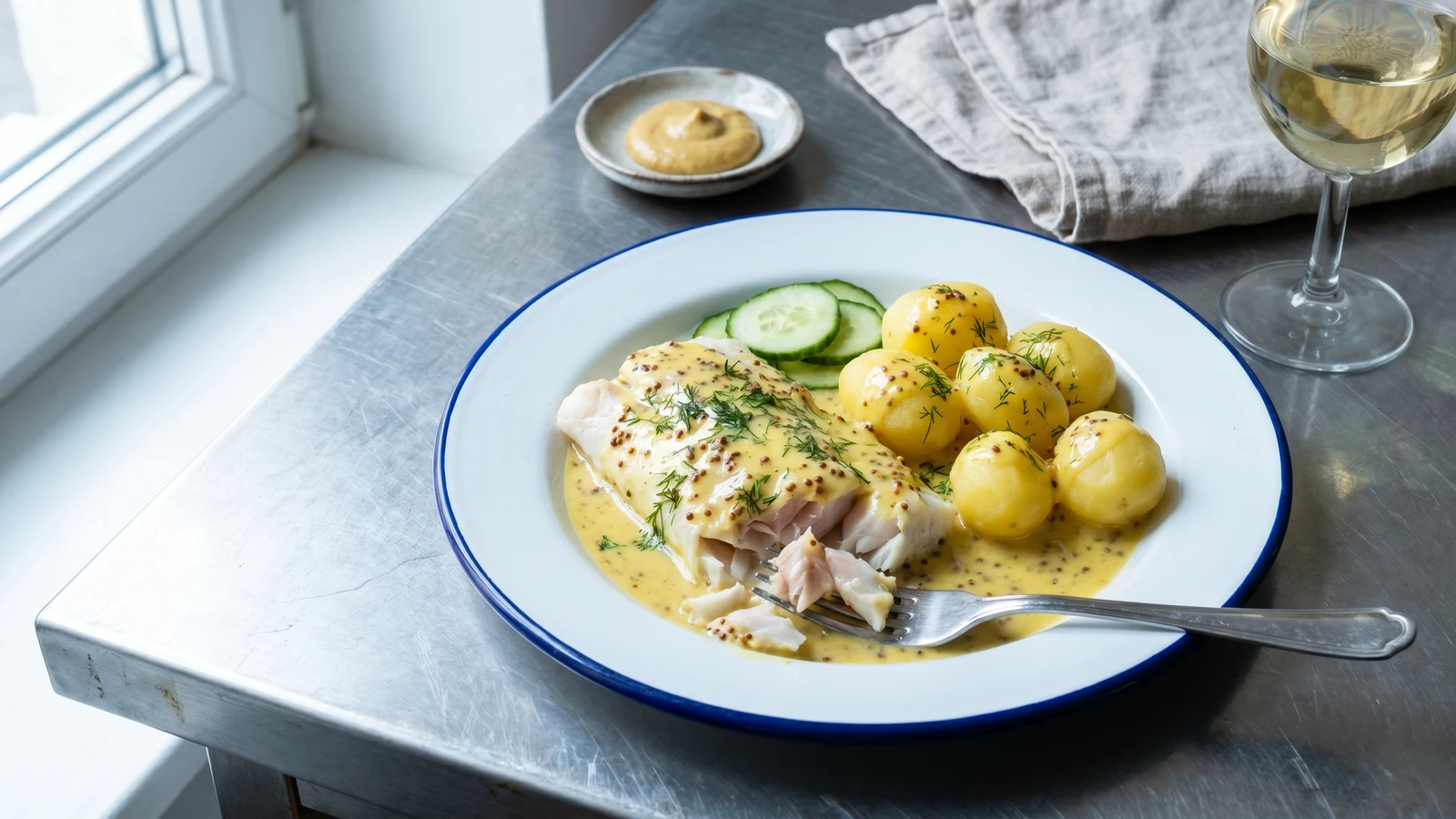
Northern cod, barely poached, then sauced with its own broth and good German mustard. The fish stays tender because the pot never boils.
Kabeljau in Senfsauce belongs to the northern table, strongest along the Baltic coast and on Rügen, where cod, potatoes, mustard, and a little dairy make a proper meal without theatre. It is weeknight food if you have fresh fish, and Sunday food if the potatoes are good and the sauce is made carefully. Das ist kein Bierzelt. The colour here is pale fish, yellow mustard, green dill, and the clean shine of a sauce that hasn't been bullied.
Im Norden anders, im Süden anders. In Mecklenburg and Schleswig-Holstein the sauce is often sharper and lighter, built on the fish liquor and mustard. Further inland you see more cream, sometimes egg, sometimes too much flour. I keep it northern: poach the cod gently, strain the liquor, and make the sauce from that. Weggeworfen wird nichts, the cooking liquid is the backbone of the dish.
The one rule is simple: the poaching liquid must tremble, not boil. Boiling tightens cod into dry flakes and clouds the broth, and then the sauce tastes tired before it begins. Keep it quiet, lift the fish out as soon as it parts under a fork, and add the mustard at the end so its sharpness stays alive. Erst verstehen, dann kochen.
Cod from the North Sea and Baltic was central to northern German cooking through the Hanseatic fish trade, whose ports connected preserved and fresh fish markets from the Middle Ages onward. Rügen and the Mecklenburg coast kept cod and mustard sauce in the everyday kitchen because the dish used what was close at hand: fish, potatoes, dairy, and mustard from a cool-climate larder. The regional split is practical: coastal cooks often keep the sauce lean and sharp on fish liquor, while inland versions soften it with more cream or egg.
Quantity
700g
cut into 4 portions
Quantity
800g
peeled or scrubbed
Quantity
900ml
Quantity
150ml
Quantity
1
sliced
Quantity
1
sliced
Quantity
1
Quantity
6
Quantity
4
Quantity
1
Quantity
1 teaspoon, plus more to taste
Quantity
35g
Quantity
35g
Quantity
350ml
Quantity
100ml
Quantity
3 tablespoons
Quantity
1 tablespoon
Quantity
1 teaspoon, plus more to taste
Quantity
1 small pinch
Quantity
to taste
freshly ground
Quantity
2 tablespoons
chopped
| Ingredient | Quantity |
|---|---|
| thick cod filletscut into 4 portions | 700g |
| waxy potatoespeeled or scrubbed | 800g |
| water or light fish stock | 900ml |
| dry white wine | 150ml |
| small onionsliced | 1 |
| small carrotsliced | 1 |
| bay leaf | 1 |
| black peppercorns | 6 |
| parsley stems | 4 |
| lemon slice | 1 |
| salt | 1 teaspoon, plus more to taste |
| butter | 35g |
| plain flour | 35g |
| strained cod poaching liquid | 350ml |
| cream | 100ml |
| German medium-hot mustard | 3 tablespoons |
| wholegrain mustard | 1 tablespoon |
| lemon juice | 1 teaspoon, plus more to taste |
| sugar | 1 small pinch |
| white or black pepperfreshly ground | to taste |
| dillchopped | 2 tablespoons |
Put the potatoes in salted cold water and bring them up gently, then cook until a knife slides through without breaking them apart. Starting cold cooks them evenly from edge to centre; drop potatoes into hard boiling water and the outside gives up before the middle is done.
Put the water or fish stock, wine, onion, carrot, bay leaf, peppercorns, parsley stems, lemon slice, and salt in a wide pan and simmer for 10 minutes. This short simmer pulls flavour from the vegetables before the fish goes in, so the cod only has to cook long enough to stay tender.
Turn the heat down until the liquid only trembles, then slide in the cod and cover the pan. Poach 6 to 8 minutes, depending on thickness, until the fish just parts under a fork and is opaque through the centre. Do not boil it. Boiling squeezes out moisture, breaks the flakes, and clouds the liquor you need for the sauce.
Lift the cod to a warm plate and cover it lightly. Strain the poaching liquid and measure 350ml for the sauce. Weggeworfen wird nichts: that clear broth now carries the fish, wine, onion, and bay, and it will taste better than anything from a jar.
Melt the butter in a saucepan, stir in the flour, and cook it for 2 minutes without letting it brown. This cooks out the raw flour taste while keeping the sauce pale, which is what a northern mustard sauce should be.
Whisk in the measured poaching liquid a little at a time, then add the cream and simmer gently for 3 to 4 minutes until the sauce coats a spoon. Add the medium-hot mustard, wholegrain mustard, lemon juice, sugar, and pepper off the hard boil. Mustard boiled hard turns dull and bitter; stirred in at the end it stays sharp and clean. Würzen, Fett, Salz zum Schluss.
Taste the sauce for salt and lemon, then spoon it over the cod and potatoes and finish with dill. The sauce should be pourable, not paste. If it tightens, loosen it with a spoon or two of the remaining poaching liquid, because the fish should taste of the coast, not of wallpaper paste.
1 serving (about 470g)
Culinary guides, cultural storytelling, and the editorial depth that makes cooking meaningful.
Discover Culinary ExplorerChef Klaus
The Allgäu pan dish that makes a meal from noodle dough, winter kraut, onion, and fat: brown the cut sides first, then cook gently so the rolls hold.

Chef Klaus
Swabian egg pasta turned toward the apple cellar: fresh Spätzle tossed with browned butter, tart apples, cinnamon, and enough restraint to stay supper, not cake.

Chef Klaus
Hesse's pork goulash belongs to Apfelwein country: shoulder, onions, and tart cider cooked low until the cheap cut turns soft and the sauce lands sweet-sour, not sour-sweet.

Chef Klaus
The old sweet supper that saves yesterday's loaf: stale bread drinks eggy milk, the pan stays moderate, and butter browns the outside only after the centre has set.