
Chef Takumi
Ago Dashi (あごだし, grilled flying fish stock)
Ago dashi is quiet luxury: roasted flying fish, konbu, and patient water. Steep it slowly and you get a clear stock that tastes sweet, clean, and full without heaviness.
A cooking platform built around craft, culture, and the stories behind what we eat.
Created by
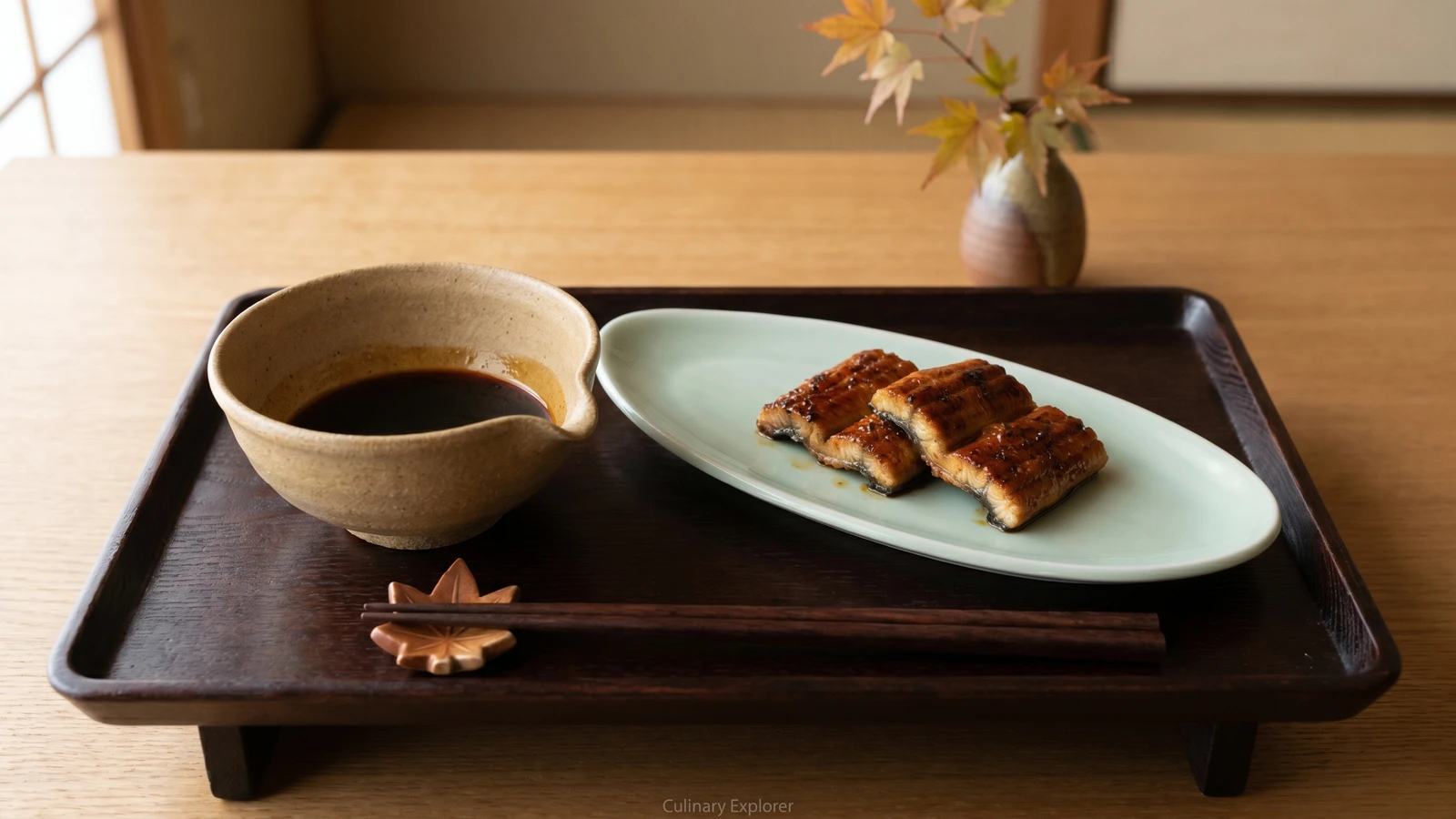
The eel glaze is only soy, mirin, sake, and sugar, but timing decides it. Reduce it gently, brush it late, and the fish wears a dark lacquer, not a burnt coat.
This is the sauce people mistake for the whole dish. Kabayaki no tare looks powerful, soy-dark and glossy, but it shouldn't hide the eel underneath. Its work is to cling, shine, and season in thin layers. Nothing hidden.
The tare itself is simple: shōyu, mirin, sake, and sugar, reduced until the bubbles slow and the spoon comes away glazed. The reason for the slow simmer is plain. Sugar thickens as water leaves, while soy and mirin round each other out. Rush it and you get a sharp, salty syrup. Let it move quietly and it becomes lacquer.
If you can get a grilled eel bone or a few trimmings, simmer them in the sauce and strain them out. That is how eel shops give their pots depth over time, one grilling after another. At home, one bone is enough to point the sauce in the right direction, and none is better than pretending with garlic, ginger, or a handful of noise.
Brush the tare late, then brush again. The first coat seasons, the second shines, and the heat sets each layer onto the fish. Kabayaki belongs to summer's Doyō no Ushi no Hi, when eel is eaten for stamina in the heat, but the lesson is useful all year: the method, not the menu, carries the dish.
Kabayaki, fish split, skewered, grilled, and glazed, was already associated with eel in Edo by the eighteenth century, when unagi shops became part of the city's food culture. The custom of eating eel on Doyō no Ushi no Hi, the midsummer Day of the Ox, is commonly linked to the Edo-period polymath Hiraga Gennai, who is said to have helped an eel seller advertise the day as lucky for stamina. Long-running eel shops often keep a tare pot alive by adding fresh sauce and letting grilled eel drip back into it, a practice that gives the glaze depth over repeated use.
Quantity
1/2 cup
Quantity
1/2 cup
Quantity
1/4 cup
Quantity
1/4 cup
Quantity
1 small piece
| Ingredient | Quantity |
|---|---|
| koikuchi shōyu (dark Japanese soy sauce) | 1/2 cup |
| mirin | 1/2 cup |
| sake | 1/4 cup |
| sugar | 1/4 cup |
| grilled eel bone or trimmings (optional) | 1 small piece |
Combine the shōyu, mirin, sake, and sugar in a small heavy saucepan. Stir before the heat goes on so the sugar begins dissolving evenly. This keeps the bottom from catching before the sauce has enough liquid movement to protect it.
Set the pan over medium heat and bring the mixture just to a lively simmer. If you have a grilled eel bone or trimming, add it now. It gives the tare the quiet roasted depth that old eel shops build over many batches, but the sauce is still proper without it.
Lower the heat and simmer for 12 to 18 minutes, stirring now and then, until the bubbles grow slower and glossy and the sauce lightly coats a spoon. Don't boil it hard. Hard boiling drives off aroma too quickly and turns the sweetness heavy before the soy has time to round out.
Strain out the eel bone if using, then let the tare cool for a few minutes. It should be soy-dark, glossy, and balanced between salt, sweetness, and the clean edge of sake. Use it warm for brushing grilled eel, or cool it fully for storing.
For kabayaki, brush the tare on near the end of grilling, then return the eel to the heat briefly and brush again. Early sugar burns before the fish is ready. Late, repeated brushing builds the lacquer little by little, the way we do it here.
1 serving (about 18g)
Culinary guides, cultural storytelling, and the editorial depth that makes cooking meaningful.
Discover Culinary ExplorerChef Takumi
Ago dashi is quiet luxury: roasted flying fish, konbu, and patient water. Steep it slowly and you get a clear stock that tastes sweet, clean, and full without heaviness.
Chef Takumi
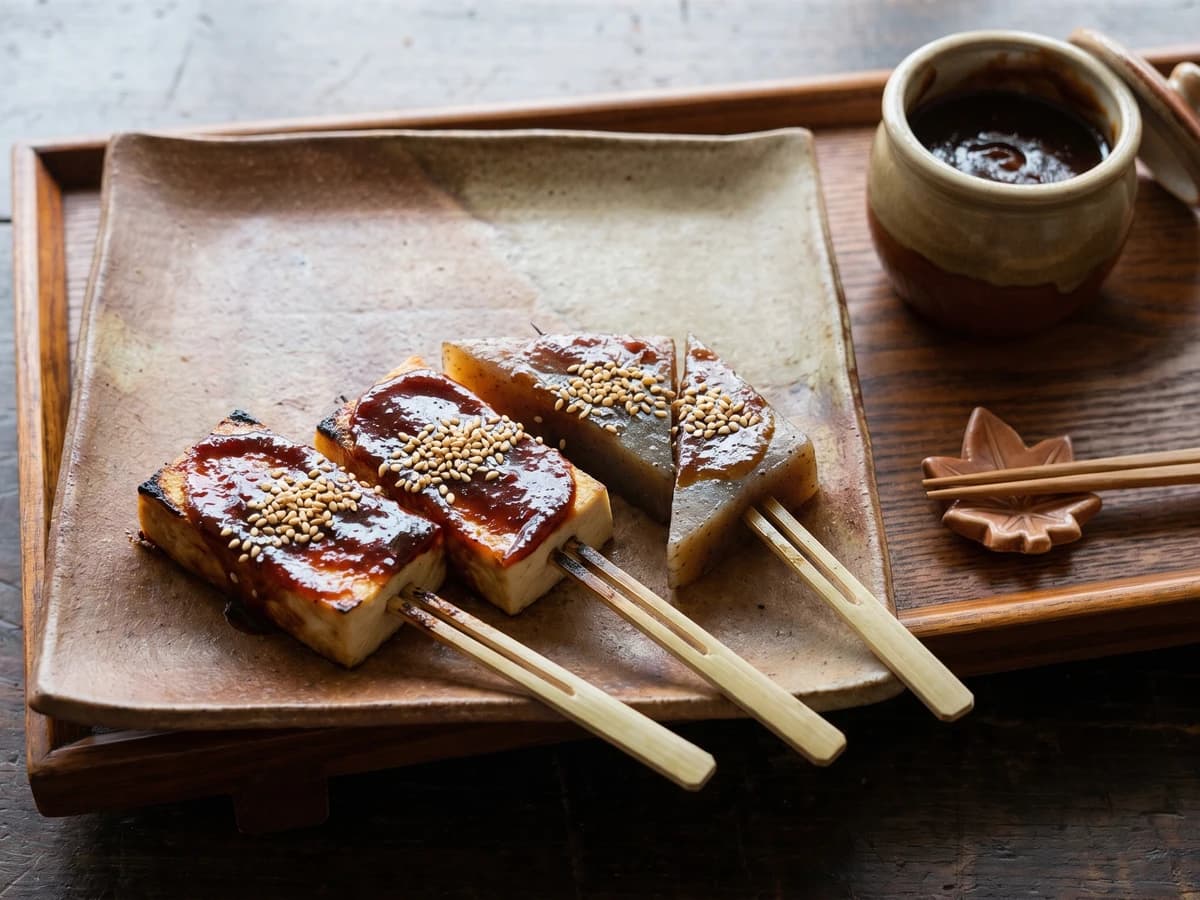
Akamiso dengaku-miso is plain work: bean miso, sweetness, sake, and patient stirring until the glaze turns dark, glossy, and thick enough to cling to the grill.
Chef Takumi
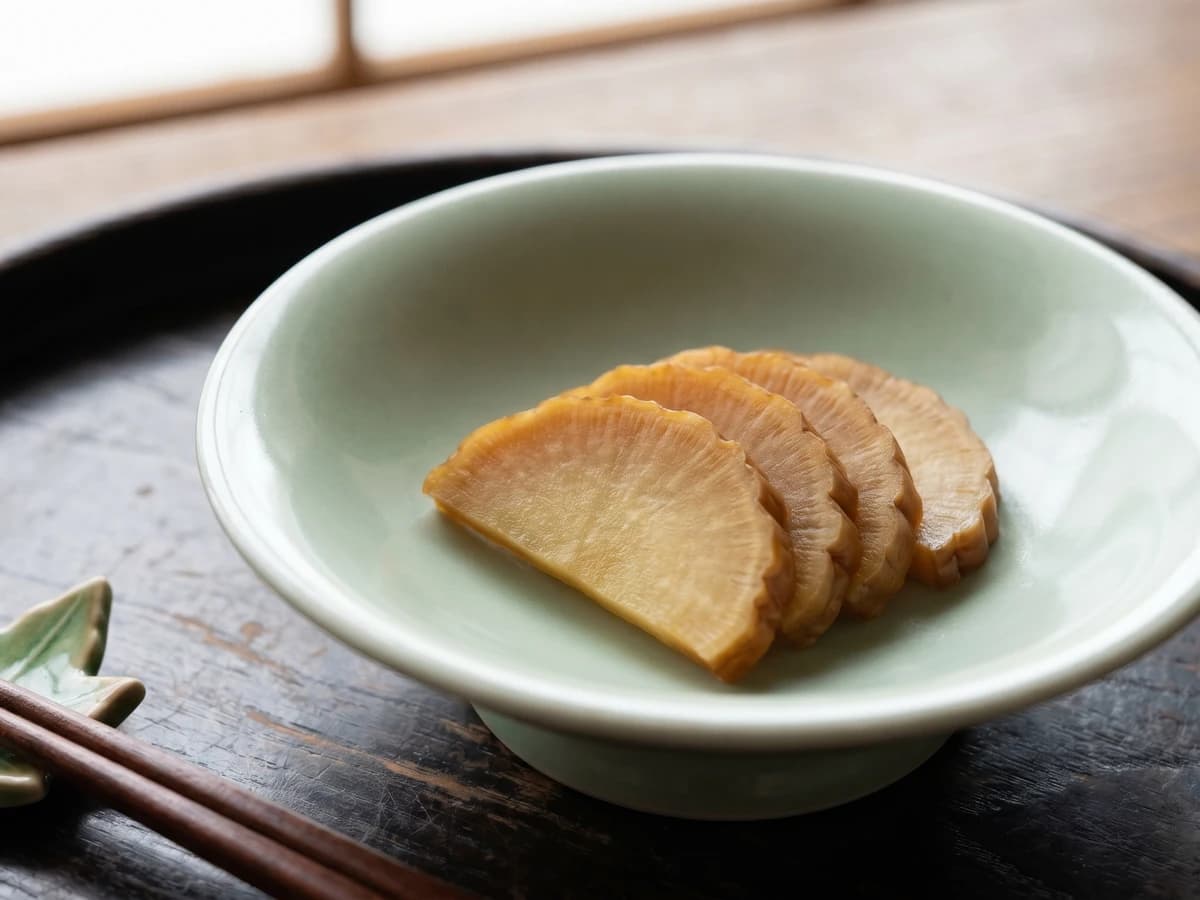
Snow-country takuan begins with smoke. Hang the daikon, dry it gently, then let rice bran, salt, and time turn it into Akita's amber pickle.

Chef Takumi
Aso takanazuke is spring caught in salt: sharp mustard greens pressed until they soften, fermented until their edge turns round, then fried briefly with sesame for rice.