Culinary Explorer

A cooking platform built around craft, culture, and the stories behind what we eat.
Discover Culinary Explorer
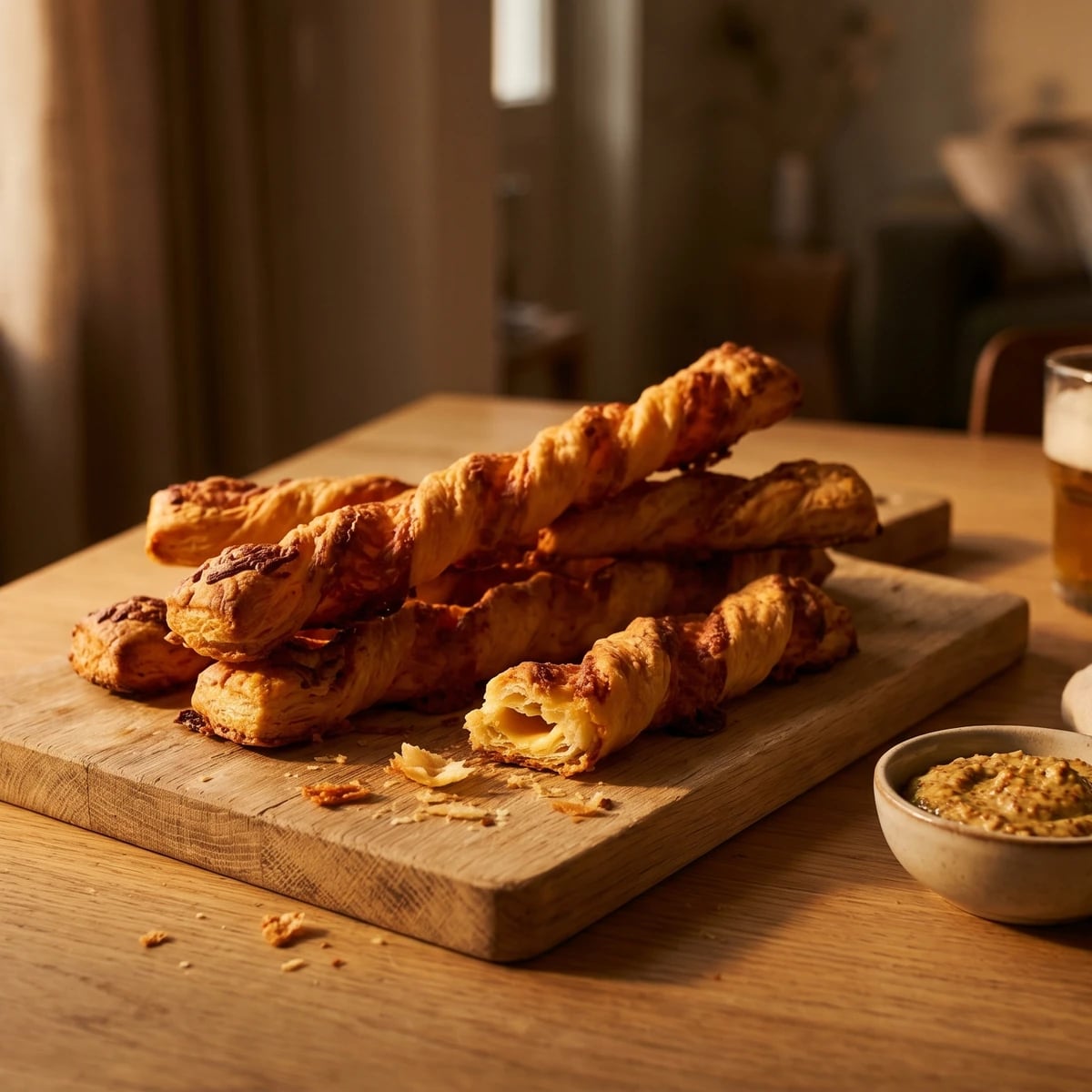
Kaasstengels (Dutch Cheese Straws)

Kaasstengels (Dutch Cheese Straws)

Created by

The name is almost too modest: cheese sticks, yes, but with aged Gouda, buttered pastry, and the whole Dutch art of making a birthday table disappear one handful at a time.

Appetizers & Snacks
Dutch
Make Ahead
Potluck
Birthday
15 min
Active Time
18 min cook33 min total
Yield24 kaasstengels

The Dutch birthday table is a serious institution disguised as a casual one. There is coffee first, cake after, chairs in a circle for obvious reasons, and somewhere between the cubes of cheese and the schaal met bitterballen, the platter of kaasstengels begins to empty. Nobody admits to taking the last one. Everybody has taken the last one.

The name already tells you nearly everything, which is very Dutch of it: kaas, cheese, and stengel, a stem or stick. No heroic etymology hides here, no exile route, no spice fleet. But let me tell you a secret: plain names often guard the best habits. A kaasstengel is the borrel, that convivial Dutch drink-and-snack hour, reduced to its cleanest form: butter, salt, cheese, crisp pastry, and something in your hand while the conversation gets comfortably loud.

The trick is restraint. Use properly aged Gouda, because young cheese melts politely and tastes of very little, while oude kaas, old cheese, brings salt, nuttiness, and those small crunchy crystals under the teeth. Keep the pastry cold, press the cheese into it, twist firmly, and bake until deeply golden. Hou het altijd simpel, always keep it simple. The oven does the showing off.

Kaasstengels belong to modern Dutch borrel culture, the home and cafe tradition of serving small salty snacks with drinks, especially at birthdays, office gatherings, and late afternoon visits. Their backbone is Gouda-style cheese, tied to the Dutch cheese trade that made towns such as Gouda, Edam, and Alkmaar famous from the early modern period onward, even though the pastry stick itself is a later bakery and household form. The dish teaches a very Dutch lesson: the national table often hides its pleasures in plain words and practical shapes.

The technique, the tradition, and the story behind every dish.

Discover Culinary Explorer

Ingredients

all-butter puff pastry

Quantity

1 sheet, about 320g

thawed but cold

aged Gouda

Quantity

120g

finely grated

egg

Quantity

1

beaten

Dijon mustard

Quantity

1 teaspoon

sweet paprika

Quantity

1/2 teaspoon

freshly grated nutmeg

Quantity

1/4 teaspoon

black pepper

Quantity

to taste

freshly ground

flaky sea salt (optional)

Quantity

a small pinch

Equipment Needed

  • Two baking trays
  • Parchment paper
  • Pastry brush
  • Sharp knife or pizza wheel
  • Cooling rack

Instructions

  1. 1

    Heat the oven

    Heat the oven to 200C and line two baking trays with parchment. Keep the puff pastry in the refrigerator until the moment you need it. Warm pastry turns soft and sulky, and a soft kaasstengel twists badly.

  2. 2

    Season the pastry

    Unroll the cold pastry on a lightly floured surface. Stir the beaten egg with the mustard, then brush a thin layer over the pastry. Scatter over the Gouda, paprika, nutmeg, and black pepper, keeping the cheese even right to the edges.

    Nutmeg belongs here in a small whisper. Dutch cheese dishes have used it for generations, but too much and the pastry tastes like December walked into the wrong room.
  3. 3

    Press and fold

    Fold the pastry in half like a book, cheese side inward, and press gently with a rolling pin so the cheese grips the dough. Brush the top lightly with more egg. You are not flattening it into obedience; you are giving the layers enough pressure to stay together in the oven.

  4. 4

    Cut and twist

    Cut the folded pastry into 24 narrow strips, about 1.5cm wide. Twist each strip three or four times and lay it on the prepared trays with space between them. If the pastry feels soft, chill the trays for ten minutes before baking. Cold butter makes crisp pastry. This is not folklore, it is engineering with better manners.

  5. 5

    Bake golden

    Bake for 15 to 18 minutes, rotating the trays halfway through, until the kaasstengels are puffed, deeply golden, and crisp at the edges. Let them cool on the trays for five minutes, then move them to a rack. They firm as they cool, so don't judge the first one too early, though naturally you will eat it anyway.

Chef Tips

  • Use aged Gouda, oude kaas, not mild young cheese. The pastry is rich already; it needs a cheese with salt, depth, and a little crystalline bite.
  • All-butter puff pastry gives the cleanest flavour. If you use standard supermarket pastry, keep it very cold and bake it a shade darker so the texture stays crisp.
  • A pinch of nutmeg is enough. Mace is also good if you have it, a quiet nod to the spice cupboard Dutch cooks have used since the VOC made these spices ordinary and extraordinary at once.
  • Serve with mustard, pickles, olives, or small cubes of cheese on a borrel board. The kaasstengels should stay dry and crisp, so keep wet things in their own little bowls.

Advance Preparation

  • Cut and twist the kaasstengels up to 24 hours ahead, then refrigerate them covered on the tray and bake straight from cold.
  • Baked kaasstengels keep for two days in an airtight tin. Recrisp for 4 to 5 minutes at 180C before serving.
  • They can be frozen unbaked on a tray, then packed into a freezer bag. Bake from frozen, adding 3 to 5 minutes.

Frequently Asked Questions

Nutrition Information

1 serving (about 18g)

Calories
80 calories
Total Fat
5 g
Saturated Fat
3 g
Trans Fat
0 g
Unsaturated Fat
2 g
Cholesterol
20 mg
Sodium
145 mg
Total Carbohydrates
5 g
Dietary Fiber
0 g
Sugars
0 g
Protein
3 g

Note: Chef personas and recipes are created with AI assistance. Cook with care: follow safe food-handling practices, check doneness with a thermometer when needed, and adapt for allergies and your kitchen.

Where cooking meets culture.

Culinary guides, cultural storytelling, and the editorial depth that makes cooking meaningful.

Discover Culinary Explorer

More from De Borrel: Bar Snacks & Borrelplank

Browse the full collection