Culinary Explorer
A cooking platform built around craft, culture, and the stories behind what we eat.
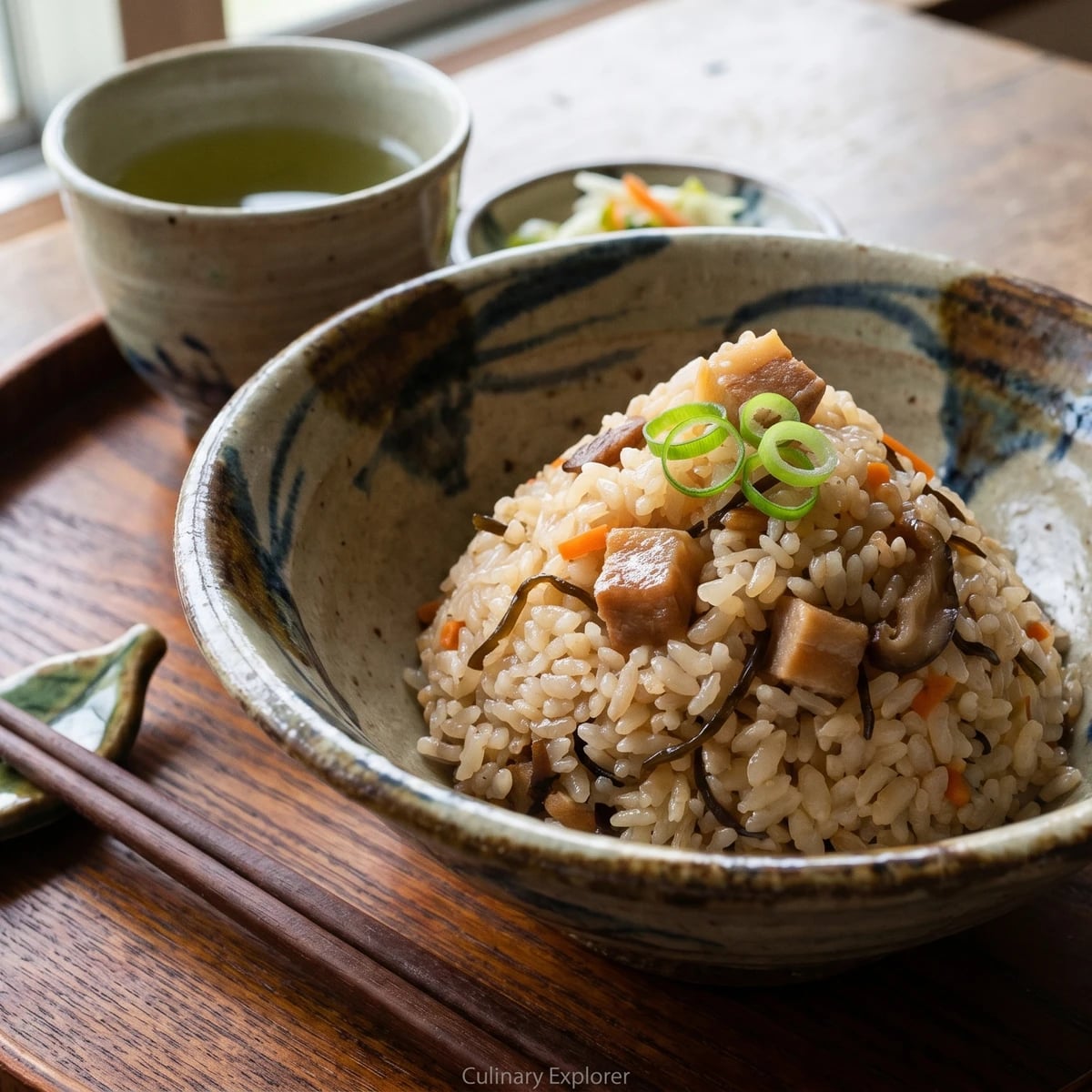
Jūshī (ジューシー, Okinawan mixed rice)
Created by Chef Takumi
Okinawan mixed rice is won or lost in the cooking liquid: pork stock, shiitake soaking water, kelp, and island soy measured before the grains go near the heat.
Jūshī looks humble, which is how rice often tells the truth. The grains are not white and separate from the meal; they have taken in pork stock, shiitake, konbu, and a little island soy until the whole pot tastes seasoned from the center. Mainland takikomi gohan has its own order. Okinawa speaks with a rounder voice here, pork and kelp in the same breath.
Do not let the mixed-rice name make you careless. The one detail that decides it is the cooking liquid. Season the stock first, then measure it as the water for the rice. If you pour soy sauce in after the line, the pot is too wet; if you sprinkle seasoning after cooking, the grains wear the flavor on the outside like a bad coat. We want it inside.
The fillings are small for a reason: pork, carrot, shiitake, and konbu should move through the rice, not sit on top of it. Scatter them over the raw grains and fold only after the rest. The rice cooks evenly, the pieces stay neat, and the dish becomes what it should be: honmono, flavor set into the grains with nothing hidden.
Ingredients
Japanese short-grain white rice
Quantity
2 rice-cooker cups (360 ml by volume, about 300g)
dried shiitake mushrooms
Quantity
4 (about 12g)
konbu (dried kelp)
Quantity
1 piece (about 5g)
| Ingredient | Quantity |
|---|---|
| Japanese short-grain white rice | 2 rice-cooker cups (360 ml by volume, about 300g) |
| dried shiitake mushrooms | 4 (about 12g) |
| konbu (dried kelp) | 1 piece (about 5g) |
Where cooking meets culture.
Culinary guides, cultural storytelling, and the editorial depth that makes cooking meaningful.
Discover Culinary Explorer