
Chef Isabel
Aguaillo de la Sierra de Cadiz
Aguaillo is from the Sierra de Cadiz: cold water, stale bread, garlic, oil and vinegar, closer to a field drink than a bowl of soup, and sharp enough to wake you in the heat.
A cooking platform built around craft, culture, and the stories behind what we eat.
Created by
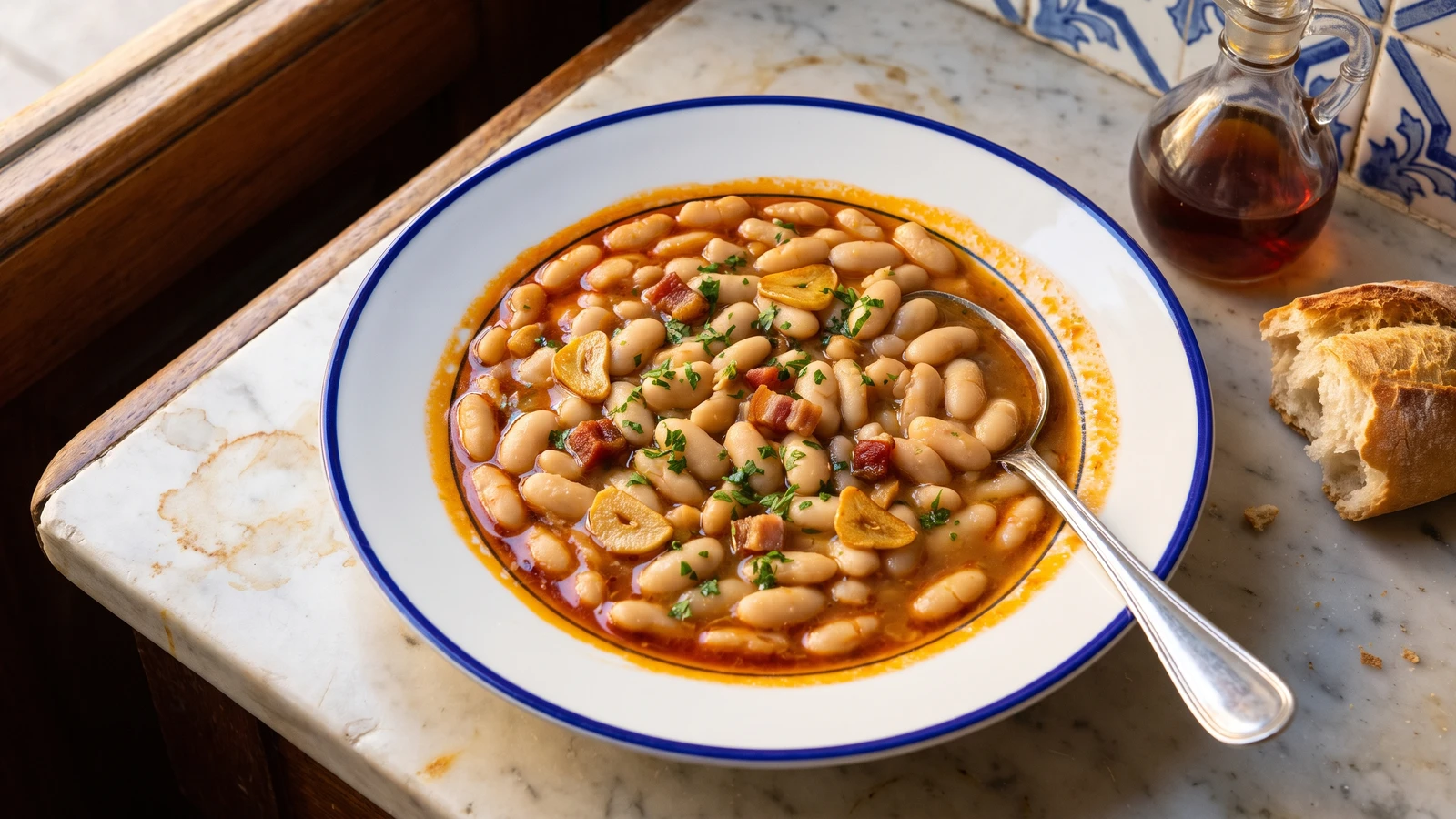
Judías a lo Tío Lucas are Madrid spoon food: white beans and tocino made plain, then woken up with garlic, pimentón, cumin, and vinegar.
Judías a lo Tío Lucas are Madrileñas, born from the old tavern table: white beans, tocino, and a final blow of garlic, pimentón, cumin, and vinegar. This is Madrid's cocina de cuchara, spoon food, not a northern fabada and not a potaje dressed up with greens. The beans stay simple so the sharp sofrito at the end can speak clearly.
The method that decides it is the finish. Cook the beans slowly with the tocino until they are tender and the broth has body, then make the sofrito, the quick fried garlic base, apart. The pimentón must bloom in the hot oil for only a few seconds before the vinegar goes in. Let it burn and it turns bitter. Catch it right and the whole pot wakes up.
If you are far from Madrid, use dried cannellini or navy beans if you cannot find Spanish judías blancas. For tocino, use unsmoked salt pork or a piece of cured pork belly, not smoky bacon if you can help it, because smoke pulls the dish somewhere else. No hace falta haber pisado España. Pésalo, no lo adivines, and this comes out the first time.
My Margin beside this one says only: add the vinegar to the pan, not straight to the pot. It sounds small. It isn't. The vinegar loosens the pimentón and garlic from the oil, and that is where the tavern taste lives. Siempre sale, si lo sigues.
Judías a lo Tío Lucas belong to Madrid's old tavern cooking, named for the well-known Casa de Tío Lucas, a 19th-century eating house remembered for plain, forceful dishes that fed workers, muleteers, and market people. The dish shows the Madrid larder at its most practical: dried beans for substance, tocino for fat, and a Castilian seasoning of garlic, pimentón, cumin, and vinegar to cut the richness. Its sharp finish separates it from the slower northern bean stews, where cured meats carry most of the flavor.
Quantity
500g
soaked overnight
Quantity
200g
in one piece
Quantity
1
peeled and halved
Quantity
1
Quantity
2 tablespoons
Quantity
4
thinly sliced
Quantity
1 teaspoon
Quantity
1/2 teaspoon
Quantity
2 tablespoons
Quantity
to taste
Quantity
1 tablespoon
chopped
| Ingredient | Quantity |
|---|---|
| dried white beans, such as judías blancas, cannellini, or navy beanssoaked overnight | 500g |
| tocino, unsmoked salt pork, or cured pork bellyin one piece | 200g |
| medium onionpeeled and halved | 1 |
| bay leaf | 1 |
| olive oil | 2 tablespoons |
| garlic clovesthinly sliced | 4 |
| sweet pimentón | 1 teaspoon |
| ground cumin | 1/2 teaspoon |
| vinagre de Jerez or good red wine vinegar | 2 tablespoons |
| salt | to taste |
| fresh parsley (optional)chopped | 1 tablespoon |
Put the dried beans in a large bowl and cover them with plenty of cold water. Leave them overnight, 8 to 12 hours. This is not fussing; it helps the beans cook evenly, so the skins don't split before the centers soften.
Drain the beans and put them in a heavy pot with the tocino, onion, and bay leaf. Cover with cold water by 4cm. Bring slowly to a gentle simmer, skimming off the grey foam that rises at the beginning.
Lower the heat and cook the beans at a quiet tremble until tender, about 1 hour 45 minutes to 2 hours 15 minutes, depending on age and size. Add small splashes of hot water if the beans begin to show above the liquid. Do not boil hard. A hard boil breaks the beans and gives you a cloudy, rough broth.
When the beans are almost tender, taste the broth and add salt only if it needs it. The tocino may have given enough. Lift out the onion and bay leaf. Take out the tocino, cut it into small pieces or thick strips, and return it to the pot.
Warm the olive oil in a small frying pan over medium-low heat. Add the sliced garlic and cook until pale gold, not brown. Pull the pan off the heat, stir in the pimentón and cumin for a few seconds, then add the vinegar at once. It will hiss and loosen everything from the pan. That sharp little shock is the taste of this dish.
Pour the garlic, pimentón, cumin, vinegar, and oil into the bean pot. Shake the pot by the handles or stir very gently, then simmer 10 minutes more so the seasoning moves through the broth. The beans should be creamy but whole, with a reddish oil gloss at the edges.
Take the pot off the heat and let it rest 10 minutes. Taste again for salt and vinegar. Serve in deep bowls, with a little parsley if you use it and bread for the broth. This is a tavern dish, not a decorated one.
1 serving (about 350g)
Culinary guides, cultural storytelling, and the editorial depth that makes cooking meaningful.
Discover Culinary ExplorerChef Isabel
Aguaillo is from the Sierra de Cadiz: cold water, stale bread, garlic, oil and vinegar, closer to a field drink than a bowl of soup, and sharp enough to wake you in the heat.

Chef Isabel
Ajilimojili is Jaen's tomato-free cold soup: potato, roasted red pepper, garlic, olive oil, and vinegar pounded into a cool, silky spoonful.

Chef Isabel
Ajo carretero is Soriano, from the pine country of Soria: lamb cooked in a plain garlicky broth, then served the old way, meat first and bread-soaked soup after.

Chef Isabel
Ajoblanco Extremeño is the poor-kitchen cold soup of Extremadura: bread, garlic, oil, egg yolk, vinegar, and icy water, with no almonds. Whisk it slowly and serve it bien fresquito.