
Chef Graziella
Brodetto all'Anconetana
The storied fish stew of Ancona, where up to thirteen varieties of Adriatic fish simmer gently in a broth sharpened with vinegar and gilded with saffron. Every port town claims theirs is authentic.
A cooking platform built around craft, culture, and the stories behind what we eat.
Created by
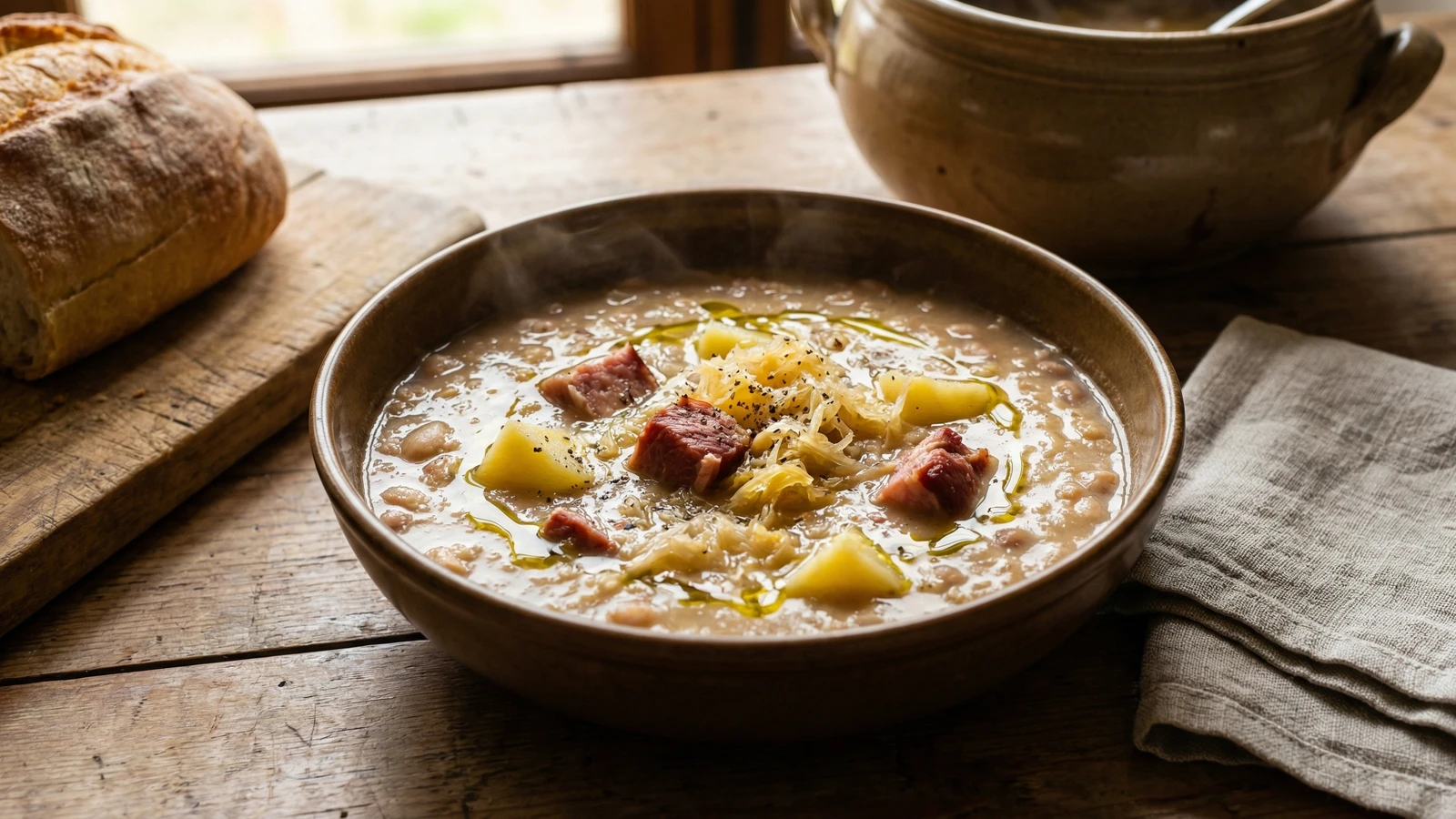
The great soup of Trieste, where Austro-Hungarian sauerkraut meets Italian beans and the smoke of cured pork. A dish that proves Italian cooking has always absorbed its neighbors.
The first useful thing to know about Italian cooking is that, as such, it actually doesn't exist. There are Venetian cooking, Neapolitan cooking, Bolognese cooking. And then there is Triestine cooking, which confounds even this understanding.
Jota comes from Trieste, that peculiar city wedged between the Adriatic and Slovenia, a place that belonged to Austria for centuries and still cooks like it remembers. You will find sauerkraut here, which no Roman would recognize. You will find beans cooked with smoked pork in a style that owes more to Ljubljana than to Milan. This is not a corruption of Italian cooking. It is Italian cooking, as it exists in this particular place.
The dish requires patience. The beans must be cooked until they begin to fall apart. The sauerkraut must simmer until its sharpness mellows. The smoked pork must give up its fat to enrich the broth. Everything comes together at the end, and some of the beans are mashed against the side of the pot to thicken the soup into something between a broth and a stew. Simple does not mean easy.
Jota predates Italian unification, rooted in the peasant cooking of the Austrian Littoral when Trieste served as the Habsburg Empire's great seaport. The dish reflects centuries of cultural exchange along the Adriatic's northeastern corner, where Slavic, Germanic, and Italian traditions met in the same pot. Each household in Friuli-Venezia Giulia maintains its own version, arguing endlessly about whether cumin belongs.
Quantity
1 pound
soaked overnight
Quantity
1 pound
drained and rinsed
Quantity
12 ounces
in one piece
Quantity
2 medium
peeled and cut into 1-inch cubes
Quantity
3 tablespoons
Quantity
1 medium
diced fine
Quantity
3
minced
Quantity
2
Quantity
1/2 teaspoon
lightly crushed
Quantity
8 cups
Quantity
to taste
Quantity
to taste
freshly ground
Quantity
for drizzling
| Ingredient | Quantity |
|---|---|
| dried borlotti beanssoaked overnight | 1 pound |
| sauerkrautdrained and rinsed | 1 pound |
| smoked pork ribs or pancettain one piece | 12 ounces |
| Yukon Gold potatoespeeled and cut into 1-inch cubes | 2 medium |
| extra virgin olive oil | 3 tablespoons |
| yellow oniondiced fine | 1 medium |
| garlic clovesminced | 3 |
| bay leaves | 2 |
| cumin seeds (optional)lightly crushed | 1/2 teaspoon |
| cold water | 8 cups |
| kosher salt | to taste |
| black pepperfreshly ground | to taste |
| extra virgin olive oil | for drizzling |
Drain the soaked beans and place them in a large heavy pot with the cold water, bay leaves, and the piece of smoked pork. Bring to a gentle simmer over medium heat, then reduce the heat to maintain the laziest bubble. Cook uncovered for 1 hour, skimming any foam that rises. The beans should be tender but not yet falling apart.
While the beans cook, rinse the sauerkraut under cold water and squeeze it dry with your hands. This removes excess sharpness. In a separate pot, cover the sauerkraut with fresh water and simmer gently for 30 minutes. Drain and set aside. The sauerkraut should taste mellow, not aggressively sour.
In a small skillet, heat the olive oil over medium-low heat. Add the diced onion and cook slowly, stirring occasionally, until soft and golden, about 15 minutes. Add the minced garlic and the cumin seeds if using. Cook one minute more, just until fragrant. The garlic must not brown. Set aside.
After the beans have cooked for 1 hour, add the potato cubes and the drained sauerkraut to the pot. Stir to combine. Continue simmering gently for another 45 minutes, until the potatoes are completely tender and beginning to break apart at the edges.
Remove the smoked pork and set it aside. Remove and discard the bay leaves. Using a wooden spoon or potato masher, crush about one-third of the beans and potatoes against the side of the pot. This thickens the broth into something more substantial. The soup should be neither thin nor porridge. Stir in the soffritto.
Cut the smoked pork into bite-sized pieces, discarding any bones. Return the meat to the pot. Taste the soup and season with salt and pepper. Remember the pork has contributed salt throughout cooking, so taste before adding more. Simmer together for 15 minutes more to marry the flavors.
Remove the pot from heat and let the jota rest for at least 30 minutes before serving. Like all bean soups, it improves as it sits. Ladle into deep bowls and drizzle each portion with your best olive oil. The soup will thicken further as it cools. Add a splash of water when reheating the next day.
1 serving (about 400g)
Culinary guides, cultural storytelling, and the editorial depth that makes cooking meaningful.
Discover Culinary ExplorerChef Graziella
The storied fish stew of Ancona, where up to thirteen varieties of Adriatic fish simmer gently in a broth sharpened with vinegar and gilded with saffron. Every port town claims theirs is authentic.

Chef Graziella
The patient work that makes everything else possible. Three meats, a handful of vegetables, cold water, and four hours of your time. This is where Italian cooking begins.
Chef Graziella
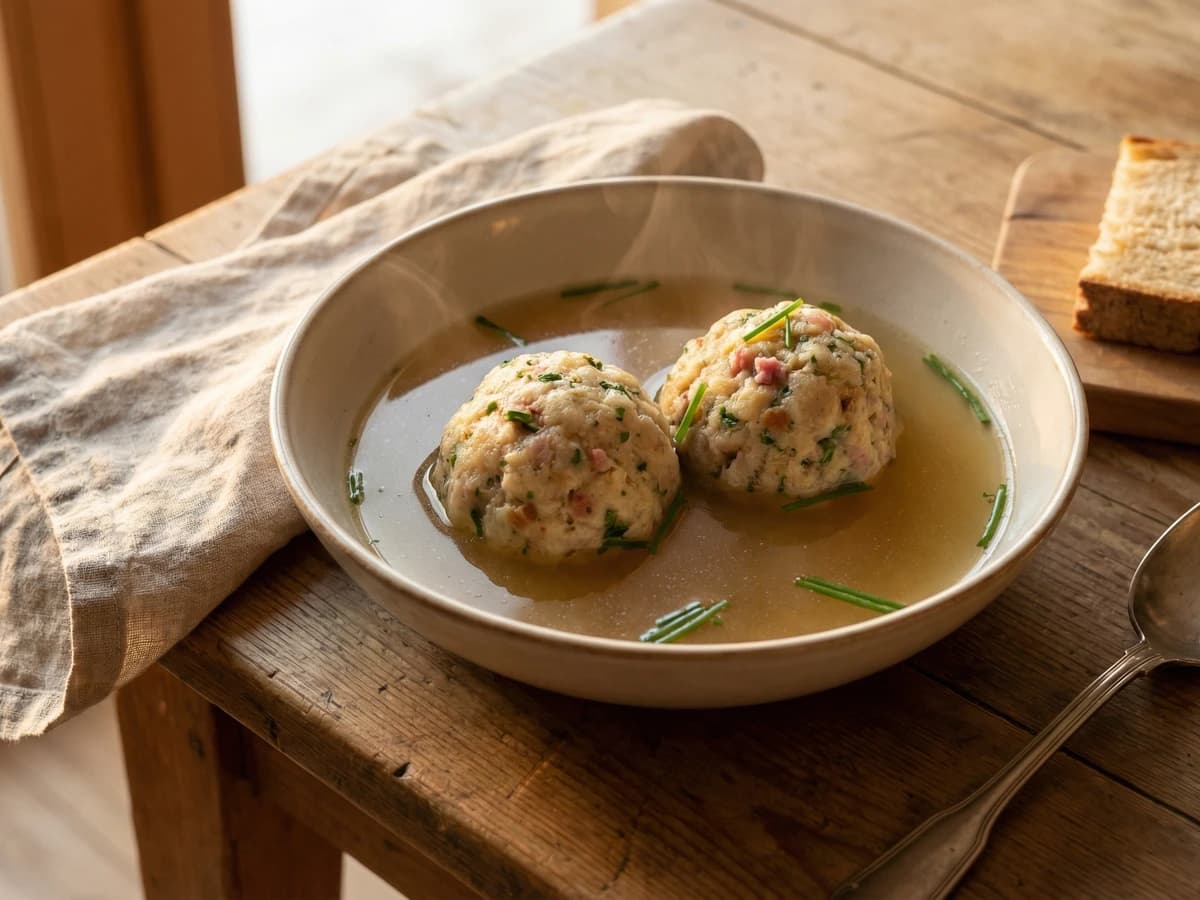
Bread dumplings from the Italian Alps, where Austrian tradition meets Italian restraint. Stale bread, smoked speck, and mountain herbs, poached in clear beef broth.
Chef Graziella
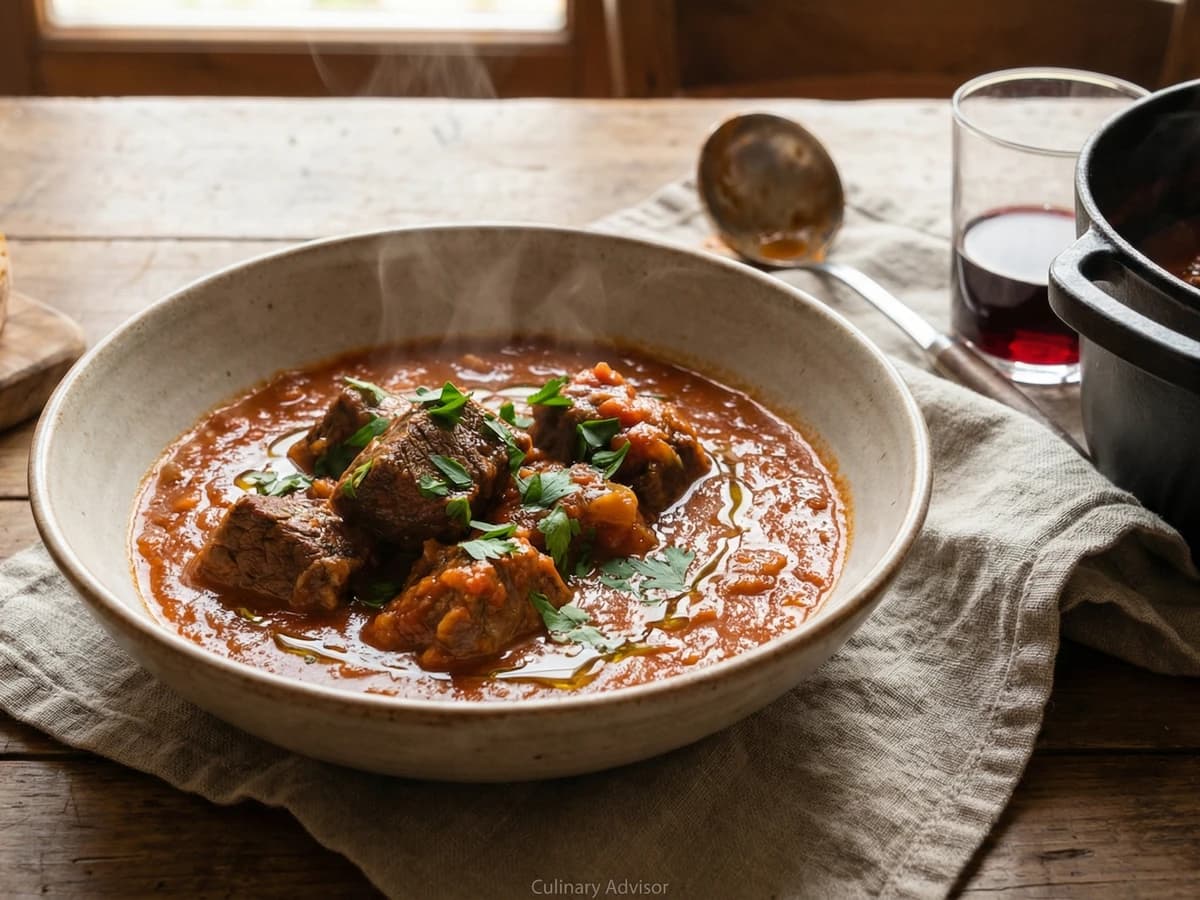
The Italian grandmother's answer to beef stew: chunks of chuck braised with patient soffritto, good wine, and San Marzano tomatoes until the meat surrenders and the sauce becomes something worth sopping bread in.