
Chef Juliana
Açaí com Camarão do Pará
You think açaí belongs with banana and granola because that's the version that traveled. In Pará, thick unsweetened açaí sits beside shrimp, rice, and farinha. Anota aí: same fruit, different meal.
A cooking platform built around craft, culture, and the stories behind what we eat.
Created by
You don't need bravery for joelho de porco. You need time, a heavy pot, and the sense to cook it tender before asking the skin to crisp.
You see that big pork knuckle at the butcher and hear the little voice: isso não é pra mim. Too large, too German, too restaurant-looking, too much. Nonsense. It's a piece of pork with skin, bone, and patience attached. Cozinhar não é dom, é um aprendizado, and this one is very willing to be taught.
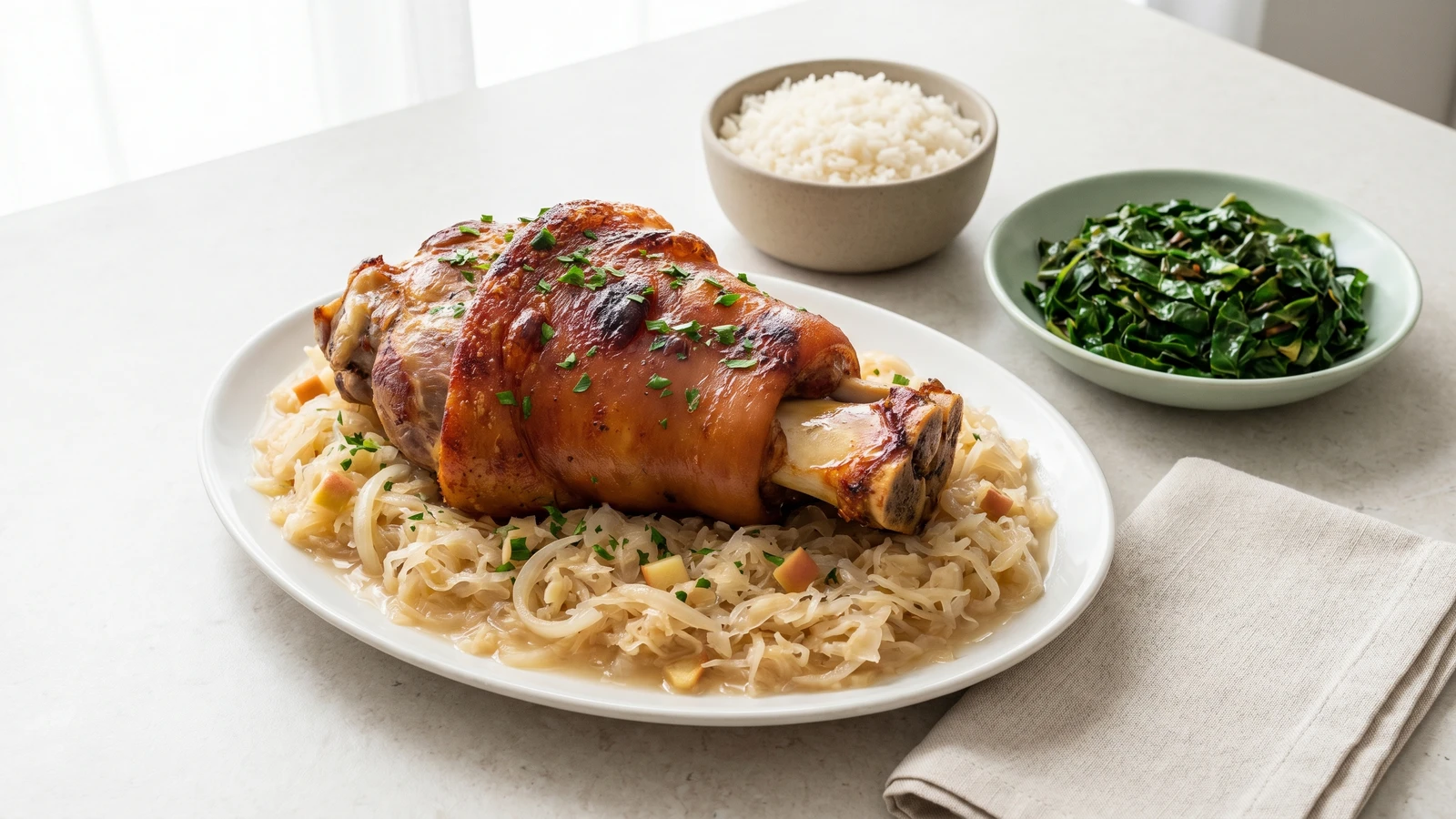
I like this dish because it looks like a celebration but behaves like comida de verdade. You simmer the joelho first so the collagen relaxes, the meat loosens from the bone, and the skin becomes ready to blister. Then you roast it hot so the outside goes crisp while the inside stays soft. Skip the simmer and you get hard skin with stubborn meat. Skip the roast and you get tender pork with no joy on top. A gente wants both.
The chucrute matters too. Not from a powder, not from a jar drowned in sugar and pretending. Real sauerkraut is cabbage, salt, and time, and if you're buying it, read the label like a person who plans to eat dinner, not surrender. We warm it with onion, apple, bay, and a little of the pork broth so it turns sour, savory, and juicy under the meat.
Put this beside arroz soltinho, feijão if it's that kind of table, and couve or another green thing. There. The pê-efe stretched itself for a festa, but it didn't forget what it is: rice, beans, meat, greens, a plate that feeds people properly.
German immigration to Brazil began officially in 1824 with settlements such as São Leopoldo in Rio Grande do Sul, and later shaped foodways across Santa Catarina, especially after Blumenau was founded in 1850. Joelho de porco with chucrute comes from that German-Brazilian table, where Eisbein met Brazilian pork butchery, rice, beans, and local habits of serving a full plate. In Brazil the dish appears both boiled and roasted, especially in southern homes, clubs, restaurants, and Oktoberfest-style celebrations.
Quantity
2, about 1.2 to 1.5 kg total
Quantity
2 teaspoons, plus more to taste
Quantity
1 teaspoon
Quantity
2 tablespoons
Quantity
1 large
halved for the simmer
Quantity
1 medium
thinly sliced for the chucrute
Quantity
5 cloves
3 smashed and 2 minced
Quantity
2
Quantity
1
cut into large pieces
Quantity
1 tablespoon seeds or 2 teaspoons prepared mustard
Quantity
8 cups, or enough to cover the pork by 2 fingers
Quantity
3 cups
drained but not rinsed
Quantity
1 small
grated or finely chopped
Quantity
1/2 cup
Quantity
1 tablespoon
Quantity
1 teaspoon
Quantity
2 tablespoons
chopped
| Ingredient | Quantity |
|---|---|
| fresh pork knuckles | 2, about 1.2 to 1.5 kg total |
| fine salt | 2 teaspoons, plus more to taste |
| black pepper | 1 teaspoon |
| oil | 2 tablespoons |
| onionhalved for the simmer | 1 large |
| onionthinly sliced for the chucrute | 1 medium |
| garlic3 smashed and 2 minced | 5 cloves |
| bay leaves | 2 |
| carrotcut into large pieces | 1 |
| whole mustard seeds or prepared mustard | 1 tablespoon seeds or 2 teaspoons prepared mustard |
| water | 8 cups, or enough to cover the pork by 2 fingers |
| sauerkrautdrained but not rinsed | 3 cups |
| applegrated or finely chopped | 1 small |
| pork cooking broth | 1/2 cup |
| vinegar (optional) | 1 tablespoon |
| sugar (optional) | 1 teaspoon |
| parsley (optional)chopped | 2 tablespoons |
Pat the pork knuckles dry and rub them with the salt and pepper, getting into the folds of the skin. Let them sit while you gather everything else, about 20 minutes. Dry skin browns better, and salt needs a little time to wake up the meat instead of sitting politely on top.
Put the pork in a heavy pot with the halved onion, smashed garlic, bay leaves, carrot, mustard, and enough water to cover by 2 fingers. Bring to a boil, then lower to a gentle simmer. Skim the grey foam from the top for the first 10 minutes. That foam won't hurt you, but removing it keeps the broth cleaner and better for the chucrute.
Simmer gently, lid slightly open, until a knife slides into the thickest part with almost no fight and the meat has pulled back from the bone, about 2 to 2 1/2 hours. Don't boil it hard. A rough boil shakes the meat apart before the collagen has melted properly, and then you have ragged pork instead of a beautiful joelho.
Lift the pork onto a rack set over a tray and let it sit for 20 minutes. Pat the skin very dry with paper towels. This pause is not drama. Wet skin steams in the oven; dry skin blisters and crisps. Anota aí, because the skin is where impatience gets exposed.
While the pork dries, warm the oil in a wide pan over medium heat. Add the sliced onion and cook until it murcha, soft and lightly golden at the edges, about 8 minutes. Add the minced garlic for one minute, just until you smell it. Onion needs time to sweeten; garlic needs attention, because burnt garlic is bitter and bossy.
Add the drained sauerkraut, apple, and 1/2 cup of the pork cooking broth. Stir, scrape the bottom, and cook for 15 to 20 minutes, until juicy but not soupy. Taste it. If it tastes flat, add the vinegar. If it bites too hard, add the sugar. That's not cheating, that's balancing the cabbage you actually bought.
Heat the oven to 230°C (450°F). Set the pork skin-side up on the rack and roast until the skin is deep golden, blistered, and crisp in patches, about 35 to 45 minutes. Rotate the tray once if your oven has a hot corner. The meat is already cooked, so now you're only asking the skin to dourar and crisp.
Rest the pork for 10 minutes, then serve it over the warm chucrute with parsley if you're using it. Spoon a little of the pan juices over the cabbage, not over the skin, or you'll soften the crisp top you just earned. Put rice, beans, and something green on the table and let the celebration behave like dinner.
1 serving (about 340g)
Culinary guides, cultural storytelling, and the editorial depth that makes cooking meaningful.
Discover Culinary ExplorerChef Juliana
You think açaí belongs with banana and granola because that's the version that traveled. In Pará, thick unsweetened açaí sits beside shrimp, rice, and farinha. Anota aí: same fruit, different meal.

Chef Juliana
You think savory açaí is not for you. I understand. Then you taste the cold, dark bowl beside hot fried fish, rice, greens, and farinha, and dinner gets very quiet.

Chef Juliana
You think salted beef and rice sound like trouble. Anota aí: soak the charque, brown it properly, build the refogado, and this one pot resolves dinner.

Chef Juliana
You think a Maranhão green rice belongs to somebody else's clever hands. It doesn't. Wilt the vinagreira, build the refogado, fold it through arroz soltinho, and dinner gets bright, coastal, and yours.