Culinary Explorer

A cooking platform built around craft, culture, and the stories behind what we eat.
Discover Culinary Explorer
Jjin-mandu (Steamed Korean Dumplings)

Jjin-mandu (Steamed Korean Dumplings)

Created by

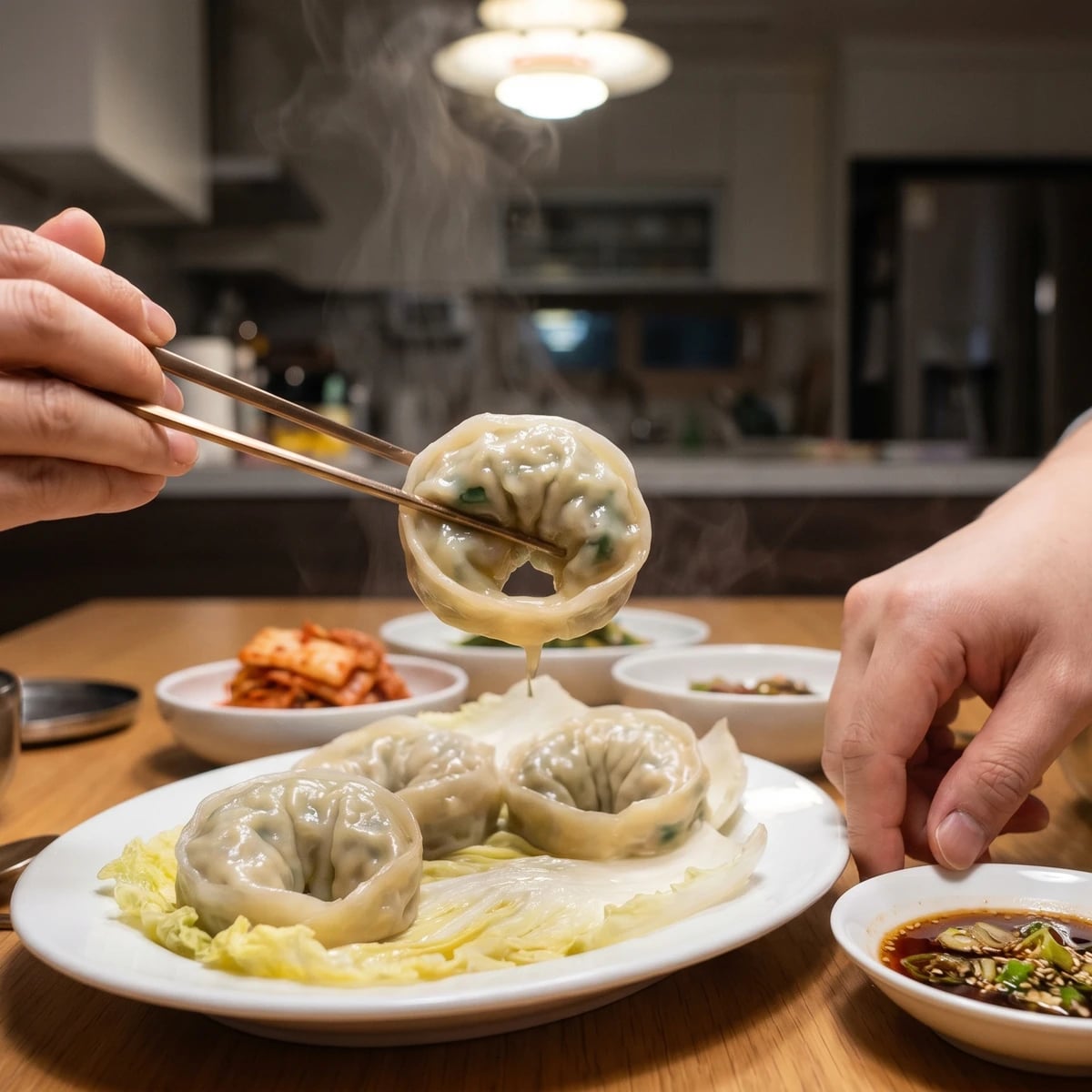
Thin dumpling skins wrapped around pork, tofu, cabbage, and chives, set over a covered pot until tender, with the filling squeezed dry so the pleats stay closed.

Main Dishes
Korean
Weeknight
Comfort Food
Make Ahead
1 hr
Active Time
20 min cook1 hr 20 min total
Yield36 dumplings, 4 to 6 servings

Mandu live or die by dryness. That sounds strange when the finished dumpling should be tender and juicy, but the filling must be pressed until it behaves. Wet tofu and cabbage split wrappers, loosen pleats, and turn a neat tray into apology. My teacher would touch the filling once, look at the bowl, and know whether the cook had been lazy.

Mandu entered Korea through northern and Central Asian routes and became especially important in the northern provinces, where wheat and buckwheat foods sat more naturally beside rice. Gaeseong mandu is one of the best-known regional styles, carefully pleated and often served in mandu-guk, while everyday jjin-mandu became a household and market food that could be made ahead and cooked quickly. In many homes, mandu still marks Seollal when served in soup, but the steamed version belongs just as much to a weeknight table with dipping sauce and kimchi.

The technique, the tradition, and the story behind every dish.

Discover Culinary Explorer

Ingredients

mandu wrappers

Quantity

36 round wrappers, about 3 1/2 inches wide

ground pork

Quantity

300g

firm tofu

Quantity

200g

drained and pressed dry

napa cabbage

Quantity

250g

finely chopped

kosher salt

Quantity

1 teaspoon

for salting cabbage

garlic chives (buchu)

Quantity

100g

finely chopped

dangmyeon (sweet potato glass noodles)

Quantity

60g

scallions

Quantity

4

finely chopped

garlic

Quantity

3 cloves

minced

fresh ginger

Quantity

1 tablespoon

minced

soy sauce

Quantity

2 tablespoons

toasted sesame oil

Quantity

1 tablespoon

rice wine or mirin

Quantity

1 tablespoon

sugar

Quantity

1 teaspoon

fine sea salt

Quantity

1/2 teaspoon

black pepper

Quantity

1/2 teaspoon

freshly ground

egg

Quantity

1 large

potato starch or cornstarch

Quantity

1 tablespoon

neutral oil

Quantity

as needed

for brushing the tray

soy sauce for dipping sauce

Quantity

3 tablespoons

rice vinegar for dipping sauce

Quantity

1 tablespoon

gochugaru (Korean chili flakes) (optional)

Quantity

1 teaspoon

toasted sesame seeds

Quantity

1 teaspoon

scallion for dipping sauce

Quantity

1

thinly sliced

Equipment Needed

  • Wide pot with tight-fitting lid
  • Bamboo basket or stainless insert, 10 to 12 inches wide
  • Clean kitchen towel or cheesecloth
  • Instant-read thermometer

Instructions

  1. 1

    Salt the cabbage

    Toss the chopped napa cabbage with 1 teaspoon kosher salt and set it aside for 20 minutes. The salt pulls out water before the cabbage goes into the filling. After it softens, squeeze it hard in a clean kitchen towel until it gives up about 1/3 cup liquid and feels almost dry.

  2. 2

    Press the tofu

    Wrap the tofu in a clean towel and press it under a plate for 15 minutes, then crumble it very fine. If water pools in the towel, press again. Tofu is quiet in the filling, but wet tofu is the reason mandu burst.

    Do not skip this because the tofu looks firm. Firm tofu still carries water, and the wrapper is too thin to forgive it.
  3. 3

    Cook the noodles

    Boil the dangmyeon for 6 to 7 minutes, until tender but still springy. Rinse briefly, drain hard, and chop into 1/2-inch pieces. The noodles catch the meat juices inside the dumpling, but long strands pull the filling apart when you pleat.

  4. 4

    Mix the filling

    In a large bowl, combine the pork, pressed tofu, squeezed cabbage, garlic chives, chopped noodles, scallions, garlic, ginger, soy sauce, sesame oil, rice wine, sugar, sea salt, pepper, egg, and starch. Mix in one direction with your hand for 2 full minutes, until the filling turns sticky and holds together. This is not ceremony; it binds the meat so the dumpling slices cleanly when cooked.

  5. 5

    Test one spoonful

    Cook 1 teaspoon of filling in a small pan or microwave it for 20 seconds, then taste. It should be savory, lightly garlicky, and clean, not salty enough to eat alone with rice. If it tastes flat, add 1/4 teaspoon salt to the bowl and mix again. 손맛 is real; I measure it anyway, so the next cook gets the same bowl.

  6. 6

    Fill and pleat

    Lay one wrapper on your palm and place 1 level tablespoon filling in the center. Wet the edge lightly with water, fold into a half-moon, and press out any trapped air before pleating or sealing. Air pockets expand during cooking and split the skin. Keep the filled mandu under a barely damp towel while you work.

  7. 7

    Prepare the pot

    Bring 2 inches of water to a steady boil in a wide pot. Brush the tray lightly with oil or line it with cabbage leaves or perforated parchment. Arrange the mandu with a little space between them, because the wrappers swell and stick if they touch.

  8. 8

    Cook covered

    Set the tray over the boiling water, cover tightly, and cook fresh mandu for 10 to 12 minutes, or frozen mandu for 14 to 16 minutes. They are done when the wrappers look translucent and taut and the pork filling reaches 71 C or 160 F in the center. Lift the lid away from you and let the dumplings sit 1 minute before moving them, so the skins firm enough not to tear.

  9. 9

    Mix the sauce

    Stir together 3 tablespoons soy sauce, 1 tablespoon rice vinegar, the gochugaru if using, toasted sesame seeds, and sliced scallion. Keep the sauce sharp and salty, not sweet. The dumpling filling is mild, so the dipping sauce should wake it up without covering the pork, tofu, and chives.

  10. 10

    Serve at once

    Move the mandu to a platter while the skins are glossy and tender. Serve with the dipping sauce, kimchi, and rice if this is dinner, or set them beside a clear broth for a fuller table. Write it down. Memory is a borrowed bowl.

Chef Tips

  • Buy wrappers that are thin but not brittle, and keep them covered until the second you fill them. Dry edges crack when folded, then open in the pot no matter how well you pleat.
  • A safe shortcut is store-bought wrappers. A bad shortcut is leaving the cabbage and tofu wet. 시대가 바뀌면 음식도 바뀌어야 해요. When times change, food must change too, but the filling still has to be handled correctly.
  • For beef mandu, replace half the pork with ground beef and add 1 extra teaspoon sesame oil. For a lighter filling, use ground chicken thigh, not breast, because breast turns dry before the wrapper is tender.
  • If you want kimchi mandu, squeeze 200g well-fermented kimchi until dry and use it in place of the cabbage. Reduce the soy sauce to 1 tablespoon, because kimchi brings its own salt.

Advance Preparation

  • The filling can be mixed up to 1 day ahead and kept covered in the refrigerator. If liquid collects at the bottom, stir in 1 extra teaspoon potato starch before wrapping.
  • Wrapped uncooked mandu freeze well. Arrange them in a single layer on a tray until firm, then transfer to a freezer bag for up to 2 months. Cook from frozen without thawing.
  • Cooked mandu can be refrigerated for 2 days. Reheat them covered over gentle heat for 4 to 5 minutes, or pan-fry them the next day for gun-mandu (pan-fried dumplings).

Frequently Asked Questions

Nutrition Information

1 serving (about 245g)

Calories
475 calories
Total Fat
19 g
Saturated Fat
5 g
Trans Fat
0 g
Unsaturated Fat
13 g
Cholesterol
70 mg
Sodium
1350 mg
Total Carbohydrates
52 g
Dietary Fiber
4 g
Sugars
3 g
Protein
23 g

Note: Chef personas and recipes are created with AI assistance. Cook with care: follow safe food-handling practices, check doneness with a thermometer when needed, and adapt for allergies and your kitchen.

Where cooking meets culture.

Culinary guides, cultural storytelling, and the editorial depth that makes cooking meaningful.

Discover Culinary Explorer

More from Mandu: The Dumpling Family

Browse the full collection