Culinary Explorer
A cooking platform built around craft, culture, and the stories behind what we eat.
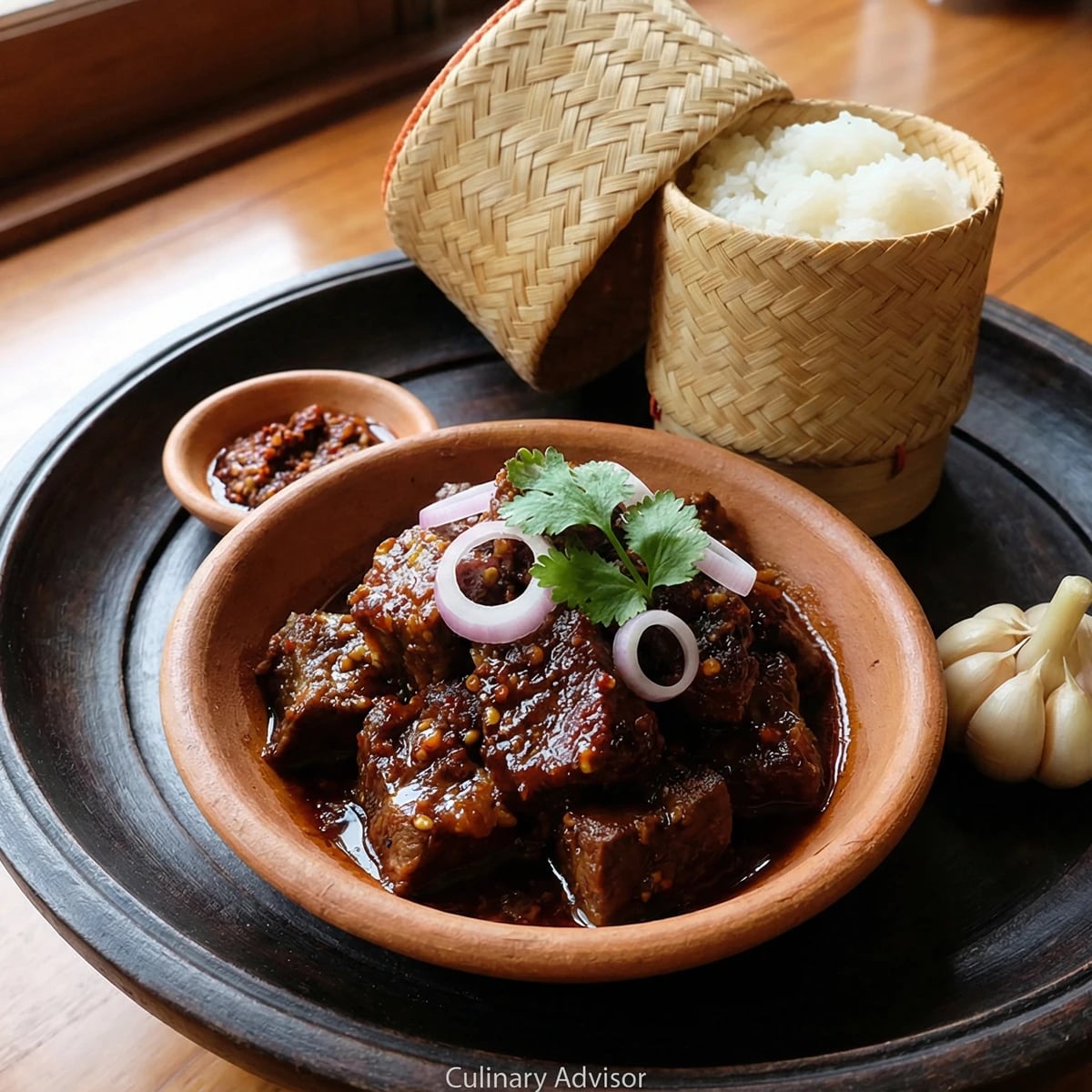
Northern Dry-Braised Beef (Jin Hoom)
Created by Chef Fai
Beef and highland paste go into a pot with water. Two hours later, the water is gone. What remains is a dark, sticky glaze of Burmese-route spices clinging to every fiber of beef. Lanna concentration at its purest.
Jin hoom is what happens when you trust the kreung tam to do everything. Meat. Paste. Water. That's it. You put them in a heavy pot, bring it to a simmer, and you wait. Over two hours, the water disappears. The paste doesn't leave with it. It clings. It concentrates. It coats every piece of beef in a dark, impossibly intense glaze of highland spices. No coconut milk, because coconut palms don't grow in the northern mountains. No rich broth to ladle into a bowl. Just meat and spice, reduced to their most concentrated form. This is Lanna dry-braising, and it's one of the most disciplined techniques in all of Thai cooking.
The paste is where the North separates from the rest of Thailand. Open a Lanna mortar and you'll find ginger where Central Thai would use galangal. You'll find toasted coriander seed and cumin, spices that traveled south from Myanmar and Yunnan along ancient trade routes and never left. You'll find tua nao (ถั่วเน่า), fermented soybean discs, providing the deep umami that shrimp paste delivers down south. Star anise. Turmeric. Black pepper. This is a mountain paste, not a tropical paste. Ajarn always said the kreung tam tells you where a dish was born. One look at this paste and you know you're in the highlands.
The technique requires patience, not talent. Cut the beef. Pound the paste. Put everything in a pot with water, fish sauce, palm sugar. Bring it up. Drop it to a lazy simmer. Then the hard part: you mostly leave it alone. The water carries the paste into the meat, softens the collagen, builds body. In the last thirty minutes, everything changes. The liquid gets low. The paste thickens into a sauce, then a glaze, then a coating. Now you stir. Constantly. The sugars caramelize against the hot pot. The beef pulls apart at the edges but stays chewy at the center. When there's no more liquid and every piece is lacquered dark brown, you're done.
Not every dish uses all four pillars equally. Jin hoom is salt, sweet, heat, and depth. Sour doesn't belong here. The system is flexible. Fish sauce for salt, palm sugar for sweet, dried chili for warmth, tua nao for that fermented backbone. The principles hold, but they don't force themselves where they're not needed. Eat this with sticky rice. Only sticky rice. Tear off a piece, press it against a chunk of glazed beef. That bite is the entire history of Lanna highland cooking: concentrated, spiced, built for cool mountain evenings around a khan tok.
Ingredients
beef shank or chuck
Quantity
800g
cut into 2-inch chunks
dried red chilies (prik haeng)
Quantity
8
deseeded, soaked in warm water 15 minutes, drained
coriander seeds (met phak chi)
Quantity
1 tablespoon
| Ingredient | Quantity |
|---|---|
| beef shank or chuckcut into 2-inch chunks | 800g |
| dried red chilies (prik haeng)deseeded, soaked in warm water 15 minutes, drained | 8 |
| coriander seeds (met phak chi) | 1 tablespoon |
Where cooking meets culture.
Culinary guides, cultural storytelling, and the editorial depth that makes cooking meaningful.
Discover Culinary Explorer