Culinary Explorer
A cooking platform built around craft, culture, and the stories behind what we eat.
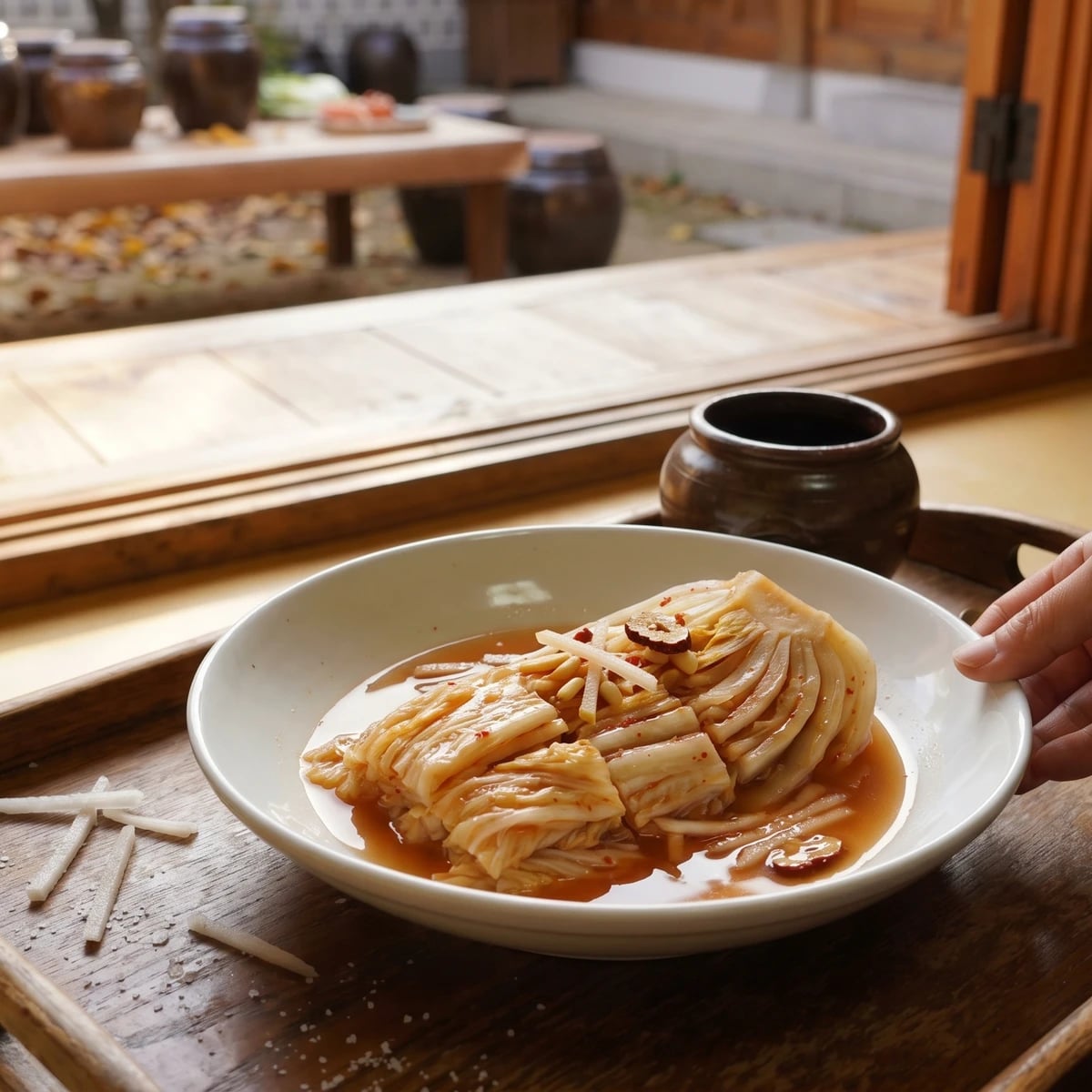
Jeotgukji (Salted-Seafood Cabbage Kimchi)
Created by Chef Jeong-sun
A pale, briny winter cabbage kimchi from the old court table, built on croaker and shrimp jeotgal so the cabbage stays clean, sweet, and deeply seasoned.
Jeotgukji lives or dies by the brine. Not the red paste, not the amount of garlic, not a proud heap of chili. The salted seafood has to season the cabbage all the way through without making it taste crude. That is why I strain the jeotgal broth, measure the salt, and taste the liquid before it ever touches the leaves.
My teacher, Master Seong-nyeo, made this only in cold weather, when napa cabbage was dense and sweet and the radish cut with a clean snap. She said the court name made people stand too straight in the kitchen. Then she made us trim the cabbage ribs evenly anyway. A dish can be from a palace table and still be cabbage in a jar. Respect both truths.
Tonight this will ask for patience: salting the cabbage until the rib bends without breaking, rinsing it well, making a clear jeotguk (salted-seafood brine), and packing the leaves firmly so no air pockets sour it badly. Use less gochugaru than your hand wants. This kimchi should be pale amber-red, not buried. Let it taste like itself.
Write it down. Memory is a borrowed bowl. Your saeu-jeot (salted shrimp) and jogi-jeot (salted croaker) will never be exactly as salty as mine, so the recipe gives you a measured starting point and tells you where to taste.
Ingredients
napa cabbage
Quantity
1 large, about 1.2 to 1.4kg
coarse sea salt
Quantity
1/2 cup
for salting
water
Quantity
6 cups
for salting brine
| Ingredient | Quantity |
|---|---|
| napa cabbage | 1 large, about 1.2 to 1.4kg |
| coarse sea saltfor salting | 1/2 cup |
| waterfor salting brine | 6 cups |
Where cooking meets culture.
Culinary guides, cultural storytelling, and the editorial depth that makes cooking meaningful.
Discover Culinary Explorer