Chef Jeong-sun
Amjuk (Dried-Grain Weaning Porridge)
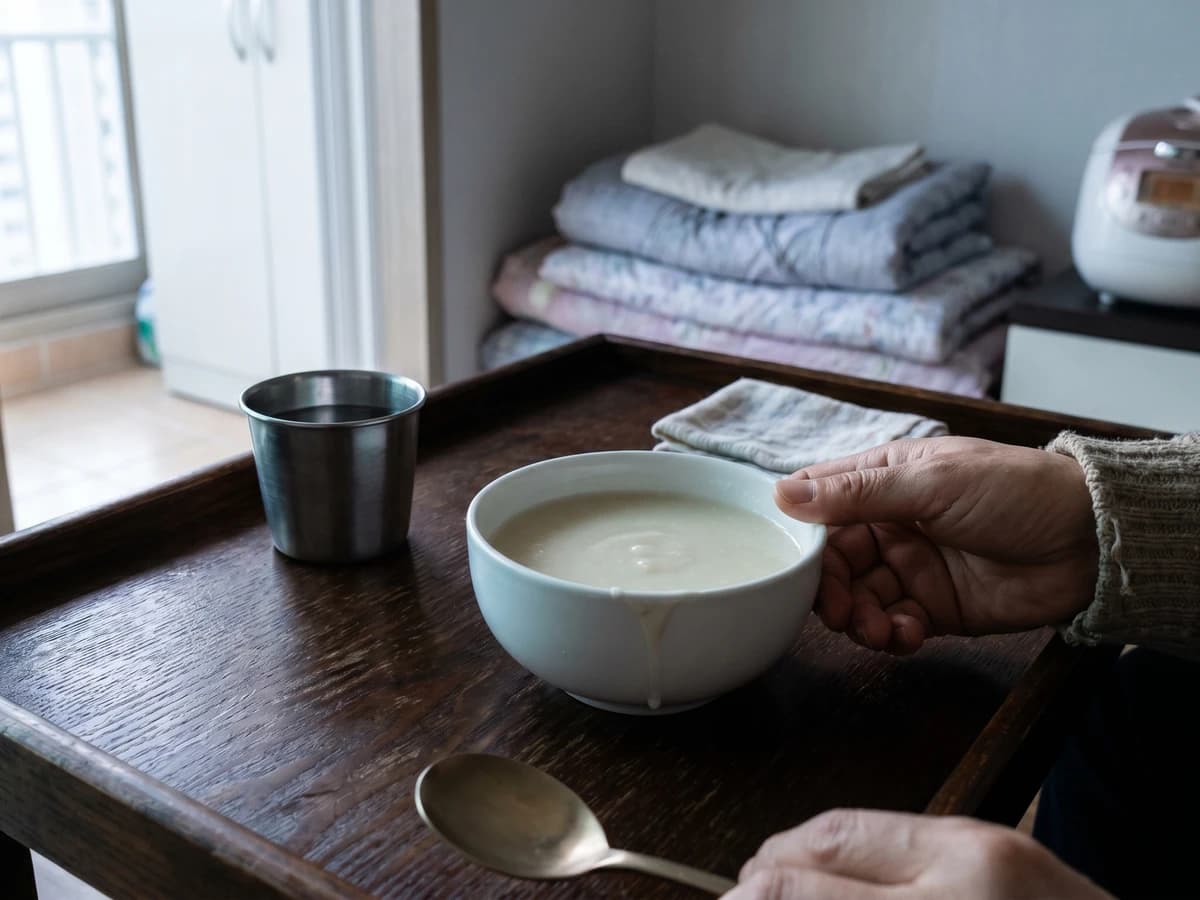
Powdered rice or dried baekseolgi cooked thin in cloudy rice water, an old Korean first-spoon porridge that asks for patience at the sieve and gentleness at the stove.
A cooking platform built around craft, culture, and the stories behind what we eat.

Created by
A careful Jeju porridge of soaked rice, thin-sliced abalone, and green viscera, simmered slowly until the grains bloom and the bowl tastes of the sea without shouting.
Jeonbok-juk lives or dies before the pot boils, at the sink. The abalone must be scrubbed, eased out of its shell, trimmed of its hard mouth, and sliced thin enough that a sick person, an elder, or a child can eat it without wrestling. Notebook 18 says 2 mm. My teacher did not write that number down for beauty; she wrote it down because thick abalone turns rubbery and then no amount of expensive seafood can save the bowl.
Jeju cooks know why the green viscera, nae-jang (abalone liver and innards), matters. It turns the rice jade and gives the porridge its deep sea taste, but only if the abalone is very fresh. If it smells wrong, leave it out. A white jeonbok-juk made honestly is better than a green one forced from tired seafood.
This is special-occasion comfort food. Someone is recovering, someone has come home, or someone bought good abalone at the market and the table grows quiet for the first spoonful. The rice is soaked, drained, and stirred gently in sesame oil before the broth goes in, so each grain opens slowly instead of collapsing into paste.
Tonight it asks for patience: 30 minutes of soaking, a careful knife, and steady stirring. Season at the end, because abalone and kelp are delicate and salt gets louder as porridge thickens. 손맛 (hand-taste) is real, and I still measure it, so it can be handed on.
During the Joseon period, abalone from Jeju and the southern coast was a valuable tribute seafood sent to the court, gathered by island divers whose work later became identified with Jeju's haenyeo (women divers) culture. Juk (rice porridge) has long served in Korean households as food for the ill, elderly, and newly recovered, and abalone made this version costly enough for special care rather than ordinary breakfast. The Jeju style often keeps the fresh viscera, nae-jang, which turns the porridge green and marks it as island cooking rather than plain white rice porridge.
Quantity
1 cup (200g)
Quantity
as needed
for rinsing and soaking the rice
Quantity
4 medium (450 to 500g in shell, or about 200g cleaned meat)
with viscera if very fresh
Quantity
1 teaspoon
for scrubbing the abalones
Quantity
7 cups
Quantity
1 piece, about 4 inches square
Quantity
1 tablespoon, plus 1 teaspoon for finishing
Quantity
1 teaspoon
Quantity
1/2 teaspoon, plus up to 1/4 teaspoon more
Quantity
1
thinly sliced
Quantity
1 sheet
cut into thin strips
Quantity
1 teaspoon
Quantity
to serve
| Ingredient | Quantity |
|---|---|
| short-grain white rice | 1 cup (200g) |
| cold waterfor rinsing and soaking the rice | as needed |
| fresh abaloneswith viscera if very fresh | 4 medium (450 to 500g in shell, or about 200g cleaned meat) |
| coarse saltfor scrubbing the abalones | 1 teaspoon |
| water | 7 cups |
| dried kelp (dasima) | 1 piece, about 4 inches square |
| toasted sesame oil | 1 tablespoon, plus 1 teaspoon for finishing |
| soup soy sauce (guk-ganjang) | 1 teaspoon |
| fine sea salt | 1/2 teaspoon, plus up to 1/4 teaspoon more |
| scallionthinly sliced | 1 |
| roasted gim (seaweed)cut into thin strips | 1 sheet |
| toasted sesame seeds | 1 teaspoon |
| mild baechu-kimchi or dongchimi (radish water kimchi) (optional) | to serve |
Rinse the rice in 3 or 4 changes of cold water, rubbing it lightly between your hands, until the water runs mostly clear. Soak it in fresh cold water for 30 minutes, then drain it in a sieve for 10 minutes. The soaking softens the center of each grain; the draining lets the sesame oil coat the rice instead of sliding off.
Put 7 cups water and the dried kelp in a small pot over medium heat. When small bubbles gather at the edge, about 8 to 10 minutes, remove the kelp and keep the water hot. Do not boil the kelp hard. It should give body, not a slick bitter taste.
Hold each abalone in a folded towel. Sprinkle the flesh side with the coarse salt and scrub the dark skirt and foot with a small brush under cold running water until the gray film lightens. Slide a sturdy spoon between the flesh and shell to loosen it, then cut away the hard mouth at the pointed end. Separate the green viscera carefully and keep it only if the abalone is very fresh and smells clean.
Trim away any gritty black strand from the viscera. Chop the viscera finely, then mash it with 1/2 cup of the hot kelp water until loose. If you are not using viscera, reserve that 1/2 cup kelp water for loosening the porridge later. Slice the abalone meat crosswise into 2 mm pieces and set aside the prettiest quarter of the slices for the end.
Set a 3-quart heavy pot over medium-low heat. Add 1 tablespoon sesame oil, the drained rice, and three quarters of the abalone slices. Stir for 3 minutes, until the rice edges look partly translucent and the abalone tightens at the edges. Add the chopped viscera mixture, if using, and stir 1 minute more. Keep the heat modest. Browning belongs to other dishes.
Pour in 2 cups hot kelp water and stir, scraping the bottom and corners, until the rice thickens, about 5 minutes. Add 4 1/2 cups more hot kelp water in three additions, stirring every 2 to 3 minutes, and simmer 30 to 35 minutes. The grains should open and the porridge should move in slow waves from the spoon. If it tightens before the rice blooms, add the reserved 1/2 cup hot kelp water a little at a time.
Fold in the reserved abalone slices, the soup soy sauce, and 1/2 teaspoon fine sea salt. Simmer 3 to 4 minutes, just until the last slices are cooked through. Taste, then add up to 1/4 teaspoon more salt only if the porridge tastes flat. The seasoning should make the abalone clearer, not make the bowl salty.
Turn off the heat and stir in the remaining 1 teaspoon sesame oil. Cover the pot and let the porridge rest 5 minutes so the grains settle. Ladle into bowls and finish with scallion, gim strips, and sesame seeds. Serve with mild baechu-kimchi or dongchimi, not a loud side dish that buries the abalone.
1 serving (about 460g)
Culinary guides, cultural storytelling, and the editorial depth that makes cooking meaningful.
Discover Culinary ExplorerChef Jeong-sun
Powdered rice or dried baekseolgi cooked thin in cloudy rice water, an old Korean first-spoon porridge that asks for patience at the sieve and gentleness at the stove.

Chef Jeong-sun
A soft summer rice porridge of kneaded mallow greens, dried shrimp, and careful doenjang broth, plain enough for breakfast and exact enough to keep the grit and bitterness out.
Chef Jeong-sun
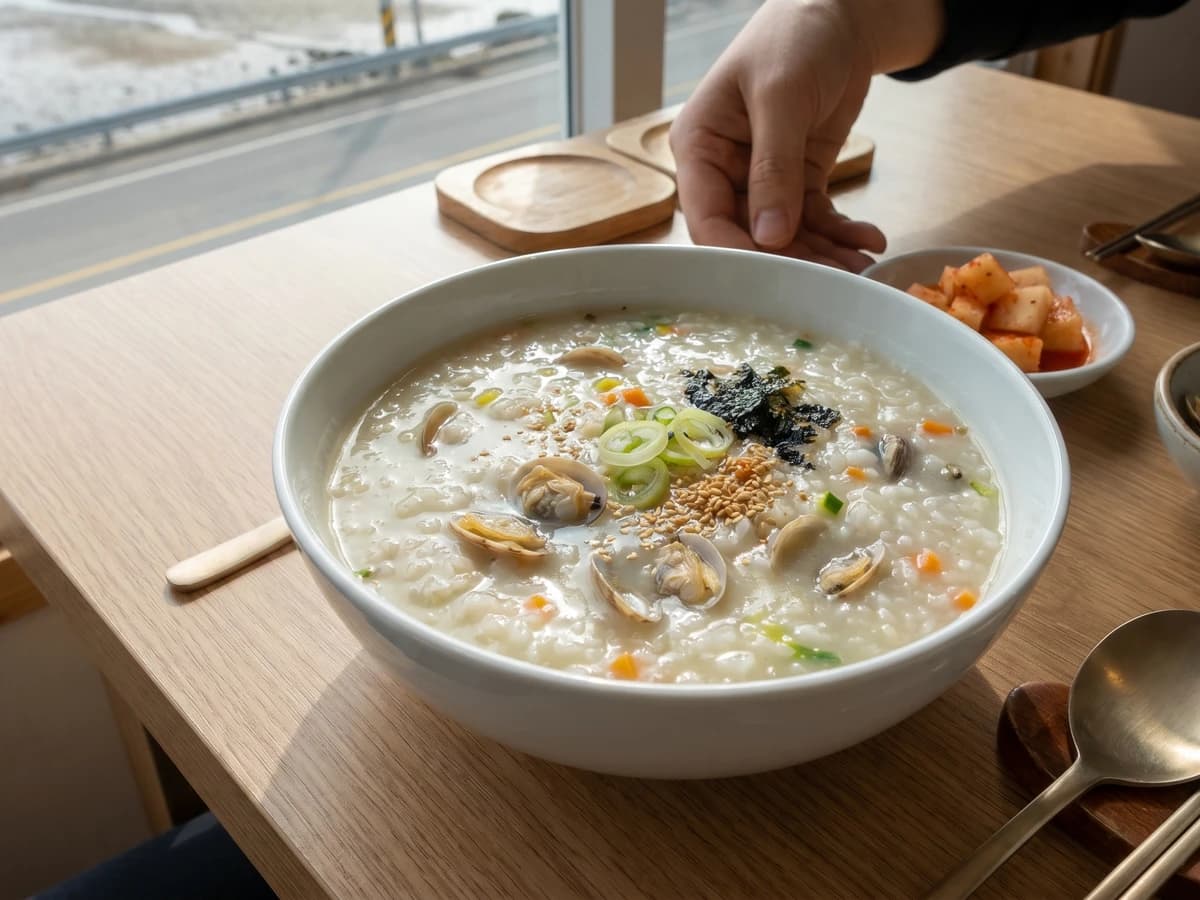
A west-coast clam porridge from Buan's tidal flats: live bajirak opened for their liquor, sesame-slicked rice toasted in the pot, and vegetables cut small enough to comfort without hiding the clams.

Chef Jeong-sun
An autumn juk of boiled chestnuts and soaked short-grain rice, simmered low until smooth and softly sweet, the kind of bowl you set before an elder, a child, or yourself.