Culinary Explorer

A cooking platform built around craft, culture, and the stories behind what we eat.
Discover Culinary Explorer
Jenever (Dutch Juniper Spirit Service)

Jenever (Dutch Juniper Spirit Service)

Created by

Jenever is not gin's cousin but its parent: a Dutch malt-wine spirit scented with juniper, poured cold to the brim so the first sip must be taken with a bow.

Beverages
Dutch
Dinner Party
Special Occasion
5 min
Active Time
0 min cook30 min total
Yield4 small servings

The first time I was old enough to be given jenever properly, nobody handed me the glass. They set it on the table, filled so full that the spirit rose in a little bright meniscus above the rim, and waited. This is how the lesson begins. You bend to the glass, hands politely out of trouble, and take the first sip from the table. A small bow to a strong drink. The Dutch can make ceremony out of thrift, weather, and a glass too full to lift.

The name already tells you where the old spirit is hiding. Jenever comes from jeneverbes, juniper berry, the dark little pine-scented fruit that gives the drink its spine. But let me tell you a secret: jenever is not gin wearing wooden shoes for tourists. It is older, grainier, rounder, built on moutwijn, malt wine, a pot-distilled grain spirit with the bread-and-cereal warmth that London gin later stripped away. History and cookery, they cannot be separated, and neither can drinking and listening when the bottle is good.

There is no cooking here, and certainly no home distilling. For obvious reasons. What you are preparing is service, which sounds minor until you do it wrong. Chill the bottle, choose jonge jenever if you want it clean and light, oude jenever if you want malt and softness, and pour into a small tulip glass until you nearly regret your confidence. Sip the first mouthful from the rim, then lift the glass. Hou het altijd simpel, but simple is not the same as careless.

Jenever developed in the Low Countries from grain distilling traditions documented by the sixteenth and seventeenth centuries, with Amsterdam and especially Schiedam becoming major centres of production. Its name comes from jeneverbes, juniper berry, and English gin grew from the British taste for Dutch genever in the seventeenth century. The protected modern categories jonge and oude refer to production style rather than age: jonge is lighter and more neutral, while oude preserves more malt-wine character.

The technique, the tradition, and the story behind every dish.

Discover Culinary Explorer

Ingredients

jonge or oude jenever

Quantity

200ml

well chilled

cold Dutch pilsner (optional)

Quantity

4 small glasses

plain salted nuts or young cheese cubes (optional)

Quantity

1 small bowl

Equipment Needed

  • 4 small tulip jenever glasses or small spirits glasses
  • Refrigerator space for chilling the bottle
  • Small beer glasses if serving kopstootje

Instructions

  1. 1

    Chill the bottle

    Put the jenever in the refrigerator for at least thirty minutes before serving. Do not freeze it solid with coldness; you want the spirit crisp and clear, not numbed. Oude jenever especially needs enough warmth left in it for the malt wine to speak.

  2. 2

    Choose the glass

    Use small tulip glasses if you have them, or the smallest neat spirits glasses in the cupboard. The shape matters because jenever is scented, not swallowed like medicine; the narrow rim gathers the juniper and grain so your nose reaches the drink before your courage does.

  3. 3

    Pour to brim

    Set the glasses on the table and pour each one absolutely full, until the liquid sits level with the rim. This is the old cafe gesture: generous, slightly dangerous, and impossible to carry across the room without confessing your sins.

  4. 4

    Take the bow

    Leave the glass on the table for the first sip. Bend forward and sip carefully from the rim before lifting it. This little bow is not theatre; it is physics with manners. Once the level has dropped, pick up the glass and sip slowly.

  5. 5

    Serve a kopstootje

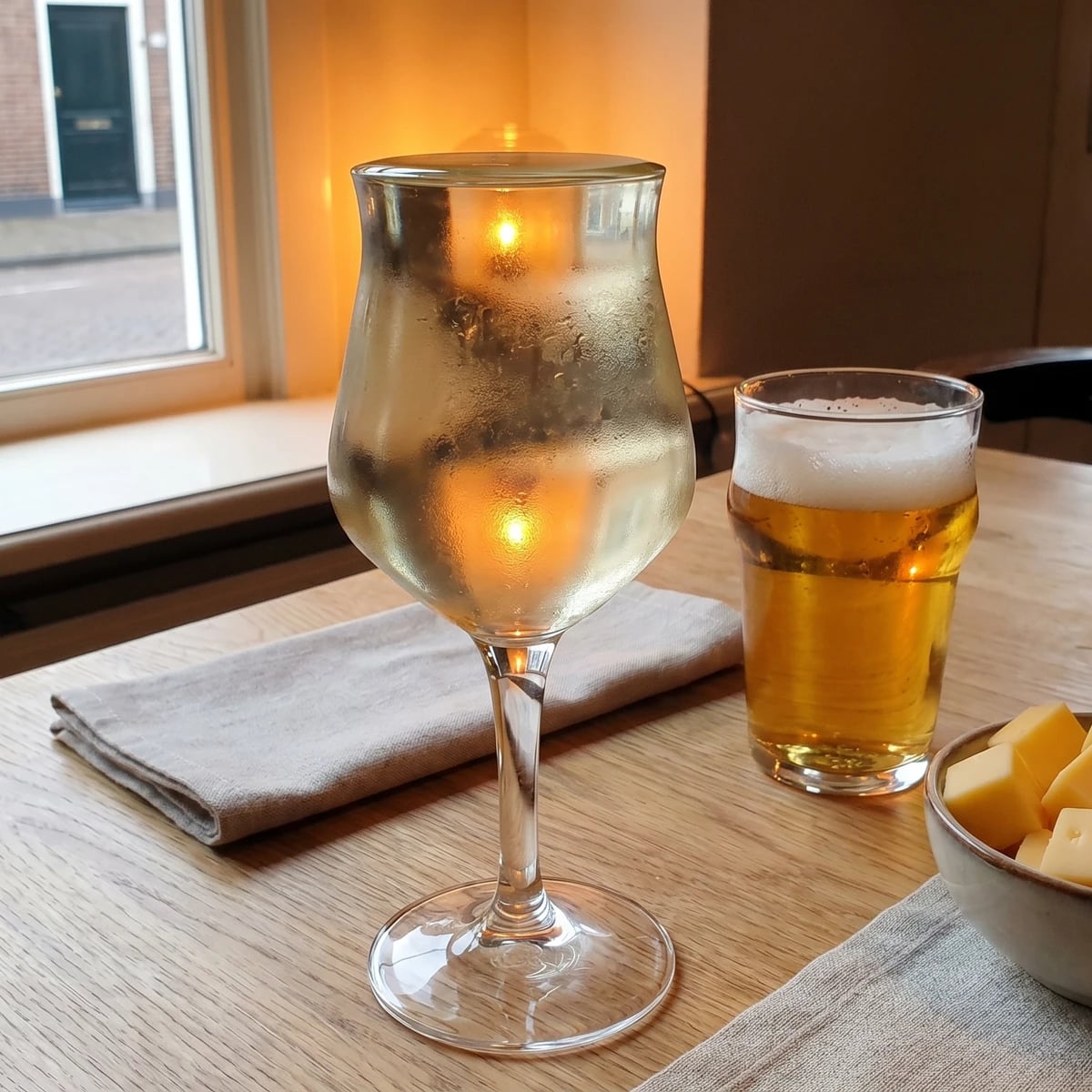
    For a kopstootje, a little head-butt, set a small cold pilsner beside the jenever. Sip the jenever first, then the beer. The beer should refresh, not bully; if it drowns the grain and juniper, you have poured a duel instead of a conversation.

    Use jonge jenever for a sharper, cleaner kopstootje. Save a good oude jenever for quieter sipping, where its malt-wine softness has room.

Chef Tips

  • Oude means old style, not necessarily barrel-aged. Look for a bottle that names moutwijn, malt wine, on the label; that is where the Dutch grain character lives.
  • Jonge jenever is clean, pale, and good beside beer. Oude jenever is rounder, grainier, and better after dinner when the table has gone a little quieter.
  • Do not add tonic, citrus peel, or a decorative berry if you are serving it the Dutch cafe way. The garnish is restraint.

Advance Preparation

  • Chill the jenever 30 minutes to 2 hours before serving.
  • Set the glasses in the refrigerator for 10 minutes if the room is warm, but keep oude jenever cool rather than icy so the malt-wine aroma remains clear.

Frequently Asked Questions

Nutrition Information

1 serving (about 50g)

Calories
115 calories
Total Fat
0 g
Saturated Fat
0 g
Trans Fat
0 g
Unsaturated Fat
0 g
Cholesterol
0 mg
Sodium
0 mg
Total Carbohydrates
0 g
Dietary Fiber
0 g
Sugars
0 g
Protein
0 g

Note: Chef personas and recipes are created with AI assistance. Cook with care: follow safe food-handling practices, check doneness with a thermometer when needed, and adapt for allergies and your kitchen.

Where cooking meets culture.

Culinary guides, cultural storytelling, and the editorial depth that makes cooking meaningful.

Discover Culinary Explorer

More from Dutch Drinks: Jenever to Anijsmelk

Browse the full collection