Chef Jeong-sun
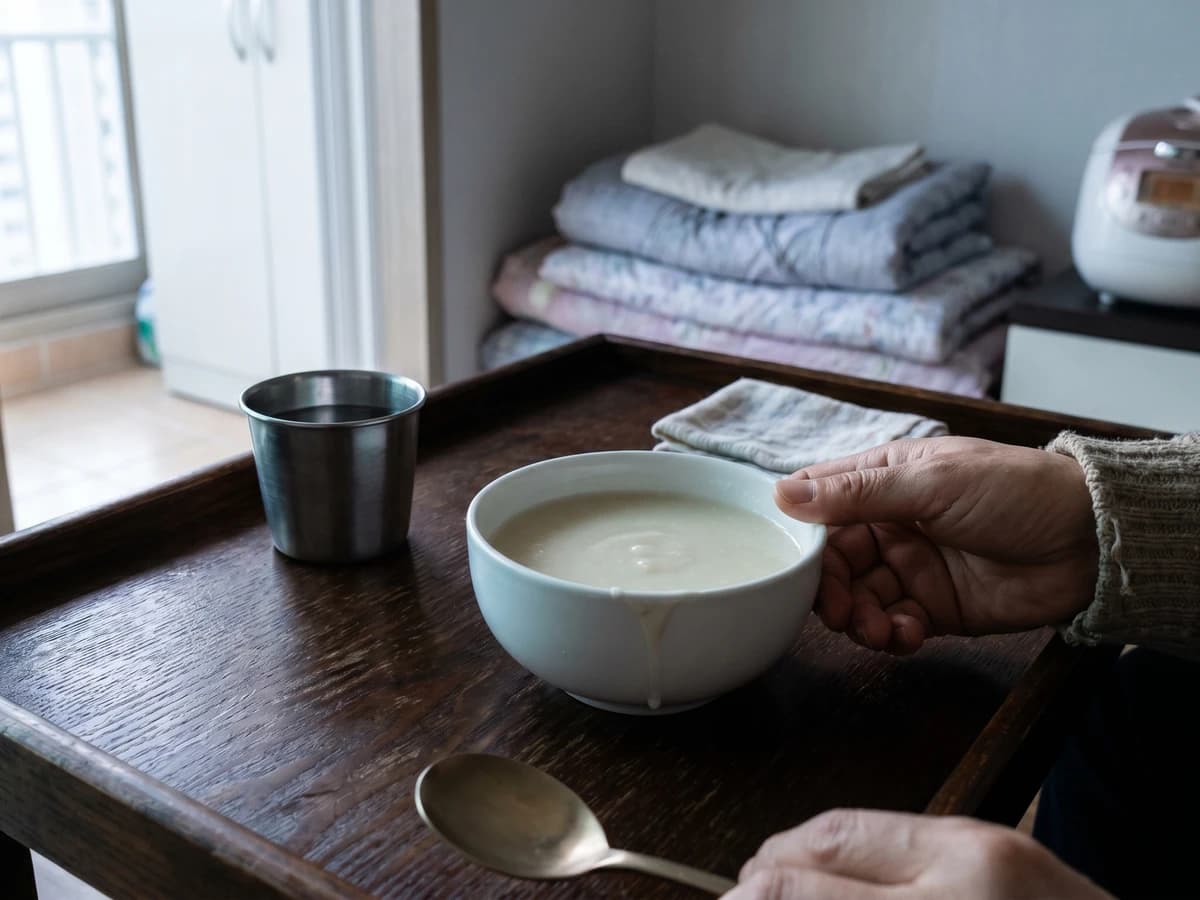
Amjuk (Dried-Grain Weaning Porridge)
Powdered rice or dried baekseolgi cooked thin in cloudy rice water, an old Korean first-spoon porridge that asks for patience at the sieve and gentleness at the stove.
A cooking platform built around craft, culture, and the stories behind what we eat.
Created by
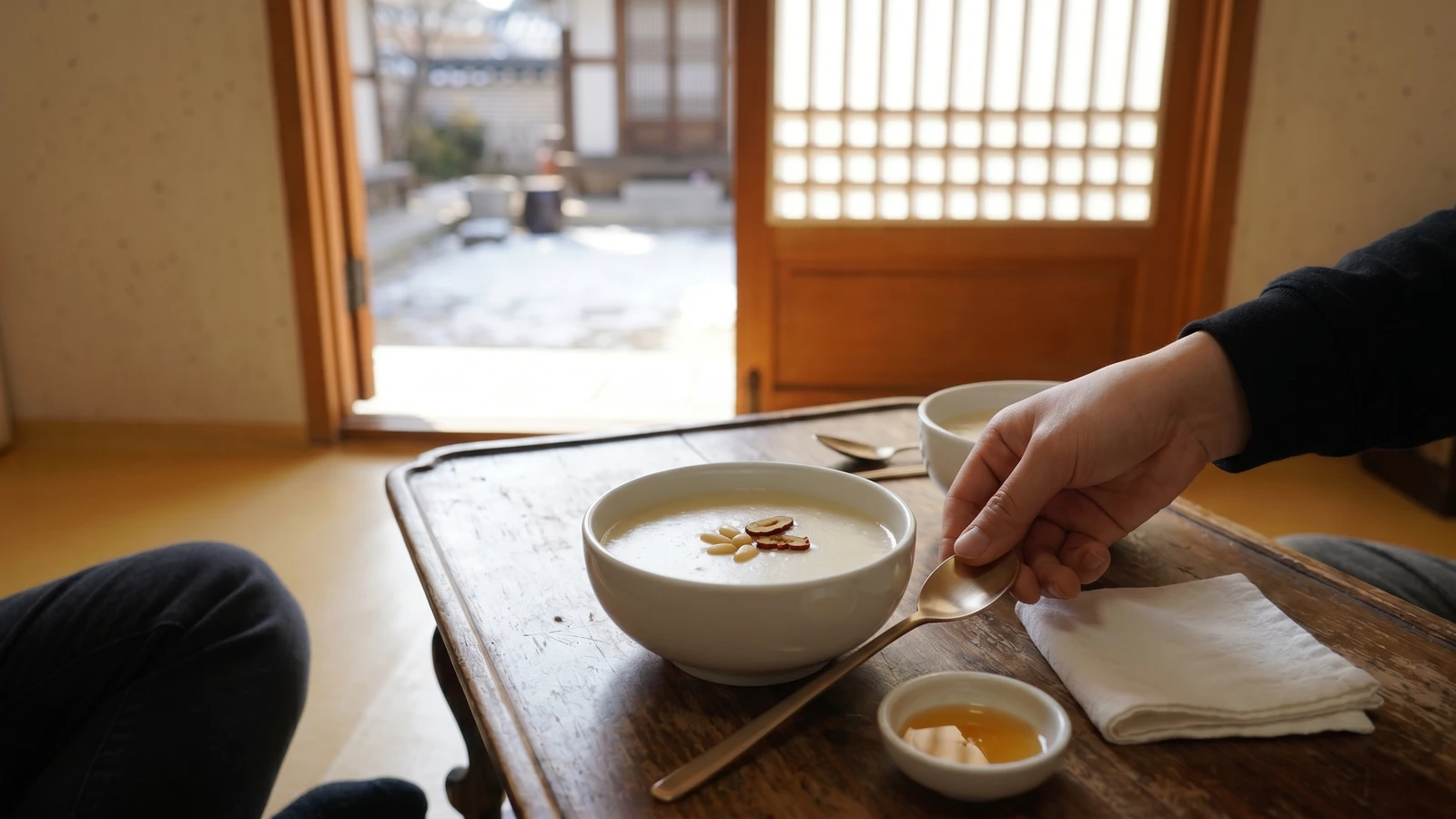
An ivory Korean porridge of pine nuts and rice, served at the sickbed and the banquet table both, rich enough to need only salt and careful heat.
Jatjuk lives or dies by the grinding. Not the pot, not the bowl, not a pretty garnish. If the pine nuts are coarse, the porridge feels sandy. If the heat is too strong, the oil separates and the bowl looks tired before it reaches the table.
My teacher, Master Seong-nyeo, made us grind the soaked rice and the pine nuts separately. We complained with our eyes only. 눈동냥, 귀동냥, borrowing with the eyes and ears, was safer than asking twice. Later I understood. Rice needs enough water to loosen its starch. Pine nuts need a gentler hand, because they are mostly fat and will turn greasy if punished.
This is not everyday barley porridge. Jatjuk appears when someone is weak, when an elder needs breakfast that asks little of the body, or when a table wants a quiet first bowl before richer food. It should be smooth, pale ivory, and only barely salted. Let it taste like pine nut. Tonight it asks you for soaking, grinding, low heat, and attention with a spoon. None of those is difficult, but none can be skipped.
Notebook 34 says 80 grams of pine nuts to 100 grams of short-grain rice for four small bowls. More pine nut tastes generous for one spoonful, then heavy by the fifth. Measure it. Memory is a borrowed bowl.
Jatjuk belongs to Korea's long juk (porridge) tradition, where rice was stretched, softened, and made digestible for breakfast, illness, old age, and ceremonial meals. Pine nuts, especially from the Korean pine forests of the central and northern mountains, were costly enough that jatjuk carried a special-occasion and restorative meaning rather than the plain daily character of white rice porridge. Joseon-era royal and upper-household food records include nut and seed porridges among refined juk preparations, but the dish also remained a home remedy because its richness is gentle when cooked correctly.
Quantity
100g
rinsed and soaked 2 hours
Quantity
80g
dark tips removed
Quantity
5 cups
divided
Quantity
1/2 teaspoon
plus more only if needed
Quantity
1 teaspoon
served on the side
Quantity
1 tablespoon
for garnish
Quantity
1
seeded and cut into thin slivers
| Ingredient | Quantity |
|---|---|
| short-grain white ricerinsed and soaked 2 hours | 100g |
| raw shelled pine nutsdark tips removed | 80g |
| waterdivided | 5 cups |
| fine sea saltplus more only if needed | 1/2 teaspoon |
| honey or sugar (optional)served on the side | 1 teaspoon |
| raw pine nuts (optional)for garnish | 1 tablespoon |
| jujube (optional)seeded and cut into thin slivers | 1 |
Rinse the rice in several changes of cold water until the water runs mostly clear, then soak it in fresh water for 2 hours. Drain well. Soaking softens the grain so it grinds smoothly and cooks into a tender body instead of little hard flecks.
Pick over the pine nuts and remove any dark tips or bitter-looking pieces. Rinse quickly under cold water and drain on a towel. Do not soak them. Pine nuts carry enough oil already, and soaking dulls their clean flavor.
Put the drained rice in a blender with 2 cups of the measured water and blend until it looks like thin cream with no hard grains visible, 45 to 60 seconds in a strong blender. Pour it into a heavy saucepan. Blend the pine nuts separately with 1 cup of the measured water for 30 to 45 seconds, just until smooth. Keeping them separate lets the rice cook first and keeps the pine nut oil from splitting.
Add the remaining 2 cups water to the rice mixture and set the saucepan over medium heat. Stir slowly and constantly with a wooden spoon until the mixture thickens and loses its raw rice smell, about 10 to 12 minutes. Scrape the bottom and corners of the pot. Rice starch catches there first.
Lower the heat to medium-low and stir in the blended pine nuts. Cook 6 to 8 minutes, stirring gently, until the porridge is glossy, smooth, and thick enough to coat the spoon but still pour slowly. Do not let it boil hard. A lazy bubble at the edge is enough, because strong heat forces the pine nut oil out.
Stir in 1/2 teaspoon fine sea salt, then taste. It should taste round and nutty, not salty. Add more salt only a pinch at a time if the pine nuts taste flat. Serve sugar or honey on the side if the table wants sweetness, but do not sweeten the whole pot for everyone.
Ladle into small warm bowls. Garnish each bowl with a few pine nuts and two or three jujube slivers if you are using them. Serve immediately, while the porridge is smooth. If it thickens as it sits, loosen it with 1 or 2 tablespoons hot water and stir gently before serving.
1 serving (about 285g)
Culinary guides, cultural storytelling, and the editorial depth that makes cooking meaningful.
Discover Culinary ExplorerChef Jeong-sun
Powdered rice or dried baekseolgi cooked thin in cloudy rice water, an old Korean first-spoon porridge that asks for patience at the sieve and gentleness at the stove.

Chef Jeong-sun
A soft summer rice porridge of kneaded mallow greens, dried shrimp, and careful doenjang broth, plain enough for breakfast and exact enough to keep the grit and bitterness out.
Chef Jeong-sun
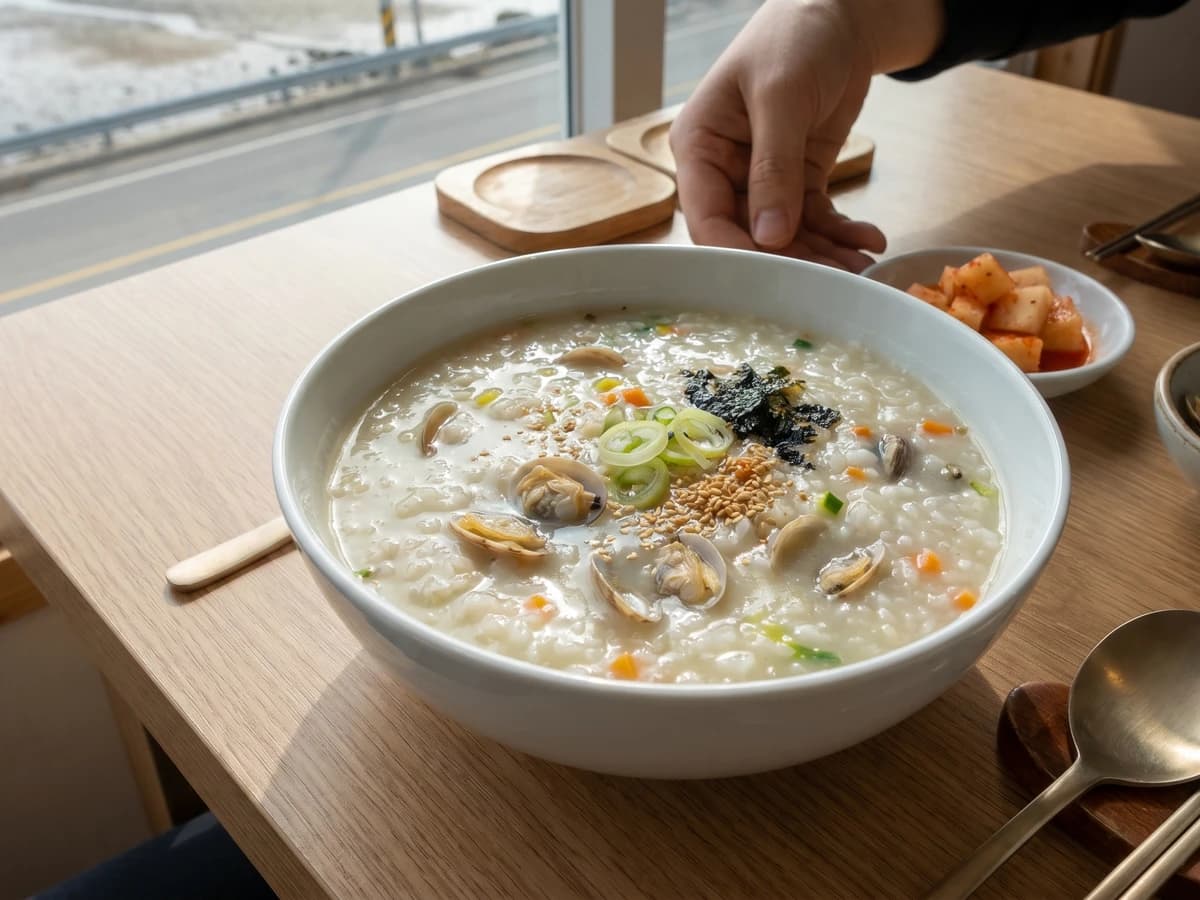
A west-coast clam porridge from Buan's tidal flats: live bajirak opened for their liquor, sesame-slicked rice toasted in the pot, and vegetables cut small enough to comfort without hiding the clams.

Chef Jeong-sun
An autumn juk of boiled chestnuts and soaked short-grain rice, simmered low until smooth and softly sweet, the kind of bowl you set before an elder, a child, or yourself.